Education 9 min read
Hash vs Kief in Canada: A Beginner’s Guide
A practical Canada-focused guide to the difference between hash and kief, legal labels, potency cautions, buying checks, and secure storage.
Hash and kief can sit near dried flower on a legal cannabis menu, but they are not simply two more kinds of bud. Both are concentrated forms made from the resin-rich trichomes of the cannabis plant. That usually means more THC in less material, a different texture, and more reason to slow down before choosing or using a product.
This beginner guide explains the practical difference between hash and kief in Canada, what the legal label should tell you, and how to compare products without relying on colour, aroma, or an impressive THC number alone. It is general education for adults, not medical advice or a consumption tutorial.
For the larger category, see our guide to cannabis concentrates in Canada. If the numbers and symbols on the package are unfamiliar, start with how to read a Canadian cannabis label.
Hash vs Kief: The Short Answer
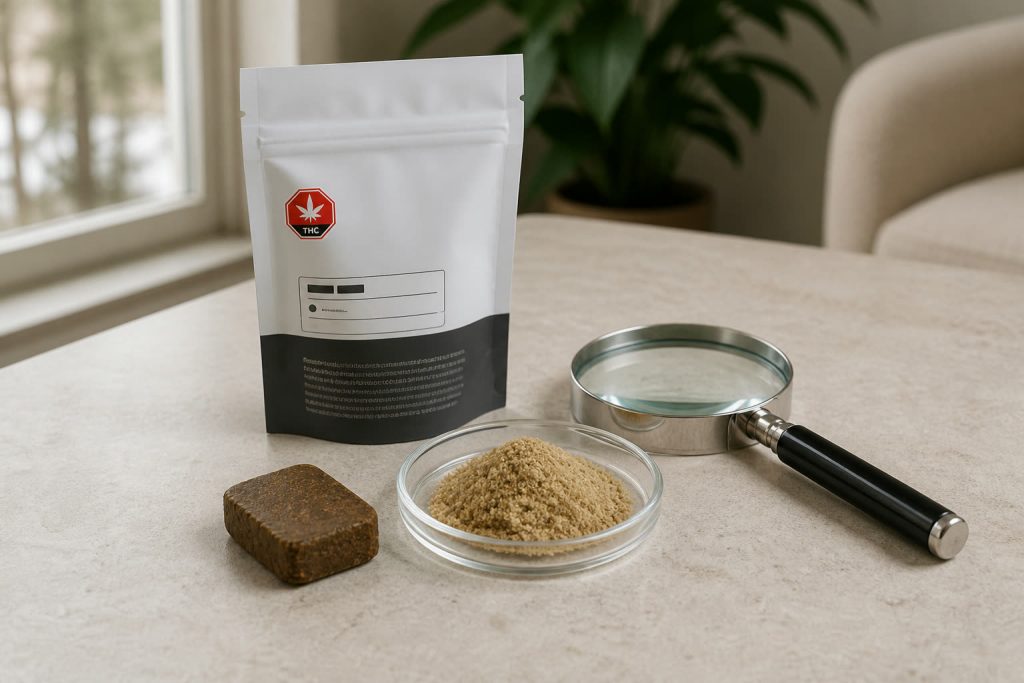
Kief is a loose collection of trichomes separated from cannabis flower. It often looks like fine tan, gold, greenish, or brown powder. Hash is generally made by collecting resin or trichomes and pressing, rolling, heating, filtering, or otherwise working the material into a more cohesive form. Depending on the method, hash may look dry and crumbly, soft and pliable, or firm and dark.
Health Canada treats kief, hashish, and similar products made by mechanical separation as cannabis extracts. The agency specifically notes that sifting, beating, rubbing, and other mechanical actions can produce extracts even when no chemical solvent is involved. That regulatory point clears up a common misconception: “solventless” does not mean “not an extract.”
| Feature | Kief | Hash | Why it matters |
|---|---|---|---|
| Typical form | Loose, sandy or powder-like trichomes | Pressed, rolled, sieved, or otherwise worked resin material | Texture affects handling and storage, not whether the product is automatically better |
| Processing idea | Trichomes are mechanically separated and collected | Collected resin or trichomes are further formed or refined | Method names can describe process, but they do not predict your personal experience |
| Canadian product class | Cannabis extract | Cannabis extract | Read the extract label and warnings rather than treating either one like ordinary flower |
| Useful comparison point | THC/CBD amount, total weight, lot and package date | THC/CBD amount, total weight, lot, package date, and texture description | The package gives more reliable buying information than appearance alone |
| Main beginner caution | Loose material can be easy to overestimate or spill | A small piece can contain more THC than its size suggests | Concentrated formats reward deliberate planning |
What Kief Actually Is
Cannabis trichomes are tiny resin-producing structures on the plant. When dried flower is sifted or agitated, some trichomes separate from the plant material and collect as kief. Legal products may use terms such as dry sift or screened kief to describe how that separation happened or the texture that resulted.
Colour can vary because of cultivar, plant material, maturity, separation method, and how much non-trichome material remains. Pale gold is not a universal quality guarantee, and a darker or greener sample is not automatically unsafe. The more useful questions are whether the product came through an authorized source, whether the seal is intact, and whether the label clearly states its cannabinoid content and lot details.
Kief is loose and fine, so storage deserves attention. Keep it in its original child-resistant package when possible, follow the label’s storage directions, and keep it dry and secure. Loose concentrated material should never be left in an unmarked jar or where a child, pet, guest, or housemate could mistake it for something ordinary.
What Hash Actually Is
Hash is a broad family rather than one standardized texture. Traditional and modern producers may use dry-sifting, ice-water separation, pressure, controlled warmth, hand-working, filtration, or combinations of methods. Product names such as pressed hash, dry-sift hash, bubble hash, or temple-style hash can offer process clues, but shoppers should not assume every producer uses those terms in exactly the same way.
A hash product may be firm, crumbly, waxy, soft, or pliable. Its surface may be matte or slightly glossy. Those traits can help describe the product, yet appearance is a weak stand-alone test of potency, purity, or freshness. A beautiful piece of hash can still be poorly labelled, improperly stored, or unsuitable for a new consumer. A plain-looking product from an authorized retailer may come with far more useful information.
The same caution applies to words such as craft, premium, full-spectrum, old-school, or artisanal. They may signal a producer’s intended style, but they are not a substitute for the regulated label, ingredient information where applicable, or clear directions.
How to Read a Hash or Kief Label in Canada
Health Canada’s current label guide lists kief and hash among cannabis extracts. On a legal package, the front panel should show THC and CBD information in the required format. You may see both “THC” and “Total THC.” Health Canada explains that the first figure refers to the amount present before activation, while total THC includes the potential amount after THCA is converted to THC. For products that may be heated, total THC is often the more useful comparison number.
- Confirm the product class. Look for cannabis extract rather than assuming the item is dried cannabis because it came from flower.
- Find THC and total THC. Read the unit carefully. Do not compare one package’s milligrams per gram with another package’s total milligrams as if they were the same measurement.
- Check CBD and total CBD. Even when CBD is low, the label should give you the relevant cannabinoid information instead of leaving you to guess.
- Read the net weight. A higher concentration and a larger package are separate facts. Keep potency and quantity distinct.
- Check the lot number. It connects the package to production records and matters if a quality issue or recall appears.
- Check the packaging date. It is not automatically an expiry date, but it gives you context for storage and product age.
- Follow the storage conditions. Heat, light, air, and moisture can change texture and aroma over time.
- Look for the standardized cannabis symbol and excise stamp where required. These are useful legal-market cues, although Health Canada notes limited exceptions can apply.
- Keep the licence-holder contact information. The package should make it possible to identify and contact the responsible company.
If an online menu shows only a strain name, a texture word, and a THC percentage, pause before ordering. Open the full product details or ask the authorized retailer for label information. Concentrates are not a good category for buying on vibes.
Potency Deserves Extra Attention
Health Canada describes physically concentrated extracts such as hash and kief as potentially much stronger than dried flower. Canada’s lower-risk guidance also warns that higher-THC products are associated with greater impairment and a higher likelihood of adverse effects. That does not mean every hash is stronger than every flower or every kief product is identical. It means the category deserves a more cautious starting assumption.
A small-looking amount can create false confidence. Package size, piece size, and visual density do not reliably communicate how much THC is present. New users should avoid copying another person’s amount, combining multiple formats, or adding more quickly because the initial experience feels subtle. Personal response varies with potency, prior exposure, timing, and other factors.
THC can affect attention, coordination, judgment, and reaction time. Do not drive or operate machinery after using cannabis. Avoid mixing cannabis with alcohol, and keep plans simple if trying an unfamiliar concentrated product. If you are pregnant or breastfeeding, Health Canada recommends avoiding cannabis. People with health conditions, taking medications, or concerned about cannabis use should speak with a qualified health professional.
A Beginner-Friendly Buying Checklist
- Buy only from the authorized retailer for your province or territory.
- Choose a package with clear THC, total THC, CBD, and total CBD information.
- Compare matching units rather than scanning the biggest number.
- Prefer a complete product description over unexplained prestige terms.
- Check the package date, lot number, seal, and storage directions.
- Start with the format that is easiest for you to understand and handle.
- Avoid buying more concentrated product than you can store securely.
- Keep the original child-resistant package and label.
- Plan for no driving, no alcohol, and no responsibility-sensitive tasks.
- If the product or label is unclear, choose something clearer.
Common Myths and Red Flags
“Solventless means it is not an extract”
False in the Canadian regulatory context. Health Canada says mechanically separated kief and hashish are cannabis extracts. Solventless describes an aspect of processing; it does not remove the product from the extract class.
“Darker hash is stronger”
Colour alone cannot establish potency. Read the cannabinoid values. Processing style, cultivar, oxidation, plant material, and storage can all affect appearance.
“Natural means low risk”
Hash and kief come from the cannabis plant, but concentrated THC still carries impairment and adverse-effect risks. Natural origin does not tell you the strength or how you will respond.
“A tiny piece is a tiny amount”
Physical size is not a dose label. Concentrated products can place substantial THC in a small volume. Use the package information and take a cautious approach.
Storage and Household Safety
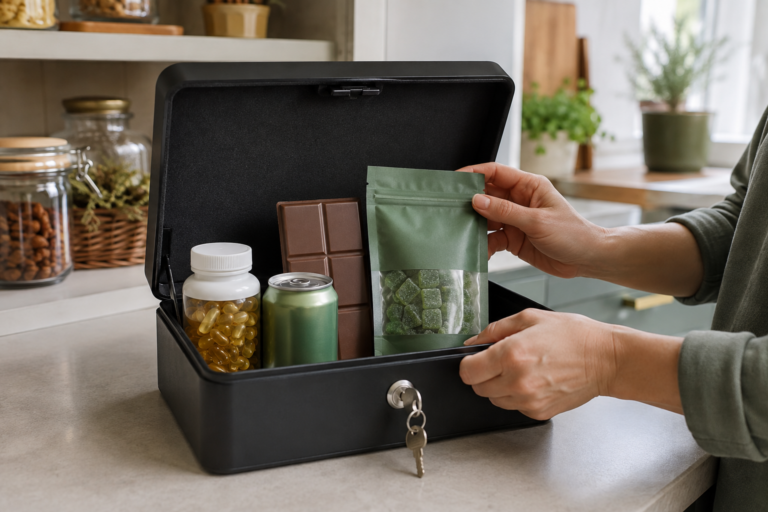
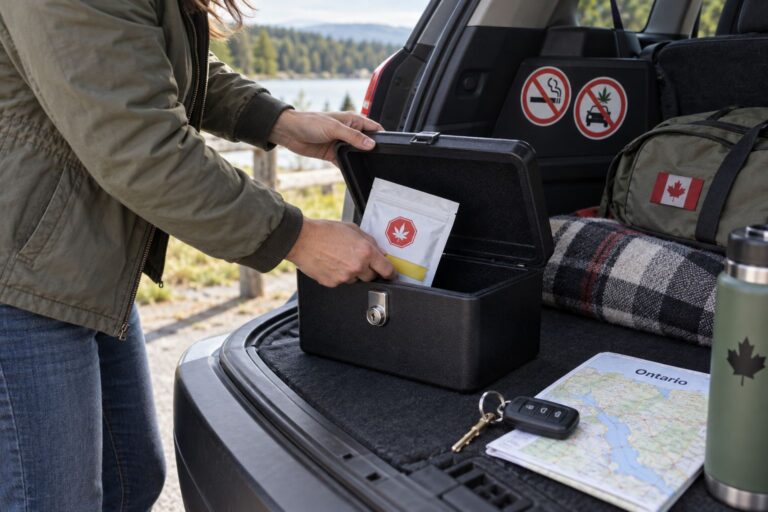
Keep hash and kief locked or otherwise secured away from children and pets. The original package preserves the label, lot number, warnings, and legal source information. If you use a secondary container temporarily, do not leave it unmarked, and return the product to secure storage immediately.
Follow the producer’s temperature, light, and humidity instructions. Keep the product away from cooking ingredients, spices, coffee, tea, and other powders. Kief in particular can look ordinary at a glance. For more household planning, use our cannabis safe-storage checklist.
FAQ
Is kief legal in Canada?
Adults who meet their province or territory’s minimum age can buy legal kief through authorized retailers where it is available. Health Canada classifies mechanically separated kief as a cannabis extract, so legal production, packaging, labelling, sale, and possession rules apply.
Is hash the same as a concentrate?
Yes. Hash is a cannabis concentrate and, under the federal framework, a cannabis extract. It is a broad product family with different production methods and textures.
Is kief weaker than hash?
Not necessarily. Potency varies by product. Compare the labelled THC and total THC using the same units rather than relying on the format name.
Does hash expire?
Legal cannabis labels provide a packaging date and recommended storage conditions, but a universal expiry timeline cannot be inferred from the format alone. Over time, texture, aroma, and cannabinoid composition can change. Follow the label, keep the package secure, and contact the producer if quality seems unusual.
Can you tell good hash by smell or colour?
Smell and colour can describe a product, but they cannot verify legal source, potency, contaminants, or overall quality. Use the sealed package, label, lot details, and authorized retail source as your baseline.
Bottom Line
Kief is loose separated trichome material; hash is resin or trichome material formed or refined into a more cohesive product. In Canada, both belong to the cannabis extract class. Compare total THC and CBD in matching units, check the lot and packaging details, store the product securely, and treat concentrated formats with more caution than their small size suggests. The best beginner purchase is not the product with the loudest name or largest number. It is the one you can identify, understand, store, and approach responsibly.
Sources
- Health Canada: Displaying THC and CBD content on dried cannabis product labels and kief
- Health Canada: How to read and understand a cannabis product label
- Health Canada: About cannabis
- Health Canada: Canada’s lower-risk cannabis use guidelines
Explore the beginner’s guide, or learn how we source and edit our stories.