Category: Education

Canadian cannabis education articles for beginners and returning readers, with practical explanations, cautious safety context, and links to trusted sources.

  • Vape Cartridge Safety Checklist in Canada

    Vape Cartridge Safety Checklist in Canada

    A cannabis vape cartridge can look simple: small tank, threaded battery, a flavour name, and a THC number. That simplicity is exactly why it deserves a checklist. A cartridge is an inhaled cannabis extract, and small differences in source, label clarity, hardware, storage, and strength can change the risk profile quickly.

    This guide is for adults in Canada who already choose to use cannabis and want a practical way to screen vape cartridges before buying or using them. It is not medical advice, and it does not claim vaping is safe. The goal is narrower: help you spot labels, hardware clues, and red flags that deserve a pause.

    If you are still deciding whether inhalation is right for you, start with our comparison of vaping vs smoking cannabis in Canada. This article focuses specifically on pre-filled cartridges and similar extract vapes.

    Quick answer

    A safer vape cartridge choice starts with five checks: buy from a legal source, read the cannabis label, understand the THC strength, inspect the hardware, and avoid products with unclear ingredients or unregulated-market claims. Legal does not mean risk-free, but legal Canadian products have required labelling and composition rules that unregulated products do not reliably follow.

    Health Canada has warned that vaping products from illegal or unregulated sources can increase potential risk, and the Public Health Agency of Canada describes vaping-associated lung illness as an acute respiratory illness linked to use of certain vaping products. For cannabis vapes, treat any missing label, unusually cheap cartridge, mystery liquid, or social-media-only seller as a reason to walk away.

    Vape cartridge checklist at a glance

    Check What to look for Why it matters
    Legal source Licensed retailer, provincial store, or clearly legal private retailer where allowed. Unregulated products may not follow Canadian cannabis rules or testing controls.
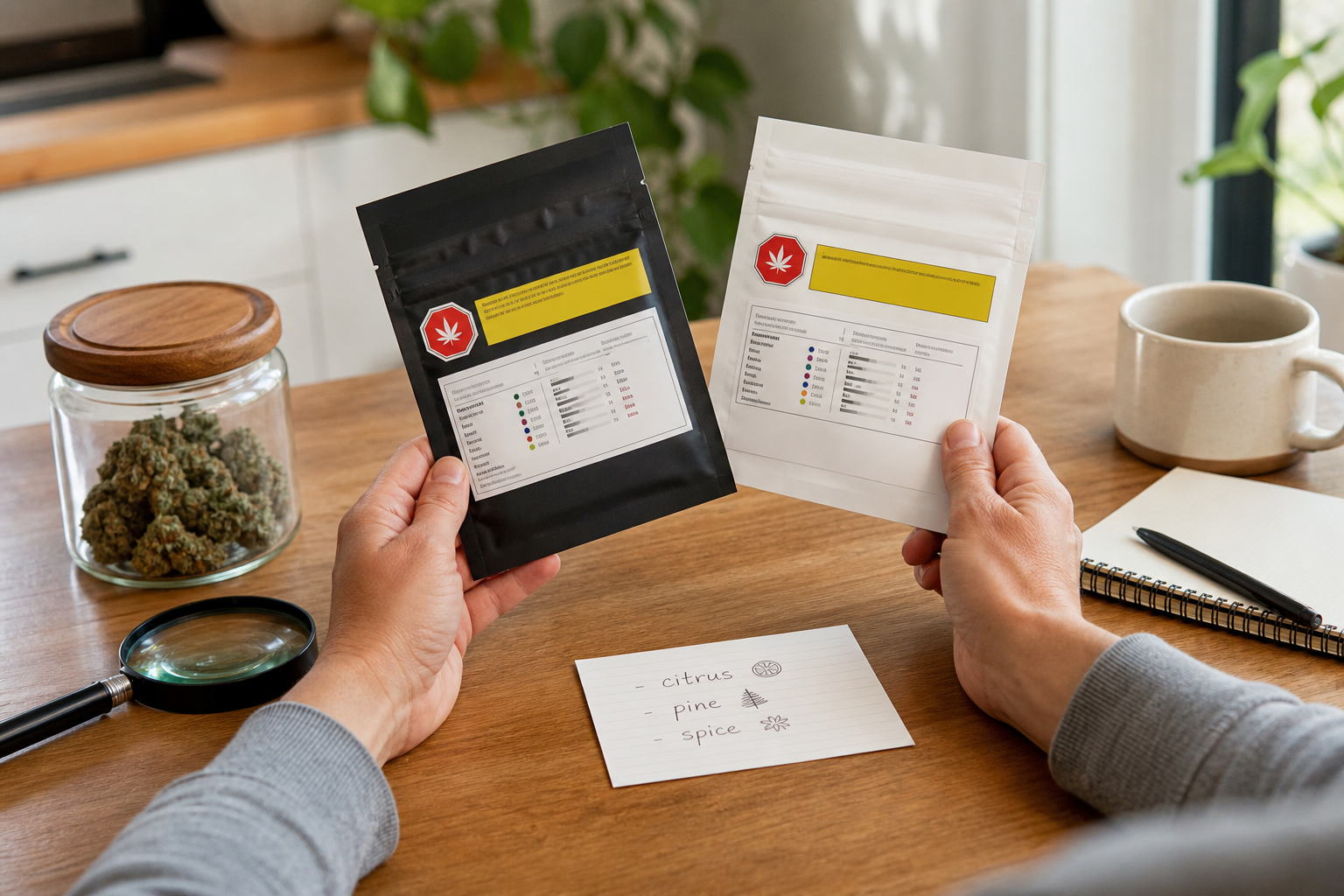
    Label basics THC, CBD, product class, lot number, packaged date, warning labels, and net weight or volume. The label is your starting point for strength, traceability, and freshness.
    Ingredients Cannabis extract, carrier or permitted formulation details, and any flavouring information shown. Vape liquids should not be a mystery blend.
    Hardware No leaks, cracks, burnt smell, loose centre pin, damaged mouthpiece, or discoloured liquid. Faulty hardware can overheat, leak, clog, or make dosing unpredictable.
    Use pattern Small puffs, wait between pulls, avoid mixing with alcohol, and do not drive. High-THC inhaled products can feel manageable until they suddenly do not.

    1. Confirm the source before the strain name

    The first question is not whether the cartridge is indica, sativa, live resin, distillate, full-spectrum, or terpene-rich. The first question is whether it came through a legal Canadian cannabis channel. In Canada, legal access depends on province or territory, but the practical point is simple: a cartridge should be traceable to a licensed producer and a legal retailer.

    A legal product should have standardized cannabis packaging and required label details. It should not be sold loose in a blank box, through a private message, from a menu that avoids licensing details, or with claims that sound more like a shortcut than a retailer. If you are unsure how to check a seller, our legal retailer checklist for buying cannabis in Canada covers the broader buying questions.

    Unregulated cartridges are especially risky because the user cannot easily see what is in the liquid or how the hardware was manufactured, filled, transported, or stored. A familiar brand name on a package is not proof by itself; counterfeit packaging exists in many consumer categories, and cannabis is no exception.

    2. Read the cannabis label, not just the front panel

    Vape packaging often leads with a strain name, flavour, terpene note, or THC percentage. Those details may be useful, but they are not enough. The label should tell you what product class it is, the amount of THC and CBD, how much product is in the cartridge, who produced it, when it was packaged, and which lot it came from.

    For a deeper walkthrough, use our guide to reading cannabis labels in Canada. For cartridges, pay extra attention to whether the THC is shown as total THC, active THC, or a percentage. A 90% THC cartridge is not a casual beginner product just because the device is small.

    Lot numbers and packaged dates matter because they create traceability. They also help you notice old stock. A cartridge that has been sitting in a hot drawer, car, or display case may leak, darken, clog, or taste harsh even if it was originally legal.

    3. Treat high THC as a real strength signal

    Many vape cartridges are cannabis concentrates. That means the THC level can be much higher than typical dried flower. The dose is not served in a neat edible-style piece, either. It depends on the device, battery voltage, puff length, oil viscosity, airflow, temperature, and how deeply a person inhales.

    That is why a cartridge can be deceptively easy to overuse. A few repeated pulls may feel routine until the effects stack. If you are new to inhaled cannabis or have a low tolerance, a high-THC cartridge is a poor first experiment. Start with lower strength, take fewer pulls, and wait before using more.

    For timing context, our guide to how long THC lasts in Canada explains the difference between short-term effects, residual impairment, and testing windows. The driving rule is simple regardless of format: do not drive or do safety-sensitive work after using cannabis.

    4. Check the hardware before attaching it

    A cartridge is both a cannabis product and a small piece of hardware. Before connecting it to a battery, look closely. The mouthpiece should be secure. The cartridge should not be cracked, leaking, sticky, or separating at the seams. The centre pin should not look pushed in or crooked. The liquid should not contain visible debris.

    A darker colour is not automatically proof that a cartridge is bad, because extracts vary. But sudden darkening, burnt odour, leaking oil, or a harsh scorched taste can suggest storage, voltage, age, or hardware problems. Do not try to rescue a cartridge that appears damaged. The small savings are not worth inhaling from a compromised device.

    Use the battery recommended for the cartridge style, keep voltage modest if the battery is adjustable, and avoid repeatedly firing the device to clear a clog. Overheating can change the experience and may increase unwanted byproducts. If a cartridge only works when forced, it is telling you something.

    5. Pause on additives, flavours, and mystery blends

    Canadian cannabis extracts are subject to composition requirements. Health Canada’s composition guide says cannabis extracts must not contain anything that may cause injury when used as intended or in a reasonably foreseeable way. The Cannabis Regulations also restrict certain ingredients in cannabis extracts, including specified prohibited substances and sugars or sweetening agents.

    That does not mean every legal vape ingredient is automatically something you want to inhale frequently. It means the label and legal framework give you a baseline for asking better questions. Look for clear ingredient information, avoid products that hide behind vague flavour claims, and be wary of anything that appears to be a homemade blend.

    Health Canada and public-health agencies have paid special attention to vaping-associated lung illness since the 2019 outbreak. The practical consumer lesson remains relevant: do not use vaping products from illegal or unregulated sources, and seek medical help promptly if breathing symptoms, chest pain, or other concerning symptoms appear after vaping.

    6. Store cartridges like cannabis, not like a gadget

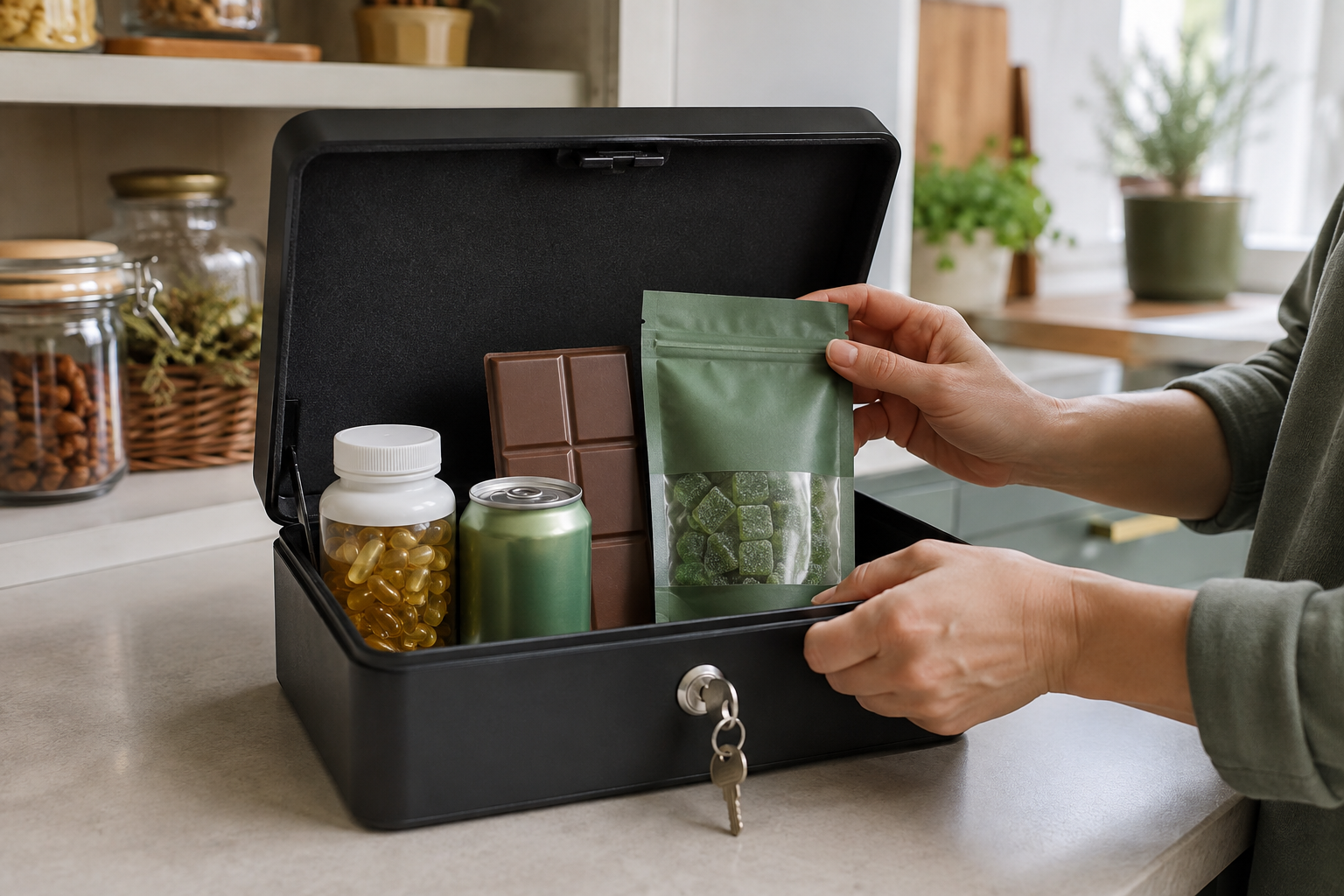
    Vape cartridges are easy to misplace because they are small. Store them upright, capped if possible, away from heat, direct sunlight, children, pets, and anyone who may mistake them for a nicotine device. Avoid leaving cartridges in a hot vehicle or pocket where pressure and temperature changes can cause leaks.

    Keep the package until the cartridge is finished. The package carries lot, product, and producer information you may need if there is a recall, adverse reaction, or quality complaint. If a cartridge tastes wrong or appears defective, stop using it and keep the product details rather than throwing away the only traceable information.

    Red flags that should stop the purchase

    • No legal retailer or licensed-source trail.
    • No standardized cannabis warning label or lot information.
    • Very high THC marketed as beginner-friendly.
    • Packaging that looks copied, misspelled, or inconsistent.
    • Cartridges sold loose, refilled, or without a sealed package.
    • Claims that the product is medical, therapeutic, or risk-free.
    • Unclear ingredients, mystery flavouring, or homemade oil.
    • Leaks, cracks, debris, burnt smell, or a damaged mouthpiece.
    • Pressure to order through social media, cash-only delivery, or disappearing menus.

    A practical pre-use checklist

    • Confirm the product came from a legal Canadian cannabis source.
    • Read THC and CBD amounts before attaching the cartridge.
    • Check packaged date, lot number, product class, and producer.
    • Inspect the cartridge for leaks, cracks, loose parts, or debris.
    • Use the right battery and avoid high-voltage experimentation.
    • Start with one small puff and wait before taking more.
    • Do not mix with alcohol or other impairing substances.
    • Do not drive, work, or handle safety-sensitive tasks afterward.
    • Store the cartridge and package securely when finished.

    Bottom line

    A vape cartridge is not just a strain name in a small tank. It is an inhaled cannabis extract, a piece of heating hardware, and a labelled product that should be traceable. The best checklist is boring on purpose: legal source, clear label, understandable strength, intact hardware, cautious use, and secure storage.

    If any part of that chain is missing, pause. Cannabis education is often about knowing when not to use a product, not just how to use one.

    Sources

  • Tinctures vs Edibles in Canada: Onset, Duration, and Dosing Basics

    Tinctures vs Edibles in Canada: Onset, Duration, and Dosing Basics

    Tinctures and edibles can look like the careful side of cannabis. There is a label, a measured amount, and no smoke. But they are not the same experience, and the difference matters most when you are trying to avoid taking too much THC.

    For a wider beginner overview of ingestible cannabis habits, see the edibles dosing and safety hub for Canada.

    In Canada, many products people casually call tinctures are sold as cannabis oils, oral sprays, or other ingestible extracts. Edibles include gummies, chocolates, baked goods, beverages, capsules, and other products meant to be swallowed and processed through digestion. Both can be useful formats for adults who choose to use cannabis, but both can also surprise people who expect an instant, easy-to-control effect.

    This guide compares tinctures, oils, capsules, beverages, and edibles from a practical Canadian label-reading perspective. It is educational only, not medical advice, and it does not recommend cannabis for any health condition.

    Quick answer

    The biggest difference is control. A measured cannabis oil or oral spray may make it easier to repeat the same amount, especially if the label clearly lists THC and CBD per millilitre or per activation. Edibles can be convenient, but one package may contain several servings, and the THC may be listed per unit, per package, or both.

    The biggest similarity is patience. If THC is swallowed, effects can take time to appear and may last much longer than expected. Health Canada advises people to start low and go slow, choose low-THC products, and wait to feel the effects before taking more. For edible cannabis, Health Canada points to products with 2.5 mg THC or less and says effects may be felt within 30 minutes to 2 hours, with full effects taking up to 4 hours.

    If you are brand new to cannabis formats, start with our broader guide to cannabis product types in Canada before comparing specific ingestible products.

    Tinctures vs edibles at a glance

    Question Tinctures, oils, and oral sprays Edibles, beverages, and capsules
    How they are usually labelled Often by ml, gram, or activation; some sprays list THC per pump. Often by unit and package; check whether the number applies to one piece or the whole package.
    Main planning advantage Measured amounts can be easier to repeat if the dropper or spray is clear. Convenient format; pre-portioned products can be simple when the serving is clear.
    Main caution Dropper markings can be confusing, and oils are still ingestible cannabis if swallowed. Delayed effects make second servings risky if you do not wait long enough.
    Best label detail to check Total THC/CBD per ml, per activation, or per measured dose. Total THC/CBD per unit and total package THC/CBD.
    Better beginner habit Measure once, write it down, and avoid changing products at the same time. Choose low THC, split only when practical, and wait before taking more.

    What counts as a tincture in Canada?

    In everyday cannabis talk, “tincture” often means a liquid cannabis product that is taken by mouth. In legal Canadian packaging, you may see terms like cannabis oil, oral spray, cannabis extract, or drops. Health Canada’s label guide lists cannabis extracts as a product class and includes oil/tinctures and vape liquids in that broader category. That classification matters because extracts can vary widely in concentration.

    For a consumer, the name is less important than the label math. Before using an oil, spray, or tincture-style product, find the amount of THC and CBD in the measured amount you plan to use. That may be listed per millilitre, per gram, per activation, or for the full package. If you cannot tell how much THC is in one measured amount, it is not a good product for careful dosing.

    Our label-reading guide explains the basics of THC, CBD, terpenes, lot dates, and package details on Canadian cannabis labels.

    What counts as an edible?

    Edible cannabis is a product meant to be eaten or drunk. Common examples include gummies, chocolates, cookies, baked goods, beverages, capsules, and some infused foods. Legal edibles in Canada have required packaging information, including THC and CBD amounts, ingredients, allergens where applicable, storage instructions, and warning labels.

    Edibles can be easy to underestimate because they look familiar. A gummy still has to be read as a cannabis product first and a snack second. The label may say 2.5 mg THC per unit, 10 mg THC per package, or both. Those are different planning details. If a package contains four pieces at 2.5 mg THC each, one piece and the full package are not the same dose.

    This is why edible timing deserves its own caution. Our guide to how long edibles take to kick in covers onset, peak, and common dose-stacking mistakes in more detail.

    Onset and duration: why patience matters

    Swallowed THC does not behave like a puff from a joint or vape. With inhaled cannabis, effects are usually felt faster. With swallowed cannabis, the product has to move through digestion and metabolism before the experience becomes clear.

    Health Canada says edible cannabis effects can be felt within 30 minutes to 2 hours and that it can take up to 4 hours to feel the full effects. The BC edible cannabis fact sheet gives similar practical cautions and notes that edible effects can last for hours, with residual effects lasting longer for some people.

    For tinctures and oils, timing depends on how the product is used, the formulation, the amount, food, metabolism, tolerance, and the product label instructions. If it is swallowed, treat it with edible-like patience. Do not assume a liquid format will be immediately controllable just because it came with a dropper.

    How to read the dose before using either format

    The safest comparison starts with the same question: how much THC and CBD are in the amount you are about to use?

    • Per unit: common on gummies, capsules, chocolates, and beverages. Example: 2.5 mg THC per piece.
    • Total package amount: useful for checking the whole container, but not enough by itself if there are multiple servings.
    • Per ml or gram: common on oils and some extracts. You still need to know how much liquid you are measuring.
    • Per activation: common on oral sprays. Health Canada’s label example notes that an oral spray may list THC per activation.
    • CBD amount: important context, but CBD does not erase THC impairment or make driving safe.

    If the math is annoying, slow down. A product that is hard to interpret is a poor fit for a careful first trial.

    A simple first-use checklist

    • Use a legal, labelled product so THC and CBD amounts are available.
    • Choose one format only. Do not test an edible and a new oil on the same day.
    • Pick a low-THC amount. Health Canada points to 2.5 mg THC or less for edible products.
    • Check whether the label is per unit, per activation, per ml, or whole package.
    • Use the product in a familiar setting with no driving or safety-sensitive tasks planned.
    • Wait long enough before considering more, especially with swallowed products.
    • Write down product, amount, time, food, effects, and duration.
    • Store leftovers securely and away from children, pets, and anyone who might mistake them for regular food.

    When tinctures may be a better fit

    A tincture-style oil or oral spray may be a better fit when the label is clear, the measuring tool is consistent, and you want to repeat a small amount with less guesswork. This is especially true when the product lists THC and CBD per activation or per measured volume and the dropper markings are easy to read.

    That does not make oils risk-free. A high-THC oil can still be too strong. A large dropper can still be misread. A person can still take more too soon. And if the oil is swallowed, the delayed timing can still lead to the same problem people run into with edibles: assuming nothing is happening before the full effect has arrived.

    When edibles may be a better fit

    Edibles may be a better fit when the product is clearly portioned, low in THC, and easy to store safely. A low-dose gummy or beverage can be simpler than a dropper if the label clearly states the amount per unit and the serving is not ambiguous.

    The tradeoff is that edibles are easy to normalize. They may look like ordinary food or candy, and that increases the importance of secure storage. They can also be easier to overconsume if the flavour encourages snacking or the person becomes impatient while waiting.

    Common mistakes to avoid

    • Comparing products by package size instead of THC per serving.
    • Using a dropper without knowing how many ml it contains.
    • Assuming a liquid cannabis product is automatically faster or lighter.
    • Taking a second edible before the first one has had enough time.
    • Mixing edible cannabis with alcohol and then blaming the dose alone.
    • Using cannabis before driving, childcare, work, tools, or safety-sensitive responsibilities.
    • Leaving edibles or oils where children, pets, guests, or roommates could access them.

    Bottom line

    Tinctures and edibles are not better or worse by default. The better choice is the one you can read, measure, wait for, and store safely. For many Canadian adults, that means choosing legal labelled products, starting with low THC, checking CBD as context, avoiding unclear serving math, and leaving enough time for delayed effects.

    If you want a careful rule, use this one: never take more until you understand what the first amount did. With ingestible cannabis, patience is not optional. It is the main safety tool.

    Sources

  • How to Microdose Cannabis in Canada: A Practical Low-Dose Guide

    How to Microdose Cannabis in Canada: A Practical Low-Dose Guide

    Microdosing cannabis sounds precise, but the useful version is simple: use less THC than you think you need, give it enough time, and pay attention to whether the amount actually fits your day. It is not a hack, a medical treatment, or a promise that cannabis will improve your mood, sleep, creativity, pain, anxiety, or focus.

    For edible-specific planning, storage, and waiting windows, pair this low-dose article with our edibles dosing and safety hub.

    For Canadian adults who already choose to use cannabis, microdosing is best understood as a lower-dose planning habit. It can help reduce the chance of taking too much, especially with edibles, oils, beverages, vapes, or high-THC flower. The goal is not to feel nothing at all. The goal is to avoid accidentally turning a small experiment into a long, uncomfortable, impairing experience.

    This guide explains how to think about low-dose cannabis in Canada, how to read THC labels, what to track, when to wait, and when microdosing is the wrong fit. It is educational only and not medical advice.

    Quick answer

    Microdosing cannabis usually means choosing a deliberately low THC amount and increasing only slowly, if at all. In Canada, Health Canada’s lower-risk advice says to start low and go slow, choose low-THC products, and wait to feel the effects before taking more. For edibles, Health Canada points readers toward products with 2.5 mg THC or less and notes that full effects can take up to 4 hours. For inhaled cannabis, it suggests 1 or 2 puffs from products with 10% THC or less and waiting because full effects can take up to 30 minutes.

    Those numbers are planning references, not personal guarantees. Your response can change based on product type, THC amount, CBD amount, tolerance, food, sleep, stress, alcohol, medication, and setting.

    Microdosing at a glance

    Choice Lower-dose starting idea Why it matters
    Edibles, capsules, oils, beverages Look for 2.5 mg THC or less per unit when available Edibles can take hours to fully show themselves, so dose stacking is a common mistake.
    Smoking or vaping flower 1 or 2 small puffs from a low-THC product Inhaled cannabis acts faster, but repeated puffs can still add up.
    Vape cartridges and concentrates Use extra caution or avoid if new or occasional Extracts can be highly concentrated and easy to overuse.
    Product balance Consider products with equal or higher CBD than THC CBD may reduce some THC effects, but it does not erase impairment.
    Tracking Record product, THC amount, time, setting, and effects A short log helps you avoid repeating uncomfortable mistakes.

    What microdosing is, and what it is not

    Microdosing is a dose strategy. It is not proof that cannabis is safe for you, and it is not a way to make driving, work, childcare, or safety-sensitive tasks compatible with cannabis use.

    A useful microdose should be small enough that you can clearly observe the effect without chasing intensity. Some people may feel relaxed, sleepy, hungry, social, distracted, anxious, or nothing obvious. A low dose can still impair judgment, attention, coordination, and reaction time, especially if you are sensitive to THC or combine cannabis with alcohol or other substances.

    If you are new to product formats, start with our broader guide to cannabis product types in Canada. Microdosing is easier to understand once you know the difference between flower, edibles, oils, vapes, beverages, and extracts.

    Why Canada’s legal labels matter

    Legal Canadian cannabis products are packaged with required information such as THC, CBD, warning labels, lot or packaging details, and product-specific instructions. That does not make every product suitable, but it gives you a clearer starting point than an unlabelled edible or informal-market vape.

    For microdosing, the key label question is not “how strong is the package?” It is “how much THC is in the amount I am about to use?” A package may contain multiple units. A bottle of oil may list THC per activation, per gram, per millilitre, or total package amount. A flower label may use percent THC or mg/g. If the label makes you unsure, pause before using it.

    Our guide to reading cannabis labels in Canada explains how to check THC, CBD, terpenes, package dates, and storage details.

    Step-by-step: a cautious microdosing approach

    1. Pick one product format. Do not test a new edible, vape, oil, and flower on the same day.
    2. Choose a low-THC product. If you are inexperienced, avoid high-THC concentrates and strong cartridges.
    3. Read the serving amount. Find THC per unit or per measured amount, not just total package THC.
    4. Use it in a safe setting. Stay somewhere familiar, with no driving or important tasks planned.
    5. Take one small amount. Do not chase an immediate result.
    6. Wait based on the format. Inhaled cannabis can build over minutes; edibles can take hours.
    7. Write down what happened. Record product name, THC amount, CBD amount, time, food, setting, and effects.
    8. Change only one thing next time. If you adjust, change the amount, product, or setting separately so you learn something useful.

    This is intentionally boring. Boring is good when the alternative is accidentally taking too much THC.

    Edibles: the microdosing format that needs the most patience

    Edibles are where many low-dose plans go wrong. A person takes a small amount, feels little after 45 minutes, takes more, and then both amounts arrive later. Health Canada warns that edible effects can take time to appear and that full effects can take up to 4 hours. The BC edible safety fact sheet also points to 2.5 mg THC as a low-dose way to learn individual response and advises waiting before taking another amount.

    If your edible is 10 mg THC and you are aiming low, one whole unit may not be a microdose for you. Check whether the product is scored, whether the label describes one unit or the whole package, and whether dividing it is practical. Homemade edibles are especially poor microdosing tools because the THC can be unevenly distributed and the actual amount may be unclear.

    For timing details, read How Long Do Edibles Take to Kick In? before treating an edible as “not working.”

    Inhaled cannabis: faster does not mean risk-free

    Smoking and vaping usually act faster than edibles, which can make small adjustments feel easier. But puff size, inhalation depth, product potency, device temperature, cartridge strength, and tolerance can all change the experience. A low-dose plan can become a high-dose session if you keep taking small puffs without waiting.

    Health Canada’s lower-risk guidance suggests starting with 1 or 2 puffs of a vape or joint with 10% THC or less, then waiting. It also cautions new or occasional users to avoid high-concentration extracts such as hash, kief, wax, or shatter because higher THC can increase impairment and adverse effects.

    If you are choosing between inhaled formats, read our comparison of vaping vs smoking cannabis in Canada.

    What to track in a simple cannabis log

    A short note after each low-dose experiment can prevent repeat mistakes. You do not need a complicated spreadsheet. Track the basics:

    • Product name and legal source
    • Format: edible, oil, beverage, flower, vape, or other
    • THC amount and CBD amount
    • Time used and time effects became noticeable
    • Food, alcohol, caffeine, medication, sleep, and stress context
    • Effects you liked, disliked, or found surprising
    • Whether you felt impaired longer than expected
    • Whether you would repeat, lower, skip, or change the format next time

    This turns microdosing from guessing into learning. It also helps you notice if cannabis is becoming more frequent, less intentional, or harder to skip.

    When microdosing is the wrong fit

    A lower dose is not always a good idea. Skip cannabis, or talk with a qualified professional first, if you are pregnant, breastfeeding, under the legal age, using cannabis because of a health condition, taking medication that could interact, dealing with a history of psychosis or serious mental health symptoms, or responsible for driving, tools, patients, children, or safety-sensitive work.

    Microdosing is also the wrong frame if you are trying to stay “technically functional” while impaired. Cannabis can affect attention, memory, coordination, reaction time, and decision-making. Low dose does not mean no impairment.

    If you notice you need cannabis more often to get the same effect, feel irritable when you skip it, use more than planned, or keep using despite problems, that is not a microdosing issue. That is a signal to step back and consider support.

    Common mistakes

    • Starting with a product that is too strong for the plan.
    • Reading total package THC instead of THC per serving.
    • Taking more edible cannabis before the first amount has peaked.
    • Using high-THC vapes or concentrates as if they are beginner products.
    • Mixing cannabis with alcohol and then blaming the cannabis dose alone.
    • Testing cannabis before driving, work, childcare, or social pressure.
    • Changing product, dose, meal, and setting all at once.
    • Treating CBD as a guarantee against impairment.

    Bottom line

    Microdosing cannabis is not magic. It is a cautious way to use less THC, wait longer, and learn how a product affects you before making bigger decisions. In Canada, the practical starting point is to use legal labelled products, choose low THC, consider CBD balance, avoid high-potency extracts if you are new or occasional, and never use a countdown as permission to drive.

    The best microdose may be no cannabis at all on days when you have responsibilities, uncertainty, or a bad setting. When you do choose to use cannabis, keep the experiment small, slow, and honest.

    Sources

  • How Long Do Edibles Take to Kick In? A Canada Guide

    How Long Do Edibles Take to Kick In? A Canada Guide

    Edibles can feel confusing because nothing happens right away. That quiet first hour is exactly where many people get into trouble. They take a gummy, chocolate, capsule, oil, or drink, decide it “isn’t working,” take more, and then both servings arrive at once.

    If you want the broader beginner map before focusing on onset, use our edibles dosing and safety guide first.

    The simple answer: cannabis edibles often take about 30 minutes to 2 hours to start being felt, can peak several hours after use, and may last much longer than inhaled cannabis. Some people feel effects sooner. Others need more time. The safest habit is to treat the waiting window as part of the dose, not as dead time.

    This Canada-aware guide explains edible onset, peak, duration, label checks, and practical waiting rules. It is not medical advice. If cannabis could affect your medication, health condition, pregnancy, breastfeeding, work, driving, or safety responsibilities, talk with a qualified professional before using it.

    Quick answer

    Most adults should expect edible cannabis to take longer than smoking or vaping because it has to be digested and processed before the effects become clear. Ontario’s public health guidance says edible cannabis can affect people for longer periods of time and advises people to start low and go slow. The Canadian Centre on Substance Use and Addiction also warns that the intoxicating effects of edibles may not appear for about 30 minutes to 2 hours.

    If you are new to edibles, returning after a break, changing product types, or trying a different brand, do not use a second serving just because the first one feels subtle at 45 minutes. Use a low amount, wait long enough, and plan your evening so you are not pressured to drive, work, parent alone, or make important decisions while impaired.

    For dose planning, use our separate guide to edible dosing in Canada. This article focuses on timing.

    If you are deciding between a gummy, drink, capsule, oil, or oral spray, our tinctures vs edibles guide compares the practical label-reading and waiting-window differences before you choose a format.

    If you are intentionally choosing a very small edible amount, pair this timing guide with our practical guide to microdosing cannabis in Canada, which covers low-dose THC planning and tracking.

    Edible timing at a glance

    Stage Typical window What to do
    Before use 0 minutes Read THC per unit, CBD, total package amount, serving size, and warnings.
    Early waiting period 0 to 30 minutes Do not judge the full effect yet. Avoid stacking more THC.
    Possible onset 30 minutes to 2 hours Effects may begin gradually, especially with gummies, baked goods, capsules, oils, and drinks.
    Stronger effects or peak 2 to 4 hours, sometimes longer Stay put, avoid driving, and do not mix with alcohol or other substances.
    Comedown 4 to 8 hours or more Effects may fade slowly. Some people feel tired or foggy afterward.
    Next day varies If you still feel impaired, do not drive or operate equipment.

    These are practical planning ranges, not promises. Product type, food, body size, individual metabolism, tolerance, THC amount, CBD amount, alcohol, sleep, and setting can all change the experience.

    Why edibles take longer than smoking or vaping

    When cannabis is smoked or vaped, cannabinoids reach the bloodstream quickly through the lungs. Edibles follow a different route. They move through digestion first, then the liver helps process THC before effects become obvious.

    That delayed path is why edibles can feel uneventful at first and then suddenly too strong later. It is also why “I do not feel anything yet” is a poor reason to take more. The product may still be working its way through your body.

    Drinks and some newer formats may be marketed as faster acting, but you should still be cautious the first time you use them. Marketing language is not a guarantee of how your body will respond. Treat every unfamiliar edible as a new product until you know its timing for you.

    What affects onset time?

    Several ordinary details can change how fast an edible feels noticeable:

    • Product format: gummies, chocolates, baked goods, oils, capsules, beverages, and lozenges do not always behave the same.
    • THC amount: more THC can feel stronger, but it does not make timing perfectly predictable.
    • Food: an empty stomach and a heavy meal can both change the experience in ways that are hard to predict.
    • Tolerance: frequent consumers may notice effects differently than beginners.
    • Individual metabolism: people process cannabinoids at different speeds.
    • CBD and other ingredients: CBD does not erase THC impairment, but product balance can affect how the experience feels.
    • Alcohol or other substances: mixing can make effects harder to judge and can increase risk.
    • Sleep, stress, and setting: being tired, anxious, or uncomfortable can make an edible feel worse.

    If you are comparing two legal products, do not compare only the front label or flavour. Read the actual THC per unit, total THC, CBD, package size, ingredients, and warnings. Our guide to reading cannabis labels in Canada explains what to look for.

    How long should you wait before taking more?

    The reader-first answer is: longer than your impatient brain wants to wait. A common safer-use approach is to start with a low amount and wait at least 2 hours before considering more. Some people should wait even longer, especially if they are new, sensitive to THC, using a higher-dose product, or trying a product type they do not know.

    The point is not to win a tolerance contest. The point is to avoid stacking doses before the first serving has finished arriving.

    If you decide to increase on a different day, change only one variable at a time. Do not change the product, dose, meal, alcohol, setting, and timing all at once. You will have no useful way to know what caused the result.

    Edibles can last longer than expected

    Edibles are often a poor fit for “I have a spare hour.” Effects can last several hours, and some people feel lingering tiredness, fogginess, or slowed reaction time after the main high fades. Health Canada notes that cannabis can affect attention, coordination, judgment, and reaction time. That matters for driving, tools, childcare, cooking, stairs, swimming, and workplace tasks.

    Plan as if the edible may take up most of the evening. Keep your calendar clear. Set up food, water, entertainment, a comfortable place to sit, and a way home before using cannabis. Do not leave transportation decisions for later.

    For a broader look at effects, impairment, tests, and timing, read How Long Does THC Last?

    A practical first-time checklist

    Before using an edible, check the basics:

    • Buy only from a legal, authorized source.
    • Read THC per unit, CBD per unit, total package THC, and serving size.
    • Choose a low amount, especially if you are new or returning after a break.
    • Use it at home or somewhere safe and familiar.
    • Do not combine with alcohol or other substances.
    • Keep the package so you can check what you took.
    • Put the rest away before effects start.
    • Keep edibles locked away from children, pets, guests, and anyone who should not access them.
    • Do not drive, cycle in traffic, use tools, or handle safety-sensitive work after using.
    • Tell a trusted adult what you took if you are nervous or inexperienced.

    If the product looks like regular candy, chocolate, baked goods, or a drink, storage matters even more. Use original packaging when practical and avoid leaving edibles in kitchens, cars, bags, or shared spaces. Our cannabis storage guide covers simple storage habits.

    What if you took too much?

    Taking too much edible cannabis can feel frightening, but panic can make the experience worse. Move to a calm place, sit or lie down safely, sip water, avoid alcohol, avoid taking more cannabis, and remind yourself that the feeling should pass with time.

    Ask a trusted sober adult to stay nearby if possible. Avoid driving yourself anywhere. If symptoms feel severe, unusual, or unsafe, contact local poison control, call emergency services, or seek medical help. Do that especially for chest pain, trouble breathing, fainting, severe confusion, repeated vomiting, injury, or if a child, pet, or someone who did not intend to consume cannabis may have eaten an edible.

    Do not treat internet reassurance as a substitute for help when something feels wrong.

    Common timing mistakes

    The most common mistakes are ordinary:

    • Taking more at 30 to 60 minutes because the first serving feels mild.
    • Forgetting that one package can contain multiple servings.
    • Comparing edibles to smoking or vaping timing.
    • Using edibles before plans that require driving or focus.
    • Eating homemade or informal products with unclear THC.
    • Ignoring CBD, unit size, and total package amount.
    • Leaving the rest of the package within easy reach after the first serving.
    • Trying a new edible while drinking alcohol.

    These mistakes are avoidable. Slow timing is not a flaw in the edible; it is part of how the product works.

    Are legal Canadian edibles safer?

    Legal Canadian edibles are regulated, labelled, and sold through authorized channels. That helps with package information, warnings, child-resistant packaging, and THC limits. It does not mean every legal edible is right for every person or that a legal product cannot be overused.

    The best use of the legal system is to read the label and make a deliberate choice. If a product’s dose, format, or ingredients are unclear to you, pick something simpler or skip it.

    If you are still deciding whether edibles, oils, beverages, flower, or vapes fit your situation, start with Cannabis 101: product types in Canada.

    Bottom line

    Edibles require patience. Expect a delayed onset, avoid taking more too soon, and plan around a longer experience than smoking or vaping. The safer pattern is simple: buy legal, read the label, start low, wait long enough, store the rest securely, and do not drive.

    The edible has not failed just because the first hour is quiet. In many cases, that first hour is the exact time to do nothing.

    Sources

  • Buying Cannabis in Canada: Legal Retailer Checklist

    Buying Cannabis in Canada: Legal Retailer Checklist

    Buying cannabis in Canada should feel less mysterious than it often does. Legalization created a regulated adult-use system, but it did not make every store, website, delivery menu, package, or product claim equally trustworthy.

    The practical question for most adults is not just “Can I buy cannabis?” It is “Am I buying from the right channel, in the right province, with a product I can understand, store safely, and use without creating avoidable problems?”

    This guide is a buyer’s checklist for Canadian adults. It is not legal advice or medical advice. It is a plain-language way to check the basics before you spend money, especially if you are new to cannabis, returning after a long break, travelling within Canada, or trying to compare legal products without getting pulled around by THC percentages and marketing language.

    Quick answer

    In Canada, adults should buy cannabis only from retailers authorized by the province or territory where they are buying. Health Canada’s retailer guidance says legal products are sold through provincial and territorial authorized channels, except for medically authorized consumers who buy directly from federally licensed sellers. Legal products should also carry required packaging, warning information, and, for products over 0.3% THC, the correct provincial or territorial excise stamp.

    If you are still learning the basics, start with our Start Here guide and our overview of legal cannabis in Canada. Then use the checklist below before placing an order or walking to the counter.

    For the full beginner buying path, including legal basics, label reading, product types, and storage, visit the Buying Cannabis in Canada hub.

    The buyer checklist

    Checkpoint What to look for Why it matters
    Legal channel Use the official provincial or territorial retailer list, licensed store, or government online store. A professional-looking website is not proof that the seller is legal.
    Legal age Check the age in the province or territory where you are buying or visiting. Most jurisdictions list 19, Alberta lists 18, and Quebec lists 21 in Health Canada’s retailer summary.
    Possession amount Stay within the public possession limit and remember equivalency rules for non-flower products. Concentrates, edibles, oils, and flower are not always compared by package size alone.
    Packaging Look for required plain packaging, warning information, product details, and child-resistant features. Unlabelled or repackaged products create safety and quality uncertainty.
    Excise stamp For products above 0.3% THC, check that the stamp matches the province or territory. The stamp is one visible sign that a product came through the regulated system.
    Label clarity Review THC, CBD, units, package size, lot details, and dates before buying. Good buying decisions start with what is actually in the package.
    Use plan Plan storage, timing, transportation, and driving before using cannabis. Legal purchase does not remove impairment, storage, or travel risks.

    Check the retailer before the product

    The first buying decision is the seller. Health Canada is clear that adults are responsible for knowing what is legal in the province or territory where they live or visit. Retail systems differ: some places use government stores, some use private licensed stores, some allow online sales through government channels, and some allow private online sales.

    Ontario is a useful example because it has private licensed in-person stores and a government-operated online store. Ontario’s public cannabis page also points adults toward the province’s legal framework, the Ontario Cannabis Store, and the Alcohol and Gaming Commission of Ontario’s licensed retail information. If you are in a different province, use that province’s official list instead of assuming Ontario’s system applies.

    Be cautious with sellers that rely on urgency, vague “same-day” claims, social-media ordering, cash-only delivery, medical-sounding promises, or menus that avoid saying who licensed the retailer. Those details do not automatically prove a site is illegal, but they are reasons to pause and verify before buying.

    Know your province before you buy

    Canada has a federal cannabis framework, but provincial and territorial details shape the everyday buying experience. Minimum age, retail model, online purchasing rules, public use rules, and local restrictions can all change when you cross a provincial border.

    Do not rely on a national habit like “it is legal in Canada” as your whole rulebook. Check the rules where you are standing. This matters for visitors, students, workers on short assignments, and anyone ordering online while travelling. It also matters if you live near a provincial boundary and shop in more than one jurisdiction.

    Public possession limits are also not a shopping recommendation. A legal limit is not a suggestion to buy that much, carry that much, or keep that much accessible at home. Buy what you can store responsibly and understand clearly.

    Read the label before chasing THC

    THC percentage gets the most attention, but it is not the whole product. A high THC number does not guarantee a better experience, and a low number does not automatically mean the product is weak in every format. Edibles, oils, capsules, beverages, dried flower, pre-rolls, vapes, and concentrates all present potency differently.

    Before buying, look for total THC and CBD, amount per unit, total package amount, product format, lot number, packaging date, expiry or best-before information where listed, ingredients, and warnings. If the label is confusing, slow down. The best cannabis product for you is not just the strongest one; it is the one you can understand and use deliberately.

    For a deeper walkthrough, use our guide to reading cannabis labels in Canada. It explains how THC, CBD, terpenes, lot details, and packaging dates fit into a real purchase.

    Online ordering and delivery red flags

    Online cannabis shopping can be legal, but the legal path depends on the province or territory. The safest habit is to begin from an official government or regulator page, then follow the listed retailer or store link from there. Search results, ads, and social posts can put unverified sellers beside legitimate ones.

    Red flags include missing licence information, no connection to an official retailer list, no clear age verification, no required product warnings, no excise-stamp information, unusually broad health claims, unclear return or privacy policies, and products that appear to be repackaged or homemade. Be especially cautious with vape cartridges and concentrates from unverified sources because the product and hardware are harder to evaluate by appearance alone.

    Keep a record of where you bought the product, especially for online orders. A confirmation email, order number, store name, and product lot details can help if you later need to check a recall, report a concern, or understand what you actually consumed.

    If a seller’s main pitch is that it is cheaper, faster, stronger, and easier than the regulated system, that is not a reason to skip verification. It is a reason to check harder.

    Plan storage before checkout

    Safe storage is part of buying. Cannabis should be kept away from children, pets, visitors, and anyone who should not access it. Edibles deserve extra care because they can resemble regular food, and a single package can contain multiple servings.

    Keep products in their original packaging when practical, especially if you need the label later. Store flower away from excess heat, light, air, and moisture. Do not leave cannabis loose in vehicles, bags, shared kitchens, or places where someone else might mistake it for something harmless. Our cannabis storage guide covers simple ways to keep flower fresher without turning storage into a complicated hobby.

    Have a use plan, not just a shopping list

    Buying legally does not make cannabis risk-free. Health Canada notes that cannabis can affect attention, coordination, judgment, and reaction time, and advises people to lower risk by starting low and going slow. That guidance is especially important with edibles and beverages because onset can be delayed and overconsumption can happen when someone takes more too soon.

    Plan your timing, setting, and ride before using cannabis. Do not drive after use. Avoid mixing cannabis with alcohol or other substances when you do not know how you respond. If you are pregnant, breastfeeding, have a personal or family history of mental health concerns, take medications, or have a medical condition, speak with a qualified professional before using cannabis.

    If you are unsure what format fits your situation, our guide to choosing cannabis product types in Canada is a better starting point than a store’s bestseller list.

    What to avoid

    • Buying from a seller you cannot match to an official authorized retailer list.
    • Choosing only by the highest THC number.
    • Ignoring package size, units, or THC per serving.
    • Assuming a delivery website is legal because it looks polished.
    • Taking cannabis across an international border.
    • Driving because you “feel fine.”
    • Removing products from labelled packaging and then forgetting what they are.
    • Buying more than you can store securely.

    Bottom line

    The best cannabis purchase is the one you can verify, understand, store safely, and use responsibly. In Canada, that starts with authorized retailers and continues with careful label reading, realistic potency expectations, safer storage, and a plan that does not involve driving or guessing.

    Legal cannabis is a regulated system. Treating it that way protects your money, lowers avoidable risk, and makes the buying experience calmer for beginners and experienced consumers alike.

    Sources

  • Legal Cannabis in Canada 2026: What Adults Should Know

    Legal Cannabis in Canada 2026: What Adults Should Know

    Legal cannabis in Canada is simple in one way and easy to misunderstand in another. The simple part: adult-use cannabis is legal under a federal framework. The part people miss: provinces, territories, municipalities, landlords, employers, and border rules can still change what is allowed in a real-life situation.

    That matters because many cannabis mistakes are not about whether legalization exists. They are about buying from the wrong source, assuming every province has the same age rules, carrying cannabis into the wrong place, driving after use, travelling across a border, or treating a workplace policy like it does not apply.

    This guide explains the 2026 basics for Canadian adults in plain language. It is not legal advice. If a cannabis issue could affect your job, housing, licence, immigration status, travel, court matter, or health, get advice from the right professional or government source.

    Quick answer

    Canada’s Cannabis Act framework allows adults, subject to provincial and territorial restrictions, to possess up to 30 grams of legal dried cannabis or equivalent in public, share up to 30 grams with other adults, buy from authorized retailers, and grow up to four plants per residence for personal use where local rules allow it.

    But “legal in Canada” does not mean “same everywhere.” Provinces and territories can increase the minimum age, lower possession limits, add rules for home growing, restrict where cannabis can be used, and control how legal retail works. Health Canada also reminds consumers that legal cannabis is sold through provincial or territorial authorized retailers, with specific packaging and excise-stamp rules.

    Federal vs provincial rules

    Rule area Federal baseline Province, territory, or local layer
    Adult possession Federal adult public possession limit is generally 30 grams dried cannabis or equivalent Some jurisdictions can set tighter limits or extra restrictions
    Minimum age Federal framework starts at 18+ Most provinces and territories set 19; Alberta is 18 and Quebec is 21
    Retail access Legal sale is controlled through the regulated system Each province or territory decides public, private, in-person, online, or mixed retail models
    Home growing Up to four plants per residence under the federal framework Local rules may restrict or prohibit growing, and housing rules may also matter
    Public use Not a single national permission slip Smoking, vaping, parks, rental housing, campuses, hotels, and event spaces can all have added rules
    Driving Impaired driving remains illegal Provincial road safety penalties and licence consequences may also apply

    The practical habit is to check two levels: what Canada permits federally and what the province or territory permits where you are standing. If you are visiting another province, use the rules of the place you are visiting, not the rules you remember from home.

    Legal age and public possession by province

    Health Canada’s provincial and territorial retailer page summarizes legal age, authorized buying channels, and public possession limits. As of the saved June 12, 2026 source snapshot used for this article, the broad public possession limit listed for provinces and territories is 30 grams of dried cannabis or equivalent, but legal age differs.

    Province or territory Legal age listed by Health Canada Public possession limit listed
    Alberta 18 30 grams dried cannabis or equivalent
    British Columbia 19 30 grams dried cannabis or equivalent
    Manitoba 19 30 grams dried cannabis or equivalent
    New Brunswick 19 30 grams dried cannabis or equivalent
    Newfoundland and Labrador 19 30 grams dried cannabis or equivalent
    Northwest Territories 19 30 grams dried cannabis or equivalent
    Nova Scotia 19 30 grams dried cannabis or equivalent
    Nunavut 19 30 grams dried cannabis or equivalent
    Ontario 19 30 grams dried cannabis or equivalent
    Prince Edward Island 19 30 grams dried cannabis or equivalent
    Quebec 21 30 grams dried cannabis or equivalent
    Saskatchewan 19 30 grams dried cannabis or equivalent
    Yukon 19 30 grams dried cannabis or equivalent

    Use this as a starting point, not a substitute for checking local rules. Retail models change, municipal bylaws can matter, and private spaces can have stricter policies than the law requires.

    Buying legally in Canada

    The safest buying rule is boring: use the official legal channel for the province or territory you are in. Health Canada says legal cannabis products are sold through retailers authorized by provincial and territorial governments, with an exception for people who are medically authorized to buy directly from a federally licensed seller.

    Legal products should have consumer information, required warnings, and an excise stamp for the province or territory, except for products with less than 0.3% THC. The stamp matters because it is one of the visible signs that a product came through the regulated system.

    Illegal or unverified sellers can look polished online. A nice website, a menu, a fast checkout, or the phrase “dispensary” does not prove a retailer is legal. Health Canada lists warning signs such as no federal licence or provincial authorization, missing excise stamp, no required warning messages, and claims that sound like medical promises.

    For a more practical pre-purchase workflow, use our legal retailer checklist for buying cannabis in Canada before ordering online or walking to the counter.

    For the broader beginner route through legal sources, labels, red flags, and storage, use our Buying Cannabis in Canada hub.

    Legal retailer checklist

    • Check the province or territory’s official authorized retailer list before buying.
    • Look for required cannabis packaging, warning symbol, and consumer information.
    • Check for the correct provincial or territorial excise stamp where required.
    • Avoid products that make disease-treatment, cure, or guaranteed-effect claims.
    • Be cautious with unlabelled extracts, unusually cheap products, refilled vape cartridges, or cash-only informal delivery.
    • Do not buy for someone under the legal age or share cannabis with youth.
    • Store products away from children, pets, guests, and anyone who should not access them.

    If you are new to labels, start with The Weed Journal’s guide to reading cannabis labels in Canada. It explains THC, CBD, lot details, packaging dates, and the difference between useful label information and marketing noise.

    Possession and “equivalents”

    The public possession limit is usually described as 30 grams of dried cannabis or equivalent. That last phrase matters. Cannabis is sold as dried flower, edibles, oils, capsules, concentrates, beverages, seeds, and plants, so the law uses equivalencies to compare formats.

    Do not assume that a small package is automatically under the legal possession limit. Concentrates and non-dried products can be treated differently under equivalency rules. If you are carrying multiple product types, especially while travelling within Canada, check the current government equivalency guidance rather than guessing.

    Also remember that public possession is not the same as use. You might be allowed to possess legal cannabis but still not be allowed to smoke, vape, or consume it in a certain place.

    Home growing is not the same everywhere

    The federal framework allows up to four cannabis plants per residence for personal use, from licensed seed or seedlings, subject to provincial and territorial restrictions. The phrase “per residence” is important. It does not mean four plants per adult.

    Local rules can be stricter, and private rules can matter too. A condo board, rental agreement, insurance policy, or municipal bylaw may affect what you can do even when federal law sounds permissive. Growing also raises practical safety issues: odour, humidity, electrical load, mould, fire risk, pests, and secure access.

    If you cannot keep plants secure from children, pets, guests, or theft, home growing is a poor fit. Legal permission is only one part of responsible use.

    Driving and cannabis

    Legal cannabis did not make impaired driving legal. Cannabis can affect attention, coordination, reaction time, judgment, and risk perception. The difficult part is that impairment is not controlled by a simple stopwatch. Dose, product type, tolerance, food, sleep, alcohol, and individual response all matter.

    Edibles deserve special caution because they can take a long time to peak and may last into the next day. Inhaled cannabis acts faster, but fast onset does not mean fast recovery for every person. If timing is your main question, read our guide to how long THC lasts in Canada.

    The practical rule is simple: plan the ride before using cannabis. Do not wait until after use to decide whether you are fine to drive.

    Travel within Canada

    Domestic travel is not automatically a problem, but it is still easy to make mistakes. You need to follow the law where you are departing, where you are arriving, and where you are using or carrying cannabis. If you fly or travel with cannabis, keep it legal, sealed when practical, clearly labelled, and within the possession limit.

    Do not use domestic travel as a reason to carry more than you need. Keep products away from youth, avoid open packages in vehicles, and remember that hotels, campuses, rental properties, ferries, workplaces, and event venues can have their own rules.

    International travel: do not cross the border with cannabis

    International travel is different. The Government of Canada warns travellers not to take cannabis across the Canadian border, whether leaving or entering Canada. This includes destinations where cannabis is legal. It also includes medical cannabis unless you have followed the specific legal requirements that apply to controlled substances and travel.

    The safest public-facing advice is blunt: do not bring cannabis across an international border. Buy legal products only where you are legally allowed to buy them, and never assume that Canadian legalization protects you in another country.

    Common myths

    Myth: If cannabis is legal, any online store is fine.

    Reality: Legal cannabis is sold through authorized channels. A professional-looking website is not proof of authorization.

    Myth: The age is 19 everywhere.

    Reality: Most jurisdictions list 19, but Alberta lists 18 and Quebec lists 21. Always check the province or territory.

    Myth: I can grow four plants because I am an adult.

    Reality: The federal framework refers to up to four plants per residence, and local or housing rules may add restrictions.

    Myth: Legal cannabis means I can drive once I feel normal.

    Reality: Feeling normal is not a reliable legal or safety test. Cannabis-impaired driving remains illegal.

    Myth: I can take cannabis to another country if it is legal there.

    Reality: Crossing the Canadian border with cannabis remains a serious legal risk. Do not do it.

    Bottom line

    Legal cannabis in Canada is a regulated adult-use system, not a free-for-all. The federal framework sets the foundation, but provinces and territories control many of the details that affect everyday buying and use.

    For most adults, the responsible pattern is straightforward: buy from authorized retailers, stay within possession limits, read the label, avoid driving, keep cannabis away from youth and pets, check local rules before travelling, and never cross an international border with cannabis.

    When in doubt, use official government sources for the place you are in. Cannabis rules are easier to follow when you treat legalization as a regulated system instead of a blanket permission slip.

    Sources

  • How Long Does THC Last? Effects, Edibles, Tests, and Driving in Canada

    How Long Does THC Last? Effects, Edibles, Tests, and Driving in Canada

    If you are asking how long THC lasts, the first answer is: which kind of “last” do you mean?

    There is the high you can feel. There is the impairment that can linger after the strongest effects fade. There is the time THC or THC metabolites may be detectable on a drug test. Those are related, but they are not the same timeline.

    For Canadian readers, this distinction matters. A person may feel mostly normal and still be too impaired to drive, work safely, or make a good decision. Another person may test positive long after the high is gone. This guide explains the difference in plain language, with cautious ranges instead of false certainty.

    Quick answer

    THC effects can begin within seconds to minutes when cannabis is smoked, vaped, or dabbed. Edibles usually take longer: often 30 minutes to 2 hours to start, with full effects sometimes taking several hours. Health Canada says cannabis effects can last up to 24 hours, especially with edibles or stronger products.

    In everyday terms, many inhaled cannabis experiences feel strongest in the first few hours. Edibles often last much longer and can affect the next day. Drug tests are different again: THC-related compounds may be detected for days or weeks depending on the person, frequency of use, and test type.

    The three THC timelines

    Timeline What it means Why it matters
    Felt effects How long you feel high, relaxed, anxious, sleepy, hungry, or altered Helps with planning, dose decisions, and avoiding overuse
    Impairment How long judgment, coordination, attention, or reaction time may be affected Matters for driving, work, childcare, and safety
    Detection How long THC or metabolites may show on a test Matters for workplace, legal, medical, or personal testing context

    Do not use one timeline as a substitute for another. Feeling less high does not prove you are safe to drive. A positive test does not necessarily prove you are currently high.

    How long inhaled THC can last

    Smoking, vaping, and dabbing send THC into the bloodstream quickly through the lungs. That is why the onset is fast. Health Canada says effects from smoking, vaporizing, or dabbing can be felt within seconds to minutes.

    The fast onset can make inhaled cannabis easier to notice in the moment than edibles, but it can still be easy to overdo. Strong flower, concentrates, deep inhalations, repeated puffs, low tolerance, and mixing with alcohol can all change the experience.

    For many people, the most noticeable effects from inhaled cannabis are shorter than edibles, but “shorter” does not mean harmless or instantly gone. Drowsiness, slowed reaction time, fogginess, or reduced coordination can linger. The Government of Canada warns that some effects, such as drowsiness, can last up to 24 hours.

    If you are comparing smoking and vaping specifically, see The Weed Journal’s guide to vaping vs smoking cannabis in Canada. Method matters, but dose and product strength matter too.

    How long edibles can last

    Edibles are the format most likely to surprise beginners. Instead of going through the lungs, THC is processed through digestion. The onset is slower, the peak can come later, and the experience can last longer.

    Health Canada says edible cannabis effects can occur within 30 minutes to 2 hours and can last up to 24 hours. Ontario’s public guidance notes that people may not feel the full effects for up to four hours and that effects can last up to 12 hours.

    That delay is why the classic edible mistake is taking more too soon. Someone eats a gummy, feels little after 45 minutes, takes another, and then both doses catch up later. If you use edibles, plan for a long window and avoid stacking doses.

    If your main question is the waiting window after a gummy, chocolate, capsule, oil, or drink, use our dedicated guide to how long edibles take to kick in before considering another serving.

    The Weed Journal’s edible dosing guide goes deeper on “start low, go slow” and why patience matters more than bravado.

    Why THC lasts differently from person to person

    There is no universal THC clock. Two people can use the same labelled product and have very different experiences.

    • Dose: more THC usually means stronger and longer-lasting effects.
    • Product type: edibles, inhaled cannabis, oils, capsules, extracts, and beverages behave differently.
    • Tolerance: frequent users may feel less from the same amount, but tolerance does not make impairment irrelevant.
    • Body and metabolism: digestion, body composition, sleep, food, and general health can affect timing.
    • Potency: high-THC products and concentrates can extend the experience or make it feel more intense.
    • Mixing substances: alcohol and other drugs can make impairment less predictable.
    • Setting: stress, unfamiliar environments, and anxiety can make effects feel stronger or harder to manage.

    This is why good cannabis advice is usually boring: start with less, wait longer, and keep the setting simple.

    How long THC can be detected

    Drug testing is a different question from “how long will I feel high?” THC is stored in body fat and broken down into metabolites. Depending on the test, those metabolites may be detected after the main effects have worn off.

    CAMH notes that THC can be expelled from the body over days or weeks and that drug tests can detect cannabis long after effects have faded, sometimes for one month or more.

    Detection windows vary because tests vary. Urine, saliva, blood, and hair testing do not answer the same question. Frequency of use also matters: a one-time user and a daily user may have very different detection windows. This article should not be used to beat a test or make employment, legal, or medical decisions. If testing matters, get advice from the relevant professional, employer policy, union, clinician, or legal source.

    Driving: do not use a countdown as permission

    Canada’s advice is direct: if you are using cannabis, do not drive. There is no standard waiting time that works for everyone after cannabis use.

    That can be frustrating because people want a simple rule. But the real answer depends on the product, dose, method, tolerance, other substances, and how the person responds. Edibles are especially risky for planning because effects can come on late and linger.

    A practical rule is to arrange the ride before using cannabis. Do not wait until you are high to decide whether you are “fine.” If there is any chance you need to drive, operate equipment, supervise others, or make time-sensitive decisions, cannabis should wait.

    What if you feel too high?

    If the experience is uncomfortable, the goal is to reduce stimulation and avoid adding more THC. Move to a calm place, sip water, breathe slowly, and avoid alcohol or other substances. If you can, tell a trusted sober person what you used and when.

    Most uncomfortable cannabis experiences pass with time, but serious symptoms need help. Chest pain, trouble breathing, fainting, severe confusion, repeated vomiting, or a frightening reaction that does not settle are reasons to seek medical assistance.

    For product-choice basics, especially if high-THC products have been too much in the past, read THC vs CBD vs CBN and our guide to reading Canadian cannabis labels.

    Planning checklist

    • Do I have the rest of the day or evening free?
    • Could this affect driving, work, childcare, school, or obligations tomorrow?
    • Do I know the THC amount per serving or per package?
    • Have I used this product before?
    • Am I mixing it with alcohol or another substance?
    • Is someone sober available if I feel unwell?
    • Is the product stored away from children, pets, and anyone who should not access it?

    If any answer gives you pause, use less, wait, or skip it.

    How to read timing clues on a cannabis package

    Canadian cannabis labels will not tell you exactly how long a product will affect you, but they can give useful clues. Start with the THC amount, then look at the format. A 2.5 mg edible, a 10 mg edible, a dried flower product, and a vape cartridge are not interchangeable experiences just because they all contain THC.

    For edibles, pay attention to THC per unit and THC per package. For dried flower, look at total THC and remember that the number does not translate neatly into a predictable personal dose. For vapes and extracts, treat potency with extra respect because small amounts can deliver strong effects quickly.

    Package dates and storage also matter. Old, poorly stored cannabis may not feel the same as a fresh product, and homemade or unlabelled products remove the basic information a cautious person needs. If you cannot tell how much THC is in a serving, it is harder to plan timing responsibly.

    When to choose a lower-risk plan

    A lower-risk plan is less about choosing the perfect product and more about protecting the next several hours. If you have an early shift, a long drive, a family obligation, a medication change, or a stressful day ahead, that is not the best time to experiment with THC.

    New users should be especially careful with edibles, concentrates, and high-THC products. Experienced users should still avoid assuming that past tolerance guarantees today’s response. Sleep, food, alcohol, stress, and product differences can all change the timeline.

    Bottom line

    THC does not have one simple duration. Inhaled cannabis can act within minutes. Edibles can take hours to fully show themselves. Some effects, especially drowsiness or impairment, may last longer than the main high. Testing can detect cannabis after the experience is over.

    The safest way to think about THC timing is not “when can I get away with it?” but “what responsibilities do I need to protect?” Read the label, choose a low starting amount, wait longer than you think you need to, avoid driving, and take lingering effects seriously.

    Sources

  • Vaping vs Smoking Cannabis in Canada: What to Know

    Vaping vs Smoking Cannabis in Canada: What to Know

    If you are choosing between vaping and smoking cannabis, the honest answer is not as simple as “one is safe and one is not.” Smoking cannabis burns plant material. Vaping heats dried cannabis or cannabis extract without the same kind of combustion, but it can still expose your lungs to irritants, concentrated THC, additives, device problems, and very strong effects.

    For Canadian readers, the practical question is usually this: what changes when cannabis is inhaled one way instead of another, and what can you do to reduce avoidable risk? This guide compares the two methods without pretending either is risk-free.

    The short version: inhaled cannabis acts quickly, whether smoked or vaporized. Smoking creates smoke from combustion, which is a clear respiratory concern. Vaping may reduce some exposure linked to burning, but it is not harmless, especially with high-THC extracts, poorly understood additives, or products from outside the legal market. If you use cannabis, the safer approach is to choose legal, clearly labelled products, start with small amounts, avoid deep breath-holding, and stop if your lungs or body are telling you something is off.

    If you are trying to keep inhaled cannabis use deliberately low, read our guide to microdosing cannabis in Canada before treating fast onset as easy dose control.

    Quick comparison

    Question Smoking cannabis Vaping cannabis
    How it works Burns dried flower and produces smoke Heats dried flower or extract to produce an aerosol/vapour
    Onset Usually within minutes Usually within minutes
    Main concern Smoke and combustion by-products entering the lungs Aerosol exposure, device quality, additives, extracts, and high THC
    Dose control Can be hard to judge puff by puff Can also be hard, especially with potent cartridges
    Best harm-reduction habit Use less, avoid holding smoke, do not mix with tobacco Use legal labelled products, avoid unknown cartridges, start low

    What changes when cannabis is burned instead of vaporized?

    Smoking is combustion. The dried cannabis flower is lit, plant material burns, and the user inhales smoke. That smoke contains cannabinoids such as THC and CBD, but it also contains by-products of burning. Health Canada’s cannabis guidance treats inhalation accessories and smoking-related exposure cautiously because inhaling combusted material can irritate and affect the respiratory system.

    Vaping is different mechanically. A dry herb vaporizer heats flower below the point of open burning. A vape pen or cartridge heats a cannabis extract. In both cases, the user inhales an aerosol or vapour rather than smoke from a lit joint, pipe, or bong. That difference matters, but it does not make vaping automatically safe.

    The biggest mistake is treating “no smoke” as “no risk.” Vaping still sends heated material into the lungs. With cartridges, the product can be much more concentrated than dried flower. A few pulls from a high-THC cartridge may deliver a stronger experience than a beginner expects. That is one reason inhalation method should be part of a larger product choice, not a shortcut around responsible use. If you are still choosing between formats, start with The Weed Journal’s guide to cannabis product types in Canada, or use the Start Here beginner pathway to choose a first reading route.

    Lung and respiratory risk

    Any inhaled cannabis product deserves extra caution because the lungs are not built for recreational exposure to smoke or aerosols. The CDC notes that smoking cannabis can harm lung tissues and cause respiratory symptoms. Health Canada also warns that vaping has risks and that long-term effects are still being studied.

    For readers, the takeaway should be measured:

    • Smoking cannabis is not just “natural plant material.” Burning and inhaling smoke is a respiratory risk.
    • Vaping cannabis is not “healthy breathing.” It may avoid some combustion exposure, but it can still irritate lungs and may involve concentrated extracts or additives.
    • Switching from smoking to vaping should not be framed as a medical decision or a guaranteed safety upgrade.

    If you have asthma, chronic bronchitis, COPD, recent lung illness, chest pain, unexplained shortness of breath, or any respiratory condition, this is a conversation for a qualified health professional, not a blog or a budtender. The Weed Journal cannot give medical advice.

    Why cartridges and extracts need special caution

    Vape cartridges are convenient, discreet, and often strong. That combination is exactly why they deserve more attention. A cartridge can contain concentrated THC, flavouring agents, carrier ingredients, or other additives depending on the product and market. In Canada, legal cannabis products have packaging and labelling requirements. Illicit or unverified cartridges may not.

    For beginners, the strength issue is often more immediate than the hardware issue. THC is the intoxicating cannabinoid most associated with feeling high. Concentrates can deliver a lot of THC quickly, and the effects can build before a person realizes they have gone too far. For a refresher on THC, CBD, and CBN basics, read our cannabinoid guide before choosing a high-potency vape.

    Label reading also matters. Look for the THC amount, CBD amount, lot or batch information, packaging date, warning symbols, and ingredient details. If a vape product does not make those basics clear, that is a reason to slow down or avoid it. Our Canadian cannabis label guide explains what to check before buying or using a product. If you already have a cartridge in hand, run through the vape cartridge safety checklist before attaching it to a battery.

    Practical harm-reduction checklist

    1. Use legal, clearly labelled products. In Canada, buy from legal sources so the product has required packaging and consumer information.
    2. Start with one small inhalation. Wait several minutes before deciding whether to use more.
    3. Avoid breath-holding. Holding smoke or vapour in your lungs longer does not make the experience more responsible.
    4. Do not mix cannabis with tobacco. Mixing substances can change exposure and make it harder to judge effects.
    5. Avoid unknown cartridges. Be especially cautious with unlabelled, refilled, unusually cheap, or informal-market vape products.
    6. Check the device. Damaged batteries, leaking cartridges, overheating hardware, or burnt tastes are red flags.
    7. Keep it away from youth and pets. Store devices and cannabis products securely.
    8. Do not drive or operate equipment. Inhaled cannabis can impair reaction time, coordination, and judgment.
    9. Stop if symptoms feel wrong. Chest pain, severe coughing, trouble breathing, faintness, confusion, or persistent vomiting are reasons to seek help.

    How inhalation compares with edibles

    Vaping and smoking have fast onset. Effects are usually felt within minutes, which can make it easier to notice when the dose is becoming too much. The tradeoff is that puff-by-puff dose is still imprecise, and strong products can hit hard.

    If you are comparing fast-onset inhalation with longer-lasting edible effects, read our guide to how long THC lasts in Canada before planning around driving, work, or next-day responsibilities.

    Edibles are different. They take longer to kick in, often much longer than new users expect, and the experience can last for hours. That slower onset is why edible overconsumption is so common. Inhalation may feel easier to titrate, but it carries lung exposure. Edibles avoid inhalation, but they bring delayed-onset dosing risk. The right choice depends on the person, the product, the setting, and the reason for use. If edibles are part of the comparison, read our practical edible dosing guide before experimenting.

    When inhalation may be the wrong fit

    There are times when the most responsible comparison is not vaping versus smoking, but whether inhaling cannabis makes sense at all. If you are recovering from a respiratory infection, dealing with a persistent cough, trying to avoid strong intoxication, or using cannabis in a setting where discretion could encourage overuse, inhalation may be a poor fit.

    It is also worth thinking about your environment. Second-hand smoke or vapour can bother people nearby, especially children, older adults, pregnant people, and anyone with breathing sensitivities. Even where cannabis use is legal, shared air matters. Step away from others, respect building rules, and avoid using cannabis in vehicles or enclosed spaces.

    For some people, a non-inhaled format may be easier to plan around, but that does not make it automatically safer. Oils, capsules, beverages, and edibles all have their own onset and dosing issues. The useful habit is to choose the format with the fewest avoidable problems for that day, that setting, and your tolerance level.

    Common myths

    Myth: Vaping cannabis is safe because there is no smoke.

    Reality: Vaping avoids open combustion, but it is still inhalation. Aerosols, additives, extracts, and device conditions can matter.

    Myth: Cannabis smoke is harmless because cannabis is a plant.

    Reality: Burning plant material and inhaling smoke can irritate the lungs. Natural does not mean risk-free.

    Myth: A vape pen is easier for beginners because it is discreet.

    Reality: Discretion does not equal dose control. Some cartridges are highly potent, and repeated small pulls can add up quickly.

    Myth: If a product is sold online, it must be legal.

    Reality: Canadian rules vary by province and legal access channel. Use official provincial or authorized sources when checking where cannabis can be legally purchased.

    Bottom line

    For cannabis inhalation, the safest claim is the cautious one: neither smoking nor vaping is risk-free. Smoking adds combustion-related respiratory concerns. Vaping changes the exposure, but it still involves inhaling heated material and may involve potent extracts or questionable additives if the product is not legal and clearly labelled.

    If you use cannabis, make the method part of a responsible-use decision: choose legal products, read the label, start with less than you think you need, avoid mixing substances, and give your body time to respond. If you are comparing methods because of a health condition, get medical advice from a clinician who understands your history.

    Sources

  • THC vs CBD vs CBN: What Canadians Should Know

    THC vs CBD vs CBN: What Canadians Should Know

    THC, CBD, and CBN show up on Canadian cannabis labels because they can change how a product feels, how it should be approached, and how cautious a beginner should be. They are not a shortcut to predicting every effect. A label can tell you how much THC or CBD is present, but it cannot guarantee a calm evening, better sleep, less anxiety, or any other personal outcome.

    The useful way to compare cannabinoids is practical: which one is intoxicating, which one is not usually intoxicating, what does the evidence actually support, and what should a Canadian consumer check before buying? This guide keeps the answer reader-first and Canada-aware, with no medical promises.

    This article is educational only. It is not medical, legal, or dosing advice. If cannabis may interact with your health, medication, work, driving, pregnancy, breastfeeding, or a mental-health condition, talk with a qualified professional before using it.

    Quick Comparison

    Cannabinoid What it is Intoxicating? What to watch
    THC The main intoxicating cannabinoid in cannabis Yes Start low, avoid driving, be cautious with edibles and high-potency products
    CBD A non-intoxicating cannabinoid often sold in balanced or CBD-forward products Usually no Can still interact with medications and may not feel like much on its own
    CBN A minor cannabinoid often marketed around nighttime products Mild or unclear depending on product and dose Sleep claims are still evidence-limited; check THC content carefully

    The biggest beginner mistake is treating these three as a simple menu: THC for fun, CBD for calm, CBN for sleep. Real products are more complicated. Dose, product format, tolerance, timing, food, alcohol, medication, and setting all matter. For a broader product-format primer, start with our guide to choosing the right cannabis product type.

    THC strength also matters when cannabis is inhaled. If you are weighing flower, pre-rolls, or vape products, read our vaping vs smoking cannabis guide before treating a fast onset as easy dose control.

    What THC Means On A Canadian Label

    THC is the cannabinoid most associated with feeling high. It can affect attention, coordination, reaction time, memory, mood, and perception. That is why the practical safety rules around THC are stricter: do not drive after using cannabis, do not mix it casually with alcohol or other substances, and do not assume a high-THC product is a better product.

    Canadian labels may show THC and total THC. For dried flower, the numbers can look different before and after heating because some cannabinoids are activated by heat. For edibles, oils, capsules, and beverages, pay close attention to THC per unit or serving, not only the total package amount.

    Edibles deserve special caution because THC can take much longer to feel and can last longer than inhaled cannabis. A person may take more too soon because nothing seems to be happening. If you are new to edible products, read our edibles dosing in Canada guide before experimenting.

    If timing is the main question, our guide to how long THC lasts separates felt effects, lingering impairment, edibles, and drug-test detection windows.

    What CBD Means On A Canadian Label

    CBD is commonly described as non-intoxicating because it does not usually produce the classic cannabis high associated with THC. That does not make CBD risk-free or medically neutral. Health Canada warns that cannabis products can have health effects, and CBD may interact with some medications. People who are pregnant, breastfeeding, managing a medical condition, or taking prescription drugs should be especially cautious.

    CBD-forward products can be useful for consumers who want to avoid strong intoxication, but expectations should stay grounded. A CBD label is not a promise that a product will treat anxiety, pain, sleep issues, inflammation, or any other condition. In a recreational shopping context, CBD is best understood as part of the product profile, not as a guaranteed result.

    Balanced THC:CBD products can still be intoxicating if they contain meaningful THC. Beginners sometimes see CBD on the package and assume the product will be gentle. The safer move is to check the THC amount first, then look at CBD, serving size, and onset.

    What CBN Means On A Canadian Label

    CBN is a minor cannabinoid that often appears in products marketed for nighttime routines. It is commonly discussed alongside sleep, but the evidence is still developing. A PubMed-indexed review on CBN and sleep notes that consumer interest has grown faster than strong clinical evidence. That does not mean every CBN product is useless; it means readers should be wary of confident claims.

    CBN products may also contain THC. That matters more than the front-of-package mood language. A gummy or oil promoted as a nighttime product can still be intoxicating if THC is present, and delayed onset can still catch people off guard. If the product contains both CBN and THC, treat it like a THC product for planning purposes.

    The most responsible way to approach CBN is to read the label, avoid stacking it with alcohol or sedating substances, leave plenty of time before responsibilities, and be skeptical of any seller promising a specific health outcome.

    THC, CBD, And CBN Are Not A Medical Plan

    Cannabis content online often drifts into medical-sounding certainty. The Weed Journal does not treat cannabinoids as cures. Health Canada’s public cannabis guidance emphasizes health risks, lower-risk choices, and the importance of avoiding cannabis before driving or safety-sensitive tasks. That is a better baseline than marketing copy.

    If a cannabis product is being considered for a symptom, condition, medication interaction, or sleep problem, the next step is not a stronger product. The next step is a conversation with a qualified healthcare professional. Recreational labels can help you understand what is in a package, but they do not replace medical advice.

    How To Read Cannabinoid Strength

    For flower and pre-rolls, cannabinoid strength is often shown as a percentage. For edibles, capsules, oils, beverages, and similar products, it is usually more useful to look for milligrams per unit or serving. A beginner-friendly package should make the serving size easy to understand.

    Look for:

    • THC per serving or unit
    • CBD per serving or unit
    • CBN per serving or unit, if present
    • Total package amount
    • Ingredients and allergens
    • Lot, package, and expiry or best-before information where available
    • Producer and legal retail channel details

    If a label feels confusing, do not guess. Use our guide on how to read Canadian cannabis labels, then choose the simplest product you can understand.

    Safer-Use Rules That Apply To All Three

    Different cannabinoids do not remove the basic rules. Buy through legal channels, keep cannabis away from children and pets, avoid driving, and avoid mixing cannabis with alcohol or other substances. Store products in their original packaging when possible so the label and warning information stay with the product.

    Health Canada’s lower-risk guidance encourages people to choose lower-potency products, start with small amounts, avoid frequent use, and be extra cautious with cannabis that is eaten or swallowed. Those points matter whether the product is THC-forward, CBD-forward, or promoted around CBN.

    For product storage basics, see our guide to keeping cannabis fresh without fancy gear.

    Which One Should A Beginner Choose?

    A cautious beginner should not start by chasing a cannabinoid trend. Start with the experience you want to avoid: too much intoxication, too long a duration, smoke or vapour, unclear dose, or a product you cannot verify. Then choose the lowest-risk format that fits.

    If you want to avoid feeling high, a CBD-forward product with little or no THC may be more appropriate than a THC-forward product, but medication interactions and personal health still matter. If you want a mild THC experience, choose a modest THC amount and avoid re-dosing quickly. If you are curious about CBN, treat sleep marketing carefully and check whether THC is also present.

    The simplest rule is this: THC drives most intoxication risk, CBD does not guarantee a therapeutic effect, and CBN should not be treated as proven sleep medicine.

    FAQ

    Is CBD the same as cannabis without the high?

    No. CBD is one cannabinoid found in cannabis. CBD-forward products are usually not intoxicating in the same way as THC-forward products, but they can still have cautions, interactions, and label details worth checking.

    Does CBN actually help with sleep?

    The evidence is limited. CBN is often marketed for nighttime use, but strong claims are ahead of the science. Also check whether the product contains THC, because THC can affect impairment and next-day planning.

    Is a balanced THC:CBD product safe for beginners?

    Balanced does not automatically mean mild. If the THC amount is significant, the product can still be intoxicating. Beginners should check THC per serving and start with a small amount.

    Can I drive after CBD or CBN?

    Do not drive if you feel impaired, sleepy, distracted, or slowed. Be especially cautious with products that contain THC or unclear cannabinoid amounts.

    Should I choose the product with the highest THC?

    Not as a beginner. High THC can increase the chance of an uncomfortable experience. Clear labeling, modest strength, and predictable timing are usually more useful than maximum potency.

    Sources

  • Cannabis 101: How to Choose the Right Product Type in Canada

    Cannabis 101: How to Choose the Right Product Type in Canada

    Most beginners start by asking which cannabis product is strongest. A better first question is which product type gives you enough control. Control is not about chasing potency. It means understanding onset, duration, dose clarity, and whether you can pause before going too far.

    If you are new to the site, the Start Here hub collects the beginner path and links these basics to our label, dosing, and storage guides.

    In Canada, adults can find cannabis in many formats, including dried flower, pre-rolls, edibles, vapes, oils, capsules, concentrates, and beverages. The right choice depends on setting, tolerance, comfort with smoke or vapour, discretion, and willingness to wait. Use cannabis only where legal, avoid driving or important responsibilities after consuming, and keep products away from children, pets, and guests.

    If you are comparing smoke-free formats specifically, our guide to tinctures vs edibles in Canada explains how oils, sprays, capsules, beverages, and edibles differ on label math, onset, duration, and waiting time.

    For the legal baseline behind those choices, see our guide to legal cannabis in Canada, including adult possession, authorized retailers, home growing, travel, and driving cautions.

    If inhalation is part of your comparison, our guide to vaping vs smoking cannabis in Canada explains the smoke, vapour, and lung-risk tradeoffs in more detail.

    This guide is educational, not medical or legal advice. If cannabis may interact with your health, medication, job, lease, or local rules, check the relevant professional or authority before using it.

    Start With The Outcome, Not The Product

    Before comparing labels, decide what you want in practical terms. Are you relaxing at home with no plans afterward? Looking for a smoke-free option? Trying to learn your tolerance slowly? Hoping for something social but controlled? Those are more useful questions than “indica or sativa?” or “what has the highest THC?”

    If your goal is to learn your response slowly, our guide to microdosing cannabis in Canada explains how low-dose planning, waiting windows, and simple tracking can reduce accidental overuse.

    For a first experience, simpler is usually better. Choose clear THC and CBD information, a modest amount per serving, and a format you understand before opening the package. Avoid mixing alcohol or multiple cannabis formats while learning. A small edible, a strong vape pull, and a pre-roll can all overlap in timing and make it harder to tell what caused what.

    If cannabinoid terms are part of the decision, use our guide to THC, CBD, and CBN basics before treating a label claim as a predictable effect.

    Also think about the day around the product. If you need to drive, work, study, handle family duties, or make important decisions, save the trial for another time. Cannabis is easier to use responsibly when you are not trying to squeeze it into a busy schedule.

    Quick Product Type Comparison

    Product type Typical onset Typical duration Best for Beginner caution
    Flower Minutes 1-3 hours Fast feedback Smoke, smell, harshness, dose control
    Pre-rolls Minutes 1-3 hours Convenience Easy to consume more than intended
    Edibles 30-120+ minutes 4-8+ hours Smoke-free longer sessions Delayed onset and overconsumption
    Vapes Minutes 1-3 hours Lower-odor fast feedback Hardware quality and product source
    Oils/tinctures 15-120 minutes Varies Measured dosing Onset depends on how used
    Capsules 30-120+ minutes 4-8+ hours Precise routine Similar delayed risk to edibles
    Beverages 10-60+ minutes Varies Social smoke-free alternative Dose still matters

    These ranges are general. Individual effects can vary based on THC amount, product chemistry, food, body size, tolerance, and how the product is used. Treat any timing chart as a planning tool, not a promise.

    If You Want The Most Control

    Products with faster feedback can feel easier to manage because you can notice effects sooner and stop. That is why some beginners prefer a small amount of flower or a vape from a licensed source. The tradeoff is that inhaled cannabis brings smoke or vapour into the lungs, can smell, and can still be overused.

    If you choose flower, avoid judging the product only by THC percentage. A very high THC product can be difficult to pace, especially if you are new. Look for a modest THC range, clear packaging, and a quiet first setting. If you choose a pre-roll, remember that you do not have to finish it in one session.

    Oils can also offer control because the label may show a measured amount per drop or millilitre. They are not always fast, though. Some oils act more like edibles depending on use, so read the package and give the product time.

    If You Want Smoke-Free

    The main smoke-free choices are edibles, oils, capsules, and beverages. These can be appealing if you dislike smoke, live with others, or want a less intrusive format. The biggest beginner risk is delayed onset. Taking a second edible or capsule too soon is one of the easiest ways to get uncomfortably high.

    If you choose edibles, start with a low THC amount and wait long enough before taking more. The same caution applies to capsules and many oils. For a deeper follow-up, use our beginner edibles dosing guide before buying.

    Beverages can feel familiar because they fit a social pattern people already know. That familiarity can be misleading. A cannabis beverage is still a cannabis product, not a regular drink, and should be paced with the same care as any other THC format.

    If You Are Worried About Getting Too High

    Look for low-THC or balanced THC:CBD products instead of treating high THC as better value. A product with a large THC number is not automatically a better beginner product. It may simply be harder to manage.

    Plan your first trial for a quiet time when you do not need to drive, work, care for someone, or make decisions. Keep water nearby, eat normally, and choose a comfortable place. If you feel unsure, wait for a better day.

    Health Canada encourages people to lower risk by starting with small amounts, avoiding frequent high-potency use, and avoiding cannabis with alcohol or other substances. The practical takeaway is simple: a boring first session is better than an overwhelming one.

    If Smell And Discretion Matter

    Smoking dried flower usually creates the strongest lingering smell. Pre-rolls are convenient, but they carry the same issue. Vapes usually smell less, although they are not scent-free and should still be used only where allowed.

    Oils, capsules, edibles, and beverages are usually the lowest-smell options. That does not mean they are appropriate everywhere. Follow local rules, lease terms, workplace policies, and private-property restrictions. Discretion should never mean hiding cannabis from people who need to know, such as a caregiver, roommate, or parent in a home where products must be stored safely.

    Label Checks Before Buying

    A beginner-friendly product should make the basics easy to find. Check THC and CBD per unit or serving, total package amount, serving size, ingredients, allergens, package or lot date, and whether it comes through a licensed provincial or territorial retail channel. If the label feels confusing, start with our guide on how to read cannabis labels in Canada.

    Do not shop by price alone. A clear label, modest dose, and fresh, well-stored product are more useful than a bargain you do not understand. After purchase, store cannabis in its original packaging when possible, sealed, dry, and out of reach. See our guide on how to store cannabis safely for more.

    Buy Through Legal Channels

    In Canada, legal access runs through provincial and territorial systems. That matters for beginners because licensed products come with standardized packaging, required warning information, THC and CBD details, lot information, and a clearer path back to the retailer or regulator if something seems wrong.

    A legal channel is also easier to verify. The Government of Canada maintains province and territory links for authorized retailers and distribution systems. If a site avoids basic business information, sells unlabelled products, or makes unclear claims about shipping, pause before ordering.

    Avoid anonymous sellers, unlabelled products, and deals that make dose or source unclear. Saving a few dollars is not worth losing basic information about what you are using.

    A Simple Beginner Decision Tree

    • Need fast feedback? Consider a small amount of flower or a licensed vape, then stop early.
    • Need smoke-free? Consider a low-dose edible, oil, capsule, or beverage, then wait.
    • Need a measured routine? Consider oil or capsules with clear dose information.
    • Unsure? Choose the simplest low-dose product with the clearest label and no deadline afterward.

    If you are comparing two common beginner routes, an edibles vs vapes comparison can help you weigh onset, smell, and dose control. If beverages interest you, a fast-acting edibles guide can explain timing differences. Those are good follow-up topics once you understand the main formats.

    Common Beginner Mistakes

    The most common mistake is starting too strong. Another is taking more because nothing has happened yet, especially with edibles or capsules. Beginners also overtrust indica and sativa labels, ignore CBD, forget storage, or assume legal products can be used anywhere.

    Another mistake is treating cannabis like a single product. A 2.5 mg edible, a 25% THC pre-roll, a balanced oil, and a vape cartridge can feel completely different in timing and intensity. Learning the product type matters as much as learning the strain or flavour.

    Pause before you buy and ask: Can I understand the label? Do I know the THC per serving? Do I know when effects may begin? Do I have time to wait? If not, choose a simpler product.

    FAQ

    What is the easiest cannabis product type for beginners?

    There is no single easiest product for everyone. Many beginners do best with a low-dose, clearly labelled product and a quiet setting. The easiest choice is one you can understand, measure, and use without rushing.

    Are edibles safer than smoking cannabis?

    Edibles avoid smoke, but they are not risk-free. Their delayed onset and longer duration can make overconsumption more likely for beginners.

    Is vaping cannabis the same as smoking?

    No. Vaping and smoking are different methods, but both are inhaled. Use only licensed products and consider lung comfort, local rules, and your own risk tolerance.

    Should beginners choose THC, CBD, or balanced products?

    Beginners who are cautious about intensity may prefer low THC or balanced THC:CBD products. Read the label carefully and avoid choosing by THC percentage alone.

    Can you mix cannabis product types?

    It is better not to mix product types while learning your tolerance. Combining formats can make timing and intensity harder to predict.

    Sources