Education 7 min read
Cannabis in a Car in Canada: Carrying and Storage Checklist
A practical Canada-aware checklist for carrying cannabis in a car, including storage, passengers, possession limits, driving, and border risks.
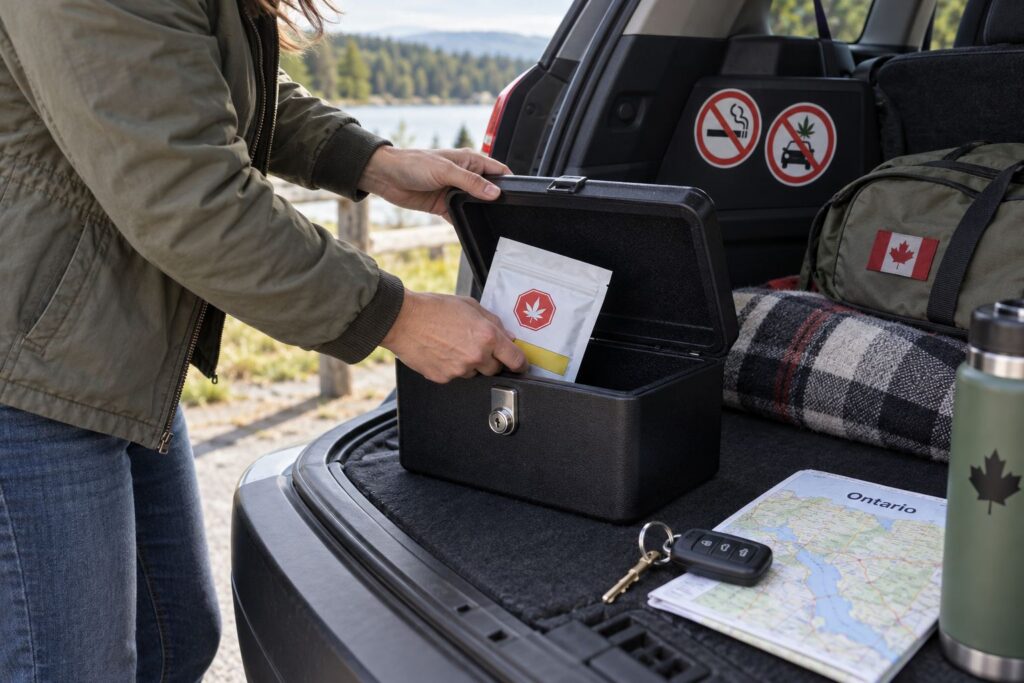
Quick answer: in Canada, adults can generally transport legal cannabis, but the safer habit is simple: keep it sealed, out of reach, away from the driver area, and never consume it in a vehicle that is being driven or could be driven. Provincial details matter, so treat the federal 30 gram public possession limit as the starting point, then check the rules where you are.
A car makes cannabis rules feel confusing because several issues overlap at once: public possession, open products, passengers, impairment, smoking and vaping bans, storage, and travel between provinces. This guide is not legal advice. It is a practical checklist for adults who want to avoid the common mistakes that turn a legal purchase into a risky ride.
The safest default
If you only remember one rule, make it this: cannabis belongs packed away, not handled in the cabin. Put legal cannabis in its original packaging when possible, close the container, place it in a bag or lockbox, and keep it in the trunk or another area that is not within easy reach of the driver. That habit helps with odour, prevents accidental access by passengers, and keeps the situation clear if you are stopped.
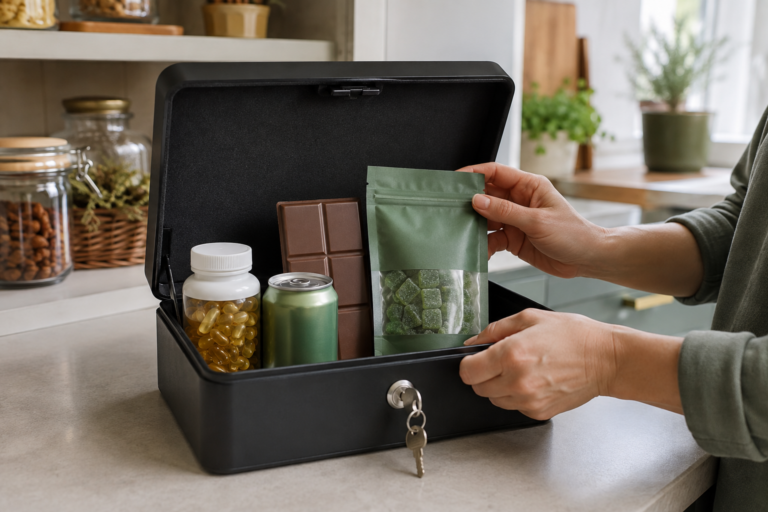
The same logic applies whether you bought dried flower, pre-rolls, vapes, oils, beverages, or edibles. A sealed package in a locked box says “transport.” A loose product, open edible, active vape, or recently used pipe inside the cabin creates a very different impression.
Car cannabis checklist
| Situation | Safer choice | Why it matters |
|---|---|---|
| Driving home from a legal store | Keep cannabis in the original sealed package and put it away before starting the trip. | It supports a clear story: you are transporting a legal product, not using it. |
| Carrying flower or pre-rolls | Use a closed container, then place it in the trunk, hatch area, or a zipped bag away from the driver. | Loose cannabis creates odour and access problems. |
| Carrying edibles or beverages | Do not open them in the vehicle. Keep them labelled and away from children, pets, and passengers. | Edibles can be mistaken for regular food and are easy to overconsume. |
| Passengers want to smoke or vape | Do not allow smoking, vaping, or edible use in the vehicle. | In Ontario, cannabis consumption is not allowed in a vehicle or boat being driven or at risk of being put into motion. |
| Crossing a border | Do not bring cannabis across Canada’s international border in either direction. | Federal travel guidance warns that cannabis remains illegal to move across the border, even when it is legal on both sides. |
How much can be in the car?
For non-medical cannabis, the federal public possession limit for adults is up to 30 grams of legal dried cannabis, or the equivalent in other product forms. Health Canada’s possession calculator is the cleanest official tool for equivalents because oils, solids, concentrates, fresh cannabis, seeds, and dried flower are not counted the same way.
That limit does not mean every car trip with 30 grams is automatically low-risk. The product still needs to be legal, the adult still needs to meet the local legal age, and the cannabis should be stored in a way that does not invite use while driving. For more detail on equivalents, use our Canadian cannabis possession limits guide as the companion article.
Can a passenger use cannabis in the car?
Do not treat the passenger seat as a loophole. Ontario’s cannabis laws say that a person cannot consume cannabis in a vehicle or boat that is being driven or will be driven. The province’s smoke-free guidance also says no one in a motor vehicle or boat being driven, or at risk of being put into motion, can consume cannabis in any manner, including smoking, vaping, or eating, with limited medical-use exceptions.
Even outside Ontario, the practical answer is the same for most adults: keep the vehicle cannabis-free during the trip. A passenger’s smoke, vape, open edible, or visible product can create odour, distraction, impairment concerns, and confusion if police stop the vehicle. If someone wants to use cannabis, park legally, leave the vehicle, and follow the local public-use rules for that place.
Driving after cannabis is different from carrying cannabis
Transporting a legal product is not the same thing as being fit to drive. Health Canada warns that cannabis can impair judgment, reaction time, coordination, attention, and decision-making. The federal impairment guidance also notes that some effects, such as drowsiness, can last up to 24 hours after use, depending on the person, product, dose, and method of consumption.
That is why “I feel fine” is not a reliable driving test. There is no universal waiting time that works for every adult after cannabis use. If you used cannabis recently, plan a different ride, wait longer, or do not drive. Our cannabis and driving in Canada guide covers impairment rules in more detail, and our night-before-driving checklist is useful for next-morning planning.
Where should cannabis go in the vehicle?
Use the least ambiguous storage spot available. In a sedan, that usually means the trunk. In a hatchback, wagon, SUV, or van, use a zipped bag, cargo area, or locked case in the back rather than the console, cupholder, glove box, or door pocket. If you are carrying cannabis for a longer trip, choose a hard-sided container that closes fully and does not leak odour.
Odour control is not only about being polite. Strong smell can draw attention, make other passengers uncomfortable, and make it harder to show that the product is simply being transported. Our smell-proof cannabis storage checklist explains practical container choices without pretending any pouch makes cannabis invisible to law enforcement.
If you are stopped
Good storage also makes an ordinary traffic stop less confusing. Keep your licence, ownership, and insurance separate from cannabis so you do not need to reach into the same bag or container. If an officer asks about cannabis, be calm and factual: it is legal cannabis, it is closed, and it is stored away from the driver. Do not open packages, hand products around, or argue roadside legal details. If you receive a ticket or charge, save the paperwork and get legal advice from a qualified professional.
The goal is not to hide cannabis. The goal is to avoid mixed signals: open products, strong odour, recent use, loose edibles, or cannabis sitting beside the driver. A boring, closed container in the back of the vehicle is usually the clearest setup.
Special caution for edibles, drinks, and vapes
Edibles and beverages deserve extra caution in vehicles because they can look ordinary. Keep gummies, chocolates, baked goods, capsules, oils, and drinks in original packaging whenever possible. Do not transfer them into regular snack bags, water bottles, or unlabelled containers. If children or pets are travelling with you, put the products in a locked bag or box before anyone gets into the car.
Vapes are different but still need discipline. A cartridge or disposable vape should be turned off, capped if possible, and packed away. Do not pass it around in the car. Do not leave batteries in direct heat, and do not toss a vape into a hot glove box for hours. For more on product handling, see our vape cartridge safety checklist.
Road trips and borders
Driving between provinces can add another layer of rules. Legal age, retail systems, public-use restrictions, and local enforcement can vary. Before a road trip, check the provincial or territorial page for where you are going, especially if you plan to buy cannabis there or stay in rental housing, hotels, parks, campgrounds, or event areas.
The international border is simpler: do not cross it with cannabis. Government of Canada travel guidance warns that taking cannabis across Canada’s border is illegal, whether you are entering or leaving Canada and even if cannabis is legal at your destination. If a route may cross into the United States or another country, remove cannabis from your bags and vehicle before the trip. Our travel with cannabis in Canada guide covers the broader trip-planning picture.
A practical pre-drive routine
- Confirm the product came from a legal source and is labelled.
- Check that the package is closed and not being used by anyone in the vehicle.
- Keep the amount within the adult public possession limit or equivalent.
- Place cannabis in the trunk, cargo area, or a locked container away from the driver.
- Keep edibles and beverages away from children, pets, and regular snacks.
- Do not drive if you have used cannabis recently or feel affected in any way.
- Remove cannabis before any international border crossing.
Bottom line
A car is for transporting cannabis, not using it. Keep legal products closed, labelled, and packed away; keep the driver unimpaired; and check local rules before you travel. Those habits will not answer every legal edge case, but they will help adults avoid the most common problems: open products in the cabin, passenger use, odour, over-the-limit possession, impaired driving, and accidental border mistakes.
Sources
- Health Canada: cannabis possession limit calculator
- Health Canada: authorized cannabis retailers in provinces and territories
- Government of Ontario: cannabis laws
- Government of Ontario: where you cannot smoke or vape
- Government of Canada: drug-impaired driving
- Government of Canada travel advice: drugs and travel
Explore the beginner’s guide, or learn how we source and edit our stories.