Education 7 min read
Cannabis Gummies in Canada: Dose, Labels, and Storage Checklist
A practical Canada-aware guide to reading cannabis gummy labels, checking THC per piece, planning timing, and storing edibles safely.

Cannabis gummies are easy to underestimate because they look familiar, taste familiar, and often come in small pieces. For Canadian adults, the safer habit is to treat every gummy like a labelled cannabis unit, not like candy with a warning sticker.
This guide explains how to read gummy labels, compare THC per piece, plan timing, and store edible cannabis away from children, pets, and visitors. It complements our broader edibles dosing and safety hub, but focuses on the practical details that come up with gummies in particular.
Quick answer
When comparing cannabis gummies in Canada, check the Total THC per package, THC per unit, number of pieces, CBD amount, ingredients, allergens, lot number, packaging date, and storage directions. Then decide whether the package fits your experience level and your plan for the day. Do not use flavour, shape, or brand name as a dose guide.
Health Canada notes that edible cannabis can look like common food and may increase accidental or over-consumption risk. Gummies are one of the clearest examples of that problem because they can resemble ordinary candy unless they stay in their original cannabis packaging.
The label sequence
| Step | What to read | Decision it supports |
|---|---|---|
| 1 | Total THC and Total CBD | Whether the whole package is stronger than you expected |
| 2 | THC per piece or unit | Whether one piece is a sensible starting amount for you |
| 3 | Number of pieces | Whether the package invites accidental repeat dosing |
| 4 | Ingredients and allergens | Whether the edible fits your dietary needs |
| 5 | Lot number and packaging date | Whether you can trace the product if there is a quality concern |
| 6 | Storage directions | Where it should go as soon as you get home |
Do not let small pieces change your judgment
A small gummy can still contain enough THC to be uncomfortable for a low-tolerance adult. The physical size of the piece is not the dose. The milligrams on the label are the dose clue. If the package is scored, separated, or shaped into pieces, still confirm the declared amount per unit before deciding what to take.
If you are unsure how to think about milligrams, use our edibles dose chart and edibles onset guide. The practical rule is to start with a low amount, wait long enough, and avoid treating a second piece as a quick correction.
Gummies versus chocolates, baked edibles, and drinks
| Format | What feels easy | What still needs caution |
|---|---|---|
| Gummies | Counting pieces | Pieces may be tempting to repeat |
| Chocolate | Breaking squares | Squares may not equal labelled units unless specified |
| Baked edible | Familiar snack format | Portion size may be misleading |
| Beverage | Sipping slowly | A drink can be finished before effects are clear |
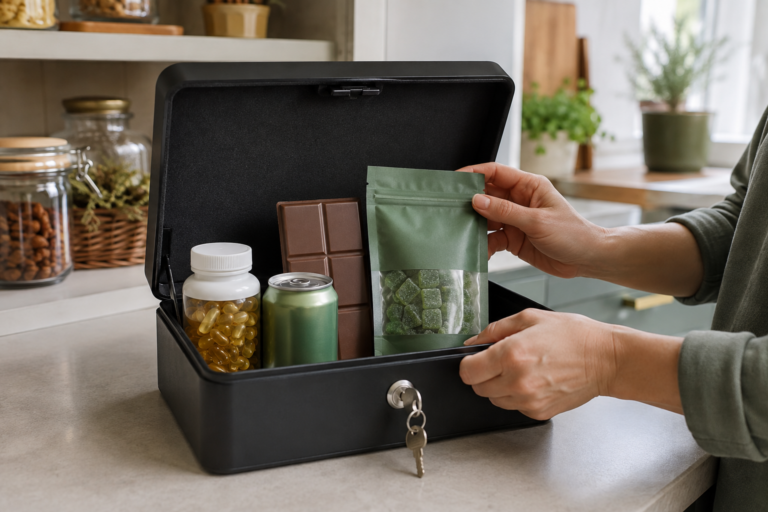
Storage checklist
- Keep gummies in the original child-resistant cannabis package.
- Do not transfer them to a candy jar, baggie, pill organizer, or food container.
- Store them away from children, pets, guests, and ordinary snacks.
- Keep the label with the lot number and packaging date until the package is finished.
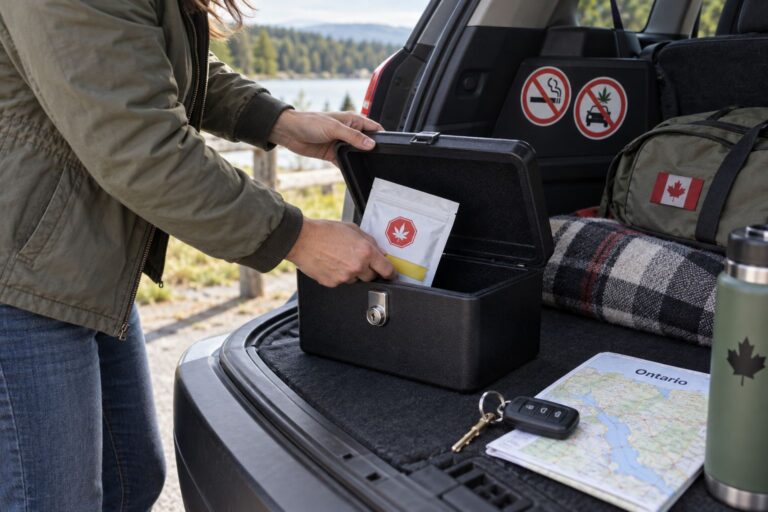
- Avoid leaving gummies in a hot car, bag, bathroom, or open kitchen area.
- If a piece looks damaged, melted, or mixed with other food, do not guess the dose.
Legal-source checks before buying
Legal-source checks matter because a gummy can be copied visually by unregulated sellers. A legal Canadian edible should come through authorized retail, carry regulated cannabis packaging and labelling, and stay within the rules for edible cannabis products. If a product claims an unusually high THC amount for an edible package, treat that as a sign to stop and verify legality.
For purchase-channel screening, use our legal cannabis buying checklist and online buying guide. A product page, social review, or flashy package does not replace authorized-source verification.
When gummies may not be the right fit
Gummies are not ideal for every situation. They are easy to carry, easy to split socially, and easy to forget in a pocket or bag. If you need precise tracking, a labelled capsule or oil may be easier to count. If you have a health condition, take medication, are pregnant or breastfeeding, or have a history of uncomfortable cannabis reactions, talk to a qualified professional instead of using a product page as advice.
How to set a gummy plan before opening the package
The safest gummy plan happens before the package is open. Decide the maximum amount you will take, put the rest away, and give the edible a long enough window. Do not leave the open package on a table while you wait. That is how repeat dosing and accidental sharing happen. If you are with other adults, make sure everyone knows the package contains cannabis and understands the labelled amount per piece.
A plan should also include the rest of the day. Avoid driving, working, supervising dependants, cooking with heat, or making important decisions after trying a new edible. The delayed timing can make people feel fine at first and then uncomfortable later. A boring plan is a good plan when you are learning your response.
When a lower-dose product may be easier
A lower-dose edible can be easier to learn from because it gives you more room to stop. That does not mean low dose is risk-free, especially for people with low tolerance, health concerns, or medication interactions. It does mean the package should not force a beginner to split tiny pieces or guess at fractions. If one piece is more than you want, choose a different product rather than relying on a messy split.
CBD content can also be misunderstood. CBD does not cancel THC impairment and does not make an edible safe for driving or work. Read the whole cannabinoid panel and treat the product according to the THC amount and your own experience.
Gummy freshness and quality questions
Edibles can change when exposed to heat, moisture, or poor storage. Gummies may melt, stick together, dry out, or lose shape. If several pieces become fused, dose tracking can become less clear. Do not try to estimate by tearing pieces apart from a melted mass. Use the product only when the package, pieces, and label still make sense together.
If a package seems damaged, has a broken seal, smells off, or does not match the product listing, keep the lot number and contact the retailer or producer. The goal is not to diagnose the problem yourself. The goal is to preserve enough information for someone responsible to answer the right question.
Reader checklist before you use the product
Before using any new cannabis product, pause long enough to answer five practical questions. Did you buy it from a legal source? Can you read the THC and CBD amount without guessing? Do you know how long the product may take to affect you? Is the rest of your day compatible with impairment? Can the package be stored where no child, pet, visitor, or roommate will confuse it for something else? If any answer is unclear, the safer move is to slow down.
Also check whether the advice you are following comes from the product label, an official public-health or regulator source, or a seller trying to close a sale. Those are not equal. The label and official sources should anchor the decision; marketing copy can help describe a product, but it should not override dose, age, legal-source, impairment, or storage cautions.
This checklist is intentionally plain. Most cannabis problems do not start because someone failed to understand advanced chemistry. They start because a product looked familiar, the label was skimmed, the dose was repeated too soon, or the package was left somewhere careless. Legal cannabis still requires adult judgment after purchase.
- Choose a calm setting for first use, especially with a new format or potency.
- Avoid mixing with alcohol or other substances when judging a product.
- Keep the original package and receipt until the product is finished.
- Write down the amount used if you are comparing products over time.
- Stop and seek qualified help if effects feel severe, unusual, or unsafe.
The goal is not to make cannabis feel complicated. The goal is to make the next step obvious. A reader-worthy product choice should survive basic questions about source, label, dose, timing, storage, and what to do if something seems wrong.
Bottom line
Cannabis gummies are not complicated, but they demand discipline. Read the label, count milligrams instead of pieces, give the edible enough time, buy only from legal sources, and store the package like a regulated cannabis product, not a snack.
FAQ
How much THC is in a cannabis gummy in Canada?
Check the package. The useful numbers are Total THC per package and THC per unit or piece. Do not infer dose from size, flavour, colour, or shape.
Can I split a gummy?
Only split a gummy if doing so matches the product directions and you can still understand the dose. Uneven splitting can make dose tracking less reliable.
Why keep gummies in the original package?
The original package carries the cannabis warnings, lot number, packaging date, cannabinoid details, and child-resistant features that help prevent mistakes.
Sources
- Health Canada: Classification of edible cannabis products
- Health Canada: How to read and understand a cannabis product label
- Health Canada: Lower-risk cannabis use guidelines
- Health Canada: Reduce your risk by choosing legal cannabis
Explore the beginner’s guide, or learn how we source and edit our stories.