Education 9 min read
Cannabis and Caffeine in Canada: Coffee, Energy Drinks, and Safer Timing
Coffee, energy drinks, and THC products can stack in ways that feel jittery, anxious, or confusing. Here is a practical Canada-aware guide to timing them more carefully.
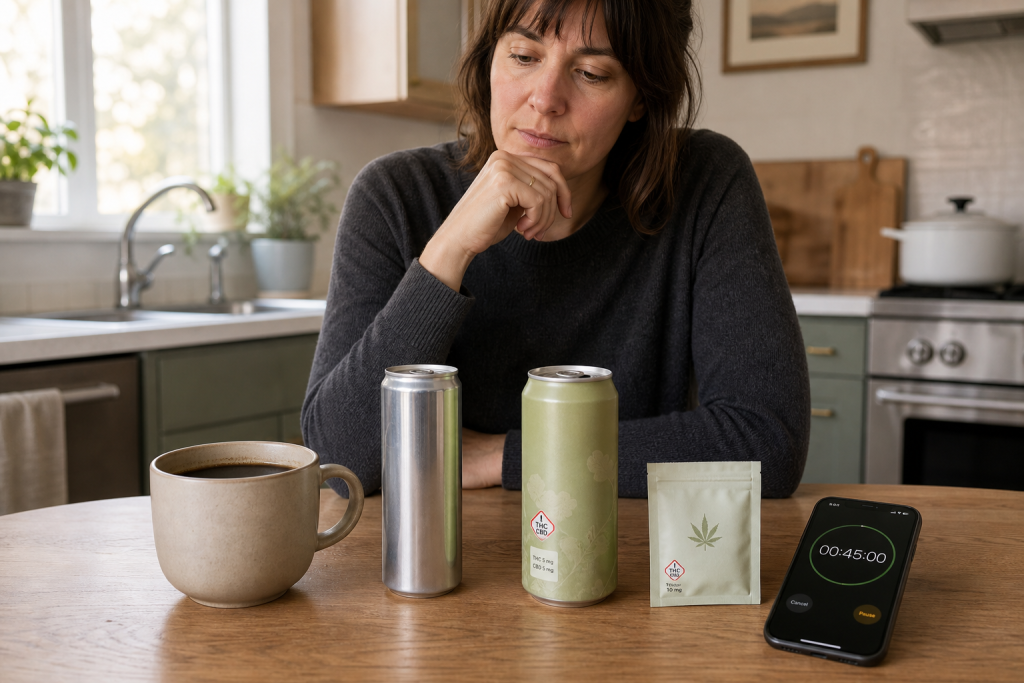
Coffee and cannabis are both common in adult routines, but they do not always make a tidy pair. A morning coffee before a low-dose edible, an energy drink before a vape, or a THC beverage at a social event where everyone is also having cold brew can make the experience harder to read. The issue is not that caffeine and cannabis are automatically dangerous together for every adult. The more practical problem is that caffeine can make the body feel more alert, restless, or keyed up while THC can change perception, timing, coordination, and anxiety. When those signals overlap, it becomes easier to misjudge dose, timing, and impairment.
This guide is for adults in Canada who want a cautious, real-world way to think about cannabis and caffeine. It is not medical advice, and it cannot predict how a specific person will feel. Tolerance, product type, THC amount, caffeine amount, sleep, food, stress, and medications can all matter. The safest default is simple: try one variable at a time, keep the THC dose modest, avoid driving, and do not use caffeine as a tool to “cancel out” cannabis impairment.
The Short Answer
Cannabis and caffeine can be used on the same day by some adults, but combining them closely together can make the experience less predictable. Caffeine may add jitters, faster heartbeat, anxiety, stomach upset, or sleep disruption for sensitive people. THC may add impairment, slower reaction time, altered perception, dry mouth, anxiety, or a stronger-than-expected high, especially with edibles and beverages. Together, they can make it harder to tell whether the problem is too much caffeine, too much THC, bad timing, or all three.
Health Canada lists a recommended maximum daily caffeine intake of 400 mg for most healthy adults, and lower limits for people who are pregnant, planning pregnancy, or breastfeeding. That number is not a cannabis-mixing guideline; it is a caffeine guideline. If cannabis is also in the picture, the smarter move is to stay comfortably below personal caffeine limits and avoid stacking several stimulating drinks around THC.
Why the Combination Can Feel Confusing
Caffeine is a stimulant. Many adults use it because it can increase alertness and reduce sleepiness for a while. That can feel helpful, but it can also bring the familiar downsides: shakiness, racing thoughts, a faster-feeling pulse, stomach discomfort, irritability, or trouble sleeping. A 2024 meta-analysis on caffeine and anxiety found that caffeine intake may increase anxiety risk, especially at higher doses, though individual response varies and study designs differ.
THC is different. It can make some people feel relaxed, social, or absorbed, but it can also make others feel anxious, foggy, overly aware of body sensations, or uncomfortable. Health Canada’s cannabis risk guidance emphasizes starting with lower-risk choices, avoiding frequent heavy use, and being careful with products that can impair judgment. With edibles and beverages, timing adds another layer because effects can take longer to appear than inhaled cannabis.
The overlap is where people get tripped up. A person may drink coffee because an edible “hasn’t kicked in,” then feel both the delayed THC and the caffeine at once. Someone may use cannabis after an energy drink and mistake stimulation for cannabis anxiety. Another adult may feel fine in the moment but sleep poorly, then use more caffeine the next day and repeat the cycle.
Coffee, Energy Drinks, and Cannabis Beverages Are Not the Same Situation
The cannabis-caffeine question changes depending on the format. A small coffee earlier in the day is not the same as a large energy drink next to a high-THC edible. A cannabis beverage is not the same as coffee with a joint because oral cannabis timing can stretch the experience.
| Situation | Main timing issue | Safer-use check |
|---|---|---|
| Coffee before cannabis | Caffeine may still be active when THC effects rise. | Use a lower THC amount than usual if you are already jittery, underslept, or anxious. |
| Energy drink plus cannabis | Higher caffeine servings can make body sensations louder. | Read the caffeine amount and serving instructions; avoid stacking multiple caffeinated products. |
| THC edible after caffeine | Delayed onset can lead to impatience and extra dosing. | Wait long enough for the edible before adding more THC or more caffeine. |
| THC beverage at a social event | Drinks are easy to sip quickly while distracted. | Track the THC per container and treat it like a cannabis product, not a regular soda. |
| Late-day cannabis and caffeine | Both can interfere with a clear read on sleep and next-day grogginess. | Leave a buffer before bedtime and avoid using caffeine to push through impairment. |
Do Not Use Coffee to Sober Up From Cannabis
A common myth is that coffee makes a person sober enough to drive, work, or handle a risky task after cannabis. That is not a safe assumption. Caffeine can make someone feel more awake without removing THC-related impairment. The person may feel more alert but still have slower reaction time, altered judgment, or poor coordination. For Canadian readers, the practical rule is clear: if cannabis may be affecting you, do not drive. Time, rest, food, water, and a calm setting are more realistic supports than trying to outsmart impairment with another substance.
If you are already too high, caffeine may not be the best next move. For some people it can make anxiety, a racing-feeling heart, or looping thoughts worse. A better first step is to lower stimulation: sit somewhere safe, pause extra THC, sip water, eat a simple snack if that feels comfortable, and remind yourself that the unpleasant peak usually passes. TWJ’s separate guide on how to sober up from being too high walks through that situation in more detail.
The Anxiety Angle
Caffeine and THC can both be uncomfortable for people who are prone to anxiety. That does not mean every anxious reaction is the same. Caffeine can feel like physical activation: alertness, restless energy, a tense stomach, or a faster heartbeat. THC anxiety can feel more perceptual: worries feel sticky, time feels stretched, ordinary sensations feel too important, or a person becomes concerned that something is wrong. Combined closely, those two patterns can reinforce each other.
If cannabis has made you anxious before, mixing it with a strong coffee or energy drink is a poor testing ground. Start with a calm day, familiar setting, low THC amount, and no pressure to perform. If anxiety, panic symptoms, chest pain, fainting, severe confusion, or other alarming symptoms show up, seek medical help rather than trying to self-manage with more cannabis, alcohol, or stimulants. For prevention-focused advice, read TWJ’s guide to weed anxiety and safer-use tips.
What the Research Can and Cannot Tell Us
There is not enough human research to give a simple universal rule for every cannabis-and-caffeine combination. Some evidence comes from animal or laboratory work, and some studies focus on specific outcomes such as memory, mood, or cardiovascular markers rather than everyday adult use. A paper on THC and caffeine interactions in memory-related tasks, for example, is useful as a caution that the combination is biologically plausible and not fully settled, but it should not be treated as a direct household dosing guide.
That uncertainty matters. When the evidence is incomplete, the responsible advice is not to make a dramatic claim. It is to reduce variables. Know how much caffeine you have had. Know how much THC is in the product. Avoid mixing several product types in one session. Give oral cannabis enough time before redosing. Do not test the combination before driving, work, exercise, childcare, or any situation where impairment would create real risk.
A Practical Timing Plan
If you still plan to use cannabis and caffeine on the same day, make it boring and trackable. Boring is good here. Use a product and dose you already understand, not a new high-THC edible beside a new energy drink. Keep the caffeine familiar too. A known morning coffee is easier to interpret than a large can with multiple stimulants and serving instructions you have not read.
- Check caffeine first: count coffee, tea, cola, energy drinks, pre-workout products, and caffeine tablets.
- Check THC second: read the total THC per package and the THC per unit or serving.
- Separate timing when possible: avoid taking THC right when caffeine is peaking if you are sensitive to jitters.
- Use a lower THC amount when caffeine, stress, or poor sleep is already in the mix.
- Set a phone timer before redosing edibles or cannabis beverages.
- Do not add alcohol as a third variable.
- Do not drive, bike in traffic, operate tools, or take on caregiving tasks while impaired.
For edible timing specifically, see TWJ’s guide to how long edibles take to kick in. For the broader duration question, the guide on how long a cannabis high lasts is a useful companion.
Energy Drink Labels Deserve Extra Attention
Energy drinks are easy to underestimate because they look like ordinary beverages. In Canada, caffeinated products can carry label directions and warnings that matter. Read the amount per serving, the number of servings in the container, and any directions about maximum daily intake or groups for whom the product is not recommended. If a drink also contains other stimulating ingredients, do not treat it as just another cup of coffee.
Pair that label reading with cannabis label reading. A THC beverage, gummy, capsule, or oil should be checked for total THC, THC per serving, CBD amount, package date, storage instructions, and whether the product came from a legal source. A legal product label is not a guarantee that the combination will suit you, but it gives you the basic information needed to make a less chaotic decision.
Who Should Be More Cautious?
Some adults should be especially careful or avoid the combination unless they have spoken with a qualified health professional. That includes people who are pregnant, planning pregnancy, breastfeeding, sensitive to caffeine, prone to panic, living with heart rhythm concerns, taking medications that affect alertness or heart rate, or using cannabis for a health-related reason. Young people should avoid cannabis, and caffeine guidance is also stricter for children and adolescents. This article is written for adults, not youth.
People with low tolerance should also slow down. A person who rarely uses cannabis may not have a reliable sense of how THC feels with or without caffeine. A person returning after a break may be surprised by a dose that used to feel ordinary. A low-dose THC product with no added pressure is a better test than a high-THC edible, strong coffee, and a busy social setting.
Bottom Line
Cannabis and caffeine are not a clean on/off switch. Caffeine does not erase cannabis impairment, and THC does not make high caffeine intake harmless. If you use both, keep the session simple: legal cannabis, known dose, known caffeine amount, enough time between products, no driving, no alcohol, and no pressure to keep adding more because the first effect was not what you expected.
The most reader-safe advice is also the least flashy: change one thing at a time. If you want to understand how cannabis affects you, do not bury the signal under an energy drink. If you want coffee, enjoy coffee without assuming it will fix a cannabis session that went too far. Clear timing beats guesswork.
Sources
- Health Canada: Caffeine in foods
- Health Canada: Lower-risk cannabis use
- Health Canada: Health effects of cannabis
- Caffeine intake and anxiety: a meta-analysis
- Combined effects of THC and caffeine on working memory in rats
Explore the beginner’s guide, or learn how we source and edit our stories.