Education 8 min read
Edibles Dosing in Canada: How Not to Overdo It
Use this practical Canadian edible cannabis dosing guide to read THC labels, plan timing, avoid dose stacking, and reduce the risk of taking too much.
Most edible cannabis problems start before anyone feels anything. A person eats one piece, waits a little while, decides it “isn’t working,” takes more, and then the first serving catches up. By the time the second one does too, the evening has stopped being relaxed and started being uncomfortable.
This guide is for adults in Canada who want a practical way to use edible cannabis more carefully. It is not medical advice, and it is not a promise that a specific dose will feel a specific way. Edibles vary by product, body, food, tolerance, sleep, alcohol use, and setting. The useful goal is simpler: read the label, choose less than you think you need, wait long enough, and avoid stacking doses.
The Short Version
- Check the THC amount per piece and per package before opening it.
- If you are new, returning after a break, or unsure, use a very low THC amount and stop there for the session.
- Do not judge an edible too early. Health Canada notes that edible effects can take time to appear and may take several hours to peak.
- Avoid mixing with alcohol or other substances.
- Keep edibles in their original child-resistant packaging and away from children and pets.
- Plan your ride, sleep, food, and next morning before you start.
For a dose-range reference, use our edibles dose chart for Canada. For timing, keep our guide to how long edibles take to kick in open beside it.
Why Edibles Are Easy to Overdo
Inhaled cannabis can feel fast because THC reaches the bloodstream quickly through the lungs. Edibles are different. They have to move through digestion, and the timing can feel uneven. A gummy, chocolate, baked good, capsule, beverage, or oil-based edible may not feel like much at first, then build later.
That delayed feedback loop is the whole problem. With smoking or vaping, people often notice quickly that they have had enough. With edibles, the quiet first hour can trick people into taking more before the first dose has finished developing. The result is not usually dangerous for a healthy adult in the way opioids or alcohol poisoning can be, but it can be intensely unpleasant: anxiety, panic, dizziness, nausea, confusion, racing thoughts, heavy sedation, and impaired coordination can happen.
Health Canada also warns that cannabis can impair driving and that higher THC exposure can increase risks, especially with frequent use or use at a young age. If an edible is part of your evening, driving should not be.
Read the Label Before You Decide the Dose
Legal cannabis edibles in Canada are labelled with THC and CBD amounts. Do not rely on package size, candy size, flavour, or brand language. A small piece can still contain more THC than you intended, while a larger-looking product may be divided into lower-dose pieces.
Before eating anything, find three details:
- Total THC in the package: this tells you the most THC available if the whole package is consumed.
- THC per unit or piece: this matters more than package size for the decision in front of you.
- CBD amount: CBD does not make THC harmless, but products with lower THC and a balanced CBD profile may be easier for some people to approach cautiously.
If the label is confusing, pause. Read our Canadian cannabis label guide before guessing. Guessing is how an edible stops being predictable.
Check the Situation, Not Just the Milligrams
The same edible can feel different on different days. A full meal, an empty stomach, poor sleep, stress, a long break from cannabis, or a product with a different ingredient base can all change the experience. Your plan should account for the day you are actually having, not the strongest edible experience you have handled before.
That is why a dose decision should include timing and responsibilities. If you have to drive later, answer work messages, care for someone, or be clear early tomorrow, skip the edible or choose another time. The careful choice is often the one that leaves the most margin.
A Practical Waiting Plan
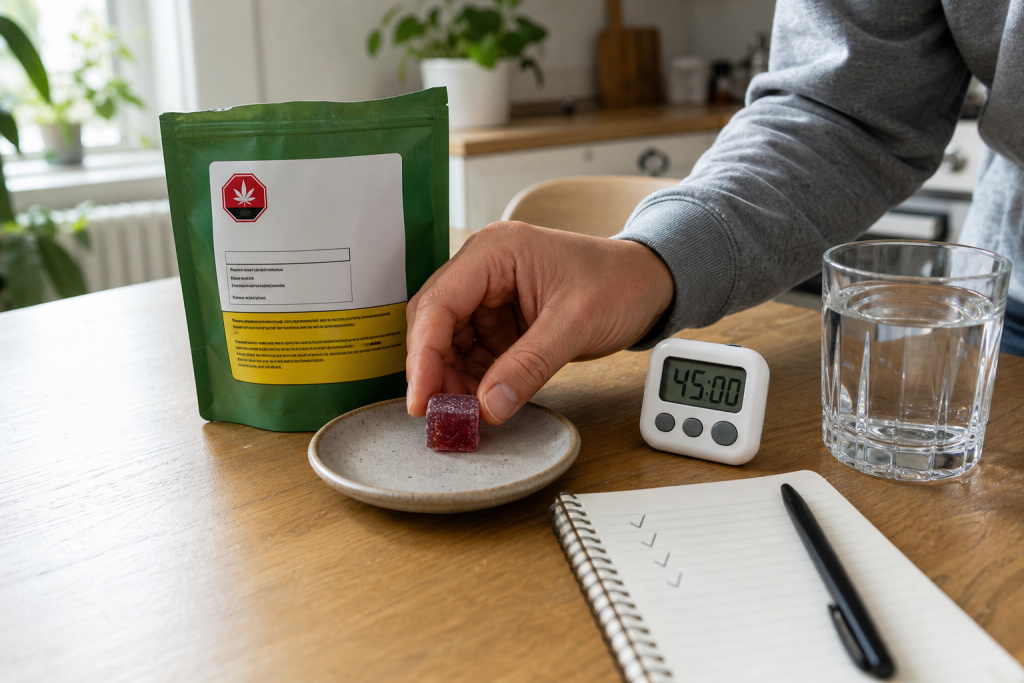
The safest edible plan is boring on purpose. Choose the serving, put the package away, set a timer, and commit not to add more during the waiting window. This is especially important if you are new to edibles, using a new product, eating after a big meal, tired, stressed, or around other people who are using more than you planned.
| Common mistake | Why it happens | Safer move |
|---|---|---|
| Taking more after 30 to 60 minutes | The first serving may not be fully felt yet. | Set a longer waiting window before the session starts. |
| Eating from the package | Pieces become easy to lose track of. | Place one planned serving on a plate and store the rest. |
| Using a new edible like an old favourite | Products can differ in THC, CBD, ingredients, and absorption. | Treat every new edible as unfamiliar, even if the label looks similar. |
| Mixing with alcohol | Alcohol can make impairment harder to judge. | Keep the session cannabis-only or skip the edible. |
| Planning too late at night | Edible effects can last into sleep and the next morning. | Start only when you have enough time and no responsibilities. |
A useful rule is to decide the maximum before you start, not while you are waiting. If you promised yourself one low serving, that is the session. Tomorrow’s notes are more useful than tonight’s impatience.
What “Start Low and Go Slow” Means in Real Life
“Start low and go slow” can sound vague, so make it concrete. Starting low means choosing a THC amount at the cautious end of the label, especially if you do not have recent experience with that exact product. Going slow means waiting long enough that you are not adding a second dose on top of a first dose that has not peaked.
Health Canada’s lower-risk messaging points adults toward lower-THC edible choices and emphasizes reading the label. The Canadian Centre on Substance Use and Addiction also stresses label reading and the importance of starting with a low amount. That advice is not about winning a tolerance contest. It is about leaving yourself room to learn how a product affects you.
If you already use cannabis often, the same principle still applies when the format changes. A person who feels comfortable with flower or a vape cartridge can still misjudge an edible because onset and duration are different. If you use oils, capsules, drinks, gummies, or baked products, compare timing with our guide to tinctures vs edibles in Canada.
Set Up the Room Before the Edible
A careful edible plan is partly about the room. You want fewer decisions later, not more. Before you take the edible, set out water, a light snack, comfortable seating, and anything you need for the night. Put the product away. If there are other adults around, tell one trusted person what you took and when. If you are alone, write the time and amount on a note.
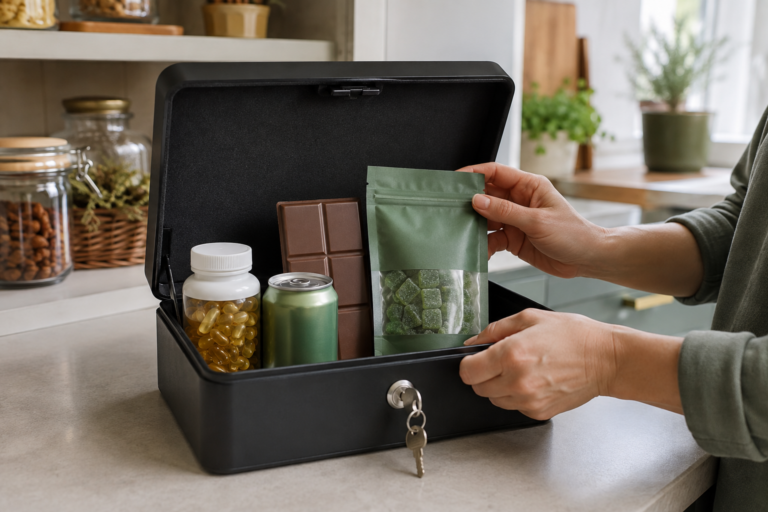
Do not leave the package on the table like a snack bag. Edibles can resemble ordinary candy or baked goods, and that is a real storage risk. Keep them in original packaging, away from regular food, and out of reach of children and pets. For the home side of this, use our safe cannabis storage checklist.
If You Took Too Much
If you took more than intended, the first job is to stop adding THC. Put the package away. Avoid alcohol. Move to a calm, familiar place. Sip water. Try slow breathing, low-stimulation music, or a simple distraction. Remind yourself that edible effects can feel intense but usually pass with time.
Get medical help if symptoms feel severe, if someone has chest pain, trouble breathing, repeated vomiting, loss of consciousness, or extreme confusion, or if a child, pet, pregnant person, or someone with a serious health condition consumed cannabis by accident. For a fuller plan, read our guide on what to do when you are too high.
A Simple Edible Dosing Checklist
- I know the THC amount per piece and per package.
- I chose the lowest reasonable serving for my experience level.
- I put the rest of the package away before starting.
- I set a timer and will not take more early.
- I am not mixing with alcohol or other substances.
- I do not need to drive, work, care for others, or make important decisions.
- I stored the product securely after opening it.
If you cannot check every box, wait. Edibles reward patience more than confidence.
FAQ
How much THC should a beginner take in an edible?
There is no universal beginner dose. Public-health guidance in Canada commonly emphasizes low-THC products and careful label reading. If you are new, returning after a break, older, on medications, or prone to anxiety, be more cautious and consider speaking with a clinician or pharmacist before using THC.
Can I take more if I do not feel anything?
That is the main way people overdo edibles. Effects can be delayed and may build gradually. Decide your maximum before the session and avoid adding more while you are still waiting.
Are legal edibles safer than homemade edibles?
Legal products have standardized labelling and regulatory controls that homemade edibles usually do not. That does not make them risk-free, but it gives adults more information to make cautious choices.
Sources
- Health Canada: Cannabis – Lower your risks
- Health Canada: Cannabis health effects
- Health Canada: Consumer information – Cannabis
- Canadian Centre on Substance Use and Addiction: 7 Things You Need to Know about Edible Cannabis
Explore the beginner’s guide, or learn how we source and edit our stories.