Education 8 min read
Cannabis Possession Limits in Canada: 30 Grams and Equivalents
A Canada-aware guide to the 30 gram public cannabis possession limit, product equivalents, legal labels, Ontario reminders, and safer carrying habits.
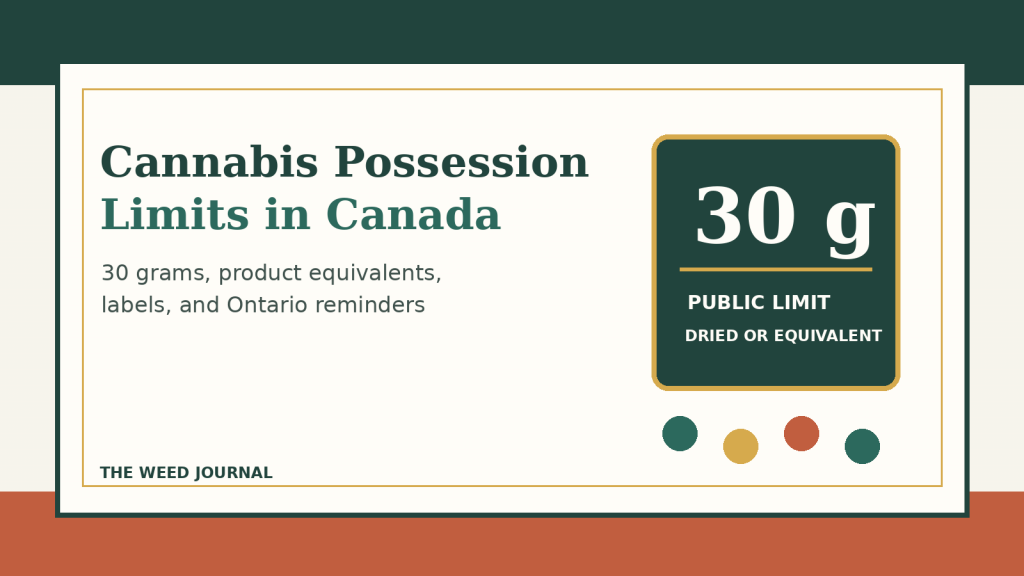
Canada’s public possession limit for non-medical cannabis sounds simple: adults can generally carry up to 30 grams of dried legal cannabis, or the equivalent amount in other product forms. The confusing part is the word equivalent. A 30 gram flower pouch, a few cannabis drinks, a pack of edibles, seeds, and a small amount of concentrate are not counted the same way.
This guide explains the federal 30 gram rule in plain language, how product equivalents work, what Ontario adults should remember, and what the limit does not cover. It is an educational overview, not legal advice. Provincial, territorial, municipal, medical-cannabis, workplace, housing, and travel rules can add extra limits.
The Short Version
- For non-medical cannabis, the federal public possession limit is 30 grams of dried cannabis or an equivalent amount in other cannabis classes.
- The rule is about public possession. It is not a personal safety recommendation, a dosing guide, or permission to use cannabis anywhere.
- Ontario sets the legal age at 19 for buying, using, possessing, and growing recreational cannabis.
- Legal products should come from authorized retailers and have required packaging details such as an excise stamp, health warning, THC/CBD information, lot number, and packaging date.
- Driving, crossing borders, sharing with youth, workplace use, and consuming in restricted places are separate legal issues.
Cannabis Possession Equivalents in Canada
Health Canada’s public possession calculator says an adult may possess up to 30 grams of dried cannabis, or its equivalent, in public for non-medical purposes. The equivalency system converts other product classes back to a dried-cannabis amount. That matters when you have mixed products in one bag, such as flower, drinks, gummies, and a vape cartridge.
| Product class | Federal equivalency | Approximate amount equal to 30 g dried cannabis | Plain-language note |
|---|---|---|---|
| Dried cannabis | 1 g dried cannabis | 30 g | The familiar flower limit. |
| Fresh cannabis | 5 g fresh cannabis = 1 g dried | 150 g fresh cannabis | Fresh material contains more moisture, so the allowed weight is higher. |
| Cannabis solids at room temperature up to 3% THC | 15 g solid product = 1 g dried | 450 g solid product | Health Canada gives baked goods and some topical soaps as examples. |
| Cannabis non-solids at room temperature up to 3% THC, excluding beverages | 70 g non-solid product = 1 g dried | 2,100 g non-solid product | Health Canada gives topical spray lotions as an example. |
| Cannabis concentrates over 3% THC | 0.25 g concentrate = 1 g dried | 7.5 g concentrate | This can include products such as hash or vaping liquids. |
| Cannabis beverages up to 3% THC | 570 g beverage = 1 g dried | 17,100 g beverage | Equivalent weight is not the same thing as a low-risk amount to consume. |
| Cannabis plant seeds | 1 seed = 1 g dried | 30 seeds | Growing rules are separate from public possession rules. |
The table is useful for understanding the rule, but it is not a shortcut for every situation. Health Canada’s own calculator warns that people remain responsible for the laws of the province or territory they are in. The calculator also is not meant for medical cannabis authorizations, where different public possession limits can apply.
Why “30 Grams” Does Not Mean 30 Grams of Every Product
The Cannabis Act uses dried cannabis as the baseline. Other cannabis classes are converted into a dried-cannabis equivalent because they have different water content, formats, and product characteristics. That is why 150 grams of fresh cannabis and 7.5 grams of concentrate can both point back to the same 30 gram dried-cannabis public limit.
This is also why a product’s package weight does not tell the whole story. A 3.5 gram container of dried flower is simple. A drink, edible, topical, or concentrate needs more context: product class, net weight or volume, THC amount, and sometimes whether it is a beverage or another non-solid product. If a package is legal, the label should help you identify the product class and the net amount.
If you are comparing different products before buying, our legal cannabis buying checklist for Canada is a better starting point than simply chasing the biggest package or strongest THC number. Legal status, label clarity, freshness, and product fit matter more than carrying as much as the law allows.
A Practical Example
Imagine an adult in Ontario is carrying 14 grams of dried flower, one small concentrate product, and several cannabis beverages. The dried flower uses 14 grams of the 30 gram dried-equivalent limit. A concentrate over 3% THC counts quickly because 0.25 grams of concentrate equals 1 gram dried. Beverages count differently again. The right answer depends on the exact product weights and classes, so the official calculator is the safer tool than mental math.
The more mixed your products are, the easier it is to misjudge the total. This is especially true after shopping, when several product formats are still in their retail packaging. Keep receipts and packaging until you are home, and do not repackage products into unlabelled containers if you may need to show what they are.
Do THC Milligrams Change the Possession Limit?
THC amount matters for legal product rules, product strength, and personal risk, but the public possession equivalency table is not simply a “total THC in your bag” calculation. Health Canada’s legal-product guidance notes, for example, that edible cannabis is limited to 10 mg THC per container, while some extract categories have higher container limits. Those product limits are different from the public possession equivalency math.
For personal use, do not treat the possession limit as a consumption target. A person could be within the public possession limit and still have far more THC than they should use in one day, one night, or one sitting. If edibles are involved, our edibles dose chart for Canada and edibles onset guide are more relevant than the possession-limit table.
What Counts as Legal Cannabis?
Justice Canada describes the adult public possession rule as applying to legal cannabis. Health Canada says legal non-medical products are sold only by retailers authorized by a province or territory. It also lists packaging cues that help shoppers recognize legal products, including an excise stamp, a standardized THC symbol where required, a yellow health warning, child-resistant packaging for most product types, and required label details.
A legal product label should also show the product class, net weight or volume, number of units where applicable, recommended storage conditions, lot number, packaging date, contact information for the manufacturer, intended use, and THC/CBD quantity or concentration. That information is useful for more than compliance. It helps you compare products and catch quality issues. For deeper shopping context, see our guide to why THC percentage is not everything.
Ontario Adults: What to Remember
Ontario’s cannabis laws page says adults must be 19 or older to buy, use, possess, and grow recreational cannabis. It also repeats the maximum public possession amount as 30 grams, about one ounce, of dried cannabis or equivalent. That means an 18-year-old rule in a federal overview is not enough for an Ontario reader. In Ontario, the practical legal-age number is 19.
Ontario rules around where cannabis can be used are also separate from how much can be possessed. You may be under the possession limit and still be in a place where smoking, vaping, or use is not allowed. Condo rules, lease terms, workplace policies, event rules, parks, campuses, hotels, and municipalities can add more restrictions. When in doubt, check the local rule before lighting, vaping, or opening an edible.
What the Public Possession Limit Does Not Cover
- Driving: Being under the possession limit does not make it safe or legal to drive after cannabis use. Read our cannabis and driving in Canada guide before making a ride plan.
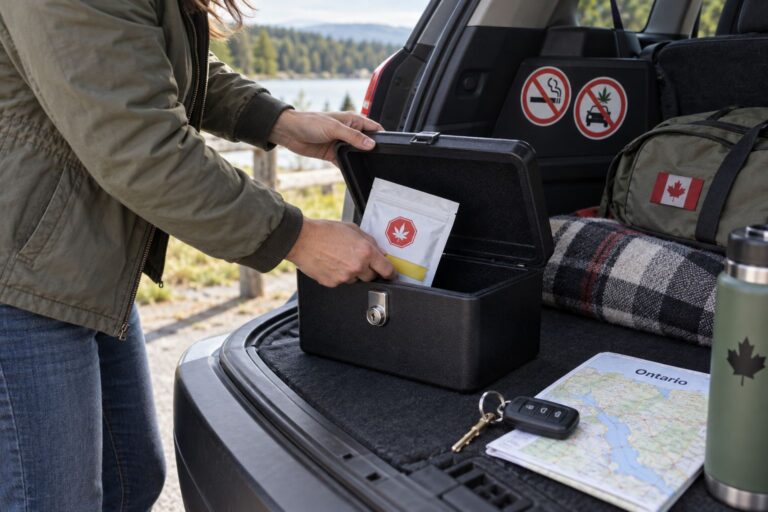
- International travel: Cannabis cannot be taken across the Canadian border, even when travelling to a place where cannabis is legal. See our guide to travelling with cannabis in Canada for the domestic-versus-border distinction.
- Medical authorizations: Medical cannabis possession limits can differ from non-medical public possession limits.
- Sharing and selling: Sharing with adults of legal age is not the same as selling. Selling requires proper licensing.
- Home growing: Plant limits, seed rules, landlord rules, and provincial restrictions are separate from what you can carry in public.
A Simple Carrying Checklist
- Confirm the product came from an authorized legal retailer.
- Keep products in original packaging while travelling home or carrying mixed formats.
- Check the product class, net weight or volume, and number of units.
- Use Health Canada’s calculator if you have more than one product class.
- Do not use the public possession limit as a dosing target.
- Keep cannabis away from children, pets, and anyone who should not access it.
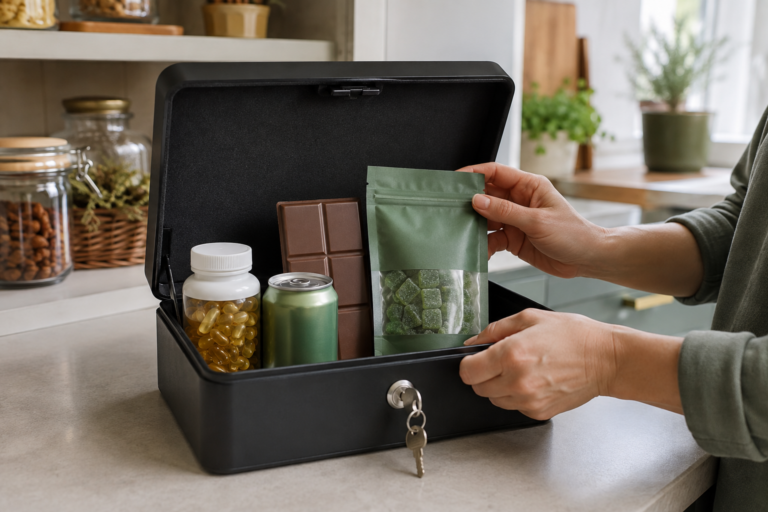
- Use smell-proof cannabis storage for odour and organization, but keep labels, legal amounts, and transport rules visible in the plan.
- Plan transportation before consuming, especially with edibles, concentrates, or high-THC products.
Bottom Line
The 30 gram rule is a public possession limit, not a permission slip to ignore product labels, local rules, driving laws, or common sense. For most adults, the safest routine is simple: buy legal products, keep labels intact, carry less than you need to, use the official calculator for mixed formats, and separate possession from consumption. The law may let an adult carry a certain amount in public, but a good plan usually involves carrying less, storing it clearly, and using it cautiously.
Sources
- Health Canada: Online calculator for limits for public possession of cannabis
- Justice Canada: Cannabis Legalization and Regulation
- Health Canada: How to read and understand a cannabis product label
- Health Canada: Reduce your risk – choose legal cannabis
- Ontario.ca: Cannabis laws
Explore the beginner’s guide, or learn how we source and edit our stories.