Education 8 min read
Cannabis and Pets in Canada: Safe Storage Guide
A practical Canada-aware guide to keeping cannabis away from pets: locked storage, edibles cleanup, signs of exposure, and when to call a veterinarian.
A pet does not need to understand cannabis for cannabis to become a household risk. A dog can chew through a gummy package. A cat can knock a loose edible from a table. A curious animal can lick infused oil, eat discarded flower, or get into a visitor’s bag before anyone realizes the product was accessible.
This Canada-aware guide is for adult cannabis consumers who share a home, vehicle, cottage, or yard with pets. It is not veterinary advice, and it is not a guide to giving cannabis to animals. The practical goal is prevention: keep legal cannabis labelled, locked, separated from food, and away from pets before an emergency starts.
Quick answer
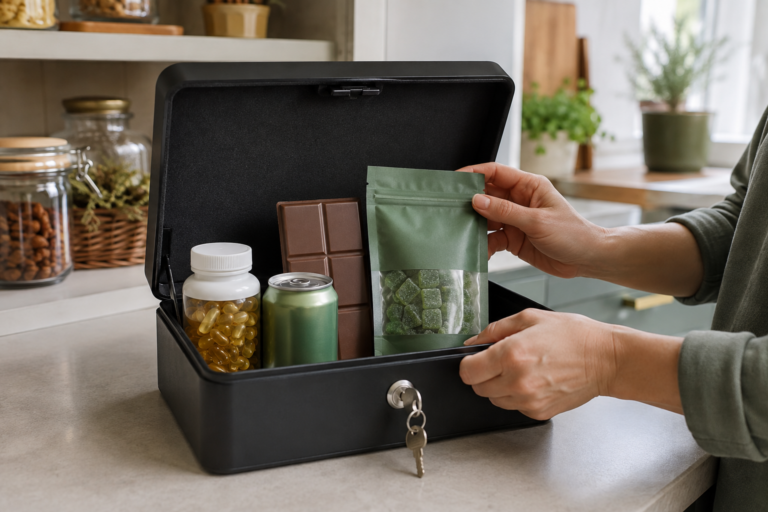
In a pet-friendly home, cannabis should be treated like medication or household chemicals: keep it in the original child-resistant package, close it fully after use, store it in a locked container, keep it separate from regular food and pet treats, and do not leave leftovers, roaches, vape parts, drinks, oils, or edibles within reach. If a pet may have eaten cannabis, call a veterinarian or emergency veterinary clinic promptly and tell them what the animal may have consumed.
Do not try to make the pet vomit unless a veterinarian tells you to. Do not wait for “funny” symptoms to become serious. Fast, honest information helps the vet judge risk and avoid guessing.
Pet-safe cannabis storage checklist
| Storage point | Better habit | Why it matters |
|---|---|---|
| Original package | Keep cannabis in its labelled, child-resistant container | The label helps identify THC, CBD, product type, lot details, and warnings |
| Locked location | Use a lockbox, locked cabinet, or high locked drawer | Pets can climb, chew, paw, and open bags more easily than expected |
| Food separation | Store edibles and drinks away from regular snacks and pet treats | Flavoured products can look or smell like food |
| After-use cleanup | Secure leftovers, ash, roaches, vape carts, wrappers, and infused-oil tools | Small residues and discarded items can still attract animals |
| Guest routine | Ask visitors to keep cannabis zipped, closed, and out of reach | Many home risks arrive in purses, backpacks, jackets, and cars |
| Emergency info | Save your vet and nearest emergency clinic number | You should not be searching for help during a poisoning concern |
Why pets are a different risk than adults
Adults can read a label, compare THC amounts, and choose whether to use cannabis. Pets cannot. They encounter cannabis as an unknown scent, oil, plant material, candy-like edible, baked good, capsule, drink, or discarded item. That means prevention has to happen before the product is visible, chewable, or lickable.
Dogs are often the bigger household risk because they investigate food smells and packaging aggressively, but cats and other animals can also be exposed. The size of the animal matters. A small amount that looks minor to an adult can be a serious exposure for a small pet.
The product format matters too. Edibles may include chocolate, raisins, xylitol, fats, or other ingredients that create separate veterinary concerns. Vape cartridges, wrappers, and packaging can create chewing or obstruction risks. Flower, concentrates, oils, capsules, and drinks should all be treated as pet hazards, not just gummies.
Do not give cannabis or CBD to pets casually
Human cannabis products are not made, labelled, or dosed for animals. Health Canada has stated that there are currently no authorized veterinary drugs containing cannabis, including CBD, in Canada. That matters because a product being legal for adult human use does not make it appropriate for a dog or cat.
If you are worried about pain, anxiety, appetite, seizures, sleep, behaviour, or aging in a pet, talk to a veterinarian. Do not substitute a human THC or CBD product, a dispensary recommendation, or an online anecdote for veterinary care. A cautious article should not promise pet benefits from cannabis, and this one does not.
Signs that may suggest cannabis exposure
Only a veterinarian can assess your pet, but cannabis exposure in pets can involve changes that are hard to miss: wobbling, unusual sleepiness, disorientation, drooling, vomiting, dribbling urine, dilated pupils, agitation, unusual vocalizing, tremors, temperature changes, or heart-rate changes. Severe cases can be more serious.
Symptoms are not proof of cannabis exposure, and the absence of symptoms does not guarantee safety. If you saw the pet eat something, found a chewed package, or cannot account for a missing edible or capsule, call for veterinary guidance rather than waiting.
Be honest with the clinic. Tell them the product type, brand if known, Total THC and Total CBD, approximate amount missing, time of possible exposure, the animal’s size, and any other ingredients. Vets are there to treat the animal, not to judge the owner.
What to do if a pet may have eaten cannabis
- Move the pet away from the product and remove any remaining cannabis from reach.
- Save the package, label, receipt, wrapper, or photo of the product.
- Call your regular veterinarian, an emergency veterinary hospital, or an animal poison-control service if your vet directs you there.
- Describe the product clearly: edible, flower, oil, capsule, concentrate, vape cartridge, drink, or unknown.
- Share the estimated THC and CBD amount, the time, and the pet’s weight.
- Follow veterinary instructions. Do not induce vomiting or give home remedies unless directed.
If a child or adult may also have consumed the product accidentally, contact the appropriate poison centre or emergency services. Ontario Poison Centre tells families to store cannabis in a locked container, separate from food and drinks, and to keep products labelled. That advice works for mixed households with pets too.
Where cannabis gets left out by mistake
Most preventable pet exposures start in ordinary places. A backpack on the floor. A coat pocket after a party. A tray table beside the couch. A glovebox during a road trip. A patio ashtray. A half-finished drink. A baking sheet. A bedside drawer. A bathroom counter. A cottage kitchen where routines are looser than at home.
Create one rule that survives busy days: cannabis is either in use by an adult or locked away. There is no in-between stage on counters, coffee tables, nightstands, bags, or vehicles. This is especially important when using products covered in our safe cannabis storage checklist, including edibles, drinks, oils, capsules, and concentrates.
Edibles and drinks need extra care
Health Canada warns families to keep cannabis away from children, locked away, and separate from regular food and drinks. The same storage logic protects pets. Edibles and beverages can smell like treats, snacks, or leftovers, and they may be more attractive to animals than plain dried flower.
Legal Canadian edible cannabis has packaging and THC limits that illegal copycat products may not follow. But legal packaging only helps when it is closed, labelled, and stored. Once a gummy, chocolate, brownie, cookie, drink, or infused oil is removed from its package, a pet cannot tell the difference between cannabis and food.
If edibles are part of your home, read our guides to edible cannabis timing and edible storage and expiry. The reader habit is the same: slow, labelled, separated, and locked.
Vehicles, walks, and shared spaces
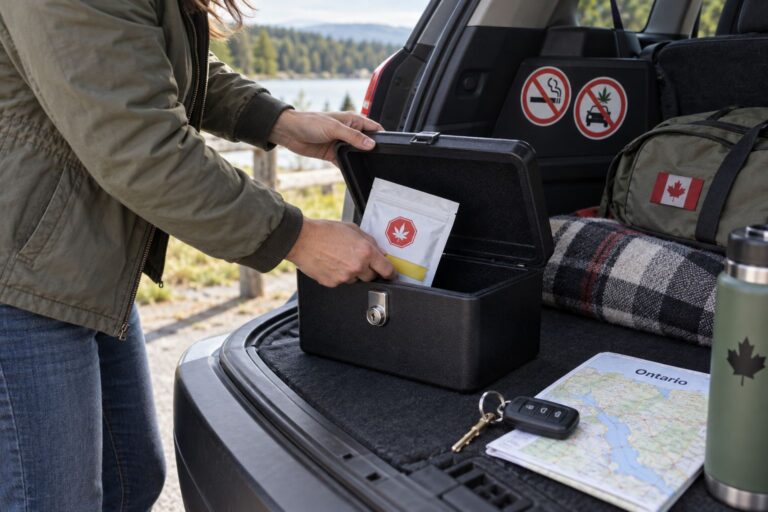
Pet safety does not stop at the kitchen. Keep cannabis sealed and inaccessible in vehicles, especially when a dog rides in the back seat or cargo area. Do not leave products in hot cars where packaging can degrade and odours can attract attention. If you carry cannabis while walking a dog, use a closed container in a pocket or bag the animal cannot access.
Watch shared outdoor spaces too. Pets can find discarded joints, edible wrappers, or unknown plant material near parks, sidewalks, trails, parking lots, and festival grounds. If your pet eats something suspicious outside, take a photo if safe, remove the animal from the area, and call a veterinarian for next steps.
A household rule that actually works
The safest cannabis routine is simple enough for every adult in the home to follow. Keep one locked storage location. Keep products in original packaging. Put cannabis away before opening pet food, serving snacks, hosting guests, going to bed, or leaving the room. Add a small note inside the lockbox with your vet’s phone number and the nearest emergency clinic.
If you use cannabis often, make cleanup part of the session rather than the morning-after chore. Ash, roaches, infused-oil droppers, residue, wrappers, baking tools, and half-finished beverages should not be left where an animal can investigate them. If the product is strong enough to affect an adult, assume a pet exposure deserves professional attention.
Bottom line
Cannabis and pets are a storage issue first. Do not give human cannabis products to animals. Do not rely on high shelves alone. Keep cannabis legal, labelled, closed, separate from food, locked away, and cleaned up after use. If a pet may have eaten cannabis, call a veterinarian quickly and be specific about what happened.
FAQ
Can pets safely use CBD products sold for humans?
Do not give a human CBD or cannabis product to a pet without veterinary guidance. Health Canada’s current veterinary CBD information says there are no authorized veterinary drugs containing cannabis, including CBD, in Canada.
What if my dog ate a cannabis edible but seems fine?
Call a veterinarian or emergency veterinary clinic anyway. Timing, THC amount, other ingredients, and the dog’s size all matter, and symptoms may not be immediate.
Should I make my pet vomit after cannabis exposure?
No, not unless a veterinarian specifically instructs you to. Home attempts can add risk, especially if the animal is sleepy, disoriented, or unstable.
Are legal cannabis products safer around pets than illegal products?
Legal products have regulated packaging and labels, which helps adults identify the product and amount. They are still unsafe for pets if chewed, eaten, licked, spilled, or left out.
What cannabis products are highest risk for pets?
Any cannabis product can be a risk, but edibles, drinks, oils, capsules, concentrates, discarded flower, vape cartridges, and infused baked goods deserve special care because they can be attractive, concentrated, or easy to leave out.
Sources
- Health Canada: How to help prevent cannabis poisoning in children
- Health Canada: Veterinary drugs containing cannabidiol for animal use
- Canadian Veterinary Medical Association: Canadian cannabis pet poisoning statistics
- University of Saskatchewan: How to keep your pets safe from marijuana poisoning
- Ontario Poison Centre: Cannabis and kids
Explore the beginner’s guide, or learn how we source and edit our stories.