Education 8 min read
Do Edibles Expire in Canada? Dates, Storage, and Safety
A Canada-aware guide to edible cannabis best-before dates, storage instructions, potency drift, food spoilage signs, and when to throw edibles out.
Old cannabis edibles create a specific kind of uncertainty: the package is still sealed, the gummy looks fine, but the best-before date is close or already past. The practical answer is not simply yes or no. In Canada, edible cannabis can lose freshness, texture, flavour, and dosing predictability over time, while food spoilage depends on the ingredients, storage, and whether the package was opened.
This guide explains how to read dates on Canadian edible cannabis labels, when to throw a product out, and how to store gummies, chocolates, baked goods, drinks, oils, and capsules more safely. It is not medical advice, and it does not tell you to push past a label date. When in doubt, choose the conservative option: do not consume it.
If edible cannabis is stored in a shared home, pair freshness checks with the cannabis at home safe storage checklist so packages stay labelled, locked, and separate from regular food.
The Quick Answer
Cannabis edibles can go bad in two main ways. First, the food itself can spoil, especially if it contains ingredients that normally need careful storage. Second, the product can become stale or less predictable as cannabinoids and other ingredients are exposed to heat, air, light, or moisture.
- Follow the label and storage instructions first.
- Treat a best-before or durable-life date as a quality signal for an unopened product stored properly, not as permission to ignore mould, odour, broken seals, or unsafe storage.
- Do not assume an older edible still matches the labelled experience perfectly.
- Do not take more quickly because an older edible “feels weak.” Edibles can still take time to appear.
- Keep all edibles in original child-resistant packaging, locked away, and separate from regular snacks.
If your main question is how long effects take, pair this guide with our edibles onset guide. If you are trying to choose a small first serving, use the edibles dose chart before you buy or open the package.
Best-Before Is Not the Same as “Safe Forever”
Canadian food labelling rules make an important distinction between date types. The Canadian Food Inspection Agency explains that a durable life date, often seen as “best before,” is about quality for unopened products stored under proper conditions. It is not a direct food-safety guarantee before or after that date. Once a package is opened, the shelf life can change.
Cannabis edibles add another layer because they are regulated cannabis products as well as edible goods. Health Canada’s cannabis packaging and labelling guidance requires product details such as THC/CBD amounts, ingredients, allergens, lot number, packaging date, storage conditions when required, and child-resistant packaging. The federal Cannabis Regulations also distinguish edible cannabis from other cannabis products for expiry-date labelling. In plain English: read the edible label carefully, but do not treat a date as the only safety check.
| What you see | What it usually means | What to do |
|---|---|---|
| Packaging date | When the product was packaged, useful for age and lot reference | Use it with storage instructions and the product’s condition |
| Best-before or durable-life date | Quality marker for an unopened, properly stored product | Follow it, especially for shorter-life foods and drinks |
| Storage instructions | Manufacturer guidance for keeping the product stable and usable | Treat this as the first rule, especially after opening |
| Lot number | Reference code for the batch | Keep it available if reporting a quality issue |
| Broken seal or damaged package | The product may have been exposed or tampered with | Do not consume if safety is uncertain |
What Usually Changes First?
Most shelf-stable edibles do not switch from “fine” to “dangerous” at midnight on a date stamp. More often, quality fades. Gummies can dry out, become tacky, sweat, or stick together. Chocolate can develop bloom, absorb odours, soften, or taste stale. Baked goods can dry out or spoil faster depending on moisture, dairy, eggs, nuts, fillings, and storage. Drinks can separate, lose carbonation, taste flat, or become questionable after opening.
Potency can also become less predictable over time. Heat, light, air exposure, and repeated opening can all make cannabis products less stable. That does not mean an old edible is harmless or inactive. It means you should not rely on guesswork. If you decide to use a legal product that is still within label guidance and looks normal, keep the same slow edible rules: start low, wait long enough, and avoid stacking doses.
When to Throw Edibles Out
Throw the product out if there is any sign that the food or package is compromised. This is especially important for homemade edibles, opened products, baked goods, chocolates with fillings, drinks, and anything stored in a warm vehicle or humid room.
- Visible mould, unusual spots, or unexplained colour changes.
- Rancid, sour, fermented, chemical, or otherwise wrong smell.
- Swollen, leaking, punctured, or broken packaging.
- Unclear storage history, especially heat exposure in a car or direct sun.
- Opened drinks, sauces, baked goods, or perishable-style products left too long.
- Any product a child, pet, or guest may have accessed.
Do not taste-test a product that smells wrong or looks suspect. With cannabis edibles, the cost of replacing a package is lower than the cost of getting sick, overconsuming, or leaving an unsafe item in the home.
Shelf-Life Notes by Edible Type
The label wins over general advice, but the edible format tells you what to watch for.
| Product type | Common quality issue | Storage habit | Extra caution |
|---|---|---|---|
| Gummies and chews | Drying, sweating, stickiness, texture changes | Cool, dark, dry, sealed | Humidity and heat can make them clump or melt |
| Chocolate | Bloom, odour absorption, rancid fats, melting | Stable cool room temperature, airtight if chilled | Fridge condensation can hurt texture |
| Baked goods | Staleness, mould, ingredient spoilage | Follow label; treat like food first | Homemade items often have shorter life |
| Drinks | Separation, flat taste, spoilage after opening | Follow label; refrigerate after opening if directed | Do not leave opened drinks sitting out |
| Capsules, oils, softgels | Rancid oil, leaking, cloudy changes, odour | Cap tight, cool, dark, dry | Avoid bathrooms, windowsills, and hot cars |
Can Older Edibles Feel Weaker?
They can, but “weaker” is not something to gamble on. A stale edible may taste old, have a different texture, or feel less consistent. Another edible from the same old package could still be strong enough to cause impairment. Edibles also have a delayed onset, which is why many uncomfortable experiences happen after someone takes more too soon.
If a legal edible is still within label guidance and appears normal, use the same conservative approach you would use with a new product. Check the THC per package and per piece, take a small amount if you are not familiar with that exact product, wait the full onset window, and do not drive. Our cannabis and driving guide covers the legal and practical risk of impairment more directly.
How to Store Edibles So They Last Longer
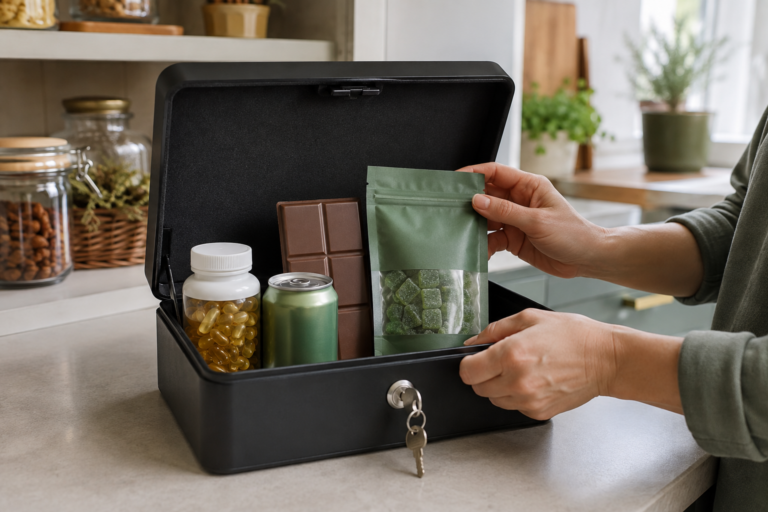
The best storage habit is boring and repeatable: keep edibles sealed, cool, dark, dry, clearly labelled, and locked. Original packaging is useful because it carries the THC amount, lot number, warnings, ingredients, allergens, and storage instructions. If you use a secondary container for organization, keep the original package inside it rather than separating the product from its label.
- Use a locked box, cabinet, or safe instead of an open pantry or snack drawer.
- Keep edibles away from ovens, sunny windows, heaters, bathrooms, and vehicles.
- Do not mix infused products with regular candy, chocolate, drinks, or baked goods.
- Reseal opened packages tightly and use them sooner than sealed ones.
- Follow “refrigerate after opening” or similar label instructions exactly.
- Date homemade edibles clearly and treat them like the regular food they are.
For broader storage targets across flower, pre-rolls, concentrates, vapes, oils, and edibles, use our cannabis storage guide. For THC beverages specifically, the cannabis drinks guide explains why drinks deserve their own caution around onset, serving size, and opened containers.
Homemade Edibles Need a Stricter Rule
Homemade edibles are not packaged like legal retail products. They may not have lab-tested THC information, child-resistant packaging, allergen information, a lot number, or storage instructions. Their shelf life depends heavily on the recipe. A brownie, cookie, butter, oil, sauce, or infused meal should be treated as food first and cannabis second.
Label homemade items with the date, estimated contents, and a clear cannabis warning. Store them locked away, separate from regular food, and do not leave them on counters during gatherings. If the food would normally belong in the fridge or freezer, cannabis does not make it shelf-stable.
FAQ
Do THC gummies expire?
THC gummies can become stale, dry, sticky, melted, or less predictable over time. Follow the package date and storage instructions. Throw them out if they smell wrong, look wrong, were stored badly, or the package seal is damaged.
Can expired edibles make you sick?
They can if the food has spoiled, the package was compromised, or the product was stored poorly. Risk depends on the ingredients and condition, not just the printed date. If there is mould, off smell, leakage, swelling, or uncertainty, do not eat it.
Do edibles lose potency after the date?
They may become less consistent, especially after heat, air, light, or time, but do not assume they are weak. Older edibles can still cause impairment. Avoid taking extra quickly because delayed onset can make the second serving arrive at the worst time.
Should edibles go in the fridge?
Only when the label says so or when the food type clearly needs it. Refrigeration can help opened drinks and heat-sensitive items, but moisture and odours can hurt gummies and chocolate if they are not sealed. If you chill them, keep them airtight and labelled.
Can you freeze cannabis edibles?
Some foods freeze better than others. Freezing may protect certain homemade baked goods or chocolates when sealed well, but it can also change texture and create moisture during thawing. Keep the product labelled, sealed, and locked, and thaw it while still sealed to reduce condensation.
Sources
- Canadian Food Inspection Agency: Date markings and storage instructions on food labels
- Health Canada: Packaging and labelling guide for cannabis products
- Cannabis Regulations: expiry-date labelling provisions
- Health Canada: How to read and understand a cannabis product label
- CCSA: Pediatric cannabis poisoning stakeholder toolkit
Explore the beginner’s guide, or learn how we source and edit our stories.