Education 8 min read
Live Resin vs Distillate in Canada: Label Checklist
A practical Canada-aware checklist for comparing live resin and distillate by product format, label details, potency, terpene cues, price, and safer use.
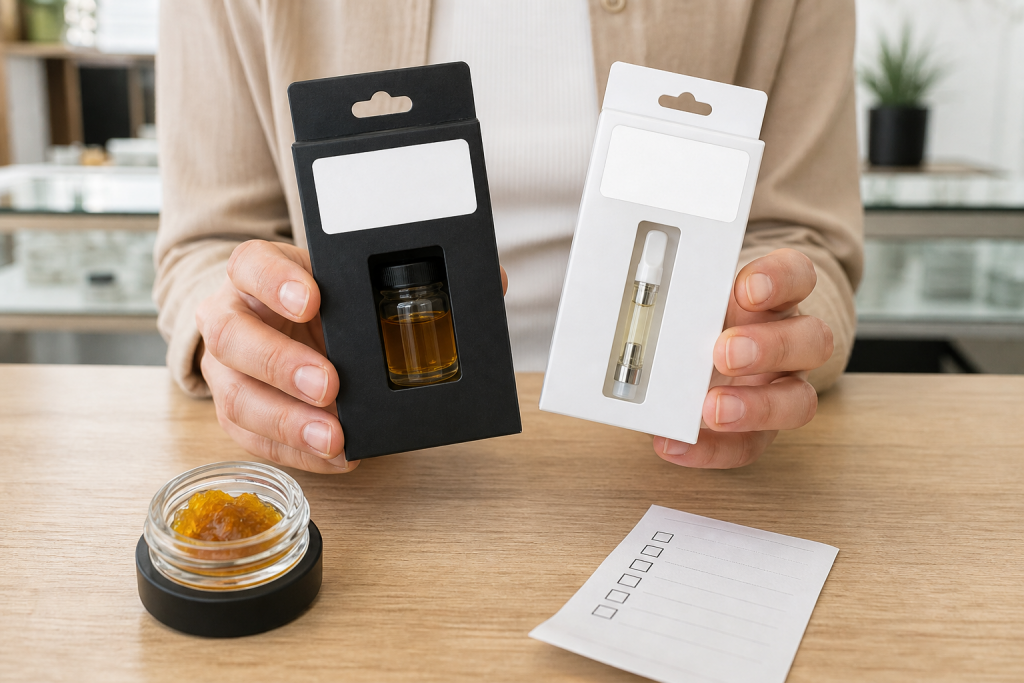
Live resin and distillate can sit beside each other on the same Canadian cannabis menu, but they are not trying to do the same job. One usually sells the idea of a more aromatic, cultivar-specific extract. The other usually sells consistency, high cannabinoid concentration, and a cleaner base for vape cartridges, edibles, oils, or infused products.
That difference matters because concentrates can be strong. A small amount may contain far more THC than a casual flower consumer expects, and the label can be confusing if you only look at the front-of-pack name. This guide explains how to compare live resin and distillate in Canada without getting lost in hype, medical claims, or strain marketing.
Quick Answer
Choose live resin when aroma, flavour, and a product that points back to a specific cultivar matter more than chasing the highest THC number. Choose distillate when you want a refined, usually clearer extract that is often more predictable, widely available, and easier to compare by THC/CBD amount and price.
Neither option is automatically safer, cleaner, stronger, or better. The better choice depends on the format, the THC/CBD amount, your tolerance, the ingredients, the device or accessory involved, and whether the product comes from a legal Canadian source with required labelling. If you are still choosing between major product types, start with our Cannabis 101 product type guide.
What Live Resin Usually Means
Live resin is a cannabis extract made with fresh-frozen plant material rather than flower that has gone through a full dry-and-cure process. The selling point is preservation of more volatile aroma compounds, especially terpenes. In plain language, live resin is usually positioned as more flavour-forward and more connected to the original cultivar.
In Canada, you may see live resin sold as vape cartridges, dabbable extracts, disposable vape formats, or blended products. The exact experience varies widely by producer, batch, hardware, and terpene profile. A live resin label does not guarantee that a product will feel gentle, balanced, or appropriate for beginners. It can still be a high-THC extract.
What Distillate Usually Means
Distillate is a more refined cannabis extract. It is processed to concentrate cannabinoids such as THC or CBD and strip away much of the original plant character. That makes it useful as a base ingredient in many products, including vape cartridges, edibles, oils, capsules, beverages, and infused pre-rolls.
Because distillate is relatively neutral on its own, flavour and aroma are often shaped by terpenes or flavouring ingredients added back into the product. Some products use cannabis-derived terpenes; others may use botanical flavouring substances. This is why the ingredient list matters. A distillate cartridge with a fruit-forward name may not reflect the same kind of cultivar expression as a live resin product with a similar strain name.
Live Resin vs Distillate: Practical Comparison
| Question | Live resin | Distillate |
|---|---|---|
| Main reason people choose it | Aroma, flavour, cultivar character, terpene expression | Potency, consistency, availability, simpler price comparisons |
| Typical product formats | Vape carts, dabs, jars, disposables, extract-forward products | Vape carts, edibles, oils, capsules, beverages, infused products |
| Label details to inspect | THC/CBD amount, terpene information, ingredients, extract type, lot date | THC/CBD amount, ingredients, flavouring/terpene source, package amount |
| Common trade-off | Often costs more and may be more variable by batch | May feel less cultivar-specific and more formulation-driven |
| Beginner caution | Do not assume “full spectrum” means mild | Do not assume clear oil or familiar flavours mean low risk |
Do Not Compare by THC Alone
Distillate often wins the simple THC-number contest, but that does not automatically make it the better purchase. A high THC percentage can also make it easier to overdo, especially with inhaled extracts where effects can arrive quickly. Live resin can also be potent enough to surprise an experienced flower consumer.
For a cleaner comparison, read the label in this order:
- Format: vape, dab, edible, oil, capsule, beverage, or infused product.
- Total THC and CBD: look at the amount in the package and, where relevant, per activation, unit, or serving.
- Ingredients: check carrier oils, flavouring ingredients, terpene claims, and anything you do not recognize.
- Package size: compare cost by amount, not just sticker price.
- Lot and packaging dates: useful for freshness and recall checks.
Health Canada’s cannabis label guidance is useful here because legal products must communicate key information such as THC/CBD amounts, health warnings, lot numbers, and packaging details. For a broader buyer habit, see our guide on why THC percentage is not everything.
Vape Cartridge Buyers: Pay Attention to Hardware
Many live resin vs distillate comparisons happen in the vape aisle. That can make the extract type feel like the only important decision, but the cartridge hardware matters too. A thick extract, poor device match, overheated cartridge, or low-quality disposable can turn a promising product into a bad experience.
Before buying a vape product, check whether it is a 510 cartridge, pod, disposable, or brand-specific device. Make sure the device is legal, compatible, and not damaged. Avoid modifying hardware or using unknown additives. Health Canada has warned that cannabis use has risks, and inhaled products can raise additional concerns because they reach the bloodstream quickly and involve heating aerosols into the lungs.
If you are choosing between vape formats, use our vape cartridge safety checklist before focusing on flavour or strain names.
Dabs, Jars, and Strong Extracts
Live resin often appears in small jars meant for dabbing. Distillate can appear in syringes, carts, or as an ingredient in other products. Dabbing concentrates is not a beginner-friendly starting point because the dose can be hard to judge, and the THC exposure can climb quickly.
Canada’s rules for cannabis extracts include composition and quantity limits, but legal does not mean low potency. Health Canada’s composition guidance notes maximum THC quantities for cannabis extracts, and proposed/new product documentation has continued to focus on how these products are described, packaged, and disclosed. For readers, the practical takeaway is simpler: do not treat a rice-grain-sized amount of concentrate like a casual puff of flower.
When Live Resin Makes More Sense
Live resin may make sense when you care about flavour, aroma, and how closely the extract reflects a cultivar. It can be a better fit for experienced consumers who already understand their tolerance and want a product where terpene profile matters. It can also make sense when the label is transparent about extract type, terpene information, and intended format.
Live resin is not automatically the right answer if you are price-sensitive, new to inhaled extracts, or mostly looking for a simple THC/CBD amount. It may also be harder to compare across producers because batch character can be part of the appeal.
When Distillate Makes More Sense
Distillate may make sense when you want a straightforward product with a clear cannabinoid amount, common format, and easier price comparison. It is often the base behind familiar cartridge and edible categories, so availability is rarely the issue.
The trade-off is that distillate can become more about formulation than plant character. If a product leans on dessert, fruit, or candy-style flavour names, check the ingredient list and avoid assuming the flavour equals the cannabis cultivar. If you are comparing ingestible products made with distillate, timing matters too; our guide to how long edibles take to kick in explains why stacking doses can cause problems.
Buyer Checklist
| Check | Why it matters | Green flag |
|---|---|---|
| Legal source | Reduces risk from untested products and unknown additives | Licensed retailer, intact package, required warning and label details |
| THC/CBD amount | Concentrates can deliver a lot from a small amount | Easy-to-find total and per-unit or per-activation information |
| Ingredients | Flavouring, terpenes, carrier ingredients, and additives vary | Short, clear ingredient list you understand |
| Format and hardware | Vape carts, dabs, oils, and edibles behave differently | Compatible device or clear instructions; no damaged hardware |
| Reason for buying | Prevents paying more for a feature you do not value | Live resin for flavour/cultivar interest; distillate for consistency/value |
Safer-Use Notes for Concentrates
Keep the boring rules close. Start with less than you think you need, avoid mixing with alcohol or other substances, do not drive or operate equipment after using cannabis, and keep all products locked away from children, teens, pets, and guests. If you are new to concentrates, try them only in a calm setting where you do not need to make quick decisions afterward.
People with pregnancy or breastfeeding considerations, a personal or family history of psychosis, heart concerns, medication interactions, or cannabis-related anxiety should be especially cautious and should not treat a retail label as medical guidance. The Weed Journal does not provide medical advice.
FAQ
Is live resin stronger than distillate?
Not automatically. Distillate often tests very high in THC, but live resin can also be highly potent. Compare the actual THC/CBD amount on the package instead of relying on the extract name.
Is live resin better than distillate?
It depends on what you value. Live resin is usually chosen for aroma and cultivar character. Distillate is usually chosen for consistency, availability, and simpler price or potency comparison.
Are live resin and distillate legal in Canada?
Legal cannabis extracts can be sold in Canada through licensed channels when they meet federal and provincial rules. Buy from legal sources and check the package for required label details.
Which is better for beginners?
Neither is automatically beginner-friendly because both can be potent. Beginners are often better served by lower-THC products, clear serving information, and formats that are easier to pace.
Bottom Line
Live resin vs distillate is not a contest between “premium” and “cheap” or “natural” and “synthetic.” It is a comparison between two extract styles with different strengths. Live resin usually makes the most sense when flavour and cultivar expression are the point. Distillate usually makes the most sense when you want consistency, availability, and a clear cannabinoid amount.
The best purchase is the one you can explain from the label: what it is, how strong it is, how you will use it, what device or format it requires, and why that choice fits your tolerance.
Sources
- Health Canada: How to read and understand a cannabis product label
- Health Canada: Guide on composition requirements for cannabis products
- Canada Gazette: Regulations amending certain cannabis regulations
- Health Canada: Cannabis health effects
Explore the beginner’s guide, or learn how we source and edit our stories.