Education 10 min read
Cannabis 101: How to Choose the Right Product Type in Canada
New to cannabis? Use this beginner guide to compare product types by onset, duration, control, smell, and responsible-use risk before you buy.
Most beginners start by asking which cannabis product is strongest. A better first question is which product type gives you enough control. Control is not about chasing potency. It means understanding onset, duration, dose clarity, and whether you can pause before going too far.
If you are new to the site, the Start Here hub collects the beginner path and links these basics to our label, dosing, and storage guides.
For a shorter format-by-format walkthrough, use our beginner product chooser for cannabis product types in Canada before comparing labels or buying.
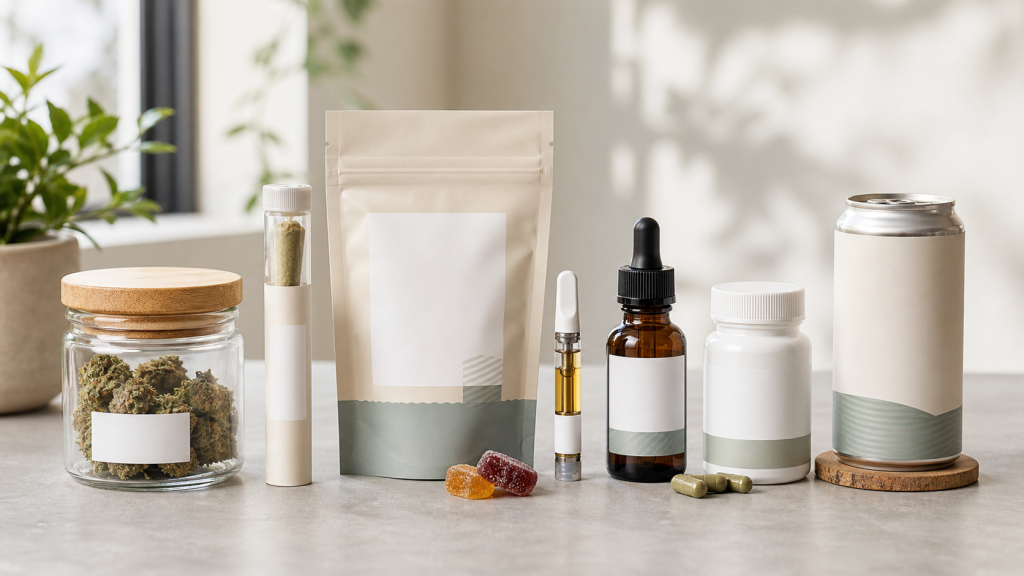
In Canada, adults can find cannabis in many formats, including dried flower, pre-rolls, edibles, vapes, oils, capsules, concentrates, and beverages. The right choice depends on setting, tolerance, comfort with smoke or vapour, discretion, and willingness to wait. Use cannabis only where legal, avoid driving or important responsibilities after consuming, and keep products away from children, pets, and guests.
If you are comparing extract labels inside that product-type decision, the live resin vs distillate comparison explains how aroma, Total THC, hardware, and label details differ without treating either format as automatically better.
If you are comparing smoke-free formats specifically, our guide to tinctures vs edibles in Canada explains how oils, sprays, capsules, beverages, and edibles differ on label math, onset, duration, and waiting time.
For a narrower bottle-by-bottle comparison, see cannabis oil vs tincture labels and dosing, including THC per ml, dropper measurement, swallowed-use timing, and sublingual-use cautions.
For the legal baseline behind those choices, see our guide to legal cannabis in Canada, including adult possession, authorized retailers, home growing, travel, and driving cautions.
If inhalation is part of your comparison, our guide to vaping vs smoking cannabis in Canada explains the smoke, vapour, and lung-risk tradeoffs in more detail.
This guide is educational, not medical or legal advice. If cannabis may interact with your health, medication, job, lease, or local rules, check the relevant professional or authority before using it.
Start With The Outcome, Not The Product
Before comparing labels, decide what you want in practical terms. Are you relaxing at home with no plans afterward? Looking for a smoke-free option? Trying to learn your tolerance slowly? Hoping for something social but controlled? Those are more useful questions than “indica or sativa?” or “what has the highest THC?”
If your goal is to learn your response slowly, our guide to microdosing cannabis in Canada explains how low-dose planning, waiting windows, and simple tracking can reduce accidental overuse.
For a first experience, simpler is usually better. Choose clear THC and CBD information, a modest amount per serving, and a format you understand before opening the package. Avoid mixing alcohol or multiple cannabis formats while learning. A small edible, a strong vape pull, and a pre-roll can all overlap in timing and make it harder to tell what caused what.
If cannabinoid terms are part of the decision, use our guide to THC, CBD, and CBN basics before treating a label claim as a predictable effect.
Also think about the day around the product. If you need to drive, work, study, handle family duties, or make important decisions, save the trial for another time. Cannabis is easier to use responsibly when you are not trying to squeeze it into a busy schedule.
Quick Product Type Comparison
| Product type | Typical onset | Typical duration | Best for | Beginner caution |
|---|---|---|---|---|
| Flower | Minutes | 1-3 hours | Fast feedback | Smoke, smell, harshness, dose control |
| Pre-rolls | Minutes | 1-3 hours | Convenience | Easy to consume more than intended |
| Vapes | Minutes | 1-3 hours | Lower-odor fast feedback | Hardware quality and product source |
| Edibles | 30-120+ minutes | 4-8+ hours | Smoke-free longer sessions | Delayed onset and overconsumption |
| Capsules/softgels | 30-120+ minutes | 4-8+ hours | Precise swallowable units | Similar delayed risk to edibles |
| Oils/tincture-style extracts | 15-120+ minutes | Varies by use | Measured mL or dropper dosing | Timing changes if swallowed or held in the mouth |
| Oral sprays | 15-120+ minutes | Varies by use | Measured spray-by-spray dosing | Spray count and THC per spray matter |
| Sublingual strips/lozenges | 15-120+ minutes | Varies by product | Smoke-free mouth-used formats | Do not assume faster means easier to redose |
| Beverages | 10-60+ minutes | Varies | Social smoke-free alternative | Dose still matters |
These ranges are general. Individual effects can vary based on THC amount, product chemistry, food, body size, tolerance, and how the product is used. Treat any timing chart as a planning tool, not a promise. For smoke-free formats, compare the label unit first: one edible piece, capsule, spray, strip, lozenge, beverage serving, or measured mL can all carry different THC and CBD amounts.
If You Want The Most Control
Products with faster feedback can feel easier to manage because you can notice effects sooner and stop. That is why some beginners prefer a small amount of flower or a vape from a licensed source. The tradeoff is that inhaled cannabis brings smoke or vapour into the lungs, can smell, and can still be overused.
If you choose flower, avoid judging the product only by THC percentage. A very high THC product can be difficult to pace, especially if you are new. Look for a modest THC range, clear packaging, and a quiet first setting. If you choose a pre-roll, remember that you do not have to finish it in one session.
Oils can also offer control because the label may show a measured amount per drop or millilitre. They are not always fast, though. Some oils act more like edibles depending on use, so read the package and give the product time.
If You Want Smoke-Free
The main smoke-free choices are edibles, capsules, oils, oral sprays, sublingual strips or lozenges, beverages, and topicals. The first split is whether the product is swallowed, held in the mouth first, sipped, or applied to the skin. That matters because onset, duration, and redosing risk change by format.
For measured swallowable products, our cannabis capsules and softgels guide explains label math, THC/CBD per unit, onset, and delayed-effect cautions. If you are comparing bottles or droppers, use the cannabis oil vs tincture labels and dosing guide. If the product is measured by sprays, strips, lozenges, or a mouth-held oil, compare it with the guides to cannabis oral spray in Canada and sublingual cannabis products in Canada.
The biggest beginner risk with ingestible and mouth-used smoke-free formats is still delayed or uneven onset. Taking a second edible, capsule, oil dose, spray, strip, lozenge, or beverage too soon is one of the easiest ways to get uncomfortably high. For a deeper follow-up, use our beginner edibles dosing guide before buying.
Topicals are a separate category because they are applied to the skin rather than eaten or inhaled; our cannabis topicals guide explains how creams, balms, THC/CBD labels, and cosmetic-style claims work in Canada. Beverages can feel familiar because they fit a social pattern people already know, but a cannabis beverage is still a cannabis product and should be paced with the same care as any other THC format.
If You Are Worried About Getting Too High
Look for low-THC or balanced THC:CBD products instead of treating high THC as better value. A product with a large THC number is not automatically a better beginner product. It may simply be harder to manage.
Plan your first trial for a quiet time when you do not need to drive, work, care for someone, or make decisions. Keep water nearby, eat normally, and choose a comfortable place. If you feel unsure, wait for a better day.
Health Canada encourages people to lower risk by starting with small amounts, avoiding frequent high-potency use, and avoiding cannabis with alcohol or other substances. The practical takeaway is simple: a boring first session is better than an overwhelming one.
If Smell And Discretion Matter
Smoking dried flower usually creates the strongest lingering smell. Pre-rolls are convenient, but they carry the same issue. Vapes usually smell less, although they are not scent-free and should still be used only where allowed.
Oils, capsules, edibles, and beverages are usually the lowest-smell options. That does not mean they are appropriate everywhere. Follow local rules, lease terms, workplace policies, and private-property restrictions. Discretion should never mean hiding cannabis from people who need to know, such as a caregiver, roommate, or parent in a home where products must be stored safely.
Label Checks Before Buying
A beginner-friendly product should make the basics easy to find. Check THC and CBD per unit or serving, total package amount, serving size, ingredients, allergens, package or lot date, and whether it comes through a licensed provincial or territorial retail channel. If the label feels confusing, start with our guide on how to read cannabis labels in Canada.
Do not shop by price alone. A clear label, modest dose, and fresh, well-stored product are more useful than a bargain you do not understand. After purchase, store cannabis in its original packaging when possible, sealed, dry, and out of reach. See our guide on how to store cannabis safely for more.
Buy Through Legal Channels
In Canada, legal access runs through provincial and territorial systems. That matters for beginners because licensed products come with standardized packaging, required warning information, THC and CBD details, lot information, and a clearer path back to the retailer or regulator if something seems wrong.
A legal channel is also easier to verify. The Government of Canada maintains province and territory links for authorized retailers and distribution systems. If a site avoids basic business information, sells unlabelled products, or makes unclear claims about shipping, pause before ordering.
Avoid anonymous sellers, unlabelled products, and deals that make dose or source unclear. Saving a few dollars is not worth losing basic information about what you are using.
A Simple Beginner Decision Tree
- Need fast feedback? Consider a small amount of flower or a licensed vape, then stop early.
- Need smoke-free? Consider a low-dose edible, oil, capsule, or beverage, then wait.
- Need a measured routine? Consider oil or capsules with clear dose information.
- Unsure? Choose the simplest low-dose product with the clearest label and no deadline afterward.
If you are comparing two common beginner routes, an edibles vs vapes comparison can help you weigh onset, smell, and dose control. If beverages interest you, a fast-acting edibles guide can explain timing differences. Those are good follow-up topics once you understand the main formats.
Common Beginner Mistakes
The most common mistake is starting too strong. Another is taking more because nothing has happened yet, especially with edibles or capsules. Beginners also overtrust indica and sativa labels, ignore CBD, forget storage, or assume legal products can be used anywhere.
Another mistake is treating cannabis like a single product. A 2.5 mg edible, a 25% THC pre-roll, a balanced oil, and a vape cartridge can feel completely different in timing and intensity. Learning the product type matters as much as learning the strain or flavour.
Pause before you buy and ask: Can I understand the label? Do I know the THC per serving? Do I know when effects may begin? Do I have time to wait? If not, choose a simpler product.
FAQ
What is the easiest cannabis product type for beginners?
There is no single easiest product for everyone. Many beginners do best with a low-dose, clearly labelled product and a quiet setting. The easiest choice is one you can understand, measure, and use without rushing.
Are edibles safer than smoking cannabis?
Edibles avoid smoke, but they are not risk-free. Their delayed onset and longer duration can make overconsumption more likely for beginners.
Is vaping cannabis the same as smoking?
No. Vaping and smoking are different methods, but both are inhaled. Use only licensed products and consider lung comfort, local rules, and your own risk tolerance.
Should beginners choose THC, CBD, or balanced products?
Beginners who are cautious about intensity may prefer low THC or balanced THC:CBD products. Read the label carefully and avoid choosing by THC percentage alone.
Can you mix cannabis product types?
It is better not to mix product types while learning your tolerance. Combining formats can make timing and intensity harder to predict.
Sources
- Health Canada: Consumer information – Cannabis
- Health Canada: Cannabis – lower your risks
- Government of Canada: Authorized cannabis retailers in the provinces and territories
- Government of Canada: Cannabis and health effects
Explore the beginner’s guide, or learn how we source and edit our stories.