Education 9 min read
Cannabis on Public Transit in Canada: Carry, Odour, and Courtesy Checklist
A practical Canada-aware checklist for carrying legal cannabis on buses, subways, trains, and ferries without smoking, vaping, odour issues, or storage mistakes.
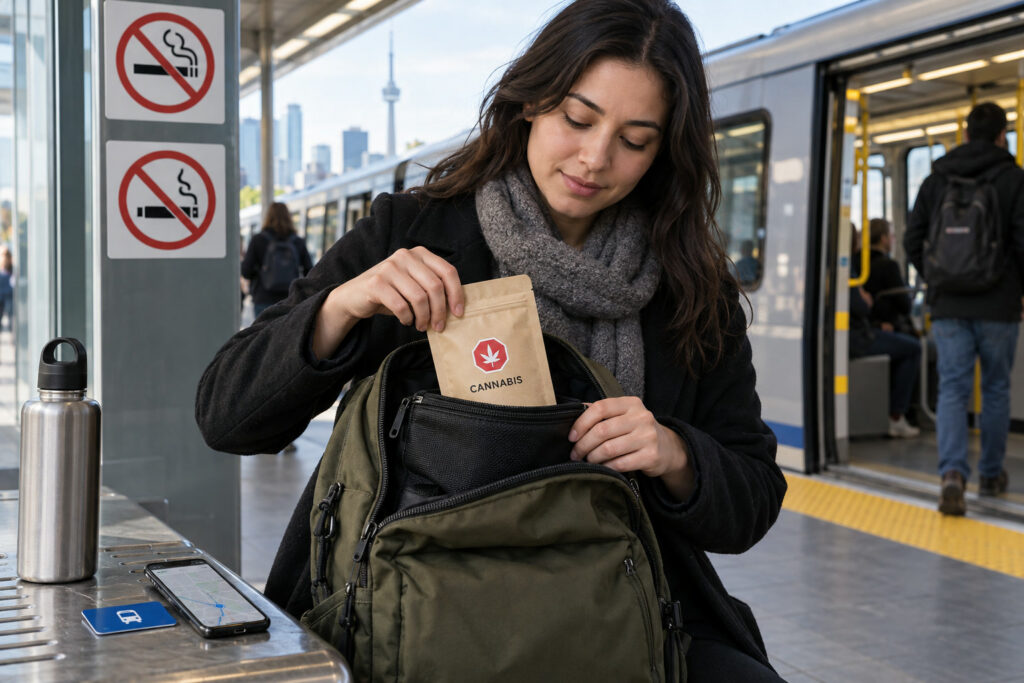
Taking legal cannabis home by bus, subway, commuter rail, or ferry sounds simple until you are standing on a platform with a paper bag, a crowded vehicle, and ten different local rules in the back of your mind. The safest approach is also the least dramatic: keep the product sealed, keep it put away, do not smoke or vape anywhere transit rules forbid it, and plan the rest of your trip as if other riders should not have to notice what you bought.
This guide is for adults in Canada who are carrying legal cannabis as a passenger on public transit. It is not legal advice, and local rules can change, but it gives you a practical checklist for the situations people actually run into: odour, open packages, transfers, long rides, storing products around kids or pets after you get home, and avoiding impaired driving after the transit leg ends.
The quick answer
In most everyday cases, an adult can carry legal cannabis on public transit in Canada if they are within the legal possession limit, the product is not being used on transit property, and local smoking, vaping, alcohol, conduct, and safety rules are followed. The federal public possession limit for adults is generally 30 grams of dried cannabis or its equivalent, but provinces, territories, municipalities, transit agencies, campuses, workplaces, landlords, and event venues can add rules about where cannabis can be used or how people may behave on their property.
Think of transit as a carry-only environment. A sealed package in a bag is one thing. Lighting up, vaping, eating an edible in a way that leaves you too impaired to navigate safely, opening strong-smelling flower beside other riders, or arguing with staff about posted rules is another.
Public transit cannabis checklist
| Transit moment | Better choice | Why it matters |
|---|---|---|
| Leaving a legal store | Keep cannabis in its original sealed package and put it inside a bag or pouch. | It reduces odour, keeps labels with the product, and avoids drawing attention on the ride. |
| Waiting at a stop or platform | Follow posted no-smoking and no-vaping rules, including outdoor station areas where they apply. | Transit agencies often treat stations, shelters, platforms, vehicles, and property as smoke-free or vape-free spaces. |
| Riding in a crowded vehicle | Keep the package closed, zipped away, and out of the aisle. | Other riders should not have to deal with odour, spills, loose items, or blocked space. |
| Carrying edibles or drinks | Keep them clearly separate from regular snacks and drinks. | Edibles can be mistaken for regular food, especially once you get home around guests, kids, or pets. |
| Ending the trip | Store cannabis securely as soon as you arrive. | Health Canada recommends keeping cannabis out of reach of children, teens, and pets. |
Can you smoke or vape cannabis at a bus stop, station, or platform?
Do not assume you can. Smoking and vaping rules are usually stricter on transit property than they are in a generic public outdoor space. Ontario, for example, has provincial rules about where people cannot smoke or vape, and transit agencies can also set their own conduct rules. The TTC’s By-law No. 1 prohibits smoking in or on TTC property and carrying lighted smoking equipment there. TransLink’s rider etiquette page says smoking and vaping are prohibited on TransLink property and vehicles and reminds riders to follow cannabis, tobacco, vaping, and municipal rules.
The practical rule is simple: if you are on a vehicle, in a station, in a shelter, on a platform, in a paid fare zone, or near posted no-smoking/no-vaping signs, do not smoke or vape. If you are outside the transit system entirely, check the local smoking and vaping rules for that place. Cannabis being legal does not mean every public spot is a consumption spot.
Should cannabis stay sealed?
Yes, whenever possible. Keeping cannabis in its original retail packaging helps preserve the label details and makes the product less likely to spill, smell, or be confused with ordinary food. This matters most for edibles, beverages, capsules, oils, and concentrates, but it is also useful for flower and pre-rolls.
If the package is already open, put it inside a secondary container or pouch before you board. This is not about hiding illegal activity. It is about being a low-friction passenger: no loose flower in a pocket, no open edible bag beside regular snacks, no leaking vape cartridge in the front pouch of a backpack, and no strong odour escaping into a packed vehicle.
For buying basics before the transit trip, The Weed Journal’s legal cannabis retailer checklist explains why legal source, labels, excise stamps, and package information matter.
What about possession limits?
The common federal adult public possession limit is 30 grams of dried cannabis or equivalent. Equivalents matter because extracts, edibles, beverages, seeds, and other product forms do not map one-to-one against dried flower weight. If you are carrying multiple formats, use the product labels and official equivalency rules rather than guessing by package size.
For a plain-language refresher, see The Weed Journal’s guide to cannabis possession limits in Canada. The key point for transit is that a legal ride home can become a problem if you are carrying more than the allowed public amount, crossing into a place with stricter property rules, or mixing legal adult possession with unsafe behaviour.
Odour is a courtesy issue, not just a storage issue
Cannabis odour can be strong even when nobody is consuming it. In a crowded bus or train, that can become a courtesy issue quickly. Some riders may dislike the smell; others may have asthma, migraine triggers, sensory sensitivities, workplace uniform concerns, or children with them. You do not need to make cannabis invisible, but you should make the trip uneventful for everyone else.
Use a simple system: original package first, then a zippered pouch, then your bag. Keep the pouch closed. Do not open jars or bags to show a friend what you bought. Do not grind flower, roll anything, reload a device, or inspect a sticky concentrate in a moving vehicle. If a package has leaked or smells unusually strong, step away from the crowd, re-secure it, and deal with it properly when you are home.
The same habits apply after the ride. The Weed Journal’s home safe-storage checklist covers locked storage, separation from ordinary food, and practical household routines.
Edibles, drinks, and long rides
Edibles and cannabis beverages deserve extra caution on transit because they can look ordinary and their effects can take time. If you take an edible before or during a long ride, the strongest effects may arrive later, possibly during a transfer, a walk home, a pickup by someone else, or a situation where you need to respond quickly. Health Canada warns that cannabis can impair attention, coordination, reaction time, and decision-making; the timing depends on the product, the person, dose, food, tolerance, and other substances.
For transit, the safer default is to wait until you are at your destination, especially if you are unfamiliar with the product, the route, or the dose. If you already consumed cannabis before boarding, avoid driving after the transit portion, avoid mixing with alcohol, and consider whether you have a simple route home that does not require complex decisions.
If your trip ends with a car, read The Weed Journal’s guide to cannabis and driving in Canada before making assumptions about timing.
Carry plan by product type
| Product type | Transit carry risk | Practical carry plan |
|---|---|---|
| Dried flower | Odour, loose material, crushed buds | Keep the retail package closed, then place it in a zippered pouch or inner backpack pocket. |
| Pre-rolls | Odour, bent tubes, temptation to light one near a stop | Leave tubes sealed and do not open them on transit property. |
| Edibles | Confusion with regular snacks | Keep child-resistant packaging intact and separate from food, especially if travelling home to a shared space. |
| Beverages | Leaking, mistaken identity, delayed effects | Keep cans or bottles closed, upright, and away from regular drinks. |
| Vapes | Leaking, heat, accidental activation, prohibited use | Store upright if possible, protect from damage, and do not use on transit vehicles or property. |
| Oils, capsules, sprays | Leaks, dosing confusion | Keep caps tight, labels visible, and products separate from toiletries or supplements. |
What if you are crossing provincial or municipal lines?
Transit trips often blur boundaries. A commuter train can cross municipalities. A bus can cross from one province into another in the Ottawa-Gatineau region. A ferry can connect places with different local rules. The federal possession framework is only one layer. Provinces and territories set age, retail, possession, home growing, public use, and enforcement details, while municipalities and transit operators can add property-specific rules.
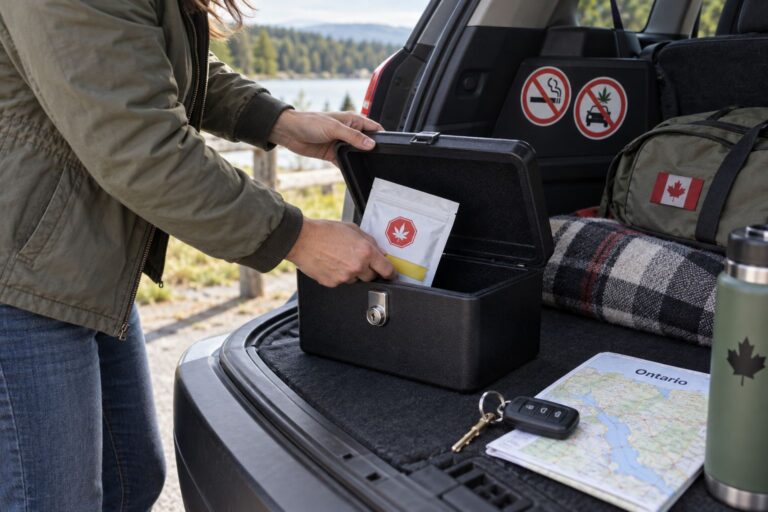
If the trip is local and routine, the low-risk approach is usually enough: legal source, legal amount, sealed storage, no use on transit property, and secure storage at home. If the trip crosses a border, involves an event, school, workplace, hospital, airport, ferry terminal, or campus, check the destination rules before you travel. The Government of Canada warns travellers not to take cannabis across Canada’s international border, even if cannabis is legal where they are going.
Do not make staff guess what you are doing
Most transit staff are trying to keep vehicles moving, maintain safety, and respond to obvious conduct issues. Make their job easy. Keep cannabis out of sight unless there is a legitimate reason to show the package. Follow posted signs. Keep bags out of doorways and aisles. If a staff member asks you to stop smoking, move away from a restricted area, put something away, or follow a property rule, do it calmly and sort out questions later through the agency’s customer service channel.
This is also where odour-control habits help. A closed pouch in a backpack does not create the same situation as an open jar, a freshly lit joint, or a vape cloud near a platform entrance.
After you get home
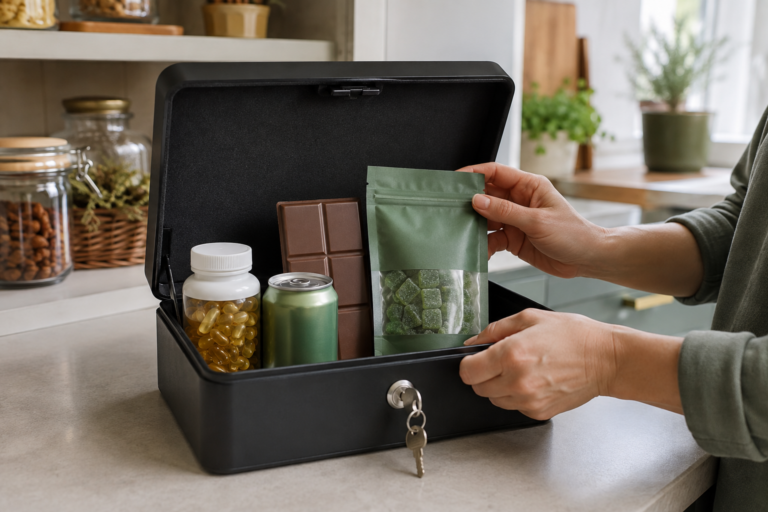
The trip does not end when you leave the vehicle. Put cannabis away before you unpack everything else, especially if you live with children, teens, pets, roommates, guests, or anyone who should not accidentally handle it. Health Canada recommends storing cannabis securely and out of reach. That means high, locked, labelled, and separate from regular food where practical.
If odour is the concern, use storage habits that respect other people in the home instead of trying to mask the smell with heavy fragrances. The Weed Journal’s smell-proof cannabis storage guide has a practical home, car, and travel checklist.
A simple public-transit carry routine
- Buy from a legal source and keep the receipt if you want extra context for the trip home.
- Confirm you are within the legal public possession amount for the products you carry.
- Leave products sealed in original packaging.
- Put cannabis inside a zippered pouch, then inside your bag.
- Do not smoke, vape, roll, grind, open, eat, or share cannabis on vehicles, platforms, shelters, or other transit property where rules prohibit it.
- Keep edibles and beverages separate from regular snacks and drinks.
- Plan a non-driving route if you have consumed cannabis or may consume soon after arriving.
- Store products securely as soon as you get home.
Bottom line
Carrying cannabis on public transit in Canada is mostly about restraint and preparation. Keep it legal, closed, labelled, zipped away, and unused until you are somewhere it is allowed. That protects you from avoidable rule problems and protects other riders from odour, smoke, vape aerosol, spills, and awkward confusion. Good cannabis etiquette is boring in the best way: nobody on the bus, train, or ferry has to think about your purchase at all.
Sources
- Health Canada: Safe storage of cannabis
- Government of Canada: Cannabis impairment
- Government of Ontario: Cannabis laws
- Government of Ontario: Where you cannot smoke or vape
- TTC By-law No. 1
- TransLink: Etiquette on Transit
- Government of Canada: Drugs, alcohol and travel
Explore the beginner’s guide, or learn how we source and edit our stories.