Education 8 min read
Cannabis and Medications in Canada: What to Ask Before You Mix
A practical Canada-aware checklist for adults using cannabis with prescription or OTC medications, including what to ask a pharmacist.
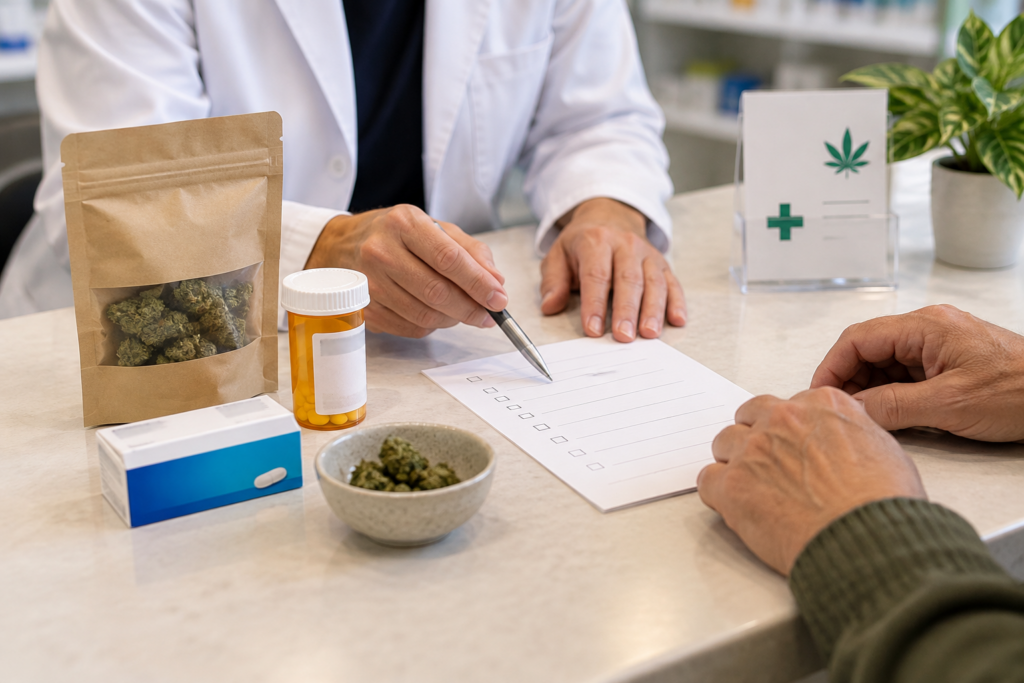
If you use cannabis and also take prescription or over-the-counter medication, the safest answer is not a blanket yes or no. It is a better question: what exactly am I taking, how often, and who has checked the combination?
Cannabis products can vary widely in THC, CBD, route of use, onset, duration, and strength. Medications vary too. A once-a-day blood pressure pill, a sleep aid, an antidepressant, an opioid pain medication, an allergy tablet, and an over-the-counter pain reliever do not raise the same questions. That is why this guide focuses on the practical part: how Canadian adults can prepare for a safer conversation with a pharmacist, prescriber, or other qualified health professional.
This is general education, not medical advice. Do not stop, start, or change prescribed medication because of an article. If cannabis is already part of your routine, bring it into the same medication review you would use for alcohol, supplements, or new prescriptions.
Why cannabis belongs in a medication review
Health Canada’s information for health care professionals notes that cannabis and cannabinoids are complex substances, and that product differences, route of administration, dose, individual factors, and possible interactions all matter. That is the core idea for consumers: “cannabis” is not one predictable product.
THC is the main intoxicating cannabinoid. CBD is not generally used for intoxication, but it can still matter in medication discussions, especially at higher doses or when used regularly. Edibles, oils, capsules, sprays, vapes, flower, concentrates, and high-CBD products can all behave differently in the body. A person who uses a low-THC product once a month is not in the same situation as someone taking daily CBD oil while also taking several prescriptions.
The Canadian Centre on Substance Use and Addiction has a public resource specifically about cannabis and medications, describing the issue as one that can involve both prescription and off-the-shelf drugs. The Canadian Pharmacists Association also emphasizes pharmacists’ medication expertise, including their role in helping identify harmful drug interactions and contraindications.
Medication groups that deserve extra caution
The goal is not to memorize a giant interaction list. The useful move is to know which categories should trigger a conversation before you combine them with cannabis, especially THC-rich products or frequent use.
| Medication or product type | Why it is worth asking about | Practical question to ask |
|---|---|---|
| Sleep aids, sedatives, benzodiazepines, some anxiety medications | THC can cause drowsiness and slowed reaction time, and other sedating products may add to that effect. | “Could cannabis make me too drowsy or unsafe to drive, work, or care for someone?” |
| Opioid pain medications and other strong pain medicines | Combining central nervous system depressants can increase safety concerns, especially around sedation and impairment. | “Is this combination risky for breathing, alertness, falls, or overdose safety?” |
| Antidepressants, antipsychotics, mood stabilizers, ADHD medications | Cannabis may affect mood, anxiety, attention, and side effects differently from person to person. | “What changes in mood, sleep, anxiety, or side effects should I watch for?” |
| Blood thinners, seizure medications, transplant medications, and narrow-therapeutic-index drugs | Some medications require stable levels; interaction concerns may be more serious when small changes matter. | “Does THC or CBD affect the level or monitoring plan for this medication?” |
| Alcohol, OTC sleep products, antihistamines, cough/cold products | These are easy to forget because they may not feel like “medications,” but they can still add sedation or impairment. | “Should I avoid cannabis on days I use this product?” |
Be especially careful with products marketed as “just CBD.” CBD is not the same as THC, but that does not make it interaction-free. A pharmacist or clinician will care about dose, frequency, the medication list, and whether the product is legal and labelled clearly enough to understand what is in it.
What to bring to the pharmacy or clinic
A useful cannabis-medication conversation is easier when you bring specifics. “I use gummies sometimes” is harder to assess than “I use one 2.5 mg THC gummy on Friday nights, and I take these three prescriptions every day.” You do not need to give a speech. You just need enough detail for the professional to spot obvious risks and ask better follow-up questions.
- Your full medication list: prescriptions, over-the-counter products, vitamins, supplements, sleep aids, allergy medication, pain relievers, and any products you take only sometimes.
- Your cannabis product details: THC and CBD amounts, product type, brand if you know it, whether it is legal Canadian cannabis, and how often you use it.
- Your timing: morning, evening, before bed, before driving, after alcohol, with meals, or only on weekends.
- Your reason for using cannabis: recreation, sleep, appetite, pain, anxiety, or another reason. Keep it plain and factual.
- Recent changes: a new prescription, higher cannabis dose, stronger product, new edible format, or a new side effect.
If you are embarrassed, remember that pharmacists and clinicians hear practical safety questions all day. You are not asking for permission to be judged; you are asking for a medication safety check.
Timing matters more than people think
Many interaction problems are not about cannabis being “bad” in isolation. They are about timing, stacking, and the activity planned afterward.
For example, an edible can take longer to feel than inhaled cannabis and may last longer. If someone adds a sleep aid because the edible “is not working yet,” the combined effect can become stronger than expected later in the evening. If someone drinks alcohol, uses THC, and takes an antihistamine, the issue may be less about any single product and more about the combined impairment.
Driving deserves its own caution. Health Canada advises that cannabis can impair judgment and reaction time, and that some effects, such as drowsiness, can last up to 24 hours. There is no universal safe waiting period for driving after cannabis. If there is any doubt, plan another way home or avoid driving entirely.
For more detail on timing, read The Weed Journal’s guides to how long edibles take to kick in, how long a cannabis high lasts, and cannabis the night before driving in Canada.
Questions to ask before mixing cannabis and medication
Bring these questions to a pharmacist, doctor, nurse practitioner, or clinic that knows your health history. You do not need every question every time, but this list can prevent the common mistake of asking only, “Is cannabis okay?”
- Could cannabis increase drowsiness, dizziness, confusion, anxiety, or fall risk with this medication?
- Does THC or CBD affect how this medication is processed or monitored?
- Should I avoid cannabis completely while taking this medication, or only avoid certain product types or doses?
- Are edibles, oils, capsules, vapes, or flower different for my situation?
- Should I avoid alcohol or other sedating products if cannabis is in the picture?
- What warning signs mean I should seek medical help?
- Would changing the timing of cannabis use reduce risk, or is the combination still a concern?
- Should this discussion be added to my medication record?
For people using medical cannabis or higher-dose CBD, ask whether any lab monitoring, medication-level checks, or prescriber follow-up is appropriate. That question is especially important for medications where blood levels, bleeding risk, seizure control, transplant safety, or heart rhythm concerns are part of the care plan.
Red flags: when not to “wait and see”
Some situations call for immediate caution rather than experimentation. Get professional advice before mixing cannabis with medication if you are taking multiple prescriptions, have a history of fainting or falls, are pregnant or breastfeeding, have a heart condition, liver disease, seizure disorder, psychosis history, or have been told not to use alcohol or sedating substances with a medication.
Seek urgent help if someone has severe confusion, chest pain, trouble breathing, repeated vomiting, loss of consciousness, severe panic that does not settle, or symptoms that feel dangerous or unusual. If a child or pet consumes cannabis or cannabis edibles, treat it as urgent and contact poison control, emergency services, or a veterinarian as appropriate.
Legal Canadian products make the review easier
A pharmacist cannot evaluate a mystery product well. Legal Canadian cannabis has standardized packaging and clearer THC/CBD information than unregulated products. That does not make every legal product low risk, but it gives the person doing the medication review something concrete to work with.
Bring the package or a photo of the label if you can. Look for total THC, total CBD, package size, unit dose, lot number, and product type. If the label is confusing, The Weed Journal’s guides on reading cannabis labels in Canada and CBD:THC ratios can help you prepare better questions before the appointment.
A safer-use checklist for adults
- Keep an updated medication list on your phone.
- Tell your pharmacist or prescriber about cannabis use, including CBD-only products.
- Avoid mixing cannabis with alcohol or sedating products unless a qualified professional has said it is acceptable for your situation.
- Do not drive or do safety-sensitive work after using cannabis.
- Be extra cautious with edibles because delayed effects can lead to accidental stacking.
- Use legal, clearly labelled products so dose and contents are easier to discuss.
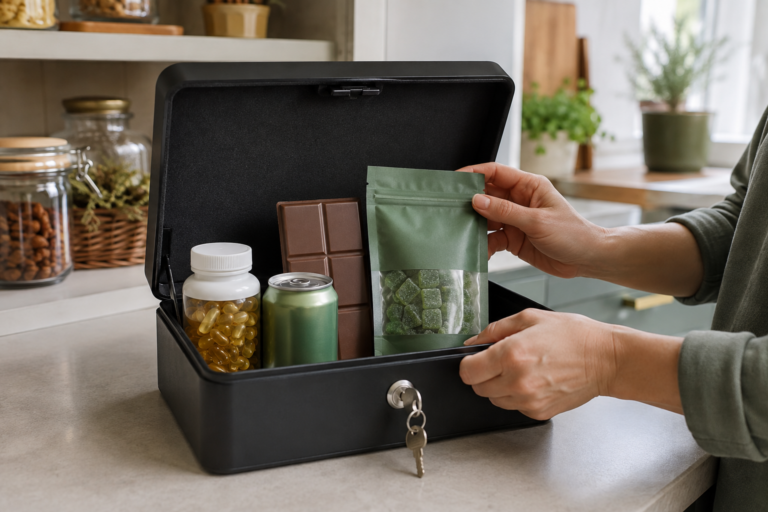
- Store cannabis away from children, pets, guests, and anyone who could mistake it for regular food or medication.
- Report worrying side effects or suspected adverse reactions to a health professional.
The bottom line
Cannabis and medications can be a simple conversation, but it should not be a guess. The responsible move is to treat cannabis like any other substance that can affect alertness, side effects, and medication safety. Bring the product details, be honest about frequency and dose, and ask a pharmacist or prescriber to check the combination against your real medication list.
The best outcome is not fear. It is clarity: what to avoid, what to monitor, when to pause, and when to get help.
Sources
- Health Canada: Information for Health Care Professionals, Cannabis and Cannabinoids
- Canadian Centre on Substance Use and Addiction: Cannabis and Your Medications
- Canadian Pharmacists Association: Medical Cannabis
- Health Canada: Cannabis Impairment
Explore the beginner’s guide, or learn how we source and edit our stories.