Education 8 min read
How to Choose Cannabis Product Types in Canada
A practical beginner checklist for comparing cannabis flower, edibles, oils, capsules, vapes, and topicals in Canada without chasing hype.
Choosing a cannabis product type is often harder than choosing a strain name. A beginner may see dried flower, pre-rolls, gummies, drinks, oils, capsules, oral sprays, vapes, concentrates, and topicals on the same menu, each with different timing, label language, and risk tradeoffs.
This guide is for adults in Canada who want a practical way to compare formats before buying or using cannabis. It does not rank products from “best” to “worst.” Instead, it helps you match a product type to the situation: how quickly effects may start, how long they may last, how easy the dose is to control, what label details matter, and when a format is a poor fit.
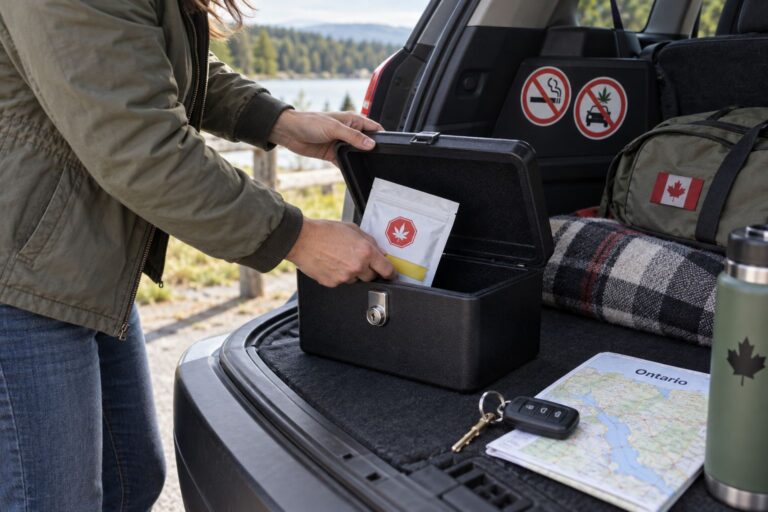
If you are completely new, keep the decision boring: use legal products, read the full label, avoid mixing cannabis with alcohol or other substances, plan transportation before use, and start with a low-THC option when you do not know your tolerance.
Quick Comparison Table
| Product type | Common beginner reason | Timing pattern to plan around | Main caution |
|---|---|---|---|
| Dried flower or pre-rolls | Familiar, flexible, easy to stop after a small amount | Effects may start quickly when inhaled and fade sooner than edibles | Smoke is harmful to lungs; pre-roll strength can be easy to underestimate |
| Vapes | Less smoke smell and controlled short draws | Usually faster onset than oral products | Use legal products only; avoid unknown cartridges or additives |
| Gummies, chocolates, baked goods | No inhaling and precise package milligrams | Effects can take much longer to appear and may last for hours | Taking more too soon is a common beginner mistake |
| Beverages | Familiar social format and low-dose options | Timing varies by product; do not assume it works like alcohol | Easy to sip too quickly or combine with alcohol |
| Oils, capsules, softgels, sprays | Measured dose and no smoking | Oral products can be delayed; sprays and oils vary by use method | Label math matters; wait before increasing |
| Topicals | Used on skin and typically not chosen for intoxication | Local skin use, not a beginner “high” format | Do not treat topical labels as medical promises |
| Concentrates | Experienced users seeking potency | Often fast and strong when inhaled | Usually a poor first choice because THC levels can be high |
Start With The Outcome, Not The Strain Name
Many beginners start by asking whether they should buy indica, sativa, or hybrid. That can be a useful shopping category, but it is not the safest first question. Product type usually shapes the experience more directly than the strain label because it affects onset, duration, dose control, smell, storage, and how easy it is to stop.
Before comparing strain names, answer four plain questions:
- Do you want to avoid inhaling smoke or vapour?
- Do you need effects to be short and easier to evaluate, or can you plan for several hours?
- Can you read the THC amount clearly and divide the serving safely?
- Will you be at home, off the road, and free of responsibilities that require attention?
For a broader foundation, use our Cannabis 101 product type guide before narrowing the choice. This article is the decision checklist version: the practical filter to use when you are staring at a menu.
Inhaled Products: Flower, Pre-Rolls, And Vapes
Inhaled cannabis usually appeals to adults who want effects they can evaluate relatively quickly. Dried flower, pre-rolls, and vapes can make it easier to pause after a small amount and decide whether to continue. That does not make inhaling cannabis harmless. Smoking cannabis exposes the lungs to smoke, and vaping should be limited to legal, regulated products with clear label information.
Flower is flexible, but it requires more judgment. You need to think about grind, amount, device, smell, storage, and THC percentage. Pre-rolls remove some setup, but a whole pre-roll may contain more THC than a beginner expects. Vapes can feel tidy and discreet, but cartridge labels, hardware, and product source matter. If you are considering a vape, read our vape cartridge safety checklist first.
A cautious beginner approach is to choose a lower-THC legal product, take a very small amount, wait, and avoid repeated use just because the first minute feels mild. Do not drive, cycle in traffic, operate equipment, supervise vulnerable people, or make important decisions after using cannabis.
Oral Products: Edibles, Drinks, Oils, Capsules, And Sprays
Oral cannabis products are popular because they avoid smoke and often list THC in milligrams per unit. That clarity helps, but it can also create false confidence. Edibles, drinks, oils, capsules, and softgels can take much longer to feel than inhaled cannabis. Effects may also last longer than expected, especially for a new user or someone who has eaten, slept poorly, or taken other substances.
The biggest beginner error is taking more before the first dose has fully developed. If a gummy does not feel noticeable right away, that does not mean it failed. It may mean the product is still being absorbed. For dose-specific planning, use the edibles dose chart for Canada and the guide to how long edibles can take to kick in.
Oils, sprays, capsules, and softgels deserve the same patience. A label might show total THC, THC per activation, THC per capsule, or THC per gram depending on the product. Do the math before use, not after. If you cannot tell how much THC you are about to take, choose a different product or ask the legal retailer for help interpreting the package.
Topicals Are A Different Category
Topicals include creams, balms, lotions, and similar products used on the skin. They are not usually selected by beginners who want an intoxicating cannabis experience, and they should not be treated as a shortcut around medical advice. Read the label, avoid broken skin unless the product specifically says otherwise, and be skeptical of broad relief claims that are not supported by the package or credible evidence.
If your reason for choosing a topical is a health condition, talk with a qualified health professional instead of relying on a cannabis menu. TWJ articles can help you read labels and understand product categories, but they are not personal medical guidance.
Concentrates Are Usually Not The Beginner Lane
Concentrates can include products such as resin, rosin, hash, kief, shatter, wax, and distillate-based products. Some are traditional formats and some are highly processed extracts. The common beginner issue is potency. A small amount can contain much more THC than a new user expects, and the hardware or method may add extra risk.
That does not mean every concentrate is automatically unsafe for every adult. It means concentrates are better approached after you understand THC labels, your own tolerance, and the specific product. If you are comparing extract styles, start with our cannabis concentrates guide or the hash vs kief beginner guide.
How To Read The Label Before Choosing
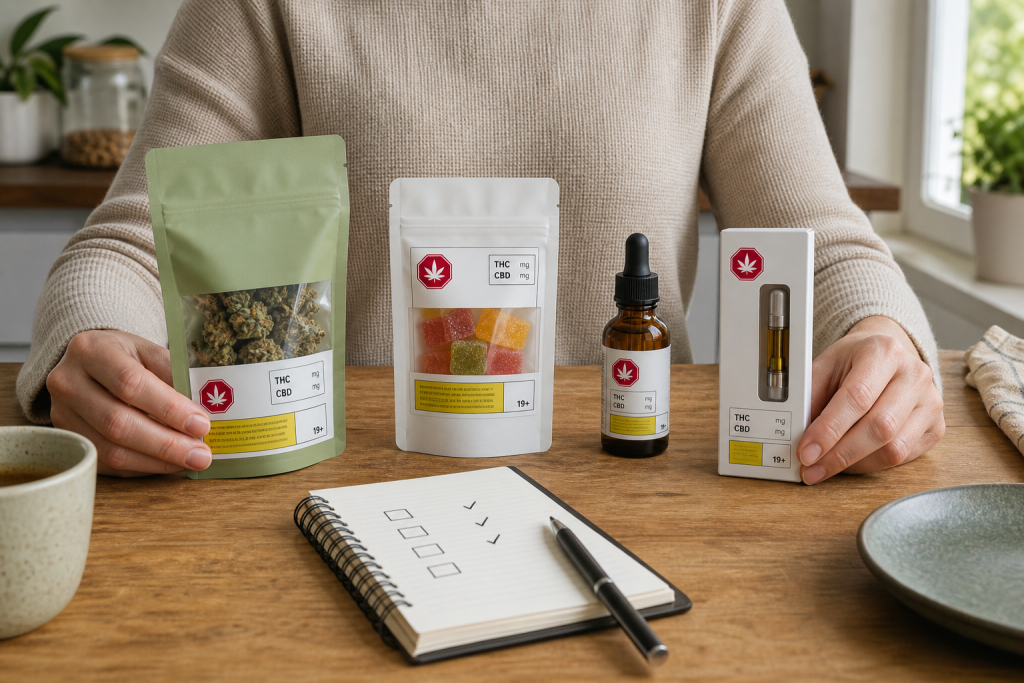
Legal cannabis labels in Canada are not just packaging decoration. They help you check THC and CBD amounts, lot details, package date, warning information, and intended serving or unit information. Health Canada publishes consumer guidance on reading cannabis labels, and that should be part of the buying process, especially when comparing unfamiliar formats.
Look for these basics every time:
- THC and CBD amount: check whether the label lists total THC, activated THC, THC per unit, or THC per package.
- Package date and lot number: useful for freshness, recalls, and matching product information.
- Unit size: especially important for gummies, capsules, drinks, sprays, and oils.
- Storage directions: follow them, and keep products away from children, pets, heat, and light.
- Warning symbol and excise stamp: make sure you are dealing with legal Canadian packaging, not an unknown source.
For a deeper label walkthrough, read our guide to reading cannabis labels in Canada.
A Simple Beginner Decision Checklist
Use this checklist before you buy or open the package:
- Choose legal first. Buy from a legal source and avoid unlabelled cartridges, homemade edibles from unknown sources, or products that hide basic THC information.
- Pick one product type. Do not test a vape, edible, drink, and concentrate in the same session. You will not know what caused the effect.
- Prefer lower THC when tolerance is unknown. High THC is not a beginner achievement. It can increase the chance of an unpleasant experience.
- Plan the calendar. Oral products can last for hours. Do not use them before driving, work, childcare, exercise in risky settings, or anything that requires coordination.
- Separate cannabis from alcohol. Mixing can make impairment harder to predict and may raise the chance of feeling unwell.
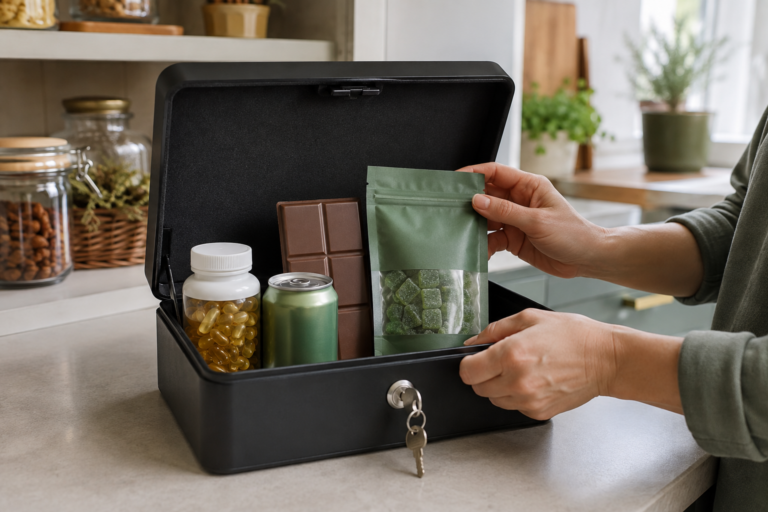
- Store it immediately. Put leftovers back in child-resistant packaging or a locked storage spot. Edibles should never be left where they could be mistaken for regular candy or snacks.
Which Product Type Fits Which Situation?
If you want the most controllable first experiment, choose a format where the THC amount is clear, the serving can be kept small, and you can wait without pressure. For many adults, that means a low-dose edible or capsule on a quiet evening, or a very small amount of a lower-THC inhaled product if they already understand the respiratory tradeoff. The “right” answer depends on your health, tolerance, setting, and reason for use.
If you want to avoid smoke, skip flower and pre-rolls. If you are worried about waiting too long, be careful with edibles and capsules. If you are concerned about smell, think about storage and packaging before you buy. If you want something strong, pause and ask whether strength is actually helping your goal or just adding risk.
The best beginner product is usually the one you can understand before using: legal source, readable THC/CBD amount, clear unit size, realistic timing, and a setting where you can stop, wait, and stay off the road.
Sources
- Health Canada: Cannabis for personal use
- Health Canada: How to read and understand a cannabis product label
- Health Canada: Cannabis health effects
FAQ
What cannabis product type should a beginner choose first?
There is no single best first product. A cautious beginner should choose a legal, clearly labelled, lower-THC product type that fits the setting and allows enough time to wait before using more.
Are edibles safer than smoking cannabis?
Edibles avoid smoke exposure, but they bring a different risk: delayed onset and longer-lasting effects. Beginners should avoid taking more just because the first dose does not feel immediate.
Should beginners avoid concentrates?
Most beginners should be cautious with concentrates because potency can be high and dosing can be harder to judge. It is better to understand labels, tolerance, and lower-THC products first.
Explore the beginner’s guide, or learn how we source and edit our stories.