Education 9 min read
Terpenes for Beginners in Canada
A practical Canada-aware guide to cannabis terpenes, aroma, labels, freshness, THC, and safer product comparisons without medical hype.
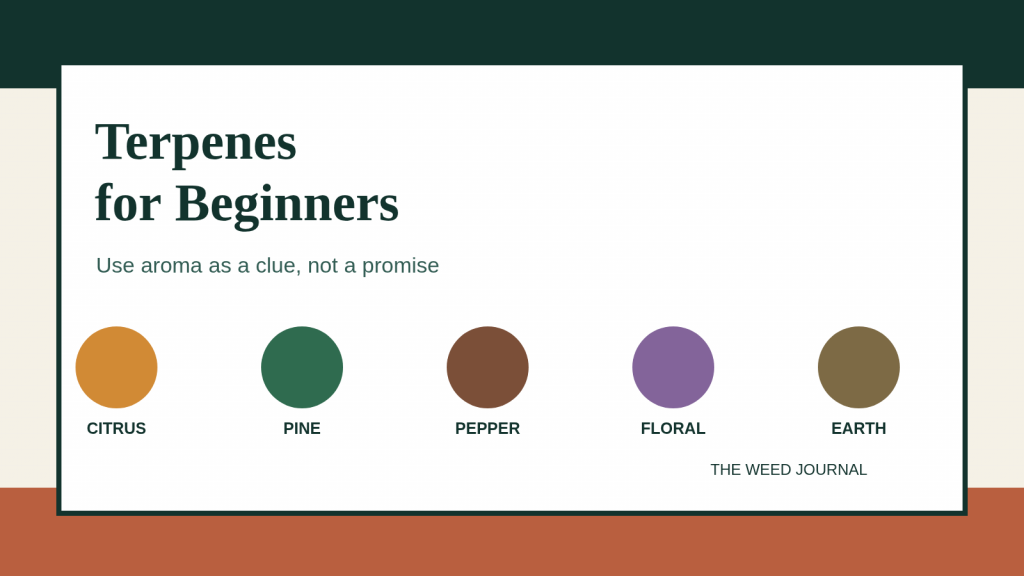
Terpenes are one of the most useful cannabis details beginners can learn, but they are also one of the easiest details to overhype. A product page may suggest a citrus terpene means energy, a peppery terpene means focus, or an earthy profile means sleep. Real life is less tidy.
This guide explains how adults in Canada can use terpene information in a practical way: as an aroma and product-comparison clue, not as a promise that a strain will create a specific effect or treat a health concern. The goal is simple. Use the label, smell, freshness, THC, CBD, format, and your own notes together instead of letting one terpene name make the decision for you.
Quick answer
Terpenes are aromatic compounds found in cannabis and many other plants. They help shape smell and flavour, and they can make one legal cannabis product feel more appealing or recognizable than another. Terpene information can be useful when comparing flower, full-spectrum extracts, or products from the same producer.
What terpenes cannot do is guarantee an effect. A terpene list does not prove that a product will make you sleepy, creative, calm, social, or pain-free. For safer buying decisions, use terpenes alongside Total THC, Total CBD, product format, package date, lot information, freshness, dose, tolerance, and setting.
What are terpenes?
Terpenes are naturally occurring aromatic compounds. They are part of why cannabis can smell like citrus peel, pine, black pepper, lavender, mango, herbs, fuel, skunk, damp earth, or fresh flowers. They are not unique to cannabis. Many familiar plant smells come from terpene families found across nature.
In cannabis shopping, terpenes usually show up in three places: the actual aroma of dried flower, the product description on a legal retailer menu, or a terpene list supplied by a producer. Some labels and product pages name dominant terpenes. Others do not. That variation is normal, so do not assume a product is poor just because the terpene list is not front and centre.
Common terpene names, translated carefully
| Terpene | Common aroma cue | Practical shopping use | What not to assume |
|---|---|---|---|
| Myrcene | Earthy, musky, herbal, sometimes mango-like | Compare earthy or heavy-smelling flower across products you already tolerate. | That it will reliably make you sleepy. |
| Limonene | Citrus peel, lemon, orange | Identify bright citrus profiles you enjoy in flower or extracts. | That it will treat anxiety or guarantee energy. |
| Pinene | Pine, resin, forest | Look for crisp, pine-forward aroma if you prefer fresher herbal notes. | That it will improve focus. |
| Caryophyllene | Pepper, clove, spice | Notice spicy profiles that may make products feel sharper or warmer. | That it is a pain treatment. |
| Linalool | Floral, lavender-like | Use as an aroma preference if you like softer floral notes. | That it is a sleep aid. |
| Humulene | Woody, herbal, hoppy | Compare beer-like, woody, or dry herbal profiles. | That it creates a predictable body effect. |
The table is deliberately cautious. Terpene names can help you describe what you smell and track what you like. They should not be treated like a menu of guaranteed outcomes.
Why terpene hype gets ahead of the evidence
Terpenes are interesting, and research on cannabis chemistry keeps developing. The problem is not that terpenes are meaningless. The problem is that retail claims often jump from “this compound exists in the plant” to “this product will reliably create this effect for you.”
Cannabis effects are influenced by more than aroma compounds. THC, CBD, product format, dose, frequency of use, individual sensitivity, food, alcohol, sleep, mood, medications, and setting can all change the experience. A high-THC product with a citrus terpene profile may still feel uncomfortable to someone prone to THC-related anxiety. A lower-THC product with less dramatic aroma may be easier for that person to use responsibly.
That is why terpene information works best as a comparison tool, not a medical or psychological prediction tool.
Start with THC and CBD before terpene shopping
Health Canada identifies THC as the main intoxicating component in cannabis and warns that higher-THC products are associated with greater risk of adverse effects. Legal Canadian labels must provide important product information, including cannabinoid details and required warnings. Those label basics matter more than a terpene claim.
If you are newer, returning after a break, or trying a new format, begin with a modest THC level, a legal source, a comfortable setting, and enough time. Then use terpene notes to refine preferences. Do not use terpene language to justify a THC strength that is higher than you planned to use.
For more detail, read our guide to why THC percentage is not everything. The same principle applies here: one number or one aroma note is never the whole product.
How to use terpenes when reading a label
When terpene information is available, read it after the core label details. First check product class, Total THC, Total CBD, package date, lot number, warning information, and serving size where relevant. Then look at the terpene profile.
Ask practical questions:
- Are one or two terpenes clearly dominant, or is the profile spread out?
- Does the aroma match the listed profile when the package is opened?
- Have you liked similar aroma profiles before?
- Is the product format familiar, or are you trying a new route such as edibles, vapes, oils, or concentrates?
- Is the THC level still appropriate for your tolerance and setting?
If a product has a detailed terpene profile but very high THC, do not let the profile distract you from the strength. If a product has no terpene list but a clear label, modest THC, good freshness, and a format you understand, it may still be a better beginner choice.
Freshness changes aroma
Terpenes are tied to aroma, and aroma can change with age, storage, and handling. Dried flower that once had a bright citrus or pine profile may smell flat if it has been stored poorly or kept too long after opening. Very dry flower may lose character and become harsher to use. Flower that smells musty, damp, or mouldy should not be consumed.
Package date is only one clue, but it is a useful one. So is the condition of the product after opening. If aroma matters to you, freshness and storage matter too.
Use our fresh cannabis flower checklist when buying or checking stored flower. A terpene list is less useful if the product no longer smells or handles the way it should.
Indica, sativa, hybrid, and terpenes
Terpene profiles are often used to support indica, sativa, and hybrid marketing. That can be helpful if a producer uses the terms consistently, but it can also make broad category labels sound more scientific than they are.
Modern cannabis products do not always fit neatly into old category expectations. A sativa-labelled product can be high in THC and uncomfortable for some people. An indica-labelled product is not guaranteed to feel sedating. A hybrid label may tell you almost nothing without the rest of the profile.
A better approach is to treat indica, sativa, hybrid, and terpenes as clues, then verify with the label and your own notes. Our indica vs sativa vs hybrid guide explains why the old labels should not be used as effect guarantees. If you are comparing familiar names side by side, use our classic cannabis strain comparison guide to weigh format, freshness, THC/CBD context, and label details before chasing a strain reputation.
A simple terpene note-taking system
If you want terpenes to become useful, track patterns instead of memorizing claims. Keep a short note after each legal product you try:
- Product name, producer, lot, and package date.
- Format: flower, pre-roll, vape, edible, oil, capsule, or extract.
- Total THC and Total CBD.
- Dominant terpenes if listed.
- Aroma in your own words.
- Amount used and timing.
- Setting, food, alcohol, mood, and sleep quality.
- What felt comfortable, uncomfortable, or not worth repeating.
After a few products, your own notes will be more useful than generic terpene charts. You might learn that you enjoy citrus aroma but prefer lower THC, or that spicy flower smells good but feels too sharp when the THC is high. That pattern is practical. It still is not a medical conclusion.
When terpene information is most useful
Terpenes are especially useful when comparing products within the same format. Flower to flower is easier than flower to edible. Two dried flower products with similar THC and CBD can feel easier to compare when one is citrus-pine and another is earthy-spicy. Two vape cartridges from the same producer may also be easier to compare by flavour profile and cannabinoid strength.
Terpenes are less useful when the format changes. An edible described with a strain name or flavour note does not behave like inhaled flower from the same strain family. Onset and duration matter more. If edibles are involved, read our guide to how long edibles take to kick in before increasing a dose.
Red flags in terpene marketing
Be skeptical when a menu or seller claims a terpene profile will treat anxiety, pain, insomnia, depression, inflammation, or any other health condition. Be skeptical when terpene claims are used to make a high-THC product sound beginner-friendly. Be skeptical when a seller cannot provide basic legal label information but makes confident effect claims.
Also be cautious with products from non-legal sources. In Canada, legal products come with regulated packaging, warnings, lot information, and testing requirements. If you cannot check the label, the source, or the package, terpene language is not enough to make the purchase trustworthy.
Beginner-safe defaults
If you are new to cannabis, use this order: legal source first, lower THC second, familiar format third, comfortable setting fourth, terpene preference fifth. That order keeps aroma in its proper place.
A calm product choice is not the one with the longest terpene list. It is the one you can understand, dose cautiously, store properly, and use without driving or safety-sensitive responsibilities. Our Cannabis 101 product type guide is the better starting point if you are still choosing between flower, edibles, oils, vapes, and capsules.
Bottom line
Terpenes can make cannabis shopping more informed and more personal. They help describe aroma, compare similar products, and build a record of what you tend to enjoy. They should not be treated as effect guarantees or health claims.
For Canadian adults, the practical framework is: check THC and CBD, confirm the legal label, consider the format, inspect freshness, then use terpene notes to refine your choice. If a terpene claim sounds too certain, it probably is.
Sources
- Health Canada: Canada’s lower-risk cannabis use guidelines
- Health Canada: Cannabis health effects
- Health Canada: Packaging and labelling guide for cannabis products
- NCBI: Cannabis sativa terpenes and their role in cannabis aroma and research
Explore the beginner’s guide, or learn how we source and edit our stories.