Education 10 min read
How to Tell If Cannabis Flower Is Fresh in Canada
Use this Canada-aware cannabis flower freshness checklist to read labels, compare package dates, spot stale or mouldy flower, and store it safely.
Fresh cannabis flower is not about chasing the loudest smell or the highest THC percentage. For Canadian buyers, the better question is simple: does this package look legal, recent enough, well stored, and usable for the way you plan to consume it?
This guide gives you a practical flower freshness checklist for legal cannabis in Canada. It focuses on label details, texture, aroma, package dates, storage, and red flags. It is not a quality guarantee, and it is not medical advice. It is a reader-first way to avoid stale, overly dry, suspicious, or poorly stored flower before it turns into a disappointing purchase.
Quick answer: signs cannabis flower is fresh
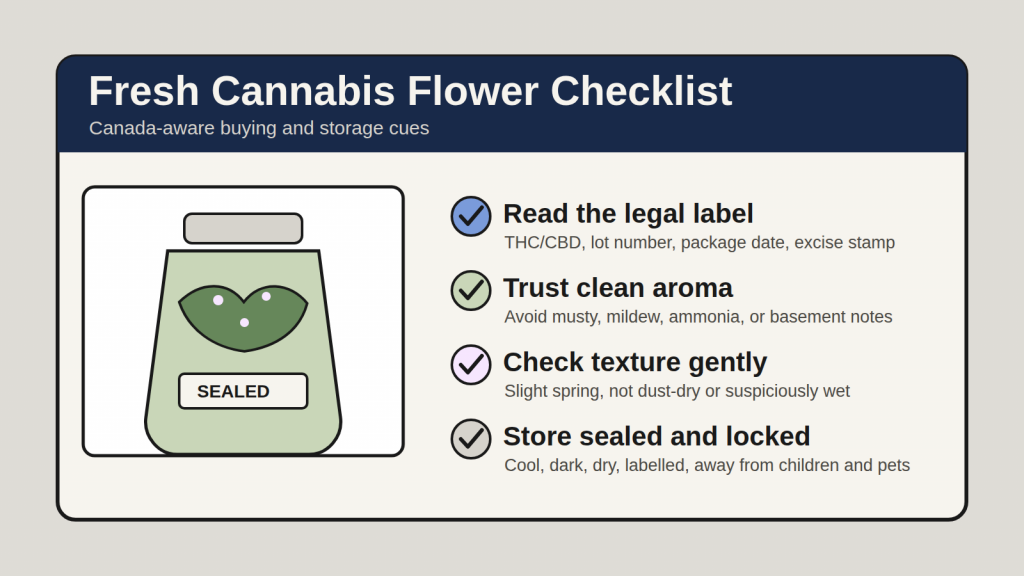
Fresh cannabis flower usually has a recognizable aroma, a little spring when gently handled, visible structure, and no sign of mould, dampness, or musty odour. In Canada, the first check should happen before you ever open the container: confirm the product came from a legal source, look for the excise stamp where required, read the total THC and CBD values, and check the package date, lot number, and producer information.
Once opened, good flower should not crumble into dust at the first touch. It also should not feel wet, spongy, or sticky in a way that suggests excess moisture. There is a middle ground: dry enough to burn or vaporize evenly, but not so dry that the buds turn brittle.
The Canada-first freshness checklist
Use this checklist when comparing dried flower from a legal retailer. It works best after you have already checked that the retailer itself is legitimate. For that broader step, start with our legal retailer checklist for buying cannabis in Canada.
| What to check | What you want to see | Possible red flag |
|---|---|---|
| Legal package details | Health Canada licence holder, lot number, package date, total THC/CBD, warning information, and excise stamp where required. | Missing label details, no clear producer, copied-looking packaging, or no provincial/territorial excise stamp on a THC product that should have one. |
| Package date | A reasonably recent package date for the product type, with packaging intact and sealed before purchase. | Very old stock, damaged seal, or no date visible on the legal label. |
| Aroma | Distinct but not necessarily overpowering; herbal, citrus, pine, peppery, earthy, sweet, or fuel-like notes can all be normal depending on cultivar. | Musty, basement-like, ammonia, mildew, hay-only, or no aroma at all after opening. |
| Texture | Slight give when gently pressed; breaks apart without becoming powder. | Dust-dry crumble, damp clumps, or flower that feels unusually wet. |
| Appearance | Intact buds, visible trichomes, and colour that looks consistent with the cultivar. | Fuzzy white/grey growth, dark wet patches, obvious foreign material, or excessive shake in a premium flower container. |
| Storage after opening | Kept sealed, cool, dark, dry, and away from children, pets, and anyone who should not access it. | Left open, stored in sunlight, stored in a hot car, mixed into unlabelled containers, or kept where children can reach it. |
This table is deliberately practical. Most consumers do not have lab equipment at home. Your job is to combine the legal label, the package condition, and your senses. If a product raises safety concerns, do not try to rescue it by airing it out, baking it, or mixing it with fresher flower.
Start with the label, not the bud photo
Canadian cannabis packaging is plain by design, but it still carries useful buying information. Health Canada explains that labels show total THC and total CBD, health warnings, lot details, and other required information. The excise stamp also matters because it helps show the product came through the legal system, although some very low-THC products may not require one.
For dried flower, the label will not tell you everything about freshness. It cannot tell you whether the aroma will suit you, whether the trim is tidy, or whether the bud structure is better than another lot from the same producer. But it does give you the basics: legal source, cannabinoid strength, package date, quantity, and a way to identify the batch if there is a product issue.
If label reading still feels confusing, use our separate guide on how to read cannabis labels in Canada. For flower freshness specifically, pay close attention to the package date and lot information. Harvest date is useful when listed, but package date is the detail Canadian buyers are most likely to see consistently.
How package date should influence your expectations
A package date is not the same thing as a freshness guarantee. Cannabis can be packaged well and age acceptably, or packaged poorly and feel tired sooner than expected. Still, the date helps you set expectations.
Recently packaged flower is not automatically excellent. Older flower is not automatically unusable. What matters is how it was dried, cured, packaged, transported, and stored. That said, a package that has been sitting for a long time deserves closer inspection once opened. If it is very dry, muted in aroma, or harsh compared with similar products, age and storage may be part of the reason.
Legal retailers may also sell value flower, smalls, milled flower, or discounted older stock. Those products can be legitimate. The key is to match the price and format to realistic expectations. A budget ounce may not have the same bud size or aromatic intensity as a small-batch jar. Freshness is about usability and safety first, then preference.
Smell: useful, but easy to overrate
Aroma is one of the easiest freshness clues, but it is not a perfect quality score. Some cultivars naturally smell bright and loud. Others are subtler. Packaging can also trap or mute aroma until the flower has been open briefly.
Good signs include a clear scent profile and no unpleasant damp or mouldy notes. Depending on the cultivar, that scent might lean citrus, floral, pine, spice, gas, berry, tea, wood, or earth. A little grassy note is not automatically a problem, especially with some lots, but a flat hay smell can suggest the flower is tired, dried too aggressively, or simply not very expressive.
Bad signs are more important than good ones. A musty, mildew-like, ammonia, or basement smell is a stop sign. Do not consume flower that smells like mould or rot. The risk is not worth trying to salvage the purchase.
Texture: the gentle squeeze test
Once the package is open, texture tells you a lot. Fresh-enough flower usually has a little give. It should break apart without turning instantly to powder. When ground, it should be workable rather than dusty.
If the flower passes the freshness check but feels tricky to prepare, use our cannabis flower grinding guide to match grind size to joints, bowls, or dry herb vapes without turning usable flower into dust.
Too dry: buds snap apart sharply, crumble into dust, taste harsh, burn very quickly, or feel lifeless in the grinder. Overly dry flower is common, especially in small containers or older packages. It is not always dangerous, but it can make the experience less pleasant and harder to portion consistently.
Too moist: buds feel wet, spongy, unusually heavy, or clump together. Excess moisture can be more concerning than dryness because it raises spoilage questions. If you see fuzzy growth, suspicious white or grey patches, or smell mustiness, do not use it.
If you are using flower in a dry herb vaporizer, texture matters even more. Very dry flower can toast quickly and taste flat; overly moist flower can vaporize unevenly. For a broader inhalation comparison, see our guide to vaping vs smoking cannabis in Canada.
Appearance: what looks normal and what does not
Colour alone does not prove freshness. Cannabis can be light green, deep green, purple, orange-haired, frosty, loose, dense, fluffy, or compact depending on cultivar and production style. Do not reject a product simply because it does not match a social-media photo.
Look instead for consistency and obvious defects. The buds should look like cannabis flower, not a container of dust unless you intentionally bought milled flower or shake. Trichomes can look like a light frost. Orange or brown pistils can be normal. Purple colouring can be genetic. Small buds can be normal, especially in value products.
Red flags include visible fuzz, web-like growth, grey or white mould patches, wet dark spots, foreign material, or a smell that confirms something is wrong. If you are uncertain, err on the side of not consuming it. For legal products, keep the package and receipt and contact the retailer or producer with the lot number. For a focused stop-use check, read the mouldy cannabis flower guide.
Why THC percentage is not a freshness score
High THC does not mean fresh. It also does not mean the product will feel better for every person. THC percentage is one label detail, not the whole buying decision.
Freshness depends more on production, curing, packaging, date, storage, and whether the product still has its expected aroma and texture. A moderate-THC flower that is fresh, aromatic, and well stored may be more enjoyable than a high-THC product that is old, dry, and harsh. If you are newer to cannabis, higher THC can also increase the chance of an uncomfortable experience. Start lower than you think you need, especially when switching products or formats.
For a wider beginner framework, use our Cannabis 101 product type guide. Flower is only one option, and the right choice depends on onset, duration, comfort with inhalation, and your setting.
How to store flower after you open it
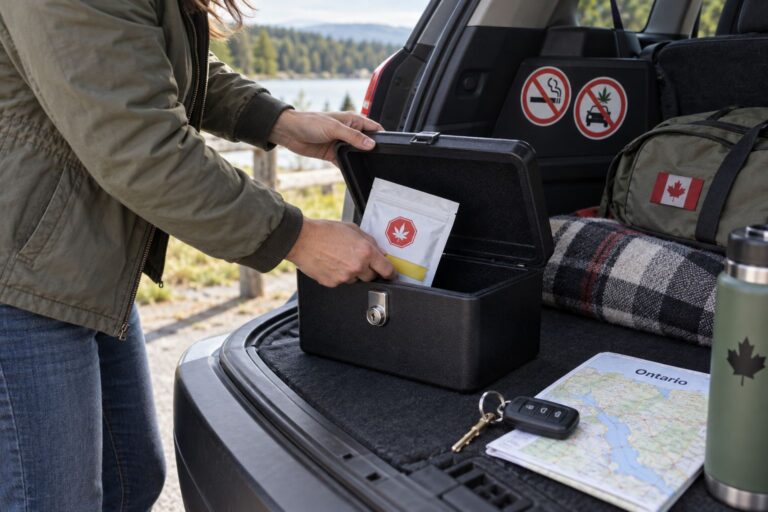
Freshness can decline quickly if you leave cannabis exposed to air, heat, and light. After opening, keep flower in a sealed container, away from direct sun, and in a cool, dry place. Do not leave it in a hot car or beside a window. Do not store it in an unlabelled snack bag or a container that could confuse someone else in the home.
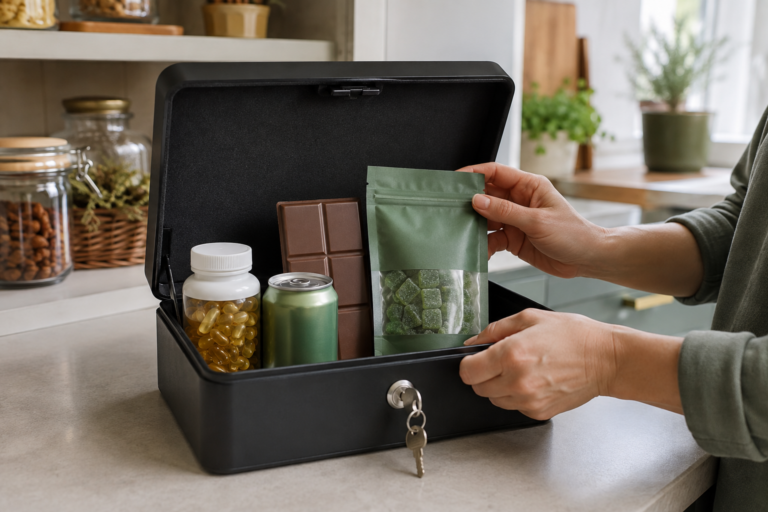
Safe storage also means access control. Health Canada and public health sources consistently emphasize keeping cannabis products out of reach of children and pets. A locked box is a better habit than a high shelf, especially in a shared home. Keep original packaging when possible because it preserves product details, warnings, and lot information.
For more detail, read our Cannabis Storage 101 guide. For a newer format-by-format storage checklist, including temperature, humidity, labels, edibles, vapes, and lockbox habits, use our guide to how to store cannabis in Canada. You do not need fancy gear for basic storage, but you do need consistency: sealed, labelled, cool, dark, dry, and secure.
What to do if the flower seems stale
If the flower is simply a bit dry but otherwise normal, some consumers use humidity packs to improve handling. That may make it less brittle, but it does not reverse age or turn poor flower into great flower. Avoid adding fruit peels, wet paper, or random moisture sources. Those can introduce unwanted moisture and contamination risk.
If the flower smells musty, appears mouldy, has foreign material, or seems wet in a concerning way, do not consume it. Keep the package, note the lot number, and contact the retailer. Legal cannabis products are traceable for a reason.
If the issue is preference rather than safety, make a note for next time: producer, lot, package date, terpene information if listed, THC/CBD values, price, and what you disliked. Over a few purchases, this simple habit teaches you more than chasing strain names alone.
Freshness checklist before you buy again
- Buy from a legal retailer or provincial online store.
- Check the package date, lot number, producer, total THC, and total CBD.
- Match price to format: whole flower, smalls, milled flower, value ounce, or premium jar.
- After opening, reject musty, mouldy, wet, or suspicious flower.
- Store opened flower sealed, labelled, cool, dark, dry, and locked away from children and pets.
- Track what worked by lot and producer, not just by strain name.
Bottom line
The best flower freshness check in Canada combines legal label reading with common-sense inspection. Start with the package: legal source, excise stamp where required, total THC/CBD, lot number, and package date. Then use your senses: aroma, texture, appearance, and storage condition.
Fresh flower should be usable, clearly labelled, and free from obvious spoilage signs. It does not need to be the strongest product on the shelf. For most readers, a reliable, well-stored, moderate product from a legal source is a better bet than a mystery package with a loud claim and no traceable label.
Sources
- Health Canada: How to read and understand a cannabis product label
- Health Canada: Packaging and labelling guide for cannabis products
- Justice Laws Website: Cannabis Regulations, dried and fresh cannabis requirements
- Canadian Centre on Substance Use and Addiction: Knowing Your Limits with Cannabis
Explore the beginner’s guide, or learn how we source and edit our stories.