Education 8 min read
Provincial Cannabis Rules in Canada: What Changes
Canada has one federal cannabis law, but provincial rules change age, retail, public use, delivery, home growing, and travel details.
Canada has one federal cannabis law, but adults do not live under one simple set of day-to-day rules. The Cannabis Act sets the national framework. Provinces and territories decide many of the practical details: legal age, where retail happens, whether home growing is allowed, where smoking or vaping is restricted, and how delivery or online sales work.
That is why cannabis advice that sounds right in Ontario may be incomplete in Quebec, and a habit that feels normal in British Columbia may not travel cleanly to another province. This guide is for adults who want a practical map of what changes by province before they buy, carry, store, grow, or travel with cannabis in Canada.
This is educational information, not legal advice. Rules can change, municipal bylaws can add another layer, and landlords, workplaces, campuses, parks, and event venues can have their own policies. When the answer matters, verify it with your province or territory before acting.
Quick answer
The federal Cannabis Act allows adults to possess up to 30 grams of dried legal cannabis, or its equivalent, in public. It also creates national rules for legal production, packaging, promotion, impaired driving offences, and access to cannabis. Provinces and territories then set many local rules, including minimum age, public-use restrictions, home-cultivation rules, retail systems, and where cannabis can be sold.
For most adults, the safest rule of thumb is simple: treat the 30-gram public possession limit as the federal baseline, then check your province or territory for age, where you can buy, where you can use cannabis, and whether home growing is permitted. If you are travelling, check both your starting point and destination.
What changes by province or territory?
| Rule area | What often changes | Practical adult check |
|---|---|---|
| Legal age | Most provinces use 19, Alberta uses 18, and Quebec uses 21. | Do not assume the age from your home province applies when you travel. |
| Where to buy | Some provinces use government stores, some private retailers, and some a mix. | Start from the official provincial or territorial retailer page, not a search ad. |
| Public possession | The federal 30-gram dried-cannabis public limit is the common baseline. | Remember that equivalents matter for edibles, extracts, and other formats. |
| Home possession | Some provinces add private-residence limits or storage rules. | Check your province before stockpiling or sharing a household supply. |
| Home growing | Federal law allows up to four plants per dwelling, but provinces can restrict it. | Verify local rules before buying seeds, plants, lights, or grow equipment. |
| Public use | Smoking and vaping rules differ by province, municipality, parks, leases, and venues. | Assume public use is restricted until you confirm the place allows it. |
| Online sales and delivery | Legal online channels are province-specific; medical access is a separate pathway. | Be skeptical of recreational websites promising mail-order service across Canada. |
The federal baseline: what usually stays the same
The Cannabis Act is the national starting point. For adults, the best-known rule is the public possession limit: up to 30 grams of dried cannabis, or the equivalent amount in another cannabis class. The Act also sets national controls around legal production, sale, packaging, promotion, possession, distribution, and youth protection.
That federal baseline does not answer every everyday question. It does not tell you which store is legal in your city, whether you can smoke in a specific park, whether your building permits cannabis use, or whether your province allows home cultivation. Those are the details that make provincial checking necessary.
If you need the broader national overview first, read our legal cannabis in Canada 2026 guide. If you are trying to understand quantities, our cannabis possession limits in Canada article explains the 30-gram public limit and equivalencies in more detail.
Legal age is not the same everywhere
Legal age is one of the easiest rules to get wrong while travelling. Ontario and British Columbia use 19. Alberta uses 18. Quebec uses 21. Other provinces and territories have their own age rules, and the official retailer lists are the cleanest place to confirm them.
The practical point is not to memorize every province. It is to avoid assuming. If you are 19 or 20, Quebec is the clearest example of why this matters: a person who can legally buy or possess cannabis in many provinces may still be underage there.
Age rules also affect retail access. A legal store, delivery service, or government online shop should screen age. If a website lets anyone browse and buy without age checks, slow down and verify the seller before entering personal information.
Where legal cannabis is sold
Legal cannabis retail is provincial and territorial. Health Canada’s province-and-territory retailer page is the best national starting point because it points adults to the official system for each jurisdiction.
Ontario, for example, has the Ontario Cannabis Store as the legal online channel and private cannabis stores licensed by the Alcohol and Gaming Commission of Ontario. British Columbia has government-run BC Cannabis Stores and licensed private retailers. Quebec uses the SQDC for retail sale. The details differ, but the verification habit is the same: start from the official source, then work outward.
For step-by-step shopping checks, use our legal cannabis buying checklist for Canada. If you are looking online, check online cannabis buying rules by province first, then use our scam cannabis delivery site checklist as the safer companion guide.
Home growing: check before you plant
Federal law allows adults to cultivate up to four cannabis plants per dwelling-house, not per adult. That is only the starting point. Provinces may restrict home cultivation, and the rules have changed in some places over time.
Quebec is the major caution for readers: its public guidance says personal cannabis cultivation is prohibited and that possessing a cannabis plant for personal use is also prohibited. Manitoba is a good reminder that rules can change; its current regulation allows a person 19 or over to cultivate up to four plants in their ordinary residence, subject to household limits and conditions.
Even where home growing is allowed, there can be landlord, condominium, municipal, fire-safety, and child-safety issues. Seeds and plants are not a casual purchase if you have not checked the rule where you live.
Public use is more local than people expect
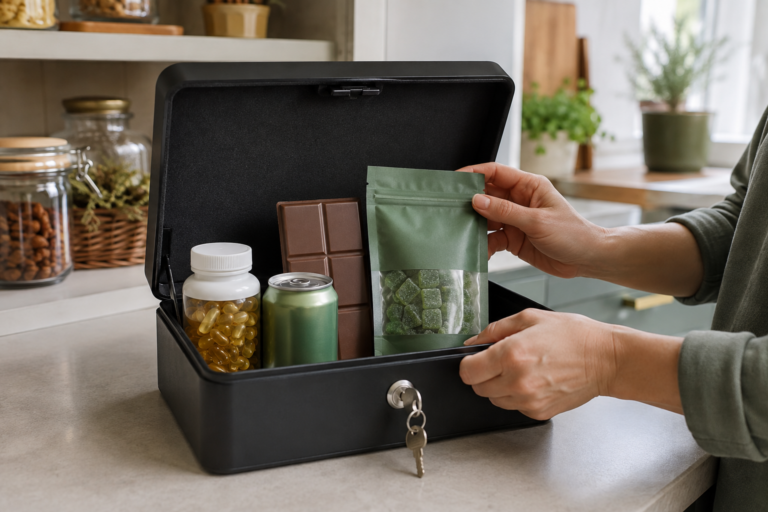
Possessing cannabis and using cannabis are different questions. You may be allowed to possess a legal amount but still be prohibited from smoking or vaping in many public or shared spaces.
Ontario’s public guidance links cannabis smoking and vaping restrictions to smoke-free rules. British Columbia also outlines restrictions for where cannabis can be used, including places where smoking and vaping are not allowed. Quebec’s guidance is stricter in many public settings, including restrictions on smoking or vaping cannabis in spaces open to the public.
Municipal bylaws, parks rules, campuses, workplaces, hotels, festivals, and rental agreements can add more restrictions. When in doubt, use cannabis only in a clearly permitted private setting and avoid bothering other people with smoke, vapour, odour, or impairment.
Travel: provincial rules follow you at the border
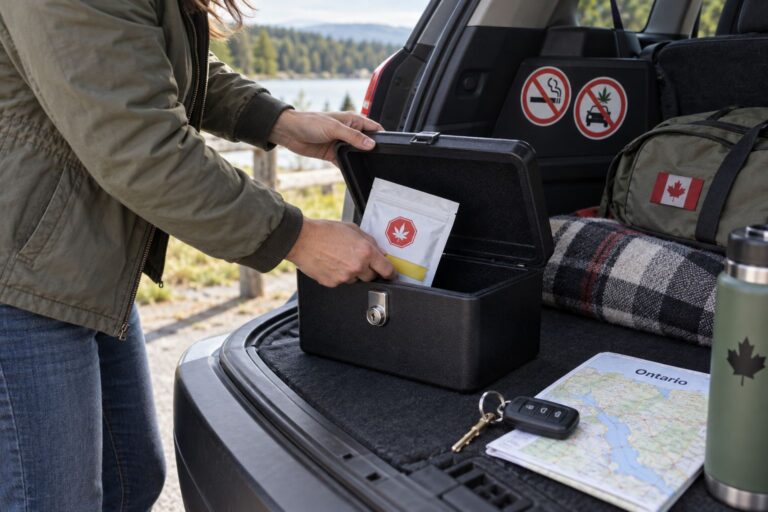
Travelling within Canada does not erase cannabis rules. You still need to respect the federal public possession limit, provincial age rules, public-use restrictions, and transport rules. You also need to remember that taking cannabis across the Canadian border remains illegal, even if cannabis is legal in the place you are leaving or entering.
Within Canada, the main risk is assuming the destination works like home. A person may leave a province where they can legally buy at 19 and enter Quebec, where the legal age is 21. Someone who grows at home in one province should not assume plants, seeds, or growing rules are the same elsewhere.
For a travel-focused checklist, read our guide on travelling with cannabis in Canada.
Driving rules are separate from possession rules
Legal possession does not mean legal driving after use. Cannabis can impair driving, and police can enforce drug-impaired driving laws. Provinces also have licence suspensions, vehicle sanctions, zero-tolerance rules for certain drivers, and related road-safety measures.
The safest practical rule is not province-specific: do not drive after consuming cannabis, do not ride with an impaired driver, and do not keep open or accessible cannabis in a way that violates local transport rules. Our cannabis and driving in Canada guide covers the road-safety side in more detail.
A province-check habit for adults
Before buying, travelling, growing, or using cannabis somewhere new, run this short check:
- What is the legal age in this province or territory?
- What is the official legal retail or online channel?
- Does the seller appear on an official government or regulator source?
- What public-use rules apply to smoking, vaping, parks, events, hotels, and rentals?
- Are home growing and home possession treated differently from federal basics?
- Are there local bylaws, lease terms, workplace rules, or campus policies that matter?
- If travelling, will any rule change at the destination?
Bottom line
Canadian cannabis law is not one flat rulebook. The federal framework matters, especially for possession limits and legal product controls, but provincial and territorial rules shape the adult experience: age, retail, public use, delivery, home growing, and local restrictions.
The reader-first answer is boring but useful: verify the province before you act. That habit protects you from illegal sellers, underage mistakes, public-use fines, travel confusion, and home-growing assumptions that may not apply where you live.
Sources
- Justice Laws Website: Cannabis Act
- Health Canada: Authorized cannabis retailers in the provinces and territories
- Ontario.ca: Cannabis laws
- Government of British Columbia: Cannabis in British Columbia
- Gouvernement du Quebec: The legislation on cannabis in brief
- Manitoba Laws: Cannabis Regulation, M.R. 120/2018
Explore the beginner’s guide, or learn how we source and edit our stories.