Education 8 min read
Cannabis Oral Spray in Canada: Labels and Dosing
A practical Canada-aware guide to cannabis oral sprays, THC/CBD per spray, timing, dose stacking, storage, and label checks.
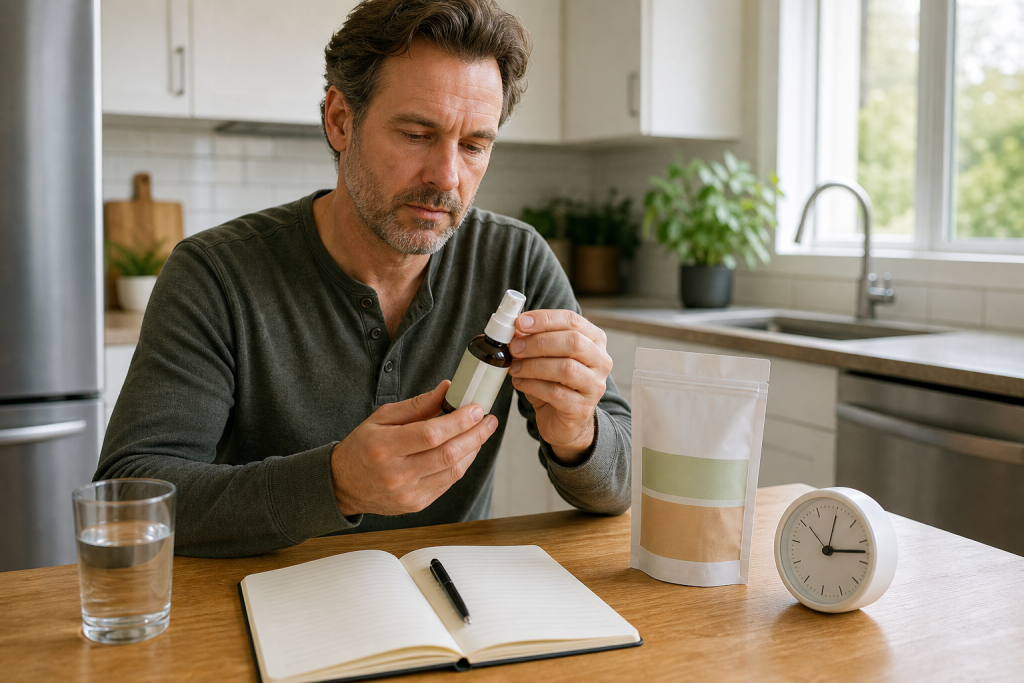
Cannabis oral sprays can look simple: a small bottle, a pump top, and a label that promises a measured amount per spray. For a cautious adult in Canada, the hard part is not pressing the nozzle. It is understanding what one spray actually contains, how long oral cannabis can take to build, and why a metered product still deserves patience.
This guide explains how to read cannabis oral spray labels in Canada, how to compare THC and CBD per activation, what timing mistakes to avoid, and when a different product format may be easier to control. It is educational information, not medical advice, and it does not replace the product label, a healthcare professional, or provincial rules.
Quick answer
A cannabis oral spray is usually a liquid cannabis extract sold with a pump or metered spray mechanism. The useful label number is the amount of THC and CBD per spray, per activation, or per mL, depending on how the product is labelled. Do not treat the whole bottle as one dose, and do not keep spraying because nothing has happened yet.
Oral sprays may be used in the mouth and then swallowed, so timing can vary. Some people expect a mouth spray to feel immediate, but swallowed cannabis can still behave more like an edible than an inhaled product. If the label or package directions say to wait, take that seriously.
What makes oral spray different from oil drops?
Oral sprays and dropper oils sit in the same general world: liquid cannabis extracts that are measured before use. The difference is the dispenser. A spray uses a pump or metered activation. A dropper oil uses marked liquid volume, usually millilitres.
That dispenser difference can help some readers because a pump may make the serving easier to repeat. It can also create false confidence. If one spray contains more THC than expected, or if someone stacks sprays too quickly, the metered nozzle does not protect them from taking too much.
If you are comparing spray products with oils or tincture-style extracts, the same label-first habit applies. Our guide to cannabis oil vs tincture labels and dosing explains the dropper side of the same problem.
For a broader format comparison, use the guide to sublingual products in Canada, including strips, lozenges, oral sprays, and oils.
Oral spray label checks at a glance
| Label item | Why it matters | What to do |
|---|---|---|
| THC per spray or activation | This is the main number for avoiding accidental overuse. | Write it down before using the product. |
| CBD per spray or activation | CBD amount can vary and does not erase THC risk. | Track it separately from THC. |
| Total THC/CBD in container | Shows package strength but does not define one serving. | Use it for context, not dose planning. |
| Directions for use | Spray timing and whether to swallow may affect expectations. | Follow the product directions. |
| Lot number and package date | Needed for recalls, questions, and quality follow-up. | Keep the original package. |
| Ingredients | Carrier oils, flavours, sweeteners, or allergens may matter. | Check before buying if you avoid certain ingredients. |
Why one spray is not a universal dose
Two oral sprays can look nearly identical and contain very different cannabinoid amounts. One bottle might list 1 mg THC per spray. Another might list 2.5 mg, 5 mg, or a combination of THC and CBD. The pump feels the same, but the amount is not the same.
Health Canada’s label guidance emphasizes reading Total THC and Total CBD information rather than relying on product names. That habit matters with sprays because the product format can make the dose feel more automatic than it really is.
If the label lists cannabinoids per mL instead of per spray, you need the package directions or dispenser information to understand the amount per activation. If that is unclear, choose a product with clearer instructions or ask the legal retailer or pharmacist-style medical channel before using it.
Example spray math
| Label says | Sprays used | Approximate THC | Why it matters |
|---|---|---|---|
| 1 mg THC per spray | 1 spray | 1 mg THC | A low measured starting comparison. |
| 2.5 mg THC per spray | 2 sprays | 5 mg THC | Two sprays can become a meaningful amount. |
| 5 mg THC per spray | 2 sprays | 10 mg THC | Same spray count, much higher total THC. |
| 1 mg THC + 10 mg CBD per spray | 2 sprays | 2 mg THC + 20 mg CBD | Track THC and CBD as separate totals. |
The point is not to recommend a dose. The point is to show why the count of sprays is only useful after you know the labelled milligrams per activation.
Timing: do not chase immediate effects
Oral sprays can tempt people into thinking the experience should arrive quickly because the product is used in the mouth. In real life, effects can still be delayed, especially if much of the liquid is swallowed. Health Canada’s cannabis warning messages note that orally ingested cannabis can take up to four hours to produce effects, and taking more before effects are felt can increase the risk of cannabis poisoning, severe anxiety, or panic.
That does not mean every oral spray will feel identical to a gummy or beverage. Product directions, individual response, food timing, THC amount, tolerance, and whether the liquid is swallowed can all change the experience. The practical rule is still conservative: assume timing can be delayed, avoid topping up quickly, and leave the rest of the day free of driving or important obligations.
For more timing context, read our guides on how long edibles take to kick in and how long a cannabis high may last. The format differs, but the waiting mistake is similar.
When oral spray may make sense
An oral spray may appeal to adults who want a small, repeatable dispenser and dislike measuring oil with a dropper. It may also be easier to store in original packaging than loose homemade preparations because the legal label keeps the lot number, cannabinoid amounts, and directions together.
That does not make sprays automatically safer or better. A spray with high THC per activation can be harder for a beginner than a lower-strength oil or capsule. A product with unclear directions is a poor fit for cautious use. A person taking medications, managing a health condition, or trying cannabis after a difficult prior reaction should speak with a qualified clinician before experimenting.
If your goal is a very small THC amount, our microdosing cannabis guide is a better planning companion than guessing from a spray count.
What to check before buying
- Legal source: Buy through the legal provincial, territorial, or authorized medical channel that applies to you.
- Clear dose unit: Prefer labels that state THC and CBD per spray or activation.
- Package limits: Remember that total container strength is not the same as one use.
- Directions: Check whether the product says to spray, hold, swallow, or follow another method.
- Warnings: Read the standardized cannabis health warning before use.
- Ingredients: Look for carrier oils, flavours, alcohol, sweeteners, or allergens.
- Storage: Keep it in original child-resistant packaging and away from children, pets, heat, and visitors.
- Recordkeeping: Write down product name, lot, THC/CBD per spray, time, amount, and how it felt later.
Common mistakes with cannabis oral sprays
The first mistake is assuming a spray is automatically precise enough for beginners. It may be repeatable, but it is only useful if the label tells you what one activation contains and the pump works as directed.
The second mistake is switching products without recalculating. If one product contains 1 mg THC per spray and another contains 5 mg THC per spray, the same two-spray habit changes from 2 mg to 10 mg THC.
The third mistake is using sprays around alcohol. Cannabis can impair reaction time, attention, and coordination, and mixing substances can make effects harder to predict. Keep the situation simple.
The fourth mistake is leaving the bottle outside the package. A small spray bottle can look ordinary, especially to a guest, child, or pet owner. Keep the legal package, not just the bottle.
FAQ
Is cannabis oral spray legal in Canada?
Legal cannabis products can include extracts with dispensing mechanisms, but availability depends on licensed producers and provincial or territorial retail systems. Buy only through legal channels and read the product class and label.
How long does cannabis oral spray take to work?
It varies. Because oral spray may be swallowed, plan for delayed oral-cannabis timing unless the product directions and your own cautious experience show otherwise. Do not keep spraying because effects are not immediate.
Is oral spray safer than edibles?
Not automatically. A metered spray can help repeat a labelled amount, but THC per activation, timing, tolerance, and stacking behaviour still matter.
Can CBD oral spray make me high?
CBD is not intoxicating like THC, but CBD products can contain different cannabinoid amounts. Read both Total CBD and Total THC, especially if you need to avoid impairment.
Bottom line
Cannabis oral spray is only as clear as its label and your patience. Before using it, identify THC and CBD per activation, follow the directions, wait long enough, avoid mixing with alcohol, and keep the bottle in its original package. A metered spray can make cannabis easier to repeat, but it does not remove the need to think in milligrams, not clicks.
Sources
- Health Canada: how to read and understand a cannabis product label
- Health Canada: guide on composition requirements for cannabis products
- Health Canada: cannabis health warning messages
- Health Canada: cannabis health effects
Explore the beginner’s guide, or learn how we source and edit our stories.