Education 8 min read
Cannabis Seeds in Canada: Buying and Label Checklist
A Canada-aware checklist for buying cannabis seeds legally, reading package details, understanding plant and possession limits, and storing seeds safely.
Cannabis seeds can look simple: a small packet, a strain name, maybe a promise about yield or flavour. In Canada, they are still regulated cannabis products. That means the safest buying decision starts with legal source, package details, provincial rules, and realistic expectations, not the loudest seed-bank copy.
This guide is for Canadian adults who are considering seeds for personal home growing where it is allowed. It is not a cultivation manual, legal advice, or a promise that a seed will produce a specific result. It is a buyer’s checklist: where to buy, what to read on the package, what the limits mean, and when to pause before germinating anything.
Quick answer
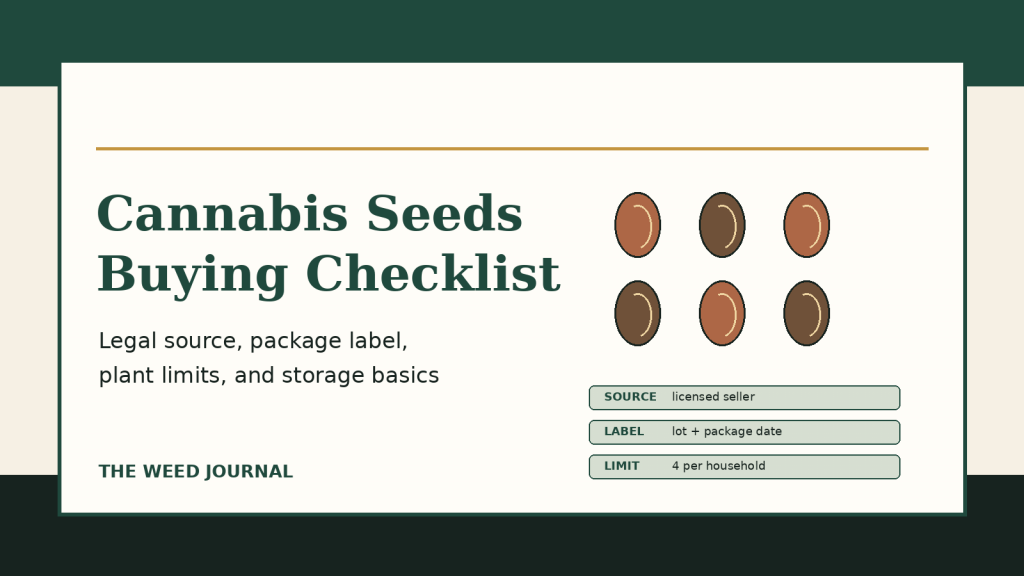
Buy cannabis seeds only from a legal source, such as an authorized retailer in your province or territory. Health Canada says adults may grow up to four cannabis plants per household under federal rules, not four per person, but provinces and territories can add stricter rules. Ontario allows up to four plants per residence for personal use by adults 19 and older. Quebec prohibits personal cultivation and possession of cannabis plants for personal use. Check your local rule before buying seeds, because a seed packet is not useful if you cannot legally grow it where you live.
For public possession, one cannabis plant seed counts as one gram of dried cannabis equivalent under the federal possession-limit framework. That matters if you are carrying seeds in public alongside flower, edibles, extracts, or other cannabis products.
Seed buying checklist
| Check | Why it matters | Pause if you see |
|---|---|---|
| Legal seller | Seeds should come through an authorized provincial or territorial channel. | Anonymous menus, imported “stealth” shipping, or sellers avoiding legal-source questions. |
| Province rules | Home grow rules are not identical across Canada. | You live somewhere cultivation is restricted or your lease/building rules prohibit it. |
| Package label | Legal cannabis packaging should give traceable product information. | No lot details, no producer information, relabelled bags, or opened packaging. |
| Seed count | Seeds count toward public possession equivalency. | You are carrying seeds plus other cannabis near the 30 g dried-equivalent limit. |
| Claims | Strain names and breeder descriptions are not guarantees. | Medical promises, unrealistic yield claims, or “100%” certainty language. |
What counts as a legal source?
Health Canada’s home-growing guidance tells consumers to buy seeds or immature plants from legal sources, such as an authorized retailer in the province or territory. It also says it is illegal to use seeds or grow plants that you know came from illegal sources. That is the clean dividing line for buyers: if the seller cannot plausibly fit inside the legal retail system, do not treat the seeds as a shortcut.
In Ontario, the provincial government says the Ontario Cannabis Store website is the only legal online source for recreational cannabis, while licensed private stores operate in person. Other provinces and territories use different retail models, so the practical move is to start from Health Canada’s authorized retailer list or your provincial cannabis authority rather than a search ad.
If you need a broader legal-shopping refresher, start with our Canadian cannabis buying checklist or the legal online buying checklist.
Four plants means household, not person
The federal home-grow baseline is up to four cannabis plants per household for personal use, not four plants for each adult in the home. That distinction matters in shared houses, apartments, and multi-adult families. A household with three adults does not become a twelve-plant household under the federal baseline.
Ontario phrases its rule similarly: adults 19 and older may grow up to four plants per residence for personal use, from legal seeds or seedlings. The province also says the plants must not be accessible to anyone under 19. That turns a seed purchase into a household-safety decision, not only a gardening decision.
Do not assume a federal rule overrides every local restriction. Provinces, territories, municipalities, landlords, condo boards, and federally regulated housing can create additional constraints. Quebec is the clearest example at the provincial level: the Quebec government states that personal cannabis cultivation is prohibited and that possessing a cannabis plant for personal use is also prohibited.
Seeds and the 30 gram public possession limit
Canadian adults often remember the public possession limit as 30 grams of dried cannabis or equivalent. Seeds are part of that equivalent system. Health Canada’s possession-limit calculator uses one cannabis plant seed as equivalent to one gram of dried cannabis.
That does not mean one seed has the same effect as one gram of dried flower. It means the law needs a conversion table for different cannabis forms. If you are carrying seeds in public, include them in your dried-equivalent math alongside dried flower, fresh cannabis, edibles, extracts, topicals, or plants.
For a deeper walkthrough, read our Canadian cannabis possession limits guide.
What to read on a seed package
Seed packaging is not the same as dried flower packaging, but it should still feel traceable and regulated. Look for the product name, producer or brand details, lot or batch information, seed count, package date where available, provincial stamp or retail context where applicable, and any required warning or regulatory elements.
Health Canada’s consumer label guidance explains why label literacy matters for legal cannabis products: labels carry health and safety information that helps consumers reduce harm. With seeds, the most important label habit is traceability. If the packet becomes part of a concern, you want the product name, lot, seller, and purchase date preserved.
Do not throw the packaging away as soon as you open it. Keep it at least until you know there is no product concern and until you no longer need the lot details. Our cannabis label guide explains the larger label system, and our packaging symbols guide covers common Canadian packaging markers.
Feminized, regular, and autoflower: buyer language, not guarantees
Seed listings often use terms such as feminized, regular, and autoflower. Those terms can help you understand what a product is intended to be, but they should not be read as a guarantee of outcome. Plants are living things, and results depend on genetics, environment, storage, handling, and grower decisions.
Be cautious with seed descriptions that promise exact effects, medical outcomes, extreme yields, or certainty that no reputable seller can control. A calm listing should tell you what the product is, who produced it, how many seeds are included, and any practical growing context allowed by law. It should not sound like a miracle-cure page or a gambling ad.
The same principle applies to strain names. A strain name can be useful shorthand, but it does not replace reading the product details. For more on why names and THC numbers can mislead shoppers, see our guide to comparing classic cannabis strains and our explainer on why THC percentage is not everything.
Storage before germination
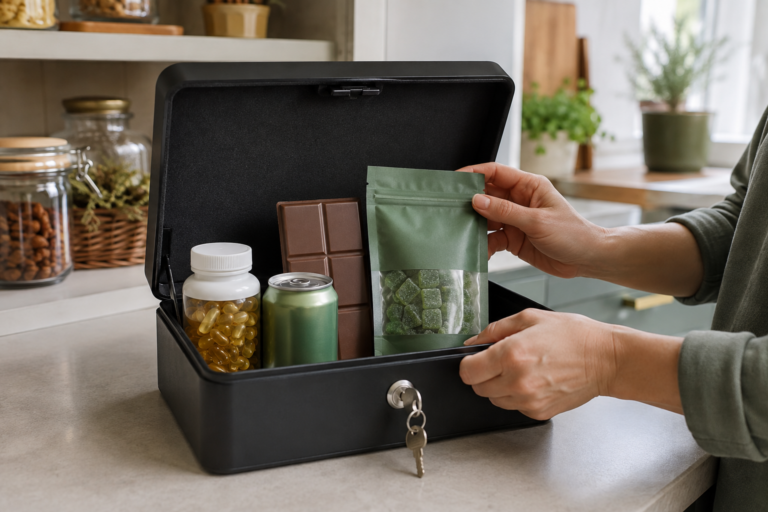
Seeds are easier to ruin than many buyers expect. Heat, moisture, light, rough handling, and casual relabelling can create problems before a seed ever reaches soil. Keep seeds in their original package until you are ready to use them, and store them in a cool, dark, dry, secure place away from children, pets, and anyone who is not allowed to access cannabis.
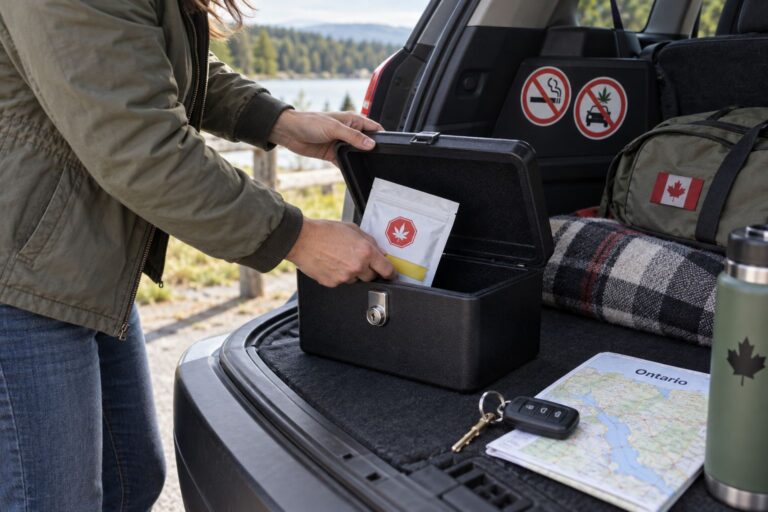
Do not store seeds in a hot car, damp basement, bathroom cabinet, sunny windowsill, or unmarked container. If you move them to another container, keep the original package and label with it. Losing the label makes it harder to confirm the strain, source, seed count, and lot details later.
For household storage habits that also apply to flower and other products, use our cannabis storage guide.
When not to buy cannabis seeds
Do not buy seeds if home growing is not allowed where you live, if your housing rules prohibit it, if you cannot keep plants away from minors, if you are already near the public possession limit, or if the seller is outside the legal channel. Also pause if the only reason you are buying is hype: a limited drop, a dramatic strain name, or a claim that sounds too certain.
Seeds are not a beginner purchase just because they are small. They can become plants, plants create storage and safety obligations, and rules differ across the country. The right decision may be buying a legal finished product instead, or waiting until you have confirmed the household and provincial rules.
FAQ
Can I order cannabis seeds from outside Canada?
For a Canadian adult-use buyer, the cleaner answer is to use authorized Canadian legal channels. Imported or grey-market seed orders can create legal-source, customs, quality, and traceability problems. If a seller is promising stealth shipping or avoiding questions about legality, that is a reason to walk away.
Can I give cannabis seeds to another adult?
Federal guidance allows sharing limited amounts of personally grown cannabis with adults of legal age, but selling cannabis requires a Health Canada licence. Because seeds count in the dried-equivalent framework and provincial age rules differ, treat gifting seeds with the same caution as any other cannabis transfer: legal-age adult only, within limits, and never as a sale.
Should I germinate every seed in a pack?
Not automatically. The plant limit applies to plants at the household or residence level, and some provinces or housing situations may be stricter. Count what you can legally and safely manage before germination, not after seedlings already exist.
Sources
- Health Canada: Growing cannabis at home safely
- Health Canada: Online calculator for public possession limits
- Ontario: Cannabis laws
- Quebec: The legislation on cannabis in brief
- Health Canada: How to read and understand a cannabis product label
Explore the beginner’s guide, or learn how we source and edit our stories.