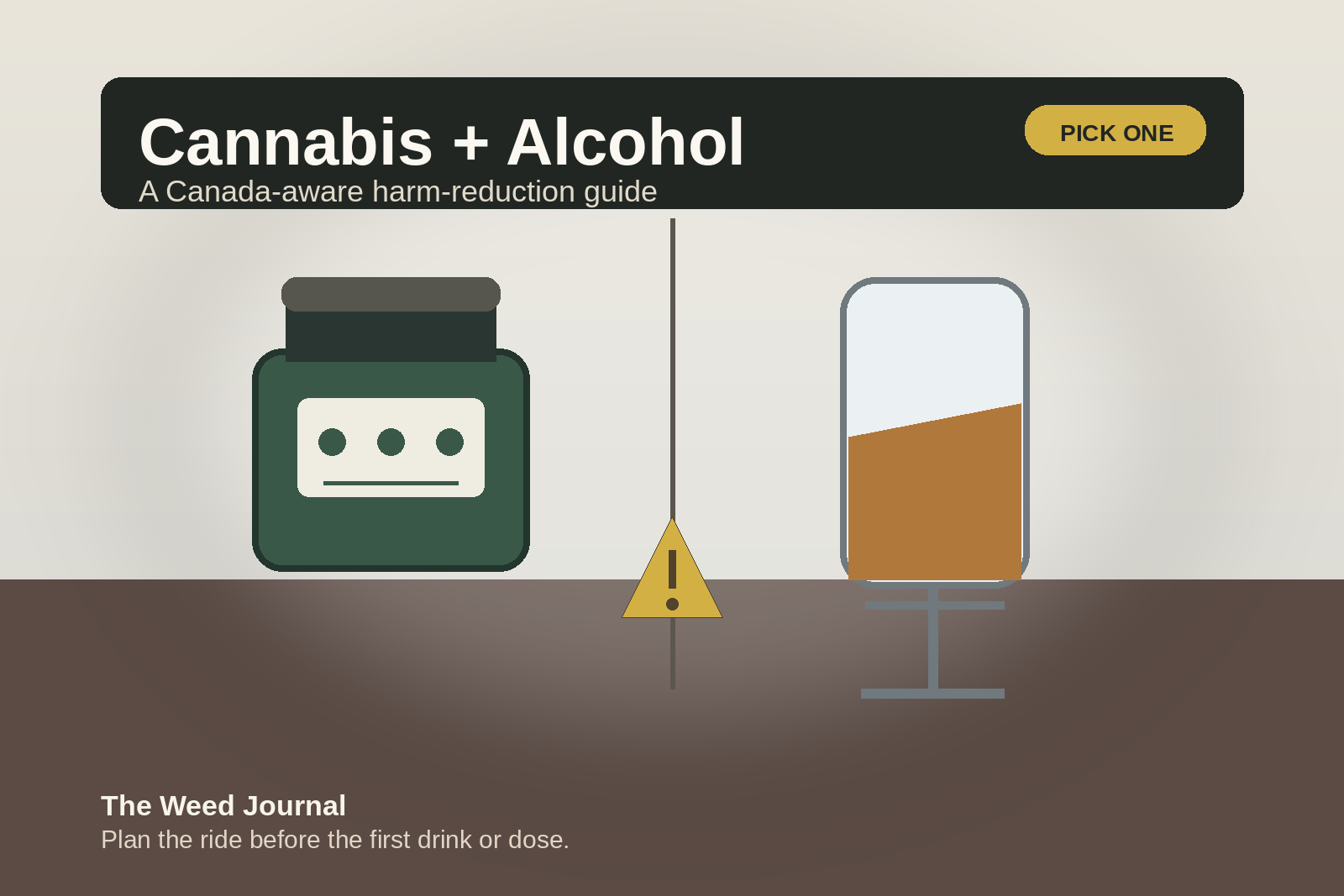
Mixing cannabis and alcohol can feel common at parties, concerts, cottages, bars, and backyard hangs. It is also one of the easiest ways for a moderate night to become more impaired than planned. The issue is not moral panic. It is basic risk management: both substances can affect judgment, coordination, reaction time, nausea, anxiety, and decision-making.
This Canada-aware guide is for adults who use cannabis, drink alcohol, or spend time around people who do. It is not medical advice, and it is not a treatment plan. The practical takeaway is simple: if you choose to use, pick one substance for the occasion, plan your ride before using anything, and treat a mixed-use situation as higher risk than either substance alone.
Quick answer
Health Canada says using cannabis at the same time as alcohol or other drugs can cause more severe impairment and adverse effects. Canada’s Lower-Risk Cannabis Use Guidelines also advise avoiding alcohol and cannabis together because the combination increases impairment. That matters for driving, walking home, consent, dosing decisions, nausea, anxiety, and looking after other people.
The safer default is to avoid mixing. If mixing has already happened, stop taking more, do not drive or operate machinery, move to a calmer place, have a sober person stay nearby, sip water normally, and seek urgent help if someone is hard to wake, has trouble breathing, has chest pain, has a seizure, is injured, or seems dangerously confused.
| Situation | Why risk rises | Lower-risk move |
|---|---|---|
| Drinking before using cannabis | Alcohol can make it easier to misjudge cannabis dose and impairment | Skip cannabis for the night or wait for a different occasion |
| Edibles plus alcohol | Delayed onset can lead to taking more before the first dose peaks | Do not stack doses; avoid driving and plan supervision |
| Smoking or vaping after drinks | Effects can feel stronger or less predictable when judgment is already affected | Choose one substance and keep the other out of reach |
| Parties or public events | Crowds, noise, heat, and social pressure can hide early warning signs | Go with a sober ride plan and a trusted person |
| Caregiving or work responsibilities | Both substances can affect attention, coordination, and reaction time | Stay sober for the responsibility window |
Why cannabis and alcohol together deserve caution
People often talk about cannabis and alcohol as separate choices. In real life, they are frequently used in the same social settings. A drink comes first, then a vape is passed around. A cannabis drink is opened beside beer. Someone takes an edible before a dinner where alcohol is served. A person who planned to drink only changes their mind once everyone else is using cannabis.
That is where the risk changes. The question is not whether every person will have a terrible experience. Many will not. The better question is whether you can still make good decisions if the effects add up faster than expected. Health Canada’s public cannabis guidance warns that combining cannabis with alcohol or other drugs can lead to more severe impairment and adverse effects. The Lower-Risk Cannabis Use Guidelines make the point even more directly: avoid the combination because impairment increases.
Impairment is not just “feeling high” or “feeling drunk.” It can include slower reaction time, weaker coordination, distorted time perception, reduced attention, poorer judgment, anxiety, dizziness, nausea, sleepiness, and worse decisions about transportation. It can also make it harder for friends to tell whether someone needs rest, reassurance, medical help, or emergency care.
The order can make the night harder to read
One reason mixed use is risky is that the effects do not arrive on the same schedule. Alcohol is often consumed over a stretch of time and can reduce caution before cannabis is introduced. Inhaled cannabis can come on quickly. Edibles can take much longer, and the peak may arrive after people assume nothing is happening.
That timing problem creates bad loops. Someone drinks, feels socially relaxed, and accepts cannabis they would otherwise skip. Someone takes an edible, feels nothing after 30 minutes, drinks more, then gets hit by the edible later. Someone vapes after drinking and suddenly feels much more impaired than expected. None of these scenarios require reckless intent. They only require a poor plan.
If cannabis is part of the night, keep alcohol out of the plan. If alcohol is part of the night, skip cannabis. That sounds plain, but plain rules are useful when judgment is the thing being affected.
Driving is the clearest no
Do not drive after using cannabis and alcohol together. Do not drive after cannabis alone if you are impaired, and do not use alcohol as a measuring stick for whether you are “fine.” Cannabis impairment can affect reaction time, attention, lane tracking, and decision-making. Alcohol adds another layer of risk. Together, they make self-assessment even less reliable.
Canada’s Lower-Risk Cannabis Use Guidelines advise not driving or operating machinery for at least six hours after using cannabis, and longer if needed. That is a minimum harm-reduction guideline, not a guarantee of fitness to drive. Edibles, higher THC products, low tolerance, fatigue, alcohol, and other drugs can stretch the impairment window.
Plan transportation before anyone uses anything: sober driver, transit, taxi, rideshare, staying overnight, or walking only when the route and weather are safe and someone sober is present. For more detail, read our guide to cannabis and driving in Canada.
Edibles and alcohol are a common trouble spot
Edibles can be harder to manage than inhaled cannabis because the onset is delayed. A person may not feel much at first, especially if they are distracted by food, music, conversation, or alcohol. Then the edible begins to build after more alcohol has already been consumed.
This is one reason “start low and go slow” is not enough when alcohol is involved. The lower-risk choice is to avoid the mix entirely. If an edible has already been taken, do not add alcohol to test the feeling. If alcohol has already been used, do not add an edible because it seems casual or small. The delayed peak makes the combined result harder to predict.
Keep serving size visible too. Legal edible cannabis products in Canada have THC limits per package, but homemade edibles and shared portions can be much less clear. When people are drinking, they are also more likely to forget how much they took, misread a label, or accept another piece. Our edibles dose chart for Canada explains why milligrams and timing matter.
Anxiety, nausea, and “too much” feelings
Some people mix cannabis and alcohol and mostly feel sleepy. Others feel dizzy, panicky, nauseated, disoriented, or unable to follow the room. Higher THC products, low tolerance, fatigue, dehydration, heat, fast drinking, and crowded environments can all make the experience harder.
If someone feels too high or too intoxicated, arguing rarely helps. Move them somewhere calm, reduce noise and heat, encourage slow breathing, avoid more substances, and keep them away from driving, swimming, balconies, stairs, and sharp objects. A sober person should stay close enough to monitor changes.
Get medical help if symptoms seem severe, unusual, or unsafe. Call 911 if the person is unconscious, hard to wake, having trouble breathing, having a seizure, seriously injured, or showing signs that worry you. For a less severe adult cannabis overconsumption situation, our guide on what to do when you are too high gives practical next steps.
Consent and social decisions matter too
Impairment is not only about vehicles and emergency rooms. Cannabis and alcohol together can affect memory, boundaries, confidence, and risk perception. That matters for sex, spending money, conflicts, posting online, walking home, accepting rides, and taking more substances.
A lower-risk social plan should include more than “do not drive.” It should include a trusted check-in person, a way to leave early, a charged phone, a safe place to sleep, and a clear rule that no one pressures anyone to drink, smoke, vape, or take edibles. If someone seems more impaired than expected, pause the party logic and switch into care mode.
This is especially important for new cannabis consumers. Beginners may not know what a normal cannabis onset feels like, how long THC can last, or how quickly a second decision can stack on the first. Our guide on how long THC lasts in Canada is a useful primer before experimenting with any format.
A practical mixed-use prevention checklist
- Choose cannabis or alcohol for the occasion, not both.
- Decide transportation before using either substance.
- Do not drive, bike in traffic, operate machinery, swim, or supervise risky activities after using.
- Keep edibles away from drinking settings where people may forget timing or serving size.
- Do not accept a vape, joint, edible, or drink just because it is offered.
- Keep original cannabis labels available so THC amount is not a guess.
- Have one sober person who can notice if someone is getting too impaired.
- Use a charged phone and know where you are in case help is needed.
- Stop adding substances if anyone feels dizzy, panicky, nauseated, confused, or unusually sleepy.
- Call for help if symptoms become severe or safety is uncertain.
What friends can do in the moment
If someone mixed cannabis and alcohol and now feels unwell, keep the response boring and practical. Remove access to more alcohol and cannabis. Help them sit or lie somewhere safe. Keep them away from vehicles, stairs, water, balconies, and isolated outdoor areas. If they may vomit, keep them positioned safely and watch their breathing.
Do not make them “walk it off” if they are dizzy or unsteady. Do not put them in a cold shower. Do not leave them alone to sleep it off if they are very hard to wake, breathing strangely, injured, or getting worse. A sober adult should monitor them and call for help when needed.
If you know what they took, write it down: approximate alcohol amount, cannabis product type, THC amount if known, time used, and any other drugs or medications. Clear information helps responders. Guessing is normal, but hiding details can make care harder.
Canada-aware bottom line
Legal cannabis does not make mixed use low risk. Alcohol being legal does not make the combination predictable. In Canada, the public-health advice is consistent: mixing cannabis with alcohol can increase impairment, and the safer move is to avoid the combination.
If you use cannabis, build the rule before the social setting starts: one substance, a ride plan, no driving, no dose stacking, and no pressure. If the plan breaks, stop adding more and shift to safety. That is not overreacting. It is how adults keep a night from turning into a preventable problem.
FAQ
Is it ever safe to mix cannabis and alcohol?
The lower-risk advice is to avoid mixing because the combination can increase impairment and adverse effects. Risk depends on the person, dose, product type, alcohol amount, tolerance, setting, and timing, but the safer plan is to choose one substance for the occasion.
Can I drive if I only had a small amount of each?
No. Do not drive after using cannabis and alcohol together. Small amounts can still affect judgment and reaction time, and self-assessment is unreliable when substances are involved.
Are edibles worse to mix with alcohol than smoking or vaping?
Edibles have a delayed onset and can last longer, which makes dose stacking easier. Inhaled cannabis can also become more impairing when mixed with alcohol. The safer rule is to avoid mixing alcohol with any cannabis format.
What should I do if a friend mixed cannabis and alcohol and feels awful?
Stop additional substances, move them to a safe calm place, keep a sober person nearby, and monitor breathing, responsiveness, vomiting, confusion, and injury. Call 911 if symptoms are severe or safety is uncertain.