Education 8 min read
How Long Does THC Last? Effects, Edibles, Tests, and Driving in Canada
Learn how long THC effects can last after smoking, vaping, edibles, and extracts, with Canada-aware safety, driving, and testing context.
If you are asking how long THC lasts, the first answer is: which kind of “last” do you mean?
There is the high you can feel. There is the impairment that can linger after the strongest effects fade. There is the time THC or THC metabolites may be detectable on a drug test. Those are related, but they are not the same timeline.
For Canadian readers, this distinction matters. A person may feel mostly normal and still be too impaired to drive, work safely, or make a good decision. Another person may test positive long after the high is gone. This guide explains the difference in plain language, with cautious ranges instead of false certainty.
If your main concern is impairment behind the wheel, use our dedicated cannabis and driving in Canada guide alongside this THC-duration overview. It explains how legal driving rules, self-assessment, and practical planning fit together.
Quick answer
THC effects can begin within seconds to minutes when cannabis is smoked, vaped, or dabbed. Edibles usually take longer: often 30 minutes to 2 hours to start, with full effects sometimes taking several hours. Health Canada says cannabis effects can last up to 24 hours, especially with edibles or stronger products.
In everyday terms, many inhaled cannabis experiences feel strongest in the first few hours. Edibles often last much longer and can affect the next day. Drug tests are different again: THC-related compounds may be detected for days or weeks depending on the person, frequency of use, and test type.
The three THC timelines
| Timeline | What it means | Why it matters |
|---|---|---|
| Felt effects | How long you feel high, relaxed, anxious, sleepy, hungry, or altered | Helps with planning, dose decisions, and avoiding overuse |
| Impairment | How long judgment, coordination, attention, or reaction time may be affected | Matters for driving, work, childcare, and safety |
| Detection | How long THC or metabolites may show on a test | Matters for workplace, legal, medical, or personal testing context |
Do not use one timeline as a substitute for another. Feeling less high does not prove you are safe to drive. A positive test does not necessarily prove you are currently high.
How long inhaled THC can last
Smoking, vaping, and dabbing send THC into the bloodstream quickly through the lungs. That is why the onset is fast. Health Canada says effects from smoking, vaporizing, or dabbing can be felt within seconds to minutes.
The fast onset can make inhaled cannabis easier to notice in the moment than edibles, but it can still be easy to overdo. Strong flower, concentrates, deep inhalations, repeated puffs, low tolerance, and mixing with alcohol can all change the experience.
For many people, the most noticeable effects from inhaled cannabis are shorter than edibles, but “shorter” does not mean harmless or instantly gone. Drowsiness, slowed reaction time, fogginess, or reduced coordination can linger. The Government of Canada warns that some effects, such as drowsiness, can last up to 24 hours.
If you are comparing smoking and vaping specifically, see The Weed Journal’s guide to vaping vs smoking cannabis in Canada. Method matters, but dose and product strength matter too.
How long edibles can last
Edibles are the format most likely to surprise beginners. Instead of going through the lungs, THC is processed through digestion. The onset is slower, the peak can come later, and the experience can last longer.
Health Canada says edible cannabis effects can occur within 30 minutes to 2 hours and can last up to 24 hours. Ontario’s public guidance notes that people may not feel the full effects for up to four hours and that effects can last up to 12 hours.
That delay is why the classic edible mistake is taking more too soon. Someone eats a gummy, feels little after 45 minutes, takes another, and then both doses catch up later. If you use edibles, plan for a long window and avoid stacking doses.
If your main question is the waiting window after a gummy, chocolate, capsule, oil, or drink, use our dedicated guide to how long edibles take to kick in before considering another serving.
The Weed Journal’s edible dosing guide goes deeper on “start low, go slow” and why patience matters more than bravado.
Why THC lasts differently from person to person
There is no universal THC clock. Two people can use the same labelled product and have very different experiences.
- Dose: more THC usually means stronger and longer-lasting effects.
- Product type: edibles, inhaled cannabis, oils, capsules, extracts, and beverages behave differently.
- Tolerance: frequent users may feel less from the same amount, but tolerance does not make impairment irrelevant.
- Body and metabolism: digestion, body composition, sleep, food, and general health can affect timing.
- Potency: high-THC products and concentrates can extend the experience or make it feel more intense.
- Mixing substances: alcohol and other drugs can make impairment less predictable.
- Setting: stress, unfamiliar environments, and anxiety can make effects feel stronger or harder to manage.
This is why good cannabis advice is usually boring: start with less, wait longer, and keep the setting simple.
How long THC can be detected
Drug testing is a different question from “how long will I feel high?” THC is stored in body fat and broken down into metabolites. Depending on the test, those metabolites may be detected after the main effects have worn off.
CAMH notes that THC can be expelled from the body over days or weeks and that drug tests can detect cannabis long after effects have faded, sometimes for one month or more.
Detection windows vary because tests vary. Urine, saliva, blood, and hair testing do not answer the same question. Frequency of use also matters: a one-time user and a daily user may have very different detection windows. This article should not be used to beat a test or make employment, legal, or medical decisions. If testing matters, get advice from the relevant professional, employer policy, union, clinician, or legal source.
Driving: do not use a countdown as permission
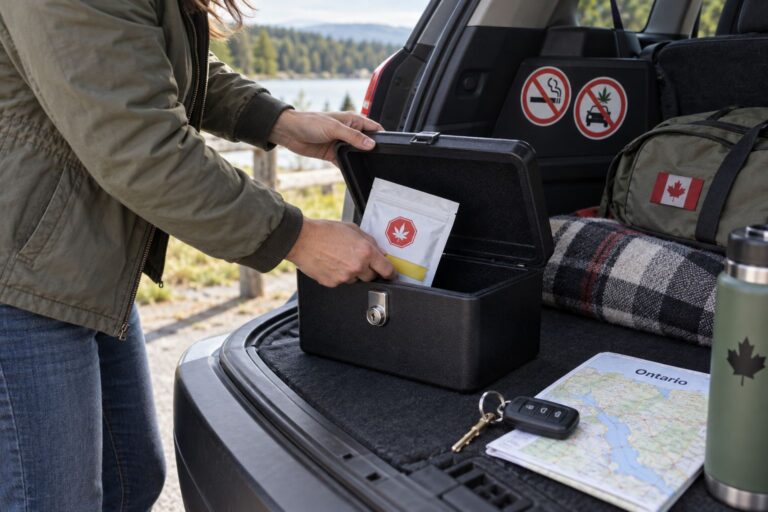
Canada’s advice is direct: if you are using cannabis, do not drive. There is no standard waiting time that works for everyone after cannabis use.
That can be frustrating because people want a simple rule. But the real answer depends on the product, dose, method, tolerance, other substances, and how the person responds. Edibles are especially risky for planning because effects can come on late and linger.
A practical rule is to arrange the ride before using cannabis. Do not wait until you are high to decide whether you are “fine.” If there is any chance you need to drive, operate equipment, supervise others, or make time-sensitive decisions, cannabis should wait.
What if you feel too high?
If the experience is uncomfortable, the goal is to reduce stimulation and avoid adding more THC. Move to a calm place, sip water, breathe slowly, and avoid alcohol or other substances. If you can, tell a trusted sober person what you used and when.
Most uncomfortable cannabis experiences pass with time, but serious symptoms need help. Chest pain, trouble breathing, fainting, severe confusion, repeated vomiting, or a frightening reaction that does not settle are reasons to seek medical assistance.
For product-choice basics, especially if high-THC products have been too much in the past, read THC vs CBD vs CBN and our guide to reading Canadian cannabis labels.
Planning checklist
- Do I have the rest of the day or evening free?
- Could this affect driving, work, childcare, school, or obligations tomorrow?
- Do I know the THC amount per serving or per package?
- Have I used this product before?
- Am I mixing it with alcohol or another substance?
- Is someone sober available if I feel unwell?
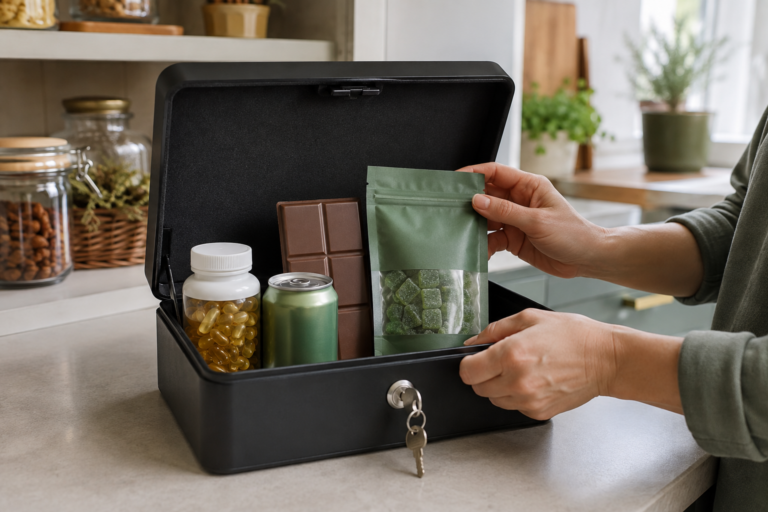
- Is the product stored away from children, pets, and anyone who should not access it?
If any answer gives you pause, use less, wait, or skip it.
How to read timing clues on a cannabis package
Canadian cannabis labels will not tell you exactly how long a product will affect you, but they can give useful clues. Start with the THC amount, then look at the format. A 2.5 mg edible, a 10 mg edible, a dried flower product, and a vape cartridge are not interchangeable experiences just because they all contain THC.
For edibles, pay attention to THC per unit and THC per package. For dried flower, look at total THC and remember that the number does not translate neatly into a predictable personal dose. For vapes and extracts, treat potency with extra respect because small amounts can deliver strong effects quickly.
Package dates and storage also matter. Old, poorly stored cannabis may not feel the same as a fresh product, and homemade or unlabelled products remove the basic information a cautious person needs. If you cannot tell how much THC is in a serving, it is harder to plan timing responsibly.
When to choose a lower-risk plan
A lower-risk plan is less about choosing the perfect product and more about protecting the next several hours. If you have an early shift, a long drive, a family obligation, a medication change, or a stressful day ahead, that is not the best time to experiment with THC.
New users should be especially careful with edibles, concentrates, and high-THC products. Experienced users should still avoid assuming that past tolerance guarantees today’s response. Sleep, food, alcohol, stress, and product differences can all change the timeline.
Bottom line
THC does not have one simple duration. Inhaled cannabis can act within minutes. Edibles can take hours to fully show themselves. Some effects, especially drowsiness or impairment, may last longer than the main high. Testing can detect cannabis after the experience is over.
The safest way to think about THC timing is not “when can I get away with it?” but “what responsibilities do I need to protect?” Read the label, choose a low starting amount, wait longer than you think you need to, avoid driving, and take lingering effects seriously.
Sources
- Health Canada: Health effects of cannabis
- Government of Canada: Cannabis impairment
- CAMH: Cannabis
- Ontario: Health effects of consuming cannabis edibles
Explore the beginner’s guide, or learn how we source and edit our stories.