Education 8 min read
THC vs CBD vs CBN: What Canadians Should Know
Understand THC, CBD, and CBN on Canadian cannabis labels, including effects, dosing caution, evidence limits, and safer-use tips.
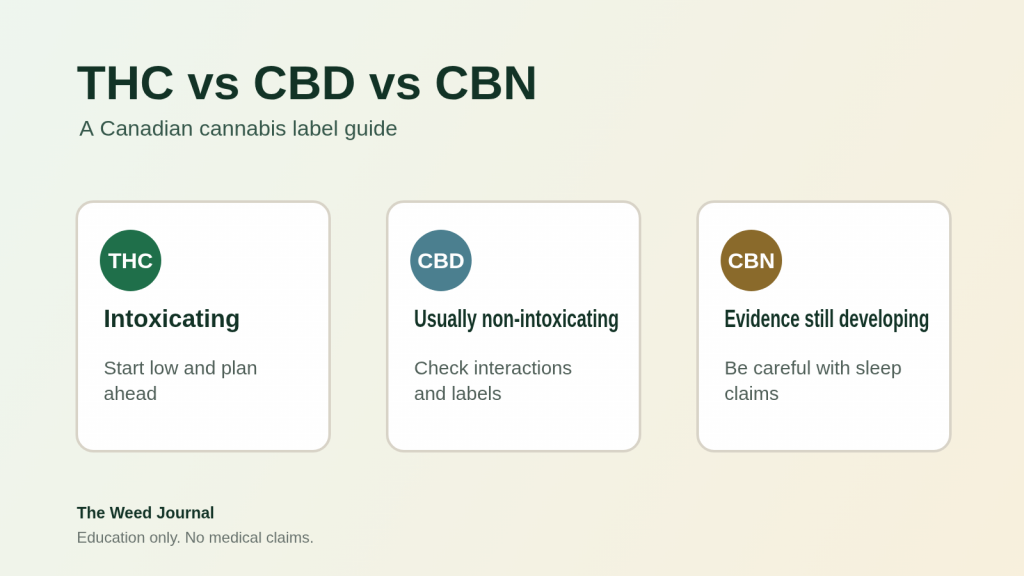
THC, CBD, and CBN show up on Canadian cannabis labels because they can change how a product feels, how it should be approached, and how cautious a beginner should be. They are not a shortcut to predicting every effect. A label can tell you how much THC or CBD is present, but it cannot guarantee a calm evening, better sleep, less anxiety, or any other personal outcome.
The useful way to compare cannabinoids is practical: which one is intoxicating, which one is not usually intoxicating, what does the evidence actually support, and what should a Canadian consumer check before buying? This guide keeps the answer reader-first and Canada-aware, with no medical promises.
This article is educational only. It is not medical, legal, or dosing advice. If cannabis may interact with your health, medication, work, driving, pregnancy, breastfeeding, or a mental-health condition, talk with a qualified professional before using it.
Quick Comparison
| Cannabinoid | What it is | Intoxicating? | What to watch |
|---|---|---|---|
| THC | The main intoxicating cannabinoid in cannabis | Yes | Start low, avoid driving, be cautious with edibles and high-potency products |
| CBD | A non-intoxicating cannabinoid often sold in balanced or CBD-forward products | Usually no | Can still interact with medications and may not feel like much on its own |
| CBN | A minor cannabinoid often marketed around nighttime products | Mild or unclear depending on product and dose | Sleep claims are still evidence-limited; check THC content carefully |
The biggest beginner mistake is treating these three as a simple menu: THC for fun, CBD for calm, CBN for sleep. Real products are more complicated. Dose, product format, tolerance, timing, food, alcohol, medication, and setting all matter. For a broader product-format primer, start with our guide to choosing the right cannabis product type.
THC strength also matters when cannabis is inhaled. If you are weighing flower, pre-rolls, or vape products, read our vaping vs smoking cannabis guide before treating a fast onset as easy dose control.
What THC Means On A Canadian Label
THC is the cannabinoid most associated with feeling high. It can affect attention, coordination, reaction time, memory, mood, and perception. That is why the practical safety rules around THC are stricter: do not drive after using cannabis, do not mix it casually with alcohol or other substances, and do not assume a high-THC product is a better product.
Canadian labels may show THC and total THC. For dried flower, the numbers can look different before and after heating because some cannabinoids are activated by heat. For edibles, oils, capsules, and beverages, pay close attention to THC per unit or serving, not only the total package amount.
Edibles deserve special caution because THC can take much longer to feel and can last longer than inhaled cannabis. A person may take more too soon because nothing seems to be happening. If you are new to edible products, read our edibles dosing in Canada guide before experimenting.
If timing is the main question, our guide to how long THC lasts separates felt effects, lingering impairment, edibles, and drug-test detection windows.
What CBD Means On A Canadian Label
CBD is commonly described as non-intoxicating because it does not usually produce the classic cannabis high associated with THC. That does not make CBD risk-free or medically neutral. Health Canada warns that cannabis products can have health effects, and CBD may interact with some medications. People who are pregnant, breastfeeding, managing a medical condition, or taking prescription drugs should be especially cautious.
CBD-forward products can be useful for consumers who want to avoid strong intoxication, but expectations should stay grounded. A CBD label is not a promise that a product will treat anxiety, pain, sleep issues, inflammation, or any other condition. In a recreational shopping context, CBD is best understood as part of the product profile, not as a guaranteed result.
\n\n
If you are looking specifically at oils, our CBD oil buying guide for Canada explains how to compare CBD amount, THC amount, carrier oil, legal source, and health-claim red flags before buying.
Balanced THC:CBD products can still be intoxicating if they contain meaningful THC. Beginners sometimes see CBD on the package and assume the product will be gentle. The safer move is to check the THC amount first, then look at CBD, serving size, and onset.
What CBN Means On A Canadian Label
CBN is a minor cannabinoid that often appears in products marketed for nighttime routines. It is commonly discussed alongside sleep, but the evidence is still developing. A PubMed-indexed review on CBN and sleep notes that consumer interest has grown faster than strong clinical evidence. That does not mean every CBN product is useless; it means readers should be wary of confident claims.
CBN products may also contain THC. That matters more than the front-of-package mood language. A gummy or oil promoted as a nighttime product can still be intoxicating if THC is present, and delayed onset can still catch people off guard. If the product contains both CBN and THC, treat it like a THC product for planning purposes.
The most responsible way to approach CBN is to read the label, avoid stacking it with alcohol or sedating substances, leave plenty of time before responsibilities, and be skeptical of any seller promising a specific health outcome.
THC, CBD, And CBN Are Not A Medical Plan
Cannabis content online often drifts into medical-sounding certainty. The Weed Journal does not treat cannabinoids as cures. Health Canada’s public cannabis guidance emphasizes health risks, lower-risk choices, and the importance of avoiding cannabis before driving or safety-sensitive tasks. That is a better baseline than marketing copy.
If a cannabis product is being considered for a symptom, condition, medication interaction, or sleep problem, the next step is not a stronger product. The next step is a conversation with a qualified healthcare professional. Recreational labels can help you understand what is in a package, but they do not replace medical advice.
How To Read Cannabinoid Strength
For flower and pre-rolls, cannabinoid strength is often shown as a percentage. For edibles, capsules, oils, beverages, and similar products, it is usually more useful to look for milligrams per unit or serving. A beginner-friendly package should make the serving size easy to understand.
Look for:
- THC per serving or unit
- CBD per serving or unit
- CBN per serving or unit, if present
- Total package amount
- Ingredients and allergens
- Lot, package, and expiry or best-before information where available
- Producer and legal retail channel details
If a label feels confusing, do not guess. Use our guide on how to read Canadian cannabis labels, then choose the simplest product you can understand.
Safer-Use Rules That Apply To All Three
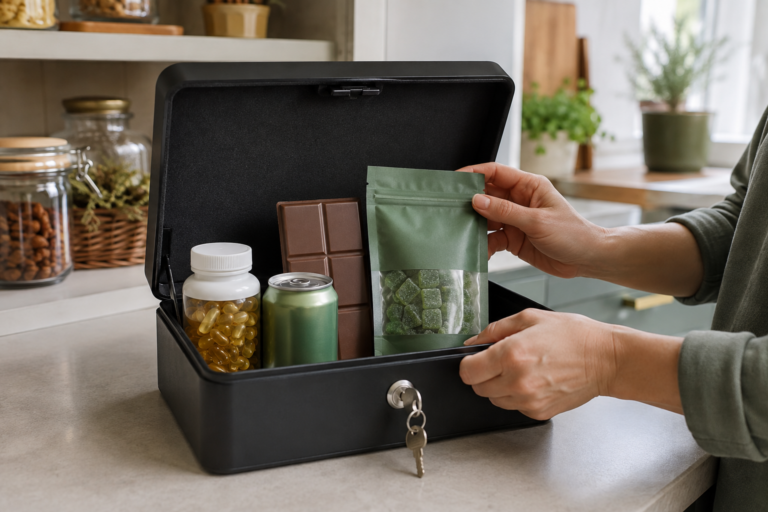
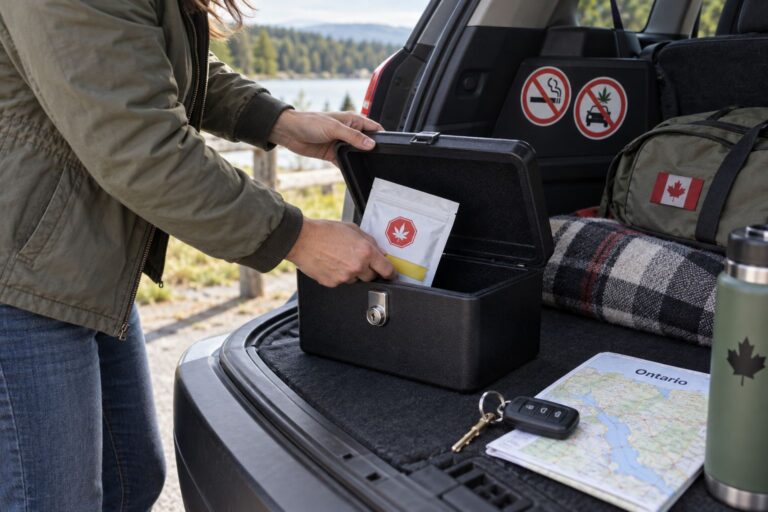
Different cannabinoids do not remove the basic rules. Buy through legal channels, keep cannabis away from children and pets, avoid driving, and avoid mixing cannabis with alcohol or other substances. Store products in their original packaging when possible so the label and warning information stay with the product.
Health Canada’s lower-risk guidance encourages people to choose lower-potency products, start with small amounts, avoid frequent use, and be extra cautious with cannabis that is eaten or swallowed. Those points matter whether the product is THC-forward, CBD-forward, or promoted around CBN.
For product storage basics, see our guide to keeping cannabis fresh without fancy gear.
Which One Should A Beginner Choose?
A cautious beginner should not start by chasing a cannabinoid trend. Start with the experience you want to avoid: too much intoxication, too long a duration, smoke or vapour, unclear dose, or a product you cannot verify. Then choose the lowest-risk format that fits.
If you want to avoid feeling high, a CBD-forward product with little or no THC may be more appropriate than a THC-forward product, but medication interactions and personal health still matter. If you want a mild THC experience, choose a modest THC amount and avoid re-dosing quickly. If you are curious about CBN, treat sleep marketing carefully and check whether THC is also present.
The simplest rule is this: THC drives most intoxication risk, CBD does not guarantee a therapeutic effect, and CBN should not be treated as proven sleep medicine.
FAQ
Is CBD the same as cannabis without the high?
No. CBD is one cannabinoid found in cannabis. CBD-forward products are usually not intoxicating in the same way as THC-forward products, but they can still have cautions, interactions, and label details worth checking.
Does CBN actually help with sleep?
The evidence is limited. CBN is often marketed for nighttime use, but strong claims are ahead of the science. Also check whether the product contains THC, because THC can affect impairment and next-day planning.
Is a balanced THC:CBD product safe for beginners?
Balanced does not automatically mean mild. If the THC amount is significant, the product can still be intoxicating. Beginners should check THC per serving and start with a small amount.
Can I drive after CBD or CBN?
Do not drive if you feel impaired, sleepy, distracted, or slowed. Be especially cautious with products that contain THC or unclear cannabinoid amounts.
Should I choose the product with the highest THC?
Not as a beginner. High THC can increase the chance of an uncomfortable experience. Clear labeling, modest strength, and predictable timing are usually more useful than maximum potency.
Sources
- Health Canada: Consumer information – Cannabis
- Health Canada: Cannabis – lower your risks
- Government of Canada: Cannabis and health effects
- PubMed: Cannabinol and sleep review
Explore the beginner’s guide, or learn how we source and edit our stories.