Education 8 min read
Cannabis at a House Party in Canada: Host Checklist
Hosting adults where cannabis may appear? Use this Canada-aware checklist for storage, edibles, smoking rules, driving plans, and guest safety.
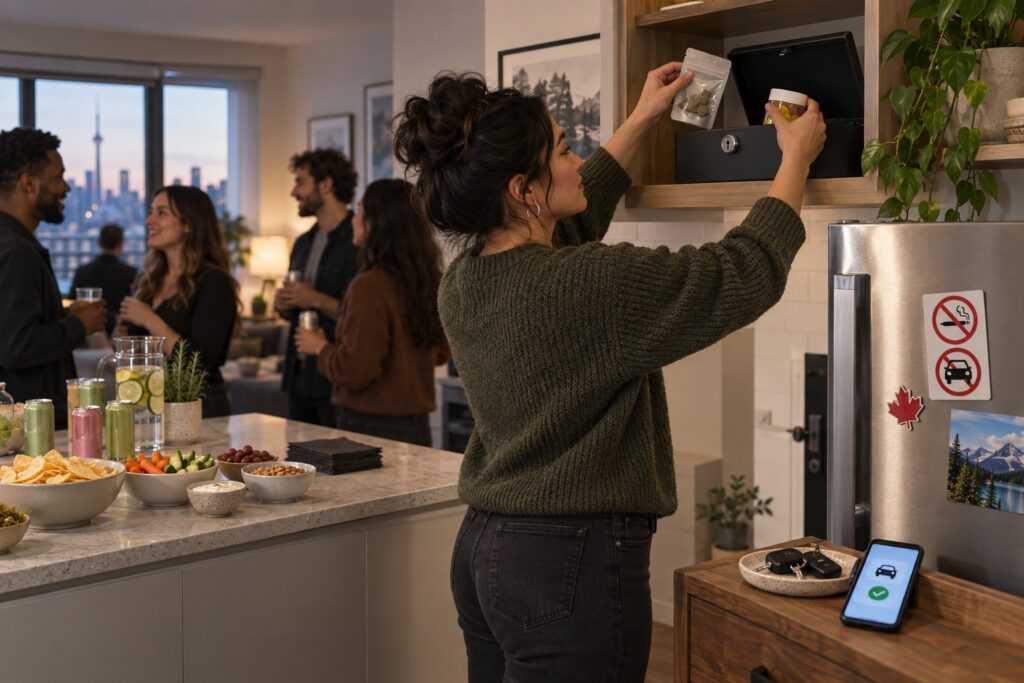
A house party is not a dispensary, a medical clinic, or a test of anyone’s tolerance. If cannabis is present, the safest host is the boring one: products are labelled, edibles are separated from regular food, smoking rules are clear, and nobody is nudged toward using more than they planned.
This Canada-aware checklist is for adult hosts who want to keep a gathering relaxed without turning cannabis into a problem. Laws vary by province, landlord, venue, and municipality, so treat this as a practical planning guide, not legal advice. The common thread is simple: adults only, legal products only, locked storage when not in active use, and no impaired driving.
The quick host rule
If you are hosting, decide before people arrive whether cannabis is part of the event. A casual “people can bring whatever” approach creates confusion around edibles, smoke, pets, kids, neighbours, and rides home. You do not need to police every adult, but you do need a visible house standard.
A good standard sounds like this: cannabis is for adults of legal age, products stay in original or clearly labelled packaging, edibles do not go near shared snacks, smoking or vaping follows local and building rules, and anyone who uses cannabis plans not to drive. That is not stiff. It is just easier than trying to solve a preventable issue at midnight.
House party cannabis checklist
| Host decision | Why it matters | Practical move |
|---|---|---|
| Adults only around cannabis | Provincial rules restrict possession, use, and distribution by age. | Do not leave cannabis where younger guests, children, or passersby can access it. |
| Keep original labels | THC amount, package date, lot details, and warnings are easier to verify. | Avoid unlabelled homemade-looking items unless everyone clearly knows what they are. |
| Separate edibles from food | Edibles can be mistaken for regular snacks and may take longer to feel. | Use a labelled container away from the snack table; do not serve cannabis edibles buffet-style. |
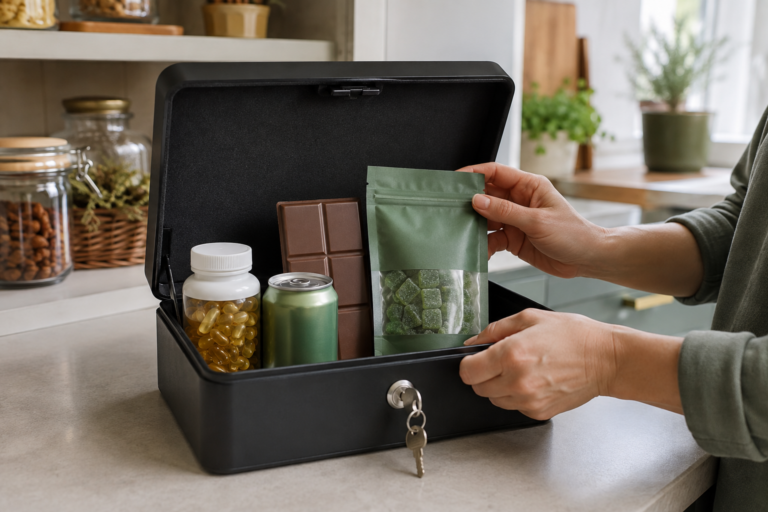
| Lock products between uses | Safe storage lowers the risk of accidental ingestion. | Use a cupboard, lockbox, or host-controlled storage spot. |
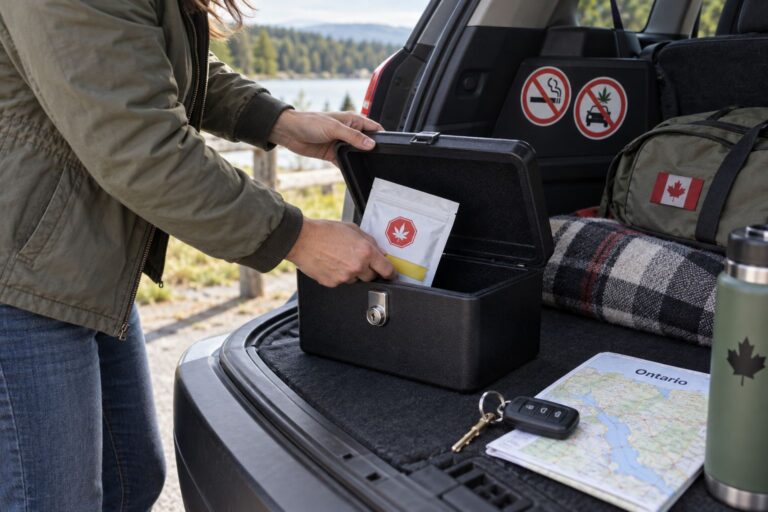
| Set smoking and vaping rules | Ontario and many other places restrict smoking or vaping in enclosed public places, workplaces, patios, vehicles, and other areas. | Follow building, lease, condo, municipal, and provincial rules before allowing smoking or vaping. |
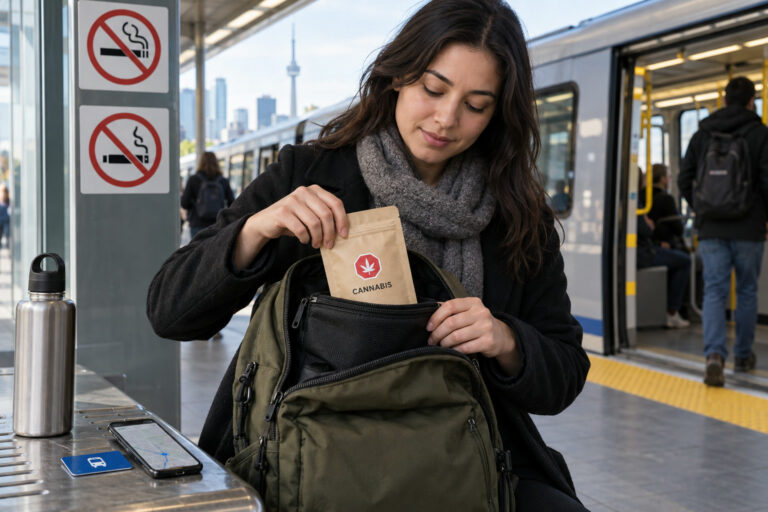
| Plan rides before use | Cannabis can impair attention, reaction time, and coordination. | Put ride-share, transit, walking, taxi, or overnight plans ahead of consumption. |
Keep edibles boring and obvious
Edibles are the easiest party format to mishandle because they look like food and do not feel immediate. Someone who would never accidentally smoke a joint could still grab a brownie, gummy, or drink from the wrong bowl. A host should never rely on vague warnings like “those are the special ones” when people are distracted, drinking, or arriving late.
Keep cannabis edibles in their legal packaging until the person using them is ready. If they are placed in another container, label that container plainly and keep it away from regular snacks. Do not put infused items beside chips, cookies, fruit, drinks, or anything guests are expected to share freely.
For adult guests who are newer to cannabis, point them toward basic timing information before they use anything. The Weed Journal’s guide to edibles dosing in Canada explains why “start low and go slow” matters and why taking more too soon is a common mistake. The host’s job is not to prescribe a dose. It is to create a setting where nobody is pressured into guessing.
Do not mix party pressure with cannabis
At parties, people often copy the room. That can be risky with cannabis because tolerance, body size, recent food, sleep, mood, medication use, alcohol use, and product strength all change how a person responds. Health Canada warns that frequent use, high-THC products, cannabis smoke, and impaired driving all carry risks. A host should make it socially easy to skip cannabis, stop early, or choose a lower-intensity option.
A simple line helps: “No pressure either way; keep your night manageable.” That sounds small, but it changes the room. Avoid games, dares, competitive hits, “finish this,” or jokes at the expense of someone who is taking less. If someone seems uncomfortable, anxious, very sleepy, confused, or more intoxicated than they expected, move them somewhere calm, offer water, keep them away from more cannabis or alcohol, and encourage medical help if symptoms seem serious or unusual.
Alcohol deserves special attention. Government of Canada impairment guidance notes that mixing cannabis with alcohol can increase impairment. If alcohol is also present, keep the cannabis plan even more conservative. Our cannabis and alcohol mixing guide is a useful internal reference for this part of the conversation.
Guests bringing their own cannabis
The easiest time to set boundaries is before people arrive with bags and pockets full of unknown products. If guests may bring cannabis, ask them to keep it in the original package or in a clearly labelled container. Loose edibles, unmarked drinks, shared jars, and “try this, I made it” items are harder to manage because nobody can quickly verify strength, ingredients, or whether the item is cannabis at all.
Do not let guests leave cannabis on the snack table, bathroom counter, couch, balcony rail, or entry table. If someone brings more than they plan to use, ask them to keep it closed and stored with their belongings or in the host-controlled storage spot. That is especially important in apartments, shared houses, and parties where people are moving between rooms.
It is also reasonable to say no to certain formats. A host can allow sealed legal edibles but not homemade infused food, or allow adults to possess cannabis while still banning indoor smoking and vaping. Clear limits are easier to enforce than vague tolerance.
Smoking, vaping, and neighbour rules
Do not assume that a private home means anything goes. Condos, apartment buildings, leases, short-term rentals, house rules, patios, balconies, and local bylaws can all matter. In Ontario, provincial pages explain that smoking cannabis and vaping are restricted in many places, and that cannabis cannot be consumed in a vehicle or boat that is being driven or may be driven. Other provinces have their own rules, and a building can be stricter than the baseline law.
If smoking or vaping is allowed at all, decide where it happens before the party starts. Avoid hallways, elevators, shared entrances, enclosed common areas, and anywhere smoke or vapour will drift into neighbours’ units. If the answer is “there is no suitable place,” make that the rule. It is better to be clear than to have a guest wander into a prohibited area with a vape or joint.
Storage during the party
Safe storage is not only a family-home issue. It matters at parties because guests move around, bags get opened, snacks get mixed, pets get curious, and people forget what they brought. Health Canada’s lower-risk information specifically advises storing cannabis out of reach and locked away, especially because accidental ingestion can be serious for children.
The cleanest host system is one controlled storage spot: a lockbox, high cabinet, or closed room where cannabis stays when it is not being actively used by an adult. Keep packaging with the product. Do not leave grinders, loose flower, open edibles, infused beverages, vape carts, or concentrates on coffee tables. If the party includes pets, children arriving later, roommates, or overnight guests, be stricter. The site already has a deeper home cannabis storage checklist for that scenario.
Driving and the end of the night
Do not make ride planning the last conversation. By then, people may be tired, impaired, embarrassed, or too optimistic about how they feel. Cannabis can impair reaction time, attention, and coordination. Impaired driving is illegal, and the safer host move is to make non-driving plans ordinary: ride-share, transit, taxi, designated sober driver, walking with a sober friend where appropriate, or staying over.
Keep car keys visible only as a reminder, not as an invitation. If someone used cannabis, especially with alcohol, the answer should be no driving. For the morning-after question, use extra caution too; effects and sleepiness can carry over for some people. The Weed Journal’s guide to cannabis the night before driving in Canada covers that planning angle in more detail.
A pre-party script hosts can use
- “Cannabis is adults-only here, and no one has to use it.”
- “Please keep anything cannabis-related labelled and away from the food table.”
- “No smoking or vaping inside; building and local rules still apply.”
- “If you use cannabis tonight, plan not to drive.”
- “If you feel uncomfortable, tell me early. You will not be judged.”
That script is plain on purpose. It avoids lecturing, but it sets expectations before cannabis becomes part of the room.
Canada-aware hosting bottom line
A responsible cannabis house party is not about making the event cannabis-themed. It is about reducing avoidable confusion. Keep products legal and labelled, separate edibles from snacks, store everything securely, follow smoking and vaping rules, avoid pressure, be careful with alcohol, and sort out rides before anyone uses cannabis.
For the legal baseline, start with the general legal cannabis in Canada guide, then check your province, municipality, building, lease, and event setting. The more public or shared the space is, the less you should improvise.
Sources
- Health Canada: Understanding cannabis health effects and how to reduce risk
- Government of Canada: Cannabis impairment
- Ontario: Cannabis laws
- Ontario: Where you cannot smoke or vape
Explore the beginner’s guide, or learn how we source and edit our stories.