Education 8 min read
Flower Buying Checklist in Canada: Freshness and Labels
A practical Canadian checklist for buying cannabis flower: legal-source checks, package dates, label math, freshness clues, storage, and red flags.
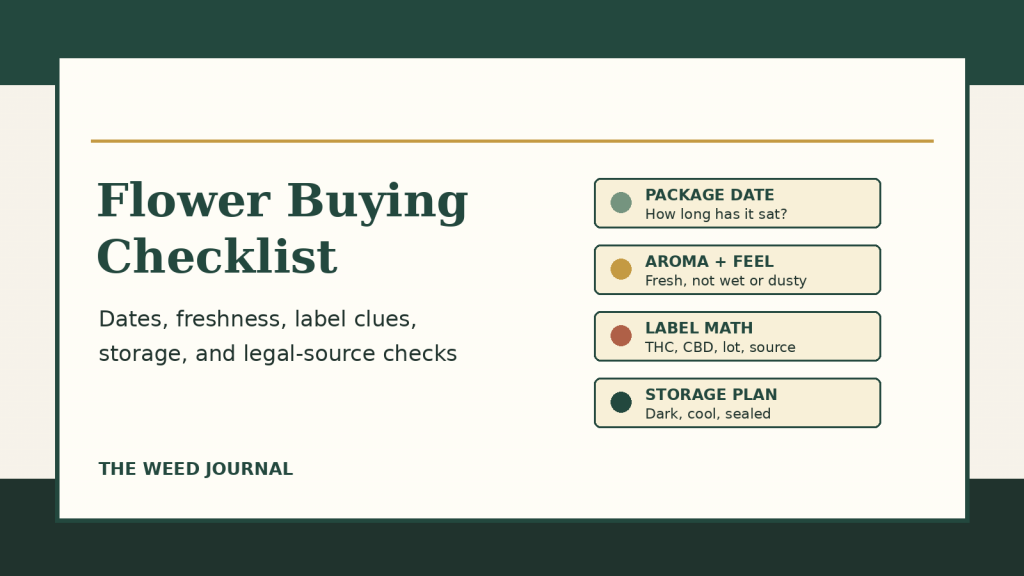
Buying cannabis flower should not feel like guessing from a strain name and the biggest THC number on the menu. In Canada, legal flower gives adults useful clues before they buy: package dates, lot numbers, THC and CBD values, net weight, warning symbols, producer details, and sometimes terpene or harvest information. The trick is knowing which clues matter in the real world.
This flower buying checklist is for Canadian adults who want fresher, better-matched cannabis without turning a simple purchase into a chemistry exam. It focuses on legal-source signals, freshness, label reading, aroma and texture, storage plans, and when to walk away.
Quick answer
When buying cannabis flower in Canada, check that the seller is legal, the package is sealed and clearly labelled, the package date is reasonable, the product is not overly dry or suspiciously wet, the THC/CBD numbers fit your tolerance, and you have a storage plan before opening it. THC percentage is only one clue. Freshness, product format, terpene profile, lot information, and how you plan to use the flower often matter more than chasing the strongest option.
If you are new, returning after a tolerance break, or switching from another format, start with modest THC, smaller quantities, and a product you can evaluate slowly. For broader shopping safety, keep our legal cannabis buying checklist for Canada open as a companion.
The 2-minute flower buying checklist
| Check | Green flag | Red flag |
|---|---|---|
| Legal source | Provincially authorized store or site | Anonymous delivery menu, no legal retailer trail |
| Package integrity | Sealed, child-resistant, labelled package | Loose bag, relabelled jar, missing warnings |
| Package date | Recent enough for the product and price | Old date with no discount or storage explanation |
| THC/CBD | Fits your tolerance and use case | Highest THC pushed as the only quality marker |
| Freshness | Aroma is clean; flower is not dusty or wet | Musty smell, visible mould, harsh dryness, damp clumps |
| Storage plan | Cool, dark, sealed, away from children and pets | Left in a hot car, clear jar in sunlight, loose bag |
1. Start with the seller, not the strain
The first quality check is whether the product is coming through a legal channel. Health Canada tells consumers to choose legal cannabis because legal products must meet federal rules for production, packaging, labelling, and testing. Provinces and territories decide how legal retail works, so the exact store system depends on where you live.
In Ontario, for example, adults can buy recreational cannabis from authorized cannabis stores or the Ontario Cannabis Store. Other provinces have their own legal retail systems. The practical rule is simple: if the source cannot show a clear legal trail, do not let a strain name, discount, or delivery promise distract you.
Legal does not automatically mean every product will be perfect for you. It does mean the package should carry required information and come through a regulated supply chain. That gives you something to verify before you spend money.
2. Read the label before you read the hype
Canadian cannabis flower labels can feel crowded, but a few fields do most of the work. Look for Total THC, Total CBD, net weight, lot number, packaging date, warning label, excise stamp when applicable, and producer information. Some products also list terpenes, harvest date, drying or curing notes, or humidity-pack information.
Our full Canadian cannabis label guide explains label math in more detail. For a buying decision, ask three fast questions: how strong is this likely to feel for me, how fresh is it likely to be, and can I trace the package to a real legal producer or retailer?
Be careful with percentages. A flower listed at 29% THC is not automatically better than one listed at 21%. It may be stronger, harsher for your tolerance, older, drier, or simply less enjoyable for your use case. If THC number is becoming the whole decision, read our guide to why THC percentage is not everything.
3. Treat package date as context, not a pass-fail stamp
A package date tells you when the product was packaged, not necessarily when it was harvested. Still, it is useful. Flower can dry out, lose aroma, or become less pleasant when it sits too long, especially if the package seal, humidity control, or storage conditions are poor.
There is no single date where legal flower instantly becomes bad. A recent package can still disappoint, and an older package can still be acceptable if it was stored well and priced honestly. Use the date with the rest of the evidence: aroma, texture, moisture balance, brand track record, product size, and whether the retailer is transparent.
For a deeper freshness pass, use our guide on how to tell if cannabis flower is fresh in Canada.
4. Learn the difference between dry, cured, and suspicious
Good flower is not supposed to feel wet. It should be dry enough to burn or vaporize properly and cured enough to avoid a grassy, harsh, unfinished feel. But there is a difference between properly dried flower and flower so brittle that it turns to dust when handled.
Use these practical clues after purchase, before use:
- Too dry: crumbles into powder, weak aroma, harsh smoke or vapour, no spring in the buds.
- Too wet: spongy or damp clumps, hard to grind, unusual ammonia or musty smell.
- Possible mould issue: fuzzy growth, grey-white patches that do not look like trichomes, damp basement smell, or visible contamination.
- Better balance: clean aroma, slight give, no wetness, no visible contamination, and a grind that is not dust.
If you see or smell something that suggests mould or contamination, do not use the product. Use the mouldy cannabis flower checklist for the stop-use signs, then contact the retailer or producer through the appropriate channel and keep the package information.
5. Do not buy more than you can store well
Large formats can look cheaper per gram, but flower quality can fall after opening if you store it poorly. Heat, light, air, and frequent opening can all make flower less enjoyable. Buying a larger bag only helps if you will use it in a reasonable timeframe and keep it sealed properly.
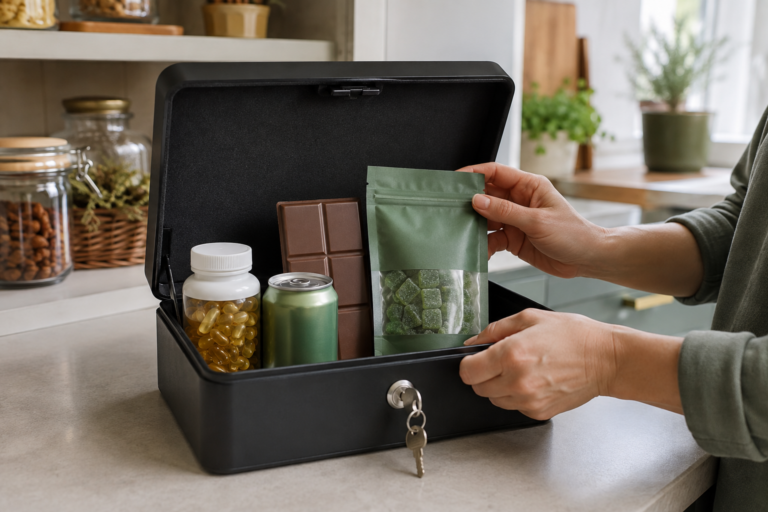
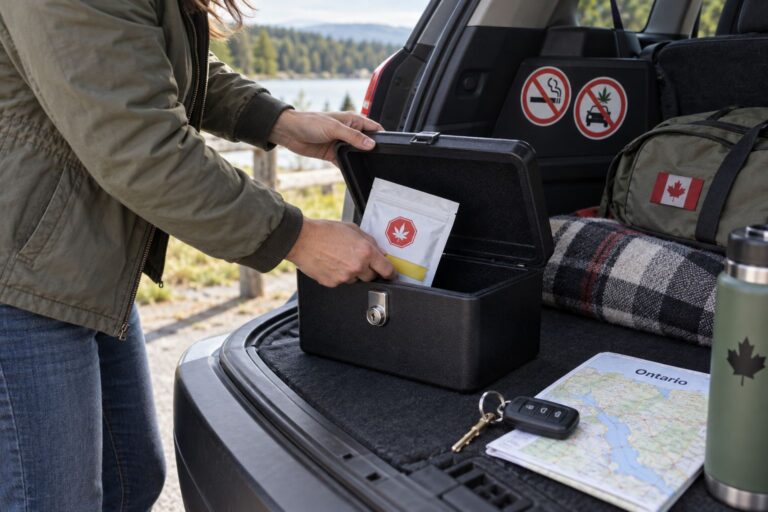
The safest household move is boring: keep cannabis in its original packaging or a clearly labelled airtight container, store it somewhere cool and dark, and keep it away from children, pets, and anyone who has not agreed to use cannabis. Do not leave flower in a car, window, bathroom, or open tray. Our cannabis storage guide for Canada covers temperature, humidity, and household safety in more detail.
6. Match the flower to the use case
A good product for one person can be the wrong product for another. Before buying, decide what you need the flower to do in practical terms. Are you looking for a small evening amount, a lower-THC option, something aromatic for a dry herb vape, or a budget product for experienced use? The answer changes what you should value.
For beginners or returning adults, moderate THC, smaller package size, and a clear label usually beat a bargain ounce with a high number and little context. For experienced consumers, price-per-gram may matter more, but it still should not override freshness or legal-source checks. For dry herb vaping, grind, moisture balance, and aroma may matter as much as headline potency.
If you are still comparing formats, start with our Cannabis 101 product type guide before buying flower by habit.
Once you bring flower home, preparation matters too. Use the cannabis flower grinding guide to match grind texture to rolling, bowls, or dry herb vaping without turning the product into dust.
7. Use terpenes carefully
Terpene labels can help describe aroma and product character, but they should not be treated like guaranteed effect labels. A listed terpene profile may tell you the flower smells citrusy, piney, earthy, fuel-like, spicy, or floral. It does not prove the product will make you sleepy, creative, calm, or social.
Use terpenes as one clue among many: aroma preference, THC/CBD amount, your tolerance, the product format, and your own past experience. If a menu turns terpenes into medical promises, slow down. The evidence is more complicated than marketing copy often makes it sound. For a plain-language primer, read Terpenes for Beginners in Canada.
8. Know when to walk away
Walk away from any flower purchase when the seller cannot show legal status, the package is not intact, required label information is missing, the price seems tied to unrealistic claims, or the product is being sold with medical promises. Also walk away if you are being pushed toward the highest THC option after saying you want something mild.
After purchase, do not use flower that appears mouldy, unusually damp, contaminated, or mislabelled. Keep the packaging, document the lot number and retailer, and follow the retailer or provincial process for product concerns. If someone accidentally consumes cannabis, especially a child or pet, treat it as urgent and seek appropriate help.
A simple decision flow
- Confirm the retailer is legal in your province or territory.
- Choose the smallest practical size for a new product.
- Check Total THC and CBD against your tolerance.
- Check package date and any freshness notes.
- Prefer clear label information over vague strain hype.
- Plan storage before opening the package.
- After opening, stop if aroma, texture, or appearance raises concerns.
Bottom line
A better flower purchase starts before you smell the jar or grind the bud. Buy from a legal source, read the label, use package date as context, avoid treating THC percentage as the whole story, and store the product properly after opening. The best cannabis flower for you is not the loudest menu item. It is the one that fits your tolerance, budget, use case, and safety boundaries without requiring guesswork.
Sources
- Health Canada: Reduce your risk by choosing legal cannabis
- Health Canada: How to read and understand a cannabis product label
- Ontario: Buying recreational cannabis
- Health Canada: Canada’s Lower-Risk Cannabis Use Guidelines evidence brief
Explore the beginner’s guide, or learn how we source and edit our stories.