Education 8 min read
How to Spot Mouldy Cannabis Flower in Canada
A practical Canadian checklist for spotting possible mould on cannabis flower, checking labels and package dates, storing safely, and knowing when to stop.
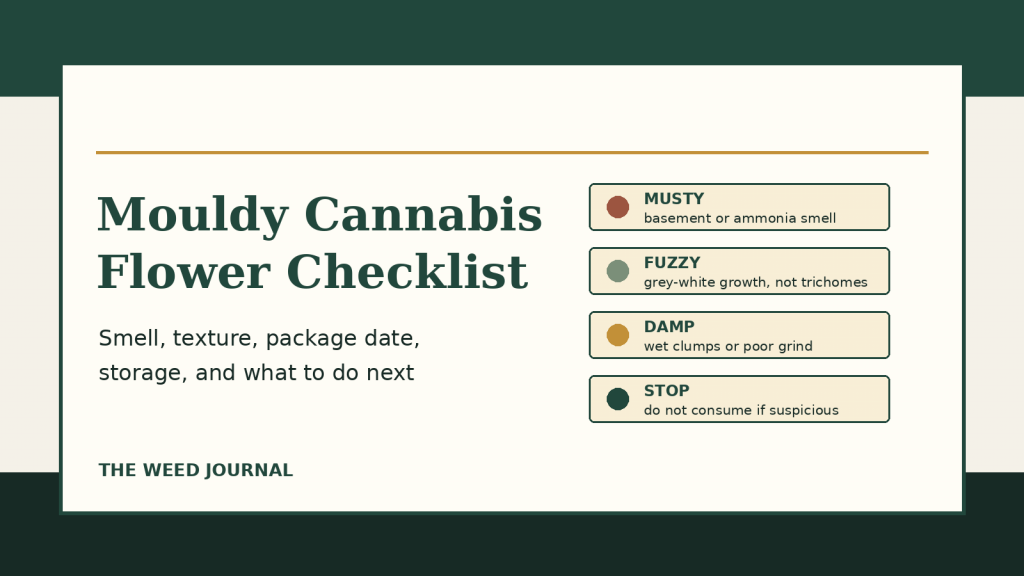
Mouldy cannabis flower is not something to “test and see.” If flower smells musty, looks fuzzy, feels suspiciously damp, or arrived in damaged packaging, the safest move is to stop, keep the package, and contact the legal retailer or producer instead of consuming it.
This guide is for Canadian adults who buy dried cannabis flower and want a practical way to tell normal cannabis features from warning signs. It is not medical advice, and it cannot diagnose contamination from a photo or description. The goal is simpler: know when to pause, what evidence to keep, and how to reduce the chance of turning a storage or buying mistake into a safety problem.
Quick answer
Do not use cannabis flower that may be mouldy. Warning signs include a basement-like or ammonia smell, fuzzy grey or white patches, damp clumps, visible webbing, strange powder that does not look like trichomes, damaged packaging, or flower that feels wet after opening. Keep the original package, note the lot number and package date, take clear photos if useful, and contact the retailer or producer through an official channel.
Legal cannabis is still the better starting point because regulated products must meet federal packaging, labelling, and production requirements. But even legal products can be stored poorly after purchase, opened carelessly, or become questionable over time. Freshness checks still matter at home.
Mould check table
| What you notice | Could be normal | Stop sign |
|---|---|---|
| White sparkle | Trichomes that look crystalline and attached to the flower | Fuzzy, dusty, web-like, or patchy growth |
| Smell | Earthy, citrus, pine, floral, fuel, spice, or skunky aroma | Musty basement, mildew, ammonia, wet hay, or rot |
| Texture | Slight give, not wet, grinds evenly | Damp clumps, sticky-wet interior, or powdery breakdown |
| Package | Sealed, labelled, lot number visible | Broken seal, missing label details, wet package, relabelled bag |
| Storage history | Cool, dark, sealed, original packaging | Hot car, sunny window, bathroom, loose jar, shared bag |
Mould or trichomes: how to tell the difference
Trichomes are the tiny resin glands that can make cannabis flower look frosty or sparkling. They usually appear as fine crystals on the surface and are part of normal flower structure. Mould is different. It may look fuzzy, cottony, dusty, web-like, grey-white, blue-green, or patchy, and it may appear in creases inside the bud where moisture can linger.
Appearance alone can be tricky because dense trichomes and broken plant material can fool the eye. Smell and texture are useful backup checks. A clean cannabis aroma can be strong, but it should not smell like damp basement, mildew, ammonia, rot, or wet hay. Flower should not feel wet or clumped in a way that suggests trapped moisture.
If you cannot tell, do not consume it. The cost of replacing questionable flower is lower than the risk of inhaling or otherwise using a contaminated product.
Why legal-source checks matter
Health Canada advises adults to choose legal cannabis because legal products are subject to rules for quality, packaging, labelling, promotion, and sale. Federal guidance also points consumers toward plain, child-resistant packaging, health warnings, the standardized cannabis symbol when required, excise stamps, and clear THC and CBD information.
That does not mean every legal flower purchase will be fresh or ideal. It means there should be a traceable package with a lot number, producer details, and a regulated retailer path. Those details matter if you need to report a concern. An unlabelled bag from an anonymous delivery menu gives you much less accountability.
If the legal-source question is still unclear, use our legal online cannabis buying checklist or broader Canadian cannabis buying checklist before placing another order.
Check the package before opening
Before you break the seal, look at the package. It should be intact, clearly labelled, and appropriate for cannabis. Check the product name, net weight, lot number, package date, THC and CBD information, warning elements, and producer or licence holder details. If anything looks tampered with, wet, relabelled, or inconsistent, pause before opening.
Package date is context, not a guarantee. Older flower can be dry and less aromatic, but age alone does not prove mould. Newer flower can still be a problem if it was mishandled. Read package date alongside storage history, seal condition, texture, aroma, and visual inspection.
For the full label walkthrough, see our Canadian cannabis label guide and packaging symbols explainer.
Check the flower after opening
Open the package somewhere with good light. Do not inspect flower over food, near children or pets, or while rushing. Pouring everything into a decorative jar before checking the product can make it harder to keep evidence organized if something is wrong.
Use a simple three-part check:
- Look: scan the outside and, if needed, gently break apart one bud to inspect the centre.
- Smell: notice whether the aroma is cannabis-like or damp, stale, ammonia-like, or rotten.
- Feel: check whether the flower is slightly springy, dusty-dry, or suspiciously wet.
Do not use a product that gives you a strong warning sign in any of those steps. Do not rely on a grinder, vaporizer, or flame to make questionable flower safe.
What to do if you suspect mould
First, stop handling the product more than necessary. Put it back in the original package or a clean container, wash your hands, and keep it away from children, pets, food, and shared surfaces. Do not mix it with other cannabis, and do not throw away the label before documenting it.
Next, record the product name, lot number, package date, retailer, purchase date, and what you noticed. Clear photos can help if you contact the retailer or producer. Use the official customer service route rather than social direct messages or informal reseller channels.
If you bought from a legal retailer, ask about the product concern process. If you suspect an illegal seller, avoid further orders and use the relevant provincial or local reporting pathway. If someone feels unwell after using cannabis, contact a health professional, poison centre, or emergency service as appropriate.
Storage mistakes that can create problems
Most home storage problems are ordinary: too much heat, too much light, too much air, too much moisture, or too many container swaps. Flower left in a hot car, bathroom, sunny window, loose bag, or frequently opened jar can lose quality quickly. Adding fruit peels, wet paper, or improvised humidity tricks can also introduce moisture or contamination.
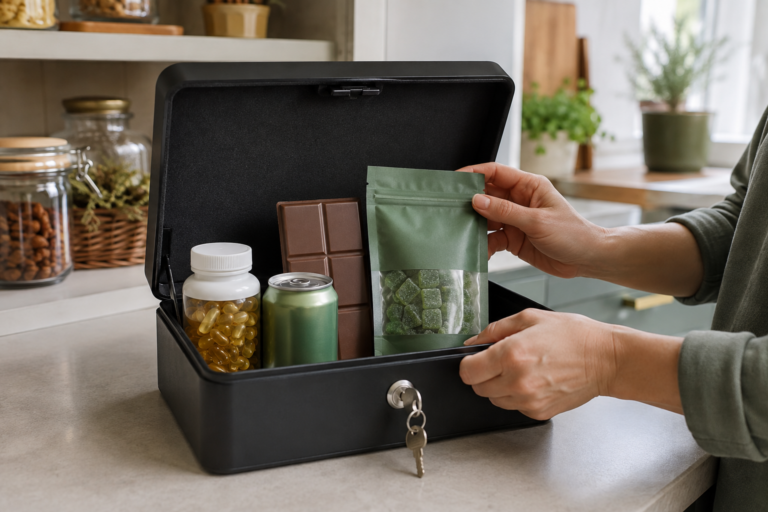
Health Canada recommends keeping cannabis products securely stored and away from children and pets. For flower quality, the practical version is: keep it sealed, labelled, cool, dark, and dry enough to avoid moisture problems. If you use humidity packs, use products intended for cannabis storage and do not try homemade moisture fixes.
Our cannabis storage guide explains temperature, humidity, original packaging, and household safety in more detail.
When dryness is a quality issue, not a mould issue
Dry flower can be disappointing without being mouldy. It may crumble too easily, smell muted, vape harshly, or burn quickly. That is a quality and freshness issue, and it can still be worth reporting to the retailer, especially if the product was sold as premium or recently packaged.
Do not confuse “too dry” with “safe enough no matter what.” If dry flower also smells musty, looks dusty in an unusual way, or has visible patches, treat it as suspicious. If it simply seems old or harsh, use that experience to buy smaller formats, check package dates more carefully, and store future purchases better.
For more buying context, read our fresh cannabis flower checklist and flower buying checklist.
Do not try to salvage questionable flower
Common salvage ideas are not reliable safety plans. Trimming off a visible patch may miss contamination inside the bud. Drying flower out does not prove it is safe. Freezing can change texture and moisture behaviour without solving the underlying concern. Baking or smoking is not a contamination test.
The better rule is strict: if mould is plausible, stop. Keep evidence, contact the legal retailer or producer, and replace the product through a safer channel. That may feel wasteful, but using a questionable product to avoid wasting money is a bad trade.
Bottom line
Mouldy cannabis flower is a stop sign. Buy from legal sources, keep the package, inspect flower in good light, trust musty smells and fuzzy patches as warnings, and store cannabis in a cool, dark, secure place after opening. When in doubt, do not consume it.
FAQ
Can mouldy cannabis be cleaned or dried out?
No. Do not try to clean, dry, trim, freeze, bake, smoke, or vaporize flower that may be mouldy. Treat it as a product concern and keep the package details for the retailer or producer.
Does legal cannabis ever have mould?
Legal cannabis is regulated and more accountable than unregulated products, but consumers should still inspect packages and store flower properly after purchase. If a legal product seems contaminated, use the official concern process.
Is white sparkle on cannabis always mould?
No. White sparkle can be normal trichomes. The warning signs are fuzzy, web-like, dusty, patchy growth, musty odour, damp clumps, or anything that makes the product look contaminated.
Sources
- Health Canada: Reduce your risk by choosing legal cannabis
- Health Canada: How to read and understand a cannabis product label
- Health Canada: Data Gathering Program comparison of legal and illegal dried cannabis products
- Health Canada: Safe storage of cannabis
Explore the beginner’s guide, or learn how we source and edit our stories.