Education 7 min read
Cannabis Decarboxylation in Canada: Labels, Edibles, and Flower
A practical Canadian guide to cannabis decarboxylation, Total THC labels, homemade edibles, dried flower, storage, and safer-use planning.
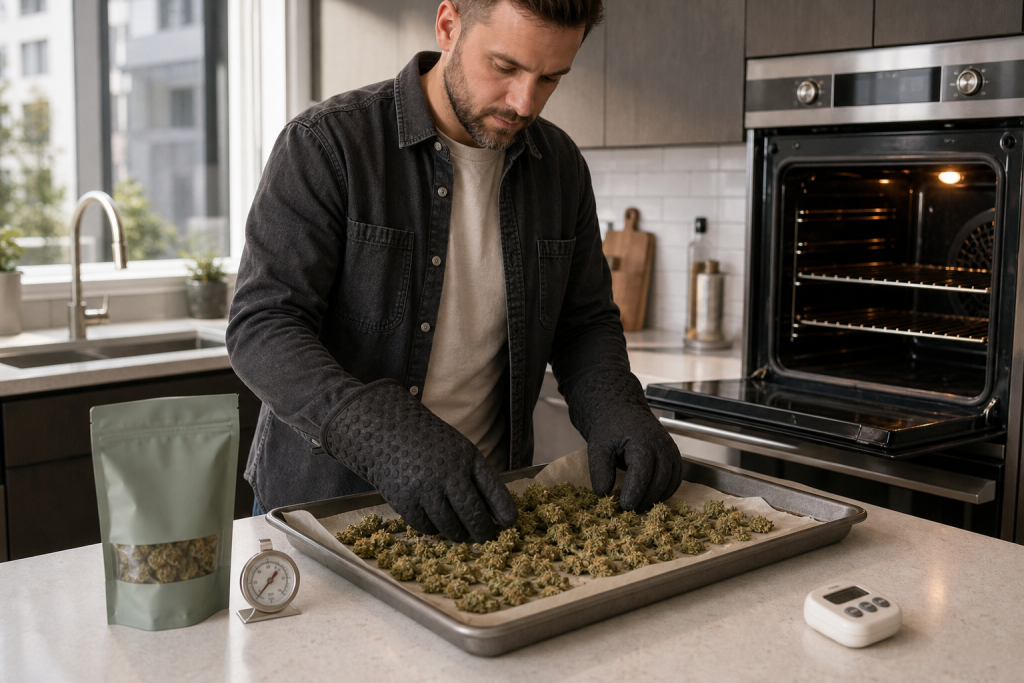
Decarboxylation is one of those cannabis words that sounds more technical than the reader question behind it. Most adults are really asking: why does heating cannabis change what it does, why do Canadian labels say Total THC, and why does dried flower behave differently from an edible, oil, capsule, or drink?
The short answer: decarboxylation is a heat-linked chemical change that can convert acidic cannabinoids such as THCA into neutral cannabinoids such as THC. That matters when you read a cannabis label, compare product types, cook with dried flower, or try to understand why raw flower is not the same as a ready-to-eat edible. This guide keeps the chemistry practical and Canada-aware, without pretending that a kitchen can control cannabis potency like a licensed lab.
Quick Answer
Cannabis decarboxylation is the process where acidic cannabinoids lose a carboxyl group and shift toward their neutral forms. In plain language, heat can help change THCA into THC and CBDA into CBD. Smoking, vaping, baking, extraction, processing, and long storage conditions can all play a role, but they do not produce perfect conversion every time.
In Canada, this is why labels often emphasize Total THC and Total CBD. Health Canada’s label guidance says the front of a cannabis label must display total THC and total CBD amounts or concentrations. Federal cannabis regulations also describe Total THC as the quantity or concentration that could yield THC when the potential conversion of THCA into THC is taken into account.
Why Decarboxylation Matters On Canadian Labels
If you are looking at dried flower, the label may show more than one cannabinoid number. THC can mean the THC already present in the product before use. Total THC is the number that accounts for potential conversion from THCA. That does not mean every person will experience the number exactly, but it is a better label clue than raw THC alone when flower will be heated.
This is closely connected to our THCA guide for Canada and our broader Canadian cannabis label guide. The practical habit is simple: for flower and other heat-used products, compare Total THC and Total CBD first, then use the rest of the label to understand product type, package date, lot number, terpenes, and storage instructions.
| Label or product detail | What decarboxylation changes | Reader takeaway |
|---|---|---|
| THCA on flower | Some THCA can convert toward THC when heated. | Raw THC alone may understate the potential effect of heated flower. |
| Total THC | Accounts for potential THC yield after conversion. | Use it as a comparison clue, not a personal dose guarantee. |
| Edible THC in mg | The product is already manufactured for oral use. | Do not apply flower-style assumptions to a gummy, drink, capsule, or chocolate. |
| Storage conditions | Heat, time, and light can affect cannabinoid stability. | Keep products sealed, labelled, and stored as directed. |
| Homemade infusion | Kitchen heat may change cannabinoids unevenly. | A homemade edible is harder to dose than a labelled legal edible. |
Flower, Vapes, Edibles, and Oils Are Not The Same
Decarboxylation shows up differently depending on the product. Dried flower is often heated by the consumer through smoking, dry herb vaping, or cooking. A vape cartridge or extract has already gone through processing steps before it reaches the shelf. An edible, beverage, capsule, or oil is a finished product with THC and CBD amounts listed in a format meant for that product category.
That is why product type matters as much as cannabinoid chemistry. If you are still comparing categories, start with our guide to choosing cannabis product types in Canada. A person who wants quick feedback, a person avoiding inhalation, and a person trying to read a flower label are solving different problems.
Can You Decarb Cannabis At Home?
Adults in Canada may encounter decarboxylation when making a homemade infusion, cooking with dried flower, or trying to understand online recipes. The important caution is that a home kitchen is not a testing lab. Oven temperatures fluctuate. Flower pieces vary in size, moisture, age, and cannabinoid content. Heat may not reach every piece evenly. Some cannabinoids and terpenes can also degrade or evaporate under heat, time, air, and light.
That does not mean the concept is useless. It means readers should avoid fake precision. A recipe that promises an exact THC result from flower without lab testing is guessing. If you use legal dried flower at home, keep the original package, note the Total THC, avoid mixing product lots, label any infused food clearly, and assume the finished result may be uneven. For many adults, a legal edible or oil with a measured label is a simpler choice than homemade cannabis food.
A Safer Home-Decarb Checklist
- Start with a legal cannabis product in its original packaging.
- Read Total THC, Total CBD, net weight, package date, lot number, and storage instructions before using it.
- Do not combine multiple lots or unknown leftovers if you want a predictable result.
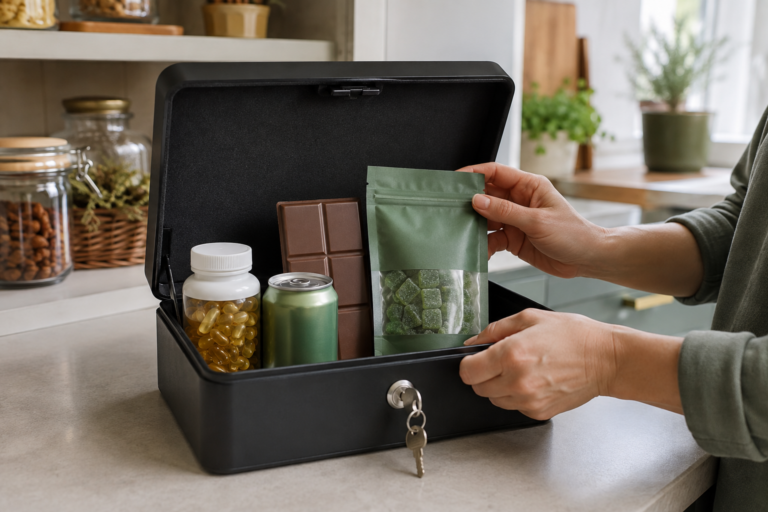
- Keep cannabis and cannabis-prepared foods away from children, pets, visitors, and anyone who may mistake them for ordinary food.
- Use clear labels on any homemade infused food, including a warning that it contains cannabis.
- Avoid driving, work, tools, caregiving duties, or alcohol when trying a new homemade product.
- Treat any homemade edible as delayed-onset and hard to measure.
The last point is the one that prevents the most trouble. Homemade edible effects can arrive slowly, feel stronger than expected, and last longer than a quick inhaled session. Health Canada’s “start low, go slow” advice is especially relevant when dose is uncertain. Pair this guide with our edibles dosing guide and edibles onset guide before making decisions about timing or serving size.
What Decarboxylation Does Not Tell You
Decarboxylation explains an important chemical change, but it does not tell the whole story of a cannabis experience. It does not tell you your tolerance, your impairment level, your personal response, whether a product is a good fit for your plans, or whether homemade food has mixed evenly. It also does not turn CBD into THC, remove impairment risk, or make a high-THC product automatically better.
It also does not replace legal sourcing. Canada’s legal cannabis system includes packaging, labelling, licensed production, and provincial or territorial retail rules. A homemade process cannot add those safeguards to unlabelled cannabis from an unknown source. When a product has no reliable label, you lose the best starting point for comparing potency and risk.
How Heat, Time, And Storage Fit Together
Scientific reviews of acidic cannabinoid decarboxylation describe conversion as affected by factors such as temperature, time, and the structure of the cannabinoid involved. For readers, the useful point is not to memorize a single universal oven setting. The useful point is that heat and time change cannabis chemistry, and uncontrolled heat and time can also reduce product quality.
Storage is the everyday version of the same lesson. Cannabis should be kept away from excess heat, light, air, and moisture, and it should stay in a secure place. If your concern is freshness rather than cooking, use our cannabis storage guide and flower freshness checklist. You are trying to preserve the product, not accidentally “improve” it through poor storage.
How To Use This When Buying Cannabis
Decarboxylation is most useful before you buy or prepare cannabis, not after something feels too strong. When comparing dried flower, check Total THC rather than chasing the biggest raw THC number. When comparing edibles, drinks, oils, capsules, or sprays, look at milligrams per unit or container and remember that the product has already been formulated for that route of use. When comparing homemade cannabis food with a legal edible, admit the difference: one has a regulated label, the other depends on your materials and method.
If a retailer, package, or recipe makes the chemistry sound too easy, slow down. Good cannabis education should make uncertainty visible. Total THC is useful. Legal labels are useful. Published chemistry is useful. But no label or article can tell you exactly how a homemade edible will affect you at a specific moment.
FAQ
Does raw cannabis flower already contain THC?
It can contain some THC, but dried flower often contains a meaningful amount of THCA. That is why Canadian labels use Total THC to help show potential THC after conversion from THCA.
Is decarboxylation the same as making cannabis stronger?
No. Decarboxylation can change acidic cannabinoids into neutral forms, but heat can also degrade some compounds. “Stronger” depends on product, amount, route of use, tolerance, and how evenly the product is prepared.
Do legal edibles need to be decarbed at home?
No. A legal edible is a finished cannabis product. Read the THC and CBD amount per unit or container, follow the label, and avoid adding more before effects are clear.
Can decarboxylation make homemade edibles predictable?
It can make the preparation more informed, but it cannot make a home kitchen as predictable as a tested legal product. Uneven mixing, oven variation, flower differences, and serving size all matter.
Sources
- Health Canada: How to read and understand a cannabis product label
- Justice Laws Website: Cannabis Regulations, labelling requirements
- Molecules: Acidic cannabinoid decarboxylation
- Cannabis and Cannabinoid Research: Decarboxylation study of acidic cannabinoids
- Health Canada: Cannabis – lower your risks
Explore the beginner’s guide, or learn how we source and edit our stories.