Education 8 min read
How to Store Cannabis Edibles in Canada
Store cannabis gummies, chocolate, drinks, and capsules safely in Canada with format-specific freshness, label, and lockbox checks.
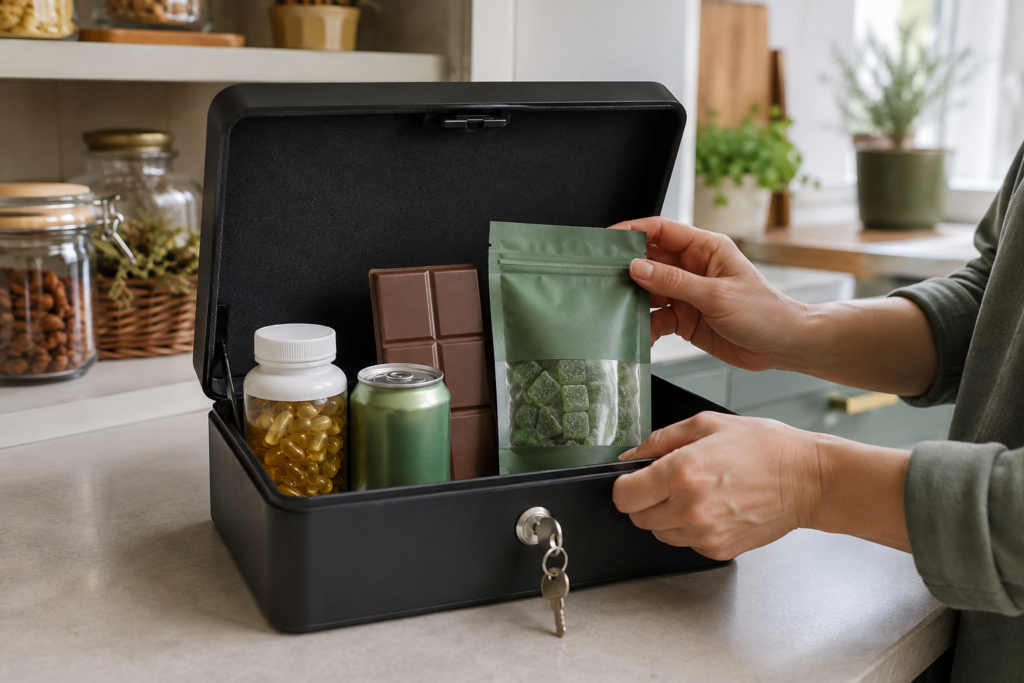
Cannabis edibles are easy to mis-store because they look and behave like ordinary food. Gummies can sweat or stick together, chocolate can soften or bloom, drinks may be forgotten in the fridge, and capsules can end up beside vitamins if you are not careful. In a Canadian home, the safest storage habit is simple: keep every edible in its original cannabis package, put that package in a locked container, and store it separately from regular snacks.
This guide is for adults who have legal cannabis gummies, chocolates, beverages, baked goods, oils, or capsules at home and want a practical system for freshness, label tracking, and household safety. It is not medical advice. If cannabis is being used for a health reason, or if you have questions about medications, pregnancy, mental health, or substance use, speak with a qualified health professional.
The short version
- Keep cannabis edibles in their original child-resistant package whenever possible.
- Put the original package inside a locked box, pouch, or cabinet.
- Store edibles away from ordinary food, candy, baking supplies, and kids’ lunch items.
- Keep the product label, THC/CBD amount, lot number, package date, and warning information with the product.
- Use cool, dark, dry storage unless the product label gives a more specific instruction.
- Do not combine leftover pieces from different products in one bag or jar.
- Throw away anything with mould, broken seals, odd odours, leakage, or unclear identity.
Why edible storage deserves its own routine
Edibles create two overlapping storage questions. The first is freshness: heat, moisture, air, and time can affect flavour, texture, and quality. The second is safety: edible cannabis can be mistaken for regular food, especially when it looks like candy, chocolate, cookies, or drinks. Health Canada advises adults to keep cannabis out of sight and reach of children and pets and to store cannabis in its original child-resistant packaging. That advice matters even more with edible products.
Original packaging is useful because it carries information you may need later: total THC and CBD, unit size, lot number, package date, expiry or best-before details when provided, warning messages, and the producer’s identity. If you move a gummy, chocolate square, or capsule into an unmarked container, you may lose the information that helps you dose cautiously, check a recall, or explain what was consumed in an accidental exposure.
For dose planning, pair this storage routine with The Weed Journal’s edibles dosing guide for Canada. Storage keeps the product organized; dosing habits decide whether the session stays manageable.
Storage by edible format
| Format | Main storage risk | Best everyday setup | When to discard |
|---|---|---|---|
| Gummies and candies | Heat, stickiness, accidental snack confusion | Keep sealed in the original pouch, then place the pouch in a locked box away from regular candy | Discard if pieces are melted into an unclear mass, smell off, show mould, or cannot be matched to the label |
| Chocolate | Melting, fat bloom, moisture, portion confusion | Store cool, dark, and dry; keep the labelled wrapper or package around any remaining pieces | Discard if it smells rancid, has mould, was left hot for a long period, or no longer has clear serving information |
| Drinks | Being mistaken for regular beverages or forgotten after opening | Keep unopened cans or bottles in a labelled locked container; follow the label after opening | Discard if opened beyond label guidance, leaking, swollen, sour-smelling, or unidentifiable |
| Baked goods | Food spoilage and unclear THC distribution | Follow the package directions closely; keep servings separated and labelled inside locked storage | Discard if stale beyond comfort, mouldy, unlabelled, or stored with regular baked goods |
| Capsules and softgels | Confusion with vitamins or medication | Keep in the original cannabis bottle or blister pack, separate from medicines and supplements, inside locked storage | Discard if the bottle is unlabelled, capsules leak, or the product cannot be identified |
Keep edibles in the original package
It can be tempting to move edibles into a nicer jar, a snack container, or a fridge bin. Avoid that unless the original package is damaged and you have no safer option. Legal Canadian cannabis packaging is designed to identify the product as cannabis and to include required warnings and product information. A plain kitchen container does the opposite: it makes the product look like food.
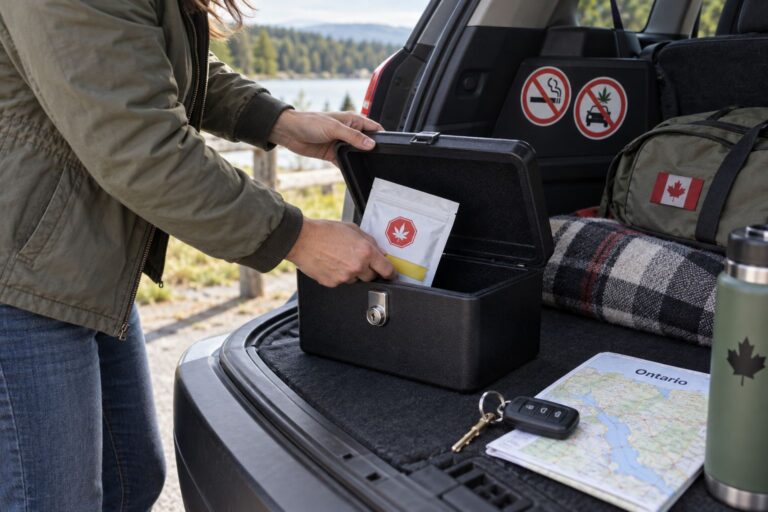
If the original package is awkward, place the whole package inside a second locked container. For example, put the cannabis gummy pouch into a lockbox instead of pouring gummies loose into a jar. Put the chocolate wrapper and all remaining pieces into a sealed bag, then place that bag inside the locked box. The goal is not decorative storage. The goal is that any adult who finds the item can immediately tell what it is.
For product-specific label details, see TWJ’s guides to cannabis gummies in Canada, cannabis beverages, and cannabis capsules and softgels.
Separate cannabis from ordinary snacks
A cannabis chocolate bar does not belong in the regular chocolate stash. A THC drink should not sit loose beside sparkling water. A gummy pouch should not live in the same basket as candy, fruit snacks, or school treats. Physical separation is one of the easiest ways to reduce confusion.
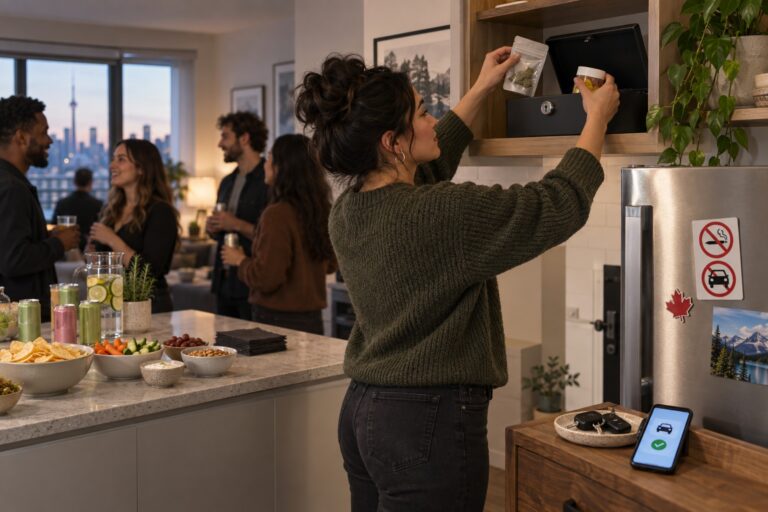
Pick one location for cannabis edibles and make it boring, adult-only, and locked. A small lockbox on a high shelf is better than a drawer everyone uses. A locked cabinet is better than a fridge door bin. If you need to refrigerate a product because the label says so, use a locked fridge box or another clearly marked locked container rather than leaving it loose.
Do not rely only on height. Children climb, visitors browse cupboards, and pets can chew through packaging. A lock adds a second layer when attention fails.
Use cool, dark, and dry as the default
Most cannabis edibles do best away from heat, sunlight, and humidity. A stable cupboard or pantry is usually more predictable than a sunny counter, a hot car, a bathroom, or a windowsill. Heat can soften gummies and chocolate. Moisture can damage packaging or encourage spoilage in food-based products. Sunlight and air can reduce quality over time.
There is one important exception: follow the product label. Some beverages or food-style products may have instructions for refrigeration after opening. If the label gives a specific direction, that direction wins. The storage system should still stay locked and clearly separate from normal food.
If you are wondering whether an older package is still usable, read TWJ’s guide to whether cannabis edibles expire in Canada. Do not try to rescue a questionable edible by baking it, freezing it after contamination, or mixing it into other food.
Do not split servings without preserving the label
Some edibles come in multiple pieces, and some adults cut chocolate or baked goods into smaller portions. If you divide a product, keep the remaining pieces with the package and a clear note about what was changed. A tiny unlabelled square wrapped in foil may be obvious to you today and confusing to someone else next week.
The safest routine is to decide on a serving only when you are ready to use it, then return the rest to the original package and locked container immediately. Avoid leaving partial servings on counters, side tables, bedside tables, or bags. Edibles often take longer than inhaled cannabis to feel noticeable, so it is easy for someone to set one down, forget it, and create a household hazard.
Build a two-minute home checklist
- Package: Is every edible still in its original labelled cannabis package?
- Lock: Is the product inside a locked box, pouch, or cabinet?
- Separation: Is it away from regular snacks, drinks, vitamins, and medication?
- Condition: Is the seal intact, the product dry where it should be dry, and the smell normal?
- Label: Can you still read the THC/CBD amount, lot number, and package details?
- After use: Did the package go back into locked storage before the session moved on?
If kids, pets, roommates, guests, or tradespeople are in the home, do the checklist before they arrive. If you travel with edibles, do it again when you return. For a broader household routine, use TWJ’s safe cannabis storage checklist for Canada.
What to do after a spill, leak, or mystery package
If a drink leaks, a package tears, or a gummy bag loses its label, do not guess. Cannabis products should be identifiable. If you cannot tell the product, amount, or age, discard it in a way that prevents accidental consumption. Do not leave loose edibles in household garbage where a child, pet, or visitor could access them.
If you think a child, pet, or another adult has accidentally consumed cannabis, treat it seriously. Call local poison control or emergency services as appropriate, especially if the person is very drowsy, confused, having trouble breathing, or cannot explain what was taken. Keep the package available if you have it; the label can help responders understand the product.
Common mistakes to avoid
The biggest edible storage mistake is treating cannabis like a normal treat. The second is separating the product from the label. The third is assuming “hidden” means secure. A bag at the back of a cupboard may be hidden from you, but not from a curious child or a houseguest looking for snacks.
Another mistake is mixing formats in the same container. Gummies, chocolate, beverages, and capsules have different labels, serving sizes, package dates, and storage needs. Keeping them together loosely makes dose tracking harder and can create confusion later.
Finally, avoid using storage as a way to stretch a product indefinitely. Cannabis edibles are still edible products. If the food base has spoiled, the package is damaged, or the product seems wrong, freshness is no longer the main issue. Safety is.
Bottom line
A good cannabis edible storage system is simple enough to repeat: original package, locked container, separate from regular food, cool and dry unless the label says otherwise, and checked before guests, kids, or pets are around. That routine protects the label information you need, helps preserve quality, and lowers the chance that an edible is mistaken for an ordinary snack.
For most households, the best upgrade is not a fancy storage gadget. It is one boring locked box and the habit of using it every time.
Sources
- Health Canada: Consumer information – cannabis
- Canadian Centre on Substance Use and Addiction: 7 things you need to know about edible cannabis
- Health Canada: Cannabis health effects
Explore the beginner’s guide, or learn how we source and edit our stories.