A cannabis high does not end on a timer. Two people can use the same product and feel different timing because dose, product type, tolerance, food, sleep, alcohol, and setting all matter. That is why a single answer like “two hours” can be misleading, especially for edibles and other swallowed products.
For adults in Canada, the practical answer is this: inhaled cannabis usually feels faster and fades sooner, while edible cannabis can take much longer to start and may last much longer. Impairment can also outlast the moment when someone feels obviously high, which matters for driving, work, childcare, cooking, and other decisions that require coordination and judgment.
This guide explains realistic timing ranges by product type, why duration varies, and how to make safer plans without turning cannabis timing into fake precision. It is educational information, not medical or legal advice.
Quick answer
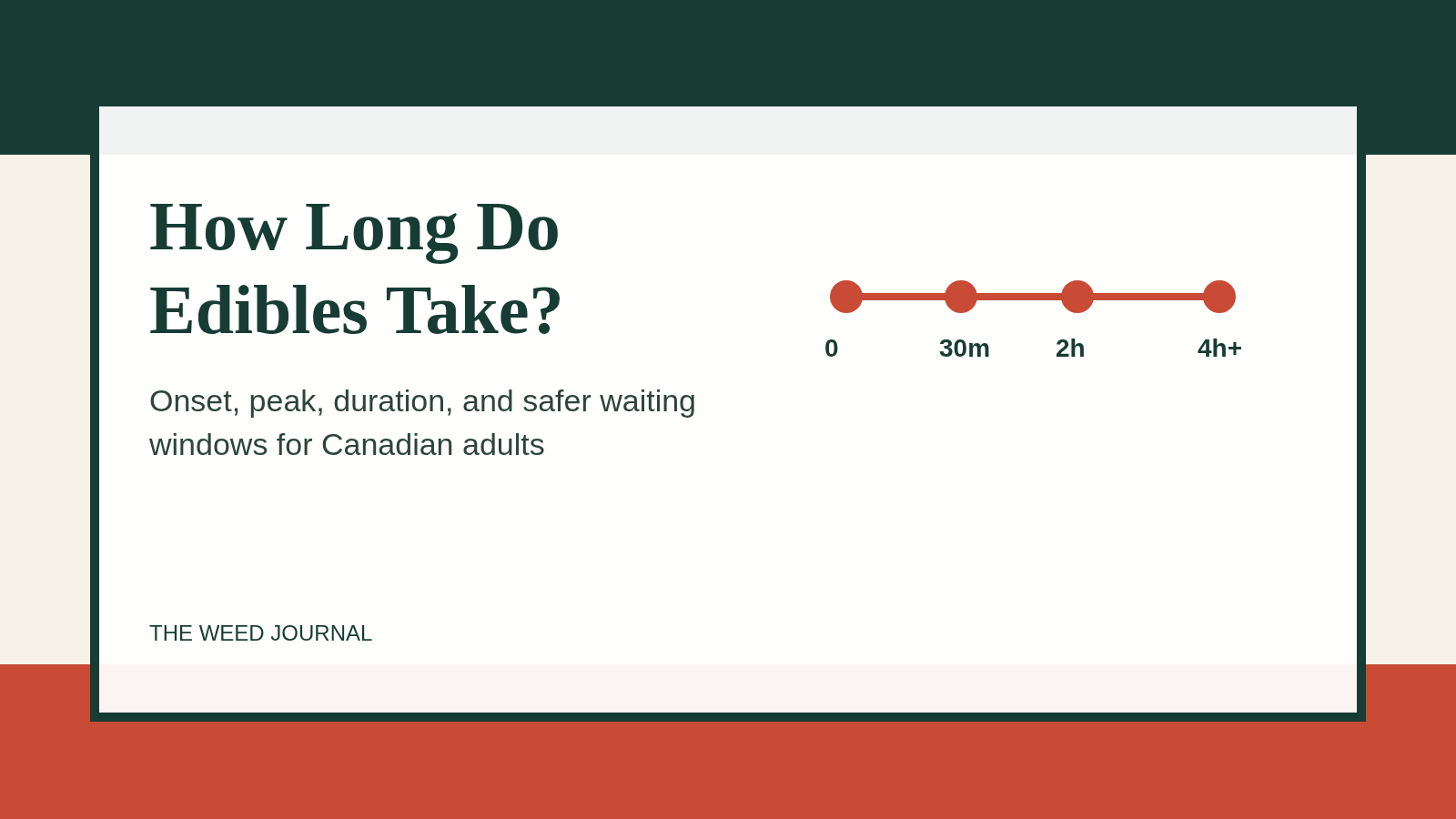
A cannabis high can last from a couple of hours to most of a day depending on the product and dose. Inhaled cannabis often starts within minutes, peaks sooner, and commonly fades within a few hours. Edibles and other swallowed products can take 30 minutes to 2 hours or more to feel noticeable, can peak later, and can last 6 to 12 hours for some people, especially at higher THC amounts.
The safer rule is to plan around the longest reasonable window, not the shortest one. Do not drive, operate equipment, mix with alcohol, or take more THC just because you do not feel much yet. If the product is edible, swallowed oil, capsule, drink, or another oral format, waiting is part of the dose.
Cannabis high duration by product type
| Product type | Common onset | Common peak window | How long effects may last | Planning note |
|---|---|---|---|---|
| Smoking or dry herb vaping | Within minutes | Often within the first hour | Often a few hours, but impairment can vary | Fast feedback makes overuse easier if you keep inhaling without pausing |
| Vape cartridges | Within minutes | Often within the first hour | Often a few hours, depending on strength and session size | Small puffs can add up quickly because cartridges can be potent and convenient |
| Edibles | Often 30 minutes to 2 hours or longer | Can peak several hours after use | Often 6 to 12 hours, sometimes longer at high doses | Do not re-dose early because the first dose may still be building |
| Capsules and softgels | Often similar to edibles | Can be delayed and gradual | Often similar to edibles or oils | Label milligrams matter more than unit size or brand familiarity |
| Oils and tinctures | Variable; swallowed oil behaves more like an edible | Depends on product, use, and food | Can last several hours | Read the label carefully and do not assume every dropper is one dose |
| Drinks | Variable by formulation and stomach contents | Can feel faster than some foods but still may be delayed | Several hours is possible | Treat THC drinks like cannabis first, not like ordinary beverages |
Why duration varies so much
The biggest factor is route of use. Inhaled cannabis reaches the bloodstream quickly through the lungs, so the feedback loop is fast. Swallowed THC moves through digestion and liver metabolism, which is why edible timing can be delayed, stronger than expected, or longer-lasting for some people.
Dose matters too. A 2.5 mg THC edible and a 20 mg THC edible are not the same experience, even if both are sold legally. The same is true with inhaled products: a single small puff is not the same as a long session, and a high-THC concentrate is not the same as lower-THC dried flower.
Tolerance changes expectations. Someone who uses THC often may feel a shorter or less intense high than a newer user at the same dose. But tolerance is not a safety shield. It can also encourage larger doses, more frequent re-dosing, or underestimating impairment.
Food and alcohol can complicate timing. A full meal may delay or change how an edible feels. Alcohol can increase impairment and make decision-making worse. Sleep deprivation, stress, dehydration, and unfamiliar settings can also make a cannabis experience feel more intense or uncomfortable.
Effects versus impairment
One of the most important distinctions is between “I feel less high” and “I am unimpaired.” Those are not always the same thing. Health Canada warns that cannabis can affect attention, coordination, reaction time, decision-making, and the ability to drive or operate equipment.
This is why timing matters beyond comfort. If you use cannabis in the evening, especially edibles, you may still feel groggy or slowed later than expected. If you need to drive, supervise children, use tools, work, or make important decisions, plan a larger buffer than the average onset-and-duration chart suggests.
For a deeper legal and safety discussion, see The Weed Journal’s guide to cannabis and driving in Canada. The short version is simple: do not drive high, and do not use a personal timing guess as a legal or safety clearance.
Why edibles surprise people
Edibles are the most common source of timing mistakes because the delay feels like nothing is happening. A person eats one serving, waits 45 minutes, decides it was too weak, then takes more. The first dose is still moving through the body, and the second dose stacks on top.
That is why a low-and-slow approach is still useful, even for adults who have used cannabis before. Start with a small THC amount, give the product enough time, and avoid turning impatience into a second dose. The label should tell you milligrams of THC and CBD per unit or package. If it does not, treat that as a red flag rather than a puzzle to solve by experimenting.
The Weed Journal’s edible onset guide and edibles dose chart explain edible timing and THC milligrams in more detail.
How to plan around a cannabis high
- Choose the product type before choosing the dose. A fast-onset product and a delayed oral product need different plans.
- Read the THC and CBD label carefully, including serving size and total package amount.
- Use cannabis when you have enough time for the full experience, not when you are rushing between responsibilities.
- Avoid alcohol and other impairing substances, especially when trying a new product or dose.
- Do not re-dose edibles, oils, capsules, or drinks early because delayed effects are normal.
- Keep products locked away before, during, and after use so children, pets, guests, and housemates do not access them.
- Write down what you used, how much, when it started, when it peaked, and when it faded if you are trying to understand your own pattern.
A simple note in your phone can prevent repeat mistakes. Record the product type, THC amount, time used, food or alcohol context, and how you felt later. Over time, that teaches you more than a brand name or strain label ever will.
What if the high lasts too long?
A long-lasting high can be uncomfortable, especially when it is stronger than intended. If you are anxious or overwhelmed, move to a calm place, avoid more cannabis or alcohol, sip water, eat something light if you can, and remind yourself that edible effects can take time to fade. Staying with a trusted sober person can help.
Do not try to “fix” a strong cannabis high by adding another substance. If symptoms are severe, unusual, or worrying, seek medical help. That includes chest pain, fainting, trouble breathing, severe confusion, persistent vomiting, suspected poisoning, or concern that a child, pet, or another adult consumed cannabis unintentionally.
For practical steps during an uncomfortable experience, read How to Sober Up From Being Too High. It focuses on harm reduction rather than quick-fix myths.
How labels help you estimate duration
Labels cannot tell you exactly how long a cannabis high will last, but they do give useful clues. Look for total THC, total CBD, THC per serving, package amount, product class, lot number, packaging date, and warning information. For dried flower and some inhaled products, THC percentage can help compare potency, but it does not predict the whole experience by itself.
For edibles, drinks, capsules, and oils, milligrams are the key unit. A small candy, capsule, or beverage can still contain enough THC to produce long-lasting effects. Do not estimate strength by package size, flavour, price, or how familiar the product looks.
If the label is confusing, our Canadian cannabis label guide is the better next read.
Timing mistakes to avoid
| Mistake | Why it causes problems | Better move |
|---|---|---|
| Taking more edibles after 30 to 60 minutes | The first dose may not have peaked yet | Wait longer and plan edible use when you have no urgent obligations |
| Using cannabis before driving later | Impairment can outlast obvious intoxication | Separate cannabis from driving entirely |
| Mixing cannabis with alcohol | Combined impairment can be stronger and less predictable | Use one substance or neither, especially with unfamiliar products |
| Ignoring serving size | A package may contain multiple servings | Check THC milligrams per unit and per package |
| Assuming tolerance means no risk | Frequent users can still be impaired or overdo it | Use the lowest amount that meets your goal and keep buffers |
Bottom line
A cannabis high can last a short evening or stretch much longer, depending on what you used and how much. Inhaled products usually give faster feedback and often fade sooner. Edibles, capsules, oils, and drinks can be delayed, stronger later, and longer-lasting.
The reader-first rule is boring but useful: read the label, start lower with unfamiliar THC products, wait longer with oral formats, avoid alcohol, and do not drive or take on safety-sensitive tasks. Planning for the long end of the range is safer than hoping for the short one.
FAQ
Can a cannabis high last into the next day?
Yes, especially after higher-dose edibles, capsules, oils, drinks, or a late-night session. Some people may feel groggy, slowed, or mentally foggy the next morning. Do not treat sleep as a guaranteed reset.
Why did an edible hit me after I thought it was not working?
Swallowed THC can take time to move through digestion and metabolism. Food, dose, product type, and personal differences can delay the noticeable effects, which is why early re-dosing is a common mistake.
Does CBD make a cannabis high end faster?
CBD may change how some people experience THC, but it should not be treated as a reliable way to end impairment. Avoid quick-fix claims and focus on time, rest, hydration, a calm setting, and medical help when symptoms are concerning.
How long should I wait before taking more edibles?
There is no universal safe re-dose time, but the cautious approach is to wait several hours and avoid taking more during the same session when you are unsure. If you are new or returning after a break, choose a lower THC amount next time instead of stacking doses.
Do stronger THC products always last longer?
Not always, but higher THC amounts can make effects stronger, less predictable, and harder to manage. Product type, dose, tolerance, food, and mixing with alcohol or other substances all affect duration.