Cannabis drinks can look simple: a can, a flavour, a THC number, maybe a promise of a cleaner alternative to alcohol. The experience is not always that simple. In Canada, THC beverages are regulated cannabis products, not regular soft drinks with a twist, and the timing can still surprise adults who are used to sipping something and feeling it quickly.
This guide is for Canadian adults comparing legal THC beverages, cannabis seltzers, infused teas, shots, and drink mixes. It explains how to read the label, why the 10 mg number matters, how long effects may take, and how to reduce the chance of stacking too much THC while you wait.
Quick answer
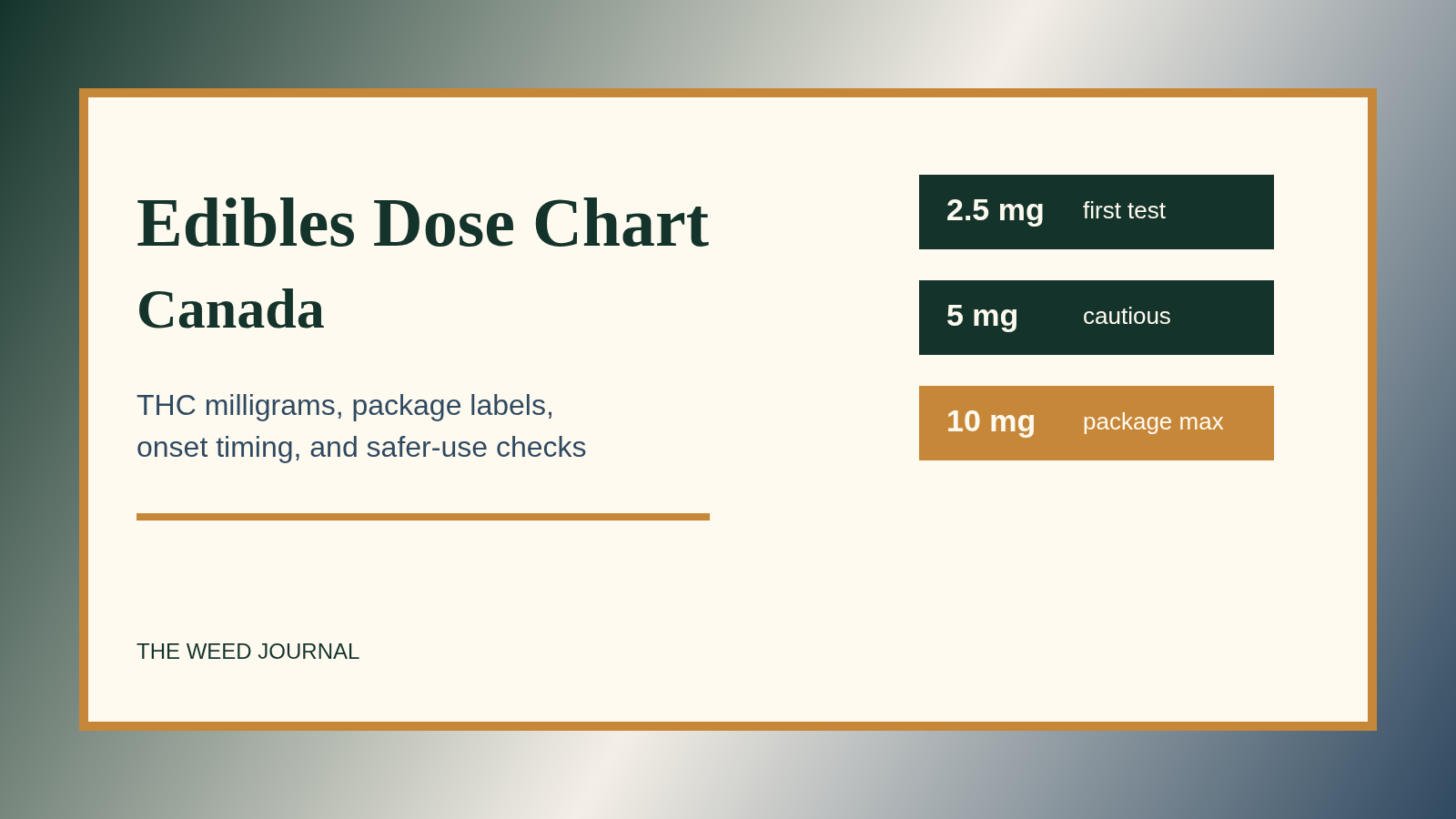
In Canada, edible cannabis products, including drinks intended to be consumed like food or beverages, are generally limited to 10 mg THC per immediate container. That is a package limit, not a beginner dose. Health Canada says effects from eating or drinking cannabis can appear within 30 minutes to 2 hours and can last up to 24 hours. Some beverage formats may feel faster for some people, but a faster-feeling drink is still THC, still impairing, and still worth pacing carefully.
If you are new, sensitive to THC, returning after a tolerance break, or trying a new product format, treat 2.5 mg THC as a more cautious starting point than a full 10 mg drink. Do not drive, mix with alcohol, or keep drinking because the first can “didn’t work yet.”
What counts as a cannabis drink?
A cannabis drink is usually an edible cannabis product in beverage form: sparkling water, iced tea, soda-style drinks, coffee-style drinks, powders, drops, or other drinkable formats sold through legal cannabis channels. Health Canada’s classification guidance says products intended to be consumed in the same manner as food, including drinks, meet the edible cannabis definition rather than the extract definition.
That distinction matters because edible cannabis has a precautionary THC limit of 10 mg per immediate container. Some ingestible extracts have different rules, including much higher container limits when they are not meant to be consumed like food. For ordinary shoppers, the practical lesson is simpler: read the product class, Total THC, servings, activation directions, and package size before assuming a drink is “light.”
THC beverage label checklist
| Label item | What to check | Why it matters |
|---|---|---|
| Total THC | Look for mg THC in the whole container | The package number is what you can accidentally finish |
| THC per serving | Check whether one can, bottle, or pouch is one serving | A “serving” may not match how people actually drink |
| CBD amount | Note CBD separately from THC | CBD does not erase impairment or make driving safe |
| Product class | Edible cannabis, extract, or accessory format | Rules and dosing mechanics can differ |
| Directions | Shake, mix, wait, or use a metered activation | Poor mixing or guessing can make dose less predictable |
| Package warning | Keep child-resistant packaging and warning labels intact | Drinks can be mistaken for regular beverages |
Why 10 mg is not a beginner target
The legal 10 mg THC container cap is easy to misunderstand. It is not a recommendation, a starter dose, or a promise that the whole drink will feel mild. It is the maximum amount of THC allowed in an edible cannabis immediate container under federal rules. A beginner, occasional user, smaller adult, tired person, anxious person, or someone returning after a break may find 10 mg much stronger than expected.
The Canadian Centre on Substance Use and Addiction’s edible cannabis label resource uses 2.5 mg THC as the “new to edible cannabis” reference point. That does not make 2.5 mg risk-free; it simply gives cautious shoppers a better anchor than assuming the largest legal package amount is the right first amount.
How long do THC drinks take to kick in?
Health Canada’s public guidance says effects from eating or drinking cannabis can occur within 30 minutes to 2 hours and can last up to 24 hours. CCSA also warns that edible cannabis effects can take up to 4 hours to fully appear, can last up to 12 hours, and may leave residual effects for up to 24 hours.
Some cannabis beverages are marketed around faster onset, emulsification, or “sessionable” formats. Individual experience can vary by product, stomach contents, dose, tolerance, body chemistry, and whether the person is already using alcohol or other substances. The safe editorial stance is to pace based on the slower window, not the marketing claim. If the drink feels faster, good; if it does not, you have not boxed yourself into a second dose too early.
For a deeper timing primer, read The Weed Journal guide to how long edibles take to kick in. THC beverages are drinkable, but they still belong in the ingestible timing conversation.
Do not compare THC drinks to alcohol one-for-one
A THC drink may replace an alcoholic drink socially, but it does not behave like alcohol in the body or on a clock. Alcohol has its own risks; cannabis has different ones. A person who is used to feeling alcohol quickly may keep sipping a cannabis beverage while waiting for a signal, then realize later that the dose has stacked.
Mixing cannabis and alcohol is also a poor test environment. It makes impairment harder to judge and can increase the chance of nausea, dizziness, poor decisions, and overconsumption. If you are trying a THC drink for the first time, do it without alcohol, without driving plans, and without a schedule that requires you to be sharp later.
CBD drinks are not automatically non-impairing
Some beverages emphasize CBD, balanced ratios, or very low THC. Read the numbers closely. A drink with CBD and THC can still impair you if it contains THC. A low-THC beverage may still feel noticeable to someone with low tolerance. CBD should not be treated as a cancellation button for THC, and it should not be used as a reason to drive or work in a safety-sensitive setting.
If you are sorting out cannabinoid labels, start with our guide to THC vs CBD vs CBN in Canada and our practical guide to reading cannabis labels.
A practical pacing plan
- Choose a legal product in original packaging.
- Read Total THC before opening it.
- Start with 2.5 mg THC or less if you are new, sensitive, or unsure.
- Wait at least 2 hours before considering more; longer is safer for unfamiliar products.
- Do not mix with alcohol, sedatives, or unknown substances.
- Do not drive, operate equipment, supervise risky activities, or make important decisions.
- Keep the product away from children, pets, and guests who may mistake it for a regular drink.
- Stop if you feel anxious, dizzy, nauseated, unusually sleepy, or uncomfortable.
If you accidentally overdo it, use our calm recovery guide on what to do when you are too high. The main move is not to “fix” THC with more substances. It is to stop, simplify the setting, get a sober adult if needed, and watch for red flags.
Storage and household safety
Cannabis drinks can create a special household risk because they resemble ordinary beverages. Keep them in their original child-resistant packaging until use. Do not pour them into an unlabelled glass, sports bottle, or party pitcher. Do not leave a half-finished can in the fridge where someone else could mistake it for a regular drink.
This is especially important around children, pets, visitors, roommates, and gatherings. A product that looks like sparkling water to one person is still a controlled cannabis product. If a child, pet, or non-consenting adult may have consumed cannabis, treat it as urgent and contact appropriate emergency, poison-centre, or veterinary help.
When cannabis drinks are a bad fit
Skip THC beverages when you need predictable timing, when you are anxious about the effect, when you are with people who pressure you to keep up, or when you have obligations later that require judgment and coordination. Also be cautious if you use medications, have a health condition, are pregnant or breastfeeding, or have a personal or family history of psychosis. This article is educational, not medical advice; ask a qualified clinician about personal risks.
For many adults, the biggest benefit of THC drinks is not strength. It is portion control. A 2 mg or 2.5 mg beverage may be easier to understand than an unmeasured homemade edible. But that benefit only holds if you stop at the planned amount and respect the wait.
Bottom line
Cannabis drinks in Canada are not regular drinks, and the legal 10 mg THC container limit is not a beginner target. Read Total THC, start below the full container when you are unsure, wait longer than you want to, avoid alcohol, and keep the product clearly labelled and out of reach. If the drink is pleasant but the timing is uncertain, that is exactly when the slowest rule matters: do not have more just because nothing has happened yet.