Tag: cannabis safety

  • Vape Cartridge Safety Checklist in Canada

    Vape Cartridge Safety Checklist in Canada

    A cannabis vape cartridge can look simple: small tank, threaded battery, a flavour name, and a THC number. That simplicity is exactly why it deserves a checklist. A cartridge is an inhaled cannabis extract, and small differences in source, label clarity, hardware, storage, and strength can change the risk profile quickly.

    This guide is for adults in Canada who already choose to use cannabis and want a practical way to screen vape cartridges before buying or using them. It is not medical advice, and it does not claim vaping is safe. The goal is narrower: help you spot labels, hardware clues, and red flags that deserve a pause.

    If you are still deciding whether inhalation is right for you, start with our comparison of vaping vs smoking cannabis in Canada. This article focuses specifically on pre-filled cartridges and similar extract vapes.

    Quick answer

    A safer vape cartridge choice starts with five checks: buy from a legal source, read the cannabis label, understand the THC strength, inspect the hardware, and avoid products with unclear ingredients or unregulated-market claims. Legal does not mean risk-free, but legal Canadian products have required labelling and composition rules that unregulated products do not reliably follow.

    Health Canada has warned that vaping products from illegal or unregulated sources can increase potential risk, and the Public Health Agency of Canada describes vaping-associated lung illness as an acute respiratory illness linked to use of certain vaping products. For cannabis vapes, treat any missing label, unusually cheap cartridge, mystery liquid, or social-media-only seller as a reason to walk away.

    Vape cartridge checklist at a glance

    Check What to look for Why it matters
    Legal source Licensed retailer, provincial store, or clearly legal private retailer where allowed. Unregulated products may not follow Canadian cannabis rules or testing controls.
    Label basics THC, CBD, product class, lot number, packaged date, warning labels, and net weight or volume. The label is your starting point for strength, traceability, and freshness.
    Ingredients Cannabis extract, carrier or permitted formulation details, and any flavouring information shown. Vape liquids should not be a mystery blend.
    Hardware No leaks, cracks, burnt smell, loose centre pin, damaged mouthpiece, or discoloured liquid. Faulty hardware can overheat, leak, clog, or make dosing unpredictable.
    Use pattern Small puffs, wait between pulls, avoid mixing with alcohol, and do not drive. High-THC inhaled products can feel manageable until they suddenly do not.

    1. Confirm the source before the strain name

    The first question is not whether the cartridge is indica, sativa, live resin, distillate, full-spectrum, or terpene-rich. The first question is whether it came through a legal Canadian cannabis channel. In Canada, legal access depends on province or territory, but the practical point is simple: a cartridge should be traceable to a licensed producer and a legal retailer.

    A legal product should have standardized cannabis packaging and required label details. It should not be sold loose in a blank box, through a private message, from a menu that avoids licensing details, or with claims that sound more like a shortcut than a retailer. If you are unsure how to check a seller, our legal retailer checklist for buying cannabis in Canada covers the broader buying questions.

    Unregulated cartridges are especially risky because the user cannot easily see what is in the liquid or how the hardware was manufactured, filled, transported, or stored. A familiar brand name on a package is not proof by itself; counterfeit packaging exists in many consumer categories, and cannabis is no exception.

    2. Read the cannabis label, not just the front panel

    Vape packaging often leads with a strain name, flavour, terpene note, or THC percentage. Those details may be useful, but they are not enough. The label should tell you what product class it is, the amount of THC and CBD, how much product is in the cartridge, who produced it, when it was packaged, and which lot it came from.

    For a deeper walkthrough, use our guide to reading cannabis labels in Canada. For cartridges, pay extra attention to whether the THC is shown as total THC, active THC, or a percentage. A 90% THC cartridge is not a casual beginner product just because the device is small.

    Lot numbers and packaged dates matter because they create traceability. They also help you notice old stock. A cartridge that has been sitting in a hot drawer, car, or display case may leak, darken, clog, or taste harsh even if it was originally legal.

    3. Treat high THC as a real strength signal

    Many vape cartridges are cannabis concentrates. That means the THC level can be much higher than typical dried flower. The dose is not served in a neat edible-style piece, either. It depends on the device, battery voltage, puff length, oil viscosity, airflow, temperature, and how deeply a person inhales.

    That is why a cartridge can be deceptively easy to overuse. A few repeated pulls may feel routine until the effects stack. If you are new to inhaled cannabis or have a low tolerance, a high-THC cartridge is a poor first experiment. Start with lower strength, take fewer pulls, and wait before using more.

    For timing context, our guide to how long THC lasts in Canada explains the difference between short-term effects, residual impairment, and testing windows. The driving rule is simple regardless of format: do not drive or do safety-sensitive work after using cannabis.

    4. Check the hardware before attaching it

    A cartridge is both a cannabis product and a small piece of hardware. Before connecting it to a battery, look closely. The mouthpiece should be secure. The cartridge should not be cracked, leaking, sticky, or separating at the seams. The centre pin should not look pushed in or crooked. The liquid should not contain visible debris.

    A darker colour is not automatically proof that a cartridge is bad, because extracts vary. But sudden darkening, burnt odour, leaking oil, or a harsh scorched taste can suggest storage, voltage, age, or hardware problems. Do not try to rescue a cartridge that appears damaged. The small savings are not worth inhaling from a compromised device.

    Use the battery recommended for the cartridge style, keep voltage modest if the battery is adjustable, and avoid repeatedly firing the device to clear a clog. Overheating can change the experience and may increase unwanted byproducts. If a cartridge only works when forced, it is telling you something.

    5. Pause on additives, flavours, and mystery blends

    Canadian cannabis extracts are subject to composition requirements. Health Canada’s composition guide says cannabis extracts must not contain anything that may cause injury when used as intended or in a reasonably foreseeable way. The Cannabis Regulations also restrict certain ingredients in cannabis extracts, including specified prohibited substances and sugars or sweetening agents.

    That does not mean every legal vape ingredient is automatically something you want to inhale frequently. It means the label and legal framework give you a baseline for asking better questions. Look for clear ingredient information, avoid products that hide behind vague flavour claims, and be wary of anything that appears to be a homemade blend.

    Health Canada and public-health agencies have paid special attention to vaping-associated lung illness since the 2019 outbreak. The practical consumer lesson remains relevant: do not use vaping products from illegal or unregulated sources, and seek medical help promptly if breathing symptoms, chest pain, or other concerning symptoms appear after vaping.

    6. Store cartridges like cannabis, not like a gadget

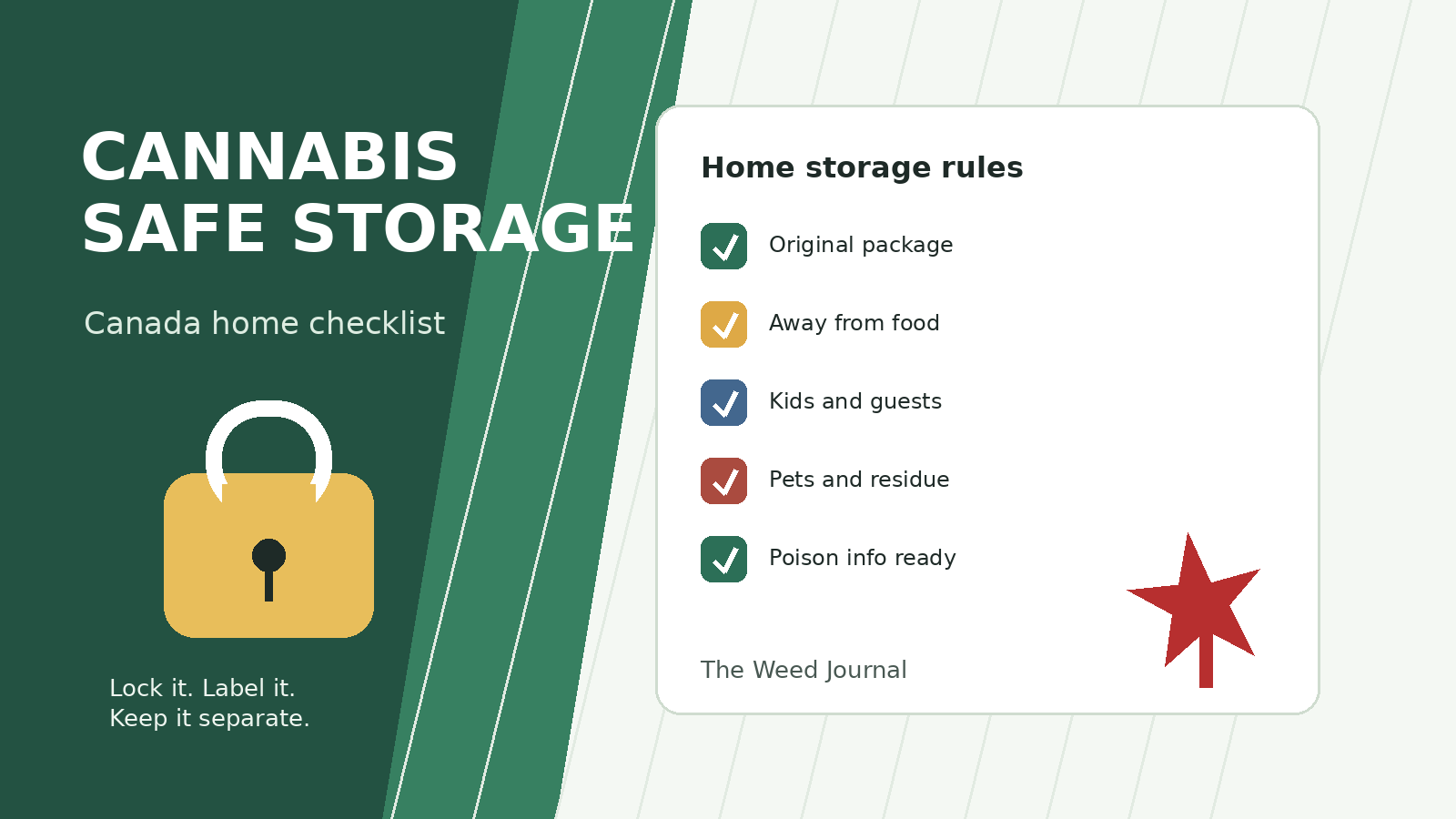
    Vape cartridges are easy to misplace because they are small. Store them upright, capped if possible, away from heat, direct sunlight, children, pets, and anyone who may mistake them for a nicotine device. Avoid leaving cartridges in a hot vehicle or pocket where pressure and temperature changes can cause leaks.

    Keep the package until the cartridge is finished. The package carries lot, product, and producer information you may need if there is a recall, adverse reaction, or quality complaint. If a cartridge tastes wrong or appears defective, stop using it and keep the product details rather than throwing away the only traceable information.

    Red flags that should stop the purchase

    • No legal retailer or licensed-source trail.
    • No standardized cannabis warning label or lot information.
    • Very high THC marketed as beginner-friendly.
    • Packaging that looks copied, misspelled, or inconsistent.
    • Cartridges sold loose, refilled, or without a sealed package.
    • Claims that the product is medical, therapeutic, or risk-free.
    • Unclear ingredients, mystery flavouring, or homemade oil.
    • Leaks, cracks, debris, burnt smell, or a damaged mouthpiece.
    • Pressure to order through social media, cash-only delivery, or disappearing menus.

    A practical pre-use checklist

    • Confirm the product came from a legal Canadian cannabis source.
    • Read THC and CBD amounts before attaching the cartridge.
    • Check packaged date, lot number, product class, and producer.
    • Inspect the cartridge for leaks, cracks, loose parts, or debris.
    • Use the right battery and avoid high-voltage experimentation.
    • Start with one small puff and wait before taking more.
    • Do not mix with alcohol or other impairing substances.
    • Do not drive, work, or handle safety-sensitive tasks afterward.
    • Store the cartridge and package securely when finished.

    Bottom line

    A vape cartridge is not just a strain name in a small tank. It is an inhaled cannabis extract, a piece of heating hardware, and a labelled product that should be traceable. The best checklist is boring on purpose: legal source, clear label, understandable strength, intact hardware, cautious use, and secure storage.

    If any part of that chain is missing, pause. Cannabis education is often about knowing when not to use a product, not just how to use one.

    Sources

  • Tinctures vs Edibles in Canada: Onset, Duration, and Dosing Basics

    Tinctures vs Edibles in Canada: Onset, Duration, and Dosing Basics

    Tinctures and edibles can look like the careful side of cannabis. There is a label, a measured amount, and no smoke. But they are not the same experience, and the difference matters most when you are trying to avoid taking too much THC.

    For a wider beginner overview of ingestible cannabis habits, see the edibles dosing and safety hub for Canada.

    In Canada, many products people casually call tinctures are sold as cannabis oils, oral sprays, or other ingestible extracts. Edibles include gummies, chocolates, baked goods, beverages, capsules, and other products meant to be swallowed and processed through digestion. Both can be useful formats for adults who choose to use cannabis, but both can also surprise people who expect an instant, easy-to-control effect.

    This guide compares tinctures, oils, capsules, beverages, and edibles from a practical Canadian label-reading perspective. It is educational only, not medical advice, and it does not recommend cannabis for any health condition.

    Quick answer

    The biggest difference is control. A measured cannabis oil or oral spray may make it easier to repeat the same amount, especially if the label clearly lists THC and CBD per millilitre or per activation. Edibles can be convenient, but one package may contain several servings, and the THC may be listed per unit, per package, or both.

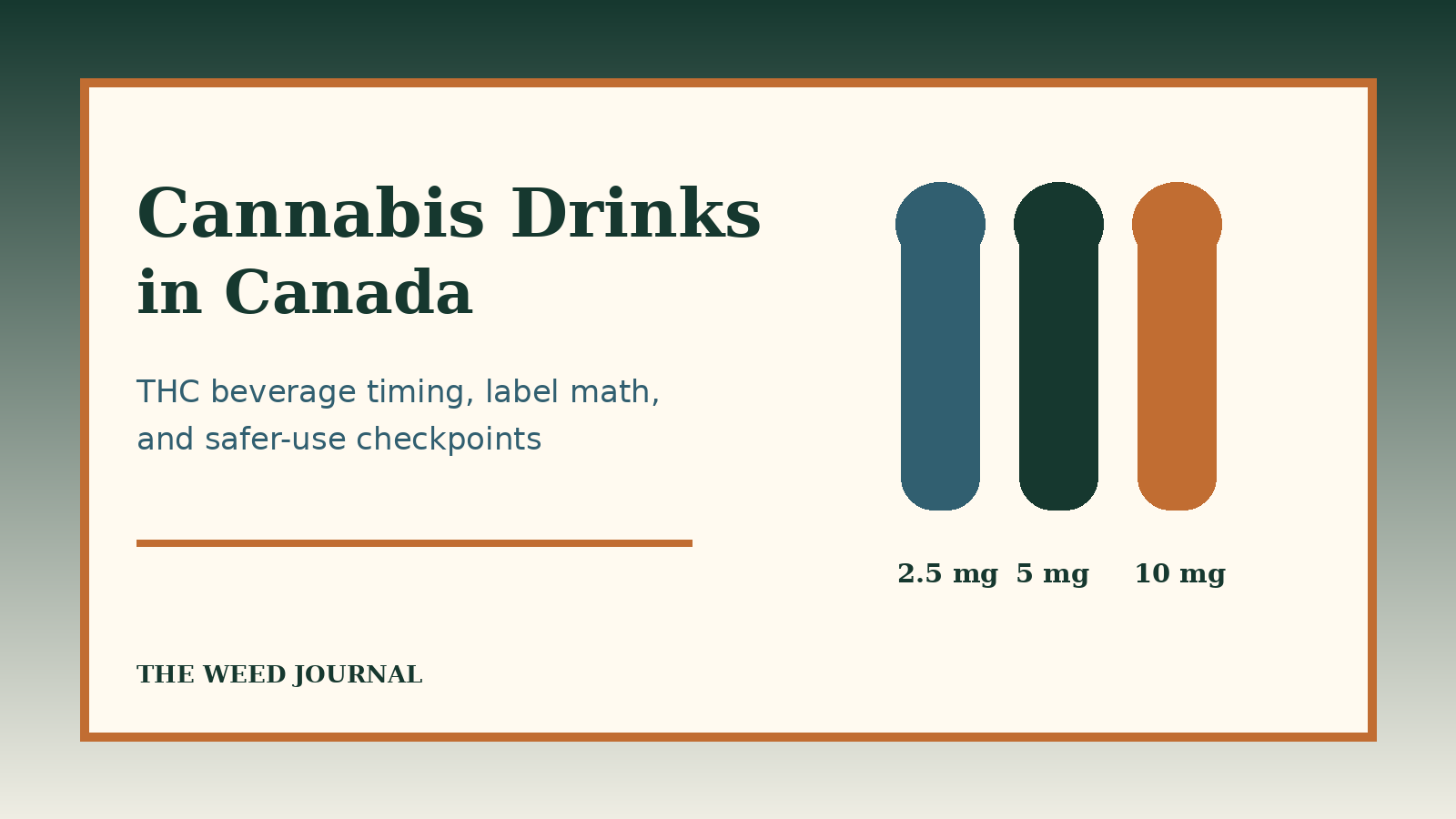
    The biggest similarity is patience. If THC is swallowed, effects can take time to appear and may last much longer than expected. Health Canada advises people to start low and go slow, choose low-THC products, and wait to feel the effects before taking more. For edible cannabis, Health Canada points to products with 2.5 mg THC or less and says effects may be felt within 30 minutes to 2 hours, with full effects taking up to 4 hours.

    If you are brand new to cannabis formats, start with our broader guide to cannabis product types in Canada before comparing specific ingestible products.

    Tinctures vs edibles at a glance

    Question Tinctures, oils, and oral sprays Edibles, beverages, and capsules
    How they are usually labelled Often by ml, gram, or activation; some sprays list THC per pump. Often by unit and package; check whether the number applies to one piece or the whole package.
    Main planning advantage Measured amounts can be easier to repeat if the dropper or spray is clear. Convenient format; pre-portioned products can be simple when the serving is clear.
    Main caution Dropper markings can be confusing, and oils are still ingestible cannabis if swallowed. Delayed effects make second servings risky if you do not wait long enough.
    Best label detail to check Total THC/CBD per ml, per activation, or per measured dose. Total THC/CBD per unit and total package THC/CBD.
    Better beginner habit Measure once, write it down, and avoid changing products at the same time. Choose low THC, split only when practical, and wait before taking more.

    What counts as a tincture in Canada?

    In everyday cannabis talk, “tincture” often means a liquid cannabis product that is taken by mouth. In legal Canadian packaging, you may see terms like cannabis oil, oral spray, cannabis extract, or drops. Health Canada’s label guide lists cannabis extracts as a product class and includes oil/tinctures and vape liquids in that broader category. That classification matters because extracts can vary widely in concentration.

    For a consumer, the name is less important than the label math. Before using an oil, spray, or tincture-style product, find the amount of THC and CBD in the measured amount you plan to use. That may be listed per millilitre, per gram, per activation, or for the full package. If you cannot tell how much THC is in one measured amount, it is not a good product for careful dosing.

    Our label-reading guide explains the basics of THC, CBD, terpenes, lot dates, and package details on Canadian cannabis labels.

    What counts as an edible?

    Edible cannabis is a product meant to be eaten or drunk. Common examples include gummies, chocolates, cookies, baked goods, beverages, capsules, and some infused foods. Legal edibles in Canada have required packaging information, including THC and CBD amounts, ingredients, allergens where applicable, storage instructions, and warning labels.

    Edibles can be easy to underestimate because they look familiar. A gummy still has to be read as a cannabis product first and a snack second. The label may say 2.5 mg THC per unit, 10 mg THC per package, or both. Those are different planning details. If a package contains four pieces at 2.5 mg THC each, one piece and the full package are not the same dose.

    This is why edible timing deserves its own caution. Our guide to how long edibles take to kick in covers onset, peak, and common dose-stacking mistakes in more detail.

    Onset and duration: why patience matters

    Swallowed THC does not behave like a puff from a joint or vape. With inhaled cannabis, effects are usually felt faster. With swallowed cannabis, the product has to move through digestion and metabolism before the experience becomes clear.

    Health Canada says edible cannabis effects can be felt within 30 minutes to 2 hours and that it can take up to 4 hours to feel the full effects. The BC edible cannabis fact sheet gives similar practical cautions and notes that edible effects can last for hours, with residual effects lasting longer for some people.

    For tinctures and oils, timing depends on how the product is used, the formulation, the amount, food, metabolism, tolerance, and the product label instructions. If it is swallowed, treat it with edible-like patience. Do not assume a liquid format will be immediately controllable just because it came with a dropper.

    How to read the dose before using either format

    The safest comparison starts with the same question: how much THC and CBD are in the amount you are about to use?

    • Per unit: common on gummies, capsules, chocolates, and beverages. Example: 2.5 mg THC per piece.
    • Total package amount: useful for checking the whole container, but not enough by itself if there are multiple servings.
    • Per ml or gram: common on oils and some extracts. You still need to know how much liquid you are measuring.
    • Per activation: common on oral sprays. Health Canada’s label example notes that an oral spray may list THC per activation.
    • CBD amount: important context, but CBD does not erase THC impairment or make driving safe.

    If the math is annoying, slow down. A product that is hard to interpret is a poor fit for a careful first trial.

    A simple first-use checklist

    • Use a legal, labelled product so THC and CBD amounts are available.
    • Choose one format only. Do not test an edible and a new oil on the same day.
    • Pick a low-THC amount. Health Canada points to 2.5 mg THC or less for edible products.
    • Check whether the label is per unit, per activation, per ml, or whole package.
    • Use the product in a familiar setting with no driving or safety-sensitive tasks planned.
    • Wait long enough before considering more, especially with swallowed products.
    • Write down product, amount, time, food, effects, and duration.
    • Store leftovers securely and away from children, pets, and anyone who might mistake them for regular food.

    When tinctures may be a better fit

    A tincture-style oil or oral spray may be a better fit when the label is clear, the measuring tool is consistent, and you want to repeat a small amount with less guesswork. This is especially true when the product lists THC and CBD per activation or per measured volume and the dropper markings are easy to read.

    That does not make oils risk-free. A high-THC oil can still be too strong. A large dropper can still be misread. A person can still take more too soon. And if the oil is swallowed, the delayed timing can still lead to the same problem people run into with edibles: assuming nothing is happening before the full effect has arrived.

    When edibles may be a better fit

    Edibles may be a better fit when the product is clearly portioned, low in THC, and easy to store safely. A low-dose gummy or beverage can be simpler than a dropper if the label clearly states the amount per unit and the serving is not ambiguous.

    The tradeoff is that edibles are easy to normalize. They may look like ordinary food or candy, and that increases the importance of secure storage. They can also be easier to overconsume if the flavour encourages snacking or the person becomes impatient while waiting.

    Common mistakes to avoid

    • Comparing products by package size instead of THC per serving.
    • Using a dropper without knowing how many ml it contains.
    • Assuming a liquid cannabis product is automatically faster or lighter.
    • Taking a second edible before the first one has had enough time.
    • Mixing edible cannabis with alcohol and then blaming the dose alone.
    • Using cannabis before driving, childcare, work, tools, or safety-sensitive responsibilities.
    • Leaving edibles or oils where children, pets, guests, or roommates could access them.

    Bottom line

    Tinctures and edibles are not better or worse by default. The better choice is the one you can read, measure, wait for, and store safely. For many Canadian adults, that means choosing legal labelled products, starting with low THC, checking CBD as context, avoiding unclear serving math, and leaving enough time for delayed effects.

    If you want a careful rule, use this one: never take more until you understand what the first amount did. With ingestible cannabis, patience is not optional. It is the main safety tool.

    Sources

  • How to Microdose Cannabis in Canada: A Practical Low-Dose Guide

    How to Microdose Cannabis in Canada: A Practical Low-Dose Guide

    Microdosing cannabis sounds precise, but the useful version is simple: use less THC than you think you need, give it enough time, and pay attention to whether the amount actually fits your day. It is not a hack, a medical treatment, or a promise that cannabis will improve your mood, sleep, creativity, pain, anxiety, or focus.

    For edible-specific planning, storage, and waiting windows, pair this low-dose article with our edibles dosing and safety hub.

    For Canadian adults who already choose to use cannabis, microdosing is best understood as a lower-dose planning habit. It can help reduce the chance of taking too much, especially with edibles, oils, beverages, vapes, or high-THC flower. The goal is not to feel nothing at all. The goal is to avoid accidentally turning a small experiment into a long, uncomfortable, impairing experience.

    This guide explains how to think about low-dose cannabis in Canada, how to read THC labels, what to track, when to wait, and when microdosing is the wrong fit. It is educational only and not medical advice.

    Quick answer

    Microdosing cannabis usually means choosing a deliberately low THC amount and increasing only slowly, if at all. In Canada, Health Canada’s lower-risk advice says to start low and go slow, choose low-THC products, and wait to feel the effects before taking more. For edibles, Health Canada points readers toward products with 2.5 mg THC or less and notes that full effects can take up to 4 hours. For inhaled cannabis, it suggests 1 or 2 puffs from products with 10% THC or less and waiting because full effects can take up to 30 minutes.

    Those numbers are planning references, not personal guarantees. Your response can change based on product type, THC amount, CBD amount, tolerance, food, sleep, stress, alcohol, medication, and setting.

    Microdosing at a glance

    Choice Lower-dose starting idea Why it matters
    Edibles, capsules, oils, beverages Look for 2.5 mg THC or less per unit when available Edibles can take hours to fully show themselves, so dose stacking is a common mistake.
    Smoking or vaping flower 1 or 2 small puffs from a low-THC product Inhaled cannabis acts faster, but repeated puffs can still add up.
    Vape cartridges and concentrates Use extra caution or avoid if new or occasional Extracts can be highly concentrated and easy to overuse.
    Product balance Consider products with equal or higher CBD than THC CBD may reduce some THC effects, but it does not erase impairment.
    Tracking Record product, THC amount, time, setting, and effects A short log helps you avoid repeating uncomfortable mistakes.

    What microdosing is, and what it is not

    Microdosing is a dose strategy. It is not proof that cannabis is safe for you, and it is not a way to make driving, work, childcare, or safety-sensitive tasks compatible with cannabis use.

    A useful microdose should be small enough that you can clearly observe the effect without chasing intensity. Some people may feel relaxed, sleepy, hungry, social, distracted, anxious, or nothing obvious. A low dose can still impair judgment, attention, coordination, and reaction time, especially if you are sensitive to THC or combine cannabis with alcohol or other substances.

    If you are new to product formats, start with our broader guide to cannabis product types in Canada. Microdosing is easier to understand once you know the difference between flower, edibles, oils, vapes, beverages, and extracts.

    Why Canada’s legal labels matter

    Legal Canadian cannabis products are packaged with required information such as THC, CBD, warning labels, lot or packaging details, and product-specific instructions. That does not make every product suitable, but it gives you a clearer starting point than an unlabelled edible or informal-market vape.

    For microdosing, the key label question is not “how strong is the package?” It is “how much THC is in the amount I am about to use?” A package may contain multiple units. A bottle of oil may list THC per activation, per gram, per millilitre, or total package amount. A flower label may use percent THC or mg/g. If the label makes you unsure, pause before using it.

    Our guide to reading cannabis labels in Canada explains how to check THC, CBD, terpenes, package dates, and storage details.

    Step-by-step: a cautious microdosing approach

    1. Pick one product format. Do not test a new edible, vape, oil, and flower on the same day.
    2. Choose a low-THC product. If you are inexperienced, avoid high-THC concentrates and strong cartridges.
    3. Read the serving amount. Find THC per unit or per measured amount, not just total package THC.
    4. Use it in a safe setting. Stay somewhere familiar, with no driving or important tasks planned.
    5. Take one small amount. Do not chase an immediate result.
    6. Wait based on the format. Inhaled cannabis can build over minutes; edibles can take hours.
    7. Write down what happened. Record product name, THC amount, CBD amount, time, food, setting, and effects.
    8. Change only one thing next time. If you adjust, change the amount, product, or setting separately so you learn something useful.

    This is intentionally boring. Boring is good when the alternative is accidentally taking too much THC.

    Edibles: the microdosing format that needs the most patience

    Edibles are where many low-dose plans go wrong. A person takes a small amount, feels little after 45 minutes, takes more, and then both amounts arrive later. Health Canada warns that edible effects can take time to appear and that full effects can take up to 4 hours. The BC edible safety fact sheet also points to 2.5 mg THC as a low-dose way to learn individual response and advises waiting before taking another amount.

    If your edible is 10 mg THC and you are aiming low, one whole unit may not be a microdose for you. Check whether the product is scored, whether the label describes one unit or the whole package, and whether dividing it is practical. Homemade edibles are especially poor microdosing tools because the THC can be unevenly distributed and the actual amount may be unclear.

    For timing details, read How Long Do Edibles Take to Kick In? before treating an edible as “not working.”

    Inhaled cannabis: faster does not mean risk-free

    Smoking and vaping usually act faster than edibles, which can make small adjustments feel easier. But puff size, inhalation depth, product potency, device temperature, cartridge strength, and tolerance can all change the experience. A low-dose plan can become a high-dose session if you keep taking small puffs without waiting.

    Health Canada’s lower-risk guidance suggests starting with 1 or 2 puffs of a vape or joint with 10% THC or less, then waiting. It also cautions new or occasional users to avoid high-concentration extracts such as hash, kief, wax, or shatter because higher THC can increase impairment and adverse effects.

    If you are choosing between inhaled formats, read our comparison of vaping vs smoking cannabis in Canada.

    What to track in a simple cannabis log

    A short note after each low-dose experiment can prevent repeat mistakes. You do not need a complicated spreadsheet. Track the basics:

    • Product name and legal source
    • Format: edible, oil, beverage, flower, vape, or other
    • THC amount and CBD amount
    • Time used and time effects became noticeable
    • Food, alcohol, caffeine, medication, sleep, and stress context
    • Effects you liked, disliked, or found surprising
    • Whether you felt impaired longer than expected
    • Whether you would repeat, lower, skip, or change the format next time

    This turns microdosing from guessing into learning. It also helps you notice if cannabis is becoming more frequent, less intentional, or harder to skip.

    When microdosing is the wrong fit

    A lower dose is not always a good idea. Skip cannabis, or talk with a qualified professional first, if you are pregnant, breastfeeding, under the legal age, using cannabis because of a health condition, taking medication that could interact, dealing with a history of psychosis or serious mental health symptoms, or responsible for driving, tools, patients, children, or safety-sensitive work.

    Microdosing is also the wrong frame if you are trying to stay “technically functional” while impaired. Cannabis can affect attention, memory, coordination, reaction time, and decision-making. Low dose does not mean no impairment.

    If you notice you need cannabis more often to get the same effect, feel irritable when you skip it, use more than planned, or keep using despite problems, that is not a microdosing issue. That is a signal to step back and consider support.

    Common mistakes

    • Starting with a product that is too strong for the plan.
    • Reading total package THC instead of THC per serving.
    • Taking more edible cannabis before the first amount has peaked.
    • Using high-THC vapes or concentrates as if they are beginner products.
    • Mixing cannabis with alcohol and then blaming the cannabis dose alone.
    • Testing cannabis before driving, work, childcare, or social pressure.
    • Changing product, dose, meal, and setting all at once.
    • Treating CBD as a guarantee against impairment.

    Bottom line

    Microdosing cannabis is not magic. It is a cautious way to use less THC, wait longer, and learn how a product affects you before making bigger decisions. In Canada, the practical starting point is to use legal labelled products, choose low THC, consider CBD balance, avoid high-potency extracts if you are new or occasional, and never use a countdown as permission to drive.

    The best microdose may be no cannabis at all on days when you have responsibilities, uncertainty, or a bad setting. When you do choose to use cannabis, keep the experiment small, slow, and honest.

    Sources

  • Vaping vs Smoking Cannabis in Canada: What to Know

    Vaping vs Smoking Cannabis in Canada: What to Know

    If you are choosing between vaping and smoking cannabis, the honest answer is not as simple as “one is safe and one is not.” Smoking cannabis burns plant material. Vaping heats dried cannabis or cannabis extract without the same kind of combustion, but it can still expose your lungs to irritants, concentrated THC, additives, device problems, and very strong effects.

    For Canadian readers, the practical question is usually this: what changes when cannabis is inhaled one way instead of another, and what can you do to reduce avoidable risk? This guide compares the two methods without pretending either is risk-free.

    The short version: inhaled cannabis acts quickly, whether smoked or vaporized. Smoking creates smoke from combustion, which is a clear respiratory concern. Vaping may reduce some exposure linked to burning, but it is not harmless, especially with high-THC extracts, poorly understood additives, or products from outside the legal market. If you use cannabis, the safer approach is to choose legal, clearly labelled products, start with small amounts, avoid deep breath-holding, and stop if your lungs or body are telling you something is off.

    If you are trying to keep inhaled cannabis use deliberately low, read our guide to microdosing cannabis in Canada before treating fast onset as easy dose control.

    Quick comparison

    Question Smoking cannabis Vaping cannabis
    How it works Burns dried flower and produces smoke Heats dried flower or extract to produce an aerosol/vapour
    Onset Usually within minutes Usually within minutes
    Main concern Smoke and combustion by-products entering the lungs Aerosol exposure, device quality, additives, extracts, and high THC
    Dose control Can be hard to judge puff by puff Can also be hard, especially with potent cartridges
    Best harm-reduction habit Use less, avoid holding smoke, do not mix with tobacco Use legal labelled products, avoid unknown cartridges, start low

    What changes when cannabis is burned instead of vaporized?

    Smoking is combustion. The dried cannabis flower is lit, plant material burns, and the user inhales smoke. That smoke contains cannabinoids such as THC and CBD, but it also contains by-products of burning. Health Canada’s cannabis guidance treats inhalation accessories and smoking-related exposure cautiously because inhaling combusted material can irritate and affect the respiratory system.

    Vaping is different mechanically. A dry herb vaporizer heats flower below the point of open burning. A vape pen or cartridge heats a cannabis extract. In both cases, the user inhales an aerosol or vapour rather than smoke from a lit joint, pipe, or bong. That difference matters, but it does not make vaping automatically safe.

    The biggest mistake is treating “no smoke” as “no risk.” Vaping still sends heated material into the lungs. With cartridges, the product can be much more concentrated than dried flower. A few pulls from a high-THC cartridge may deliver a stronger experience than a beginner expects. That is one reason inhalation method should be part of a larger product choice, not a shortcut around responsible use. If you are still choosing between formats, start with The Weed Journal’s guide to cannabis product types in Canada, or use the Start Here beginner pathway to choose a first reading route.

    Lung and respiratory risk

    Any inhaled cannabis product deserves extra caution because the lungs are not built for recreational exposure to smoke or aerosols. The CDC notes that smoking cannabis can harm lung tissues and cause respiratory symptoms. Health Canada also warns that vaping has risks and that long-term effects are still being studied.

    For readers, the takeaway should be measured:

    • Smoking cannabis is not just “natural plant material.” Burning and inhaling smoke is a respiratory risk.
    • Vaping cannabis is not “healthy breathing.” It may avoid some combustion exposure, but it can still irritate lungs and may involve concentrated extracts or additives.
    • Switching from smoking to vaping should not be framed as a medical decision or a guaranteed safety upgrade.

    If you have asthma, chronic bronchitis, COPD, recent lung illness, chest pain, unexplained shortness of breath, or any respiratory condition, this is a conversation for a qualified health professional, not a blog or a budtender. The Weed Journal cannot give medical advice.

    Why cartridges and extracts need special caution

    Vape cartridges are convenient, discreet, and often strong. That combination is exactly why they deserve more attention. A cartridge can contain concentrated THC, flavouring agents, carrier ingredients, or other additives depending on the product and market. In Canada, legal cannabis products have packaging and labelling requirements. Illicit or unverified cartridges may not.

    For beginners, the strength issue is often more immediate than the hardware issue. THC is the intoxicating cannabinoid most associated with feeling high. Concentrates can deliver a lot of THC quickly, and the effects can build before a person realizes they have gone too far. For a refresher on THC, CBD, and CBN basics, read our cannabinoid guide before choosing a high-potency vape.

    Label reading also matters. Look for the THC amount, CBD amount, lot or batch information, packaging date, warning symbols, and ingredient details. If a vape product does not make those basics clear, that is a reason to slow down or avoid it. Our Canadian cannabis label guide explains what to check before buying or using a product. If you already have a cartridge in hand, run through the vape cartridge safety checklist before attaching it to a battery.

    Practical harm-reduction checklist

    1. Use legal, clearly labelled products. In Canada, buy from legal sources so the product has required packaging and consumer information.
    2. Start with one small inhalation. Wait several minutes before deciding whether to use more.
    3. Avoid breath-holding. Holding smoke or vapour in your lungs longer does not make the experience more responsible.
    4. Do not mix cannabis with tobacco. Mixing substances can change exposure and make it harder to judge effects.
    5. Avoid unknown cartridges. Be especially cautious with unlabelled, refilled, unusually cheap, or informal-market vape products.
    6. Check the device. Damaged batteries, leaking cartridges, overheating hardware, or burnt tastes are red flags.
    7. Keep it away from youth and pets. Store devices and cannabis products securely.
    8. Do not drive or operate equipment. Inhaled cannabis can impair reaction time, coordination, and judgment.
    9. Stop if symptoms feel wrong. Chest pain, severe coughing, trouble breathing, faintness, confusion, or persistent vomiting are reasons to seek help.

    How inhalation compares with edibles

    Vaping and smoking have fast onset. Effects are usually felt within minutes, which can make it easier to notice when the dose is becoming too much. The tradeoff is that puff-by-puff dose is still imprecise, and strong products can hit hard.

    If you are comparing fast-onset inhalation with longer-lasting edible effects, read our guide to how long THC lasts in Canada before planning around driving, work, or next-day responsibilities.

    Edibles are different. They take longer to kick in, often much longer than new users expect, and the experience can last for hours. That slower onset is why edible overconsumption is so common. Inhalation may feel easier to titrate, but it carries lung exposure. Edibles avoid inhalation, but they bring delayed-onset dosing risk. The right choice depends on the person, the product, the setting, and the reason for use. If edibles are part of the comparison, read our practical edible dosing guide before experimenting.

    When inhalation may be the wrong fit

    There are times when the most responsible comparison is not vaping versus smoking, but whether inhaling cannabis makes sense at all. If you are recovering from a respiratory infection, dealing with a persistent cough, trying to avoid strong intoxication, or using cannabis in a setting where discretion could encourage overuse, inhalation may be a poor fit.

    It is also worth thinking about your environment. Second-hand smoke or vapour can bother people nearby, especially children, older adults, pregnant people, and anyone with breathing sensitivities. Even where cannabis use is legal, shared air matters. Step away from others, respect building rules, and avoid using cannabis in vehicles or enclosed spaces.

    For some people, a non-inhaled format may be easier to plan around, but that does not make it automatically safer. Oils, capsules, beverages, and edibles all have their own onset and dosing issues. The useful habit is to choose the format with the fewest avoidable problems for that day, that setting, and your tolerance level.

    Common myths

    Myth: Vaping cannabis is safe because there is no smoke.

    Reality: Vaping avoids open combustion, but it is still inhalation. Aerosols, additives, extracts, and device conditions can matter.

    Myth: Cannabis smoke is harmless because cannabis is a plant.

    Reality: Burning plant material and inhaling smoke can irritate the lungs. Natural does not mean risk-free.

    Myth: A vape pen is easier for beginners because it is discreet.

    Reality: Discretion does not equal dose control. Some cartridges are highly potent, and repeated small pulls can add up quickly.

    Myth: If a product is sold online, it must be legal.

    Reality: Canadian rules vary by province and legal access channel. Use official provincial or authorized sources when checking where cannabis can be legally purchased.

    Bottom line

    For cannabis inhalation, the safest claim is the cautious one: neither smoking nor vaping is risk-free. Smoking adds combustion-related respiratory concerns. Vaping changes the exposure, but it still involves inhaling heated material and may involve potent extracts or questionable additives if the product is not legal and clearly labelled.

    If you use cannabis, make the method part of a responsible-use decision: choose legal products, read the label, start with less than you think you need, avoid mixing substances, and give your body time to respond. If you are comparing methods because of a health condition, get medical advice from a clinician who understands your history.

    Sources