Terpene labels can make cannabis shopping feel more precise than it really is. A package might list myrcene, limonene, caryophyllene, pinene, linalool, or total terpene percentage, but that does not mean the label can predict exactly how you will feel. It can, however, give you useful clues about aroma, freshness, product consistency, and whether two products are genuinely different.
This Canadian guide explains how to read terpene information without turning it into a promise. Use it beside the basics: THC and CBD amount, package date, lot number, product type, your tolerance, and whether the product comes from a legal source with regulated packaging.
What terpenes are
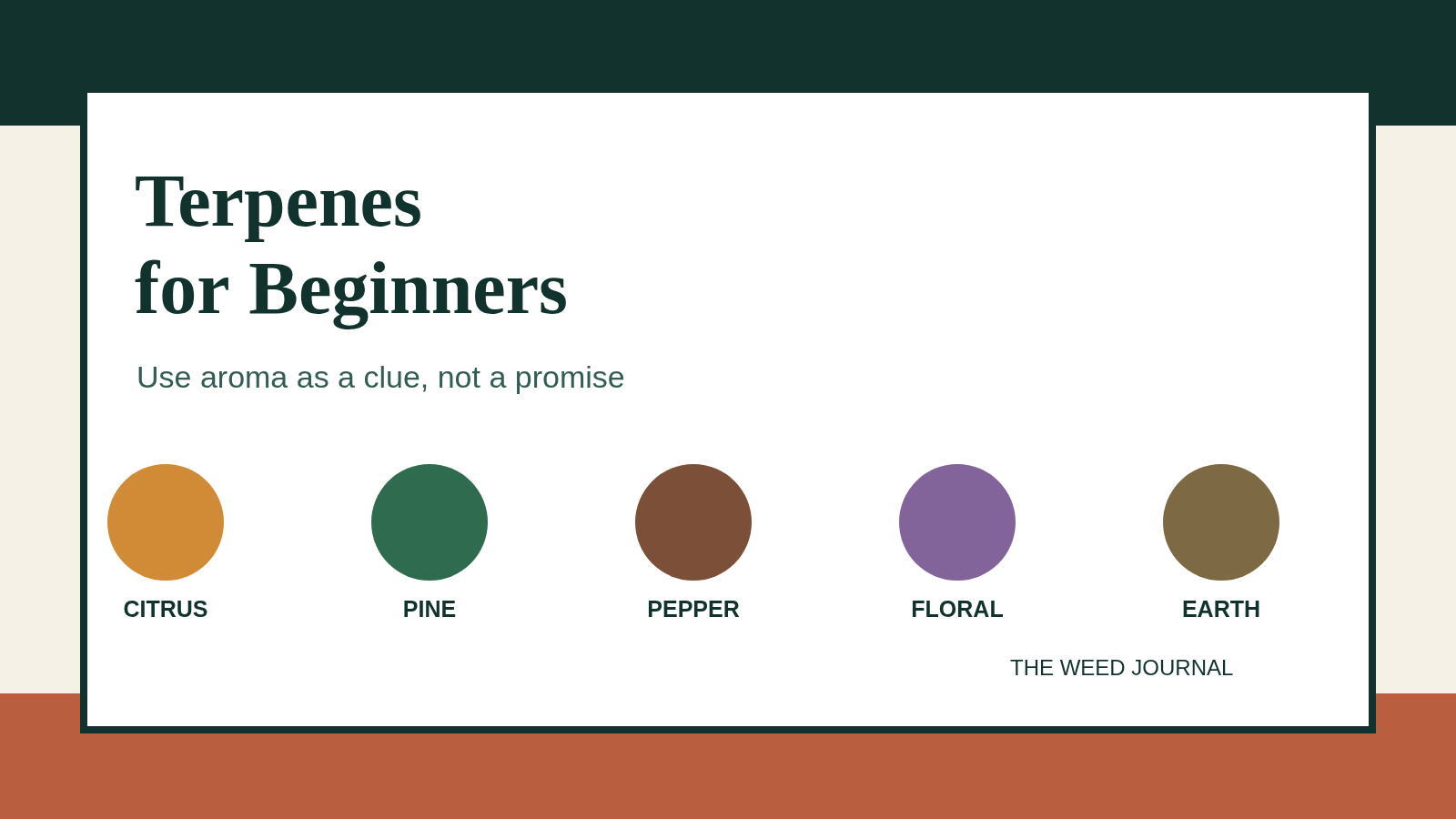
Terpenes are aromatic compounds found in cannabis and many other plants. They help shape how a product smells: citrus, pine, pepper, floral, earthy, fuel-like, herbal, or fruity. In cannabis retail, terpenes are often presented as part of a product’s “profile” alongside cannabinoid information.
The important beginner point is simple: terpene labels are best used as aroma and comparison clues, not as a medical or mood guarantee. A product high in a certain terpene may smell familiar from past products you liked, but effects still vary by THC amount, CBD amount, dose, route of consumption, setting, tolerance, sleep, food, and individual sensitivity.
Where terpene information appears in Canada
Canadian cannabis packages must follow federal packaging and labelling rules. Required information focuses on things like standardized cannabis symbols, THC and CBD amounts, warning statements, lot numbers, net weight, and responsible-use details. Terpene information may appear on the package, a producer’s website, a retailer listing, or a certificate-style lab summary, but it is not always presented the same way from product to product.
That means terpene labels are useful only when you read them in context. If a package has no terpene profile, that does not automatically mean the product is poor. If a package has a detailed profile, that does not automatically mean it is better. The value is in how the information helps you compare one product with another.
How to read a terpene panel
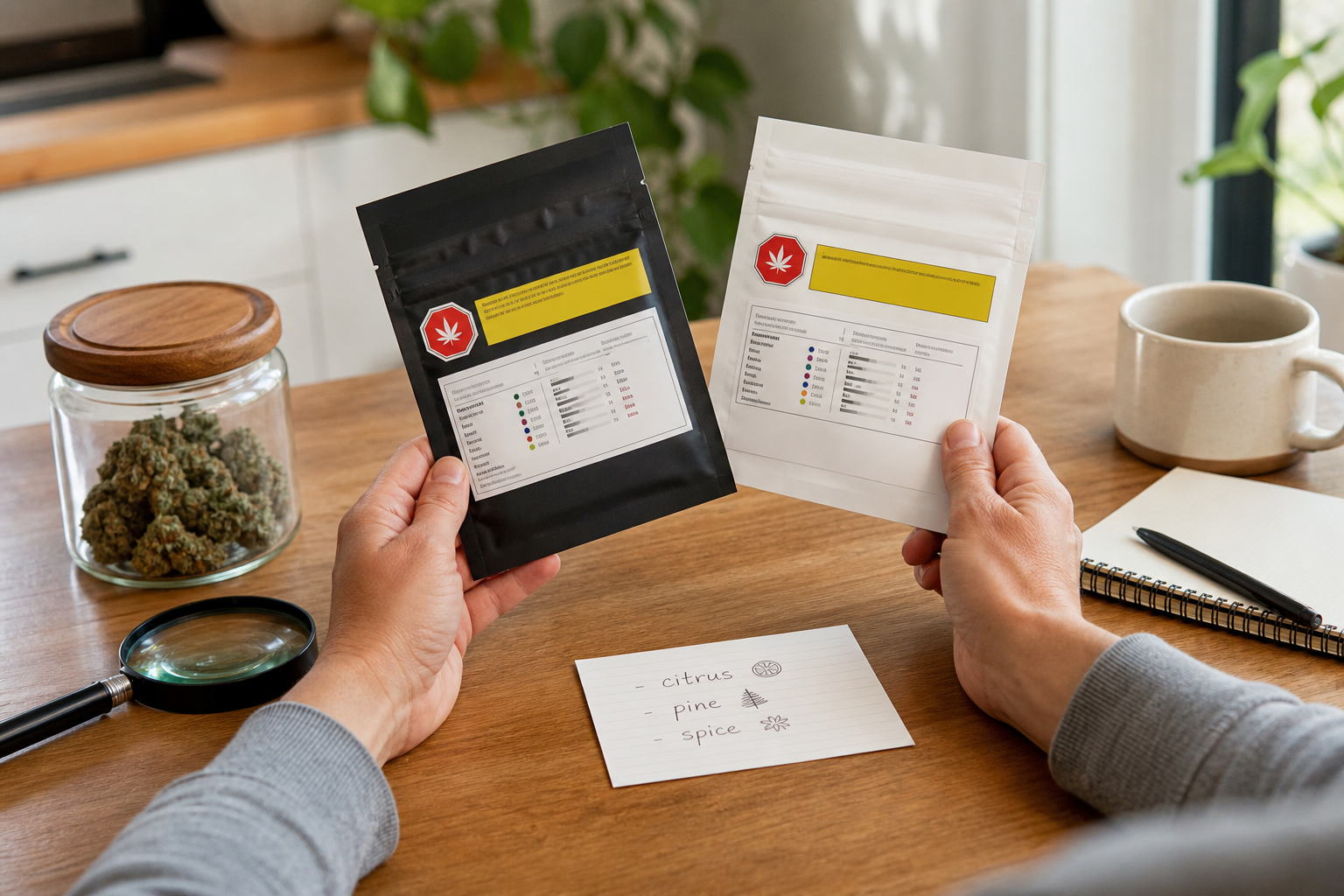
Start with the unit. Some labels show individual terpenes as percentages. Others show milligrams per gram, total terpene percentage, or a ranked list of the top terpenes. Do not compare two products until you know whether the numbers are using the same unit.
| Label item | What it can tell you | What it cannot tell you |
|---|---|---|
| Total terpenes | Whether the product may have a stronger or lighter aroma profile compared with similar products. | Whether the product will feel stronger than another product with more THC. |
| Top terpene list | The dominant aroma direction, such as citrus, pine, herbal, floral, spicy, or earthy. | A guaranteed effect such as sleep, focus, anxiety relief, or pain relief. |
| Batch or lot result | Whether the listed profile belongs to a specific lot or a broad product description. | Whether every future package of the same strain will match exactly. |
| Package date | How long the product has been sealed since packaging, which can matter for aroma quality. | The exact freshness or storage history before you bought it. |
| THC and CBD beside terpenes | The potency context you need before judging whether a product suits your tolerance. | A complete prediction of your personal experience. |
A practical way to use the panel is to compare like with like. Compare dried flower with dried flower, pre-rolls with pre-rolls, and vapes with vapes. A terpene percentage on a dried flower label does not mean the same thing as a flavour-forward vape description, especially when the product format and ingredients are different.
Common terpene names and aroma clues
You do not need to memorize every terpene. Start with the names that appear most often and connect them to smell, not promised effects.
| Terpene | Common aroma clue | How to use that clue while shopping |
|---|---|---|
| Myrcene | Earthy, herbal, musky, sometimes clove-like | Look for it if you tend to enjoy heavier, earthier flower aromas. |
| Limonene | Citrus peel, lemon, orange | Use it as a signpost for brighter citrus aroma, not as a promise of mood. |
| Beta-caryophyllene | Pepper, spice, woody notes | Helpful when comparing products that smell more peppery or savoury. |
| Pinene | Pine, resin, fresh herbs | Useful if you prefer crisp, forest-like aroma notes. |
| Linalool | Floral, lavender-like | Use it to identify softer floral profiles, especially in lower-aroma products. |
| Humulene | Hoppy, herbal, woody | Can help distinguish herbal profiles from sweet or fruit-forward ones. |
Do terpenes predict effects?
They should not be treated as an effects guarantee. Cannabis research continues to explore how cannabinoids, terpenes, dose, and individual biology interact, but retail shorthand often gets ahead of the evidence. A label that lists limonene does not prove the product will be energizing. A label that lists myrcene does not prove the product will be sedating. Those claims are too tidy for how cannabis actually behaves from person to person.
A more careful approach is to track your own experience. If two legal products have similar THC amounts but one repeatedly feels better suited to you, compare their terpene panels, package dates, product types, and CBD content. Over time, patterns may emerge. Treat those patterns as personal notes, not universal rules.
How terpene labels fit with THC and CBD
Many shopping mistakes happen when people treat terpenes as a workaround for potency. They are not. A high-THC product with a terpene profile you like can still be too strong. A balanced CBD:THC product with fewer terpene details may still be a better fit for a cautious beginner.
If you are new, start by reading the THC and CBD values first. Health Canada emphasizes that cannabis products vary in strength and that THC can have intoxicating effects. Once you know the potency range, terpene details can help you choose between products in the same general strength band.
For a broader potency primer, The Weed Journal’s guide to CBD:THC ratios in Canada explains how to read balanced products without treating one number as the whole story. If you are still choosing between product formats, start with how to choose cannabis product types in Canada before using terpene details as a finer filter.
Freshness, storage, and package dates matter
Terpene labels are most useful when the product still smells and handles like the profile suggests. Poor storage, old package dates, damaged seals, and dried-out flower can make a labelled aroma profile less meaningful in real life.
When buying dried flower or pre-rolls, check the package date, lot number, seal, and product condition. A terpene panel from the original batch is not a magic shield against stale handling. If aroma quality matters to you, pair terpene reading with the freshness checks in our Canadian flower buying checklist and our guide to storing cannabis at home.
A simple terpene-label checklist
- Confirm the product type before comparing numbers.
- Check whether the label shows total terpenes, top terpenes, or both.
- Look at the units: percentage, mg/g, or a ranked list.
- Read THC and CBD values before giving terpenes too much weight.
- Check package date, lot number, and seal condition.
- Use aroma words as clues, not medical or mood claims.
- Keep notes on products you personally tolerate well.
- Be cautious with very high-THC products, even when the terpene profile sounds appealing.
Red flags when terpene information is overused
Be careful when product copy turns a terpene into a certainty. Phrases that promise anxiety relief, sleep, pain control, focus, or other health outcomes deserve skepticism unless they are properly supported and legally appropriate. Cannabis can affect people differently, and health-adjacent claims should not be reduced to a terpene name on a package.
Also be wary of comparisons that ignore format. A dried flower profile, an infused pre-roll, a vape cartridge, and an edible may all use terpene language, but they do not deliver cannabis in the same way. Inhaled products usually have a faster onset than oral products; oral cannabis can take longer and last longer. Terpenes do not erase those format differences.
When a terpene profile is most useful
Terpene information is most useful when you already know your preferred format and potency range. For example, an adult who likes moderate-THC dried flower and wants a brighter aroma can compare two products with similar THC values, package dates, and price, then use limonene or pinene as aroma clues. Another reader who dislikes sharp citrus aromas may use the same panel to avoid a product, not chase a promised effect.
It is also useful for repeat buying. If you liked a product last month but the next package feels different, compare lot numbers, package dates, THC/CBD values, and terpene totals. Cannabis is an agricultural product, so variation is normal. The label gives you a paper trail for noticing those changes.
Bottom line
Terpene labels are worth reading, but they work best as part of a bigger label-reading habit. Start with legal packaging, THC and CBD amount, product type, package date, and lot number. Then use terpene names and totals to understand aroma direction and compare similar products.
The careful shopper’s rule is this: terpenes can help you ask better questions, but they should not make the decision for you. If a product sounds too strong, too old, poorly labelled, or wrapped in health promises, the terpene list is not enough to fix that.
Sources
- Health Canada: How to read and understand a cannabis product label
- Health Canada: Packaging and labelling guide for cannabis products
- Health Canada: Cannabis health effects
- Review article: Cannabis sativa terpenes and biological activity
FAQ
Are terpenes required on every Canadian cannabis label?
No. Canadian cannabis labels must include required federal information, but terpene details are not presented consistently across every product. You may see them on a package, retailer listing, producer page, or lab-style summary.
Is a higher terpene percentage always better?
No. Higher terpene totals may suggest a more noticeable aroma, but they do not automatically mean better quality, better effects, or better fit for your tolerance.
Can I use terpenes to choose cannabis for sleep or anxiety?
Use caution. Terpene names are often marketed with effect claims, but they should not be treated as medical advice or a guaranteed outcome. Talk to a healthcare professional for health-specific questions.