A cannabis recall is easy to miss if the product is already in your drawer, lockbox, or fridge. Most people do not check recall notices after every purchase. They buy from a legal store, put the package away, and assume the product is still fine unless the retailer contacts them directly.
That is not a great system for adults who want to use cannabis carefully. Recalls can involve a specific brand, product size, lot number, packaging date, province, or sales channel. A product on your shelf may be unaffected, while a similar-looking product from the same brand may be part of a notice. The only way to know is to match the details.
This Canada-aware guide explains how to check cannabis recalls, what label details to compare, what to do if a product matches, and when to report a side effect or product concern. It is educational information, not legal or medical advice.
Quick answer
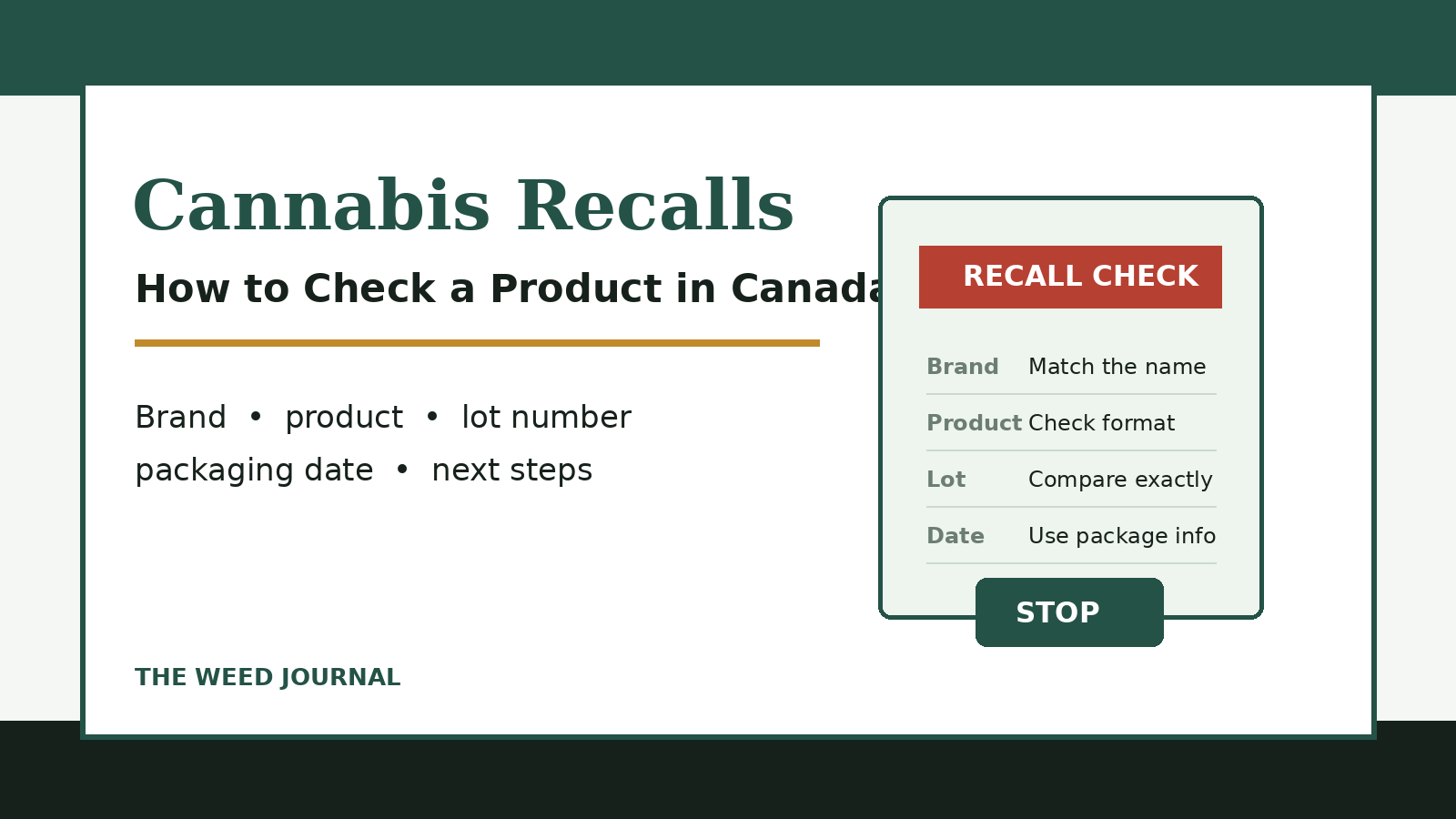
To check a cannabis recall in Canada, use Health Canada’s cannabis recalls and reporting page or the federal recalls and safety alerts site, then compare the notice against your package. Match the brand, product name, product size, lot number, packaging date, province or sales channel, and any printed potency or label details listed in the notice. If your product appears to match, stop using it, keep the package, follow the recall instructions, and contact the retailer, licence holder, or Health Canada reporting channel listed in the notice.
If you or someone else has a concerning reaction after using a cannabis product, seek medical help when needed and report the suspected side effect through Health Canada’s cannabis adverse reaction reporting process. If the concern is about suspected illegal sales, misleading products, packaging, promotion, or another cannabis compliance issue, use the appropriate concern-reporting path rather than guessing.
What to match before assuming a recall applies
| Recall detail | Where to look | Why it matters |
|---|---|---|
| Brand and product name | Front label, receipt, retailer listing | Similar names can exist across formats, sizes, and product lines |
| Product class | Label and recall notice | Dried flower, pre-rolls, edibles, extracts, topicals, seeds, and drinks are not interchangeable |
| Package size | Net weight, volume, unit count, or serving count | A recall may cover one size but not another |
| Lot number | Package label, outer container, peel-back label, or receipt details | This is often the most important match point |
| Packaging date | Package label | Helps separate affected batches from unaffected stock |
| Where it was sold | Recall notice and purchase record | Some recalls are limited to certain provinces, territories, medical channels, or retailers |
| Printed vs actual values | Recall notice and label | Some recalls involve incorrect THC, CBD, warning, or product information |
Where to check cannabis recalls in Canada
Health Canada maintains a cannabis recalls, adverse reactions, and reporting page that points readers to recall searches, side-effect reporting, and cannabis concern reporting. The broader Government of Canada recalls and safety alerts site also lets people search recall notices and subscribe to alerts.
For most adults, the simplest habit is to bookmark the federal cannabis recalls page and search the broader recalls site by brand or product name when something looks off. If your province, territory, retailer, or medical cannabis seller sends a notice, use that notice as a prompt to verify the product details against the federal listing.
Legal retailers and licence holders may also publish recall information, but official federal notices are the better source of record. Screenshots shared on social media, forum posts, and word-of-mouth can be useful signals, but they should not be your only confirmation.
How to read the label before you search
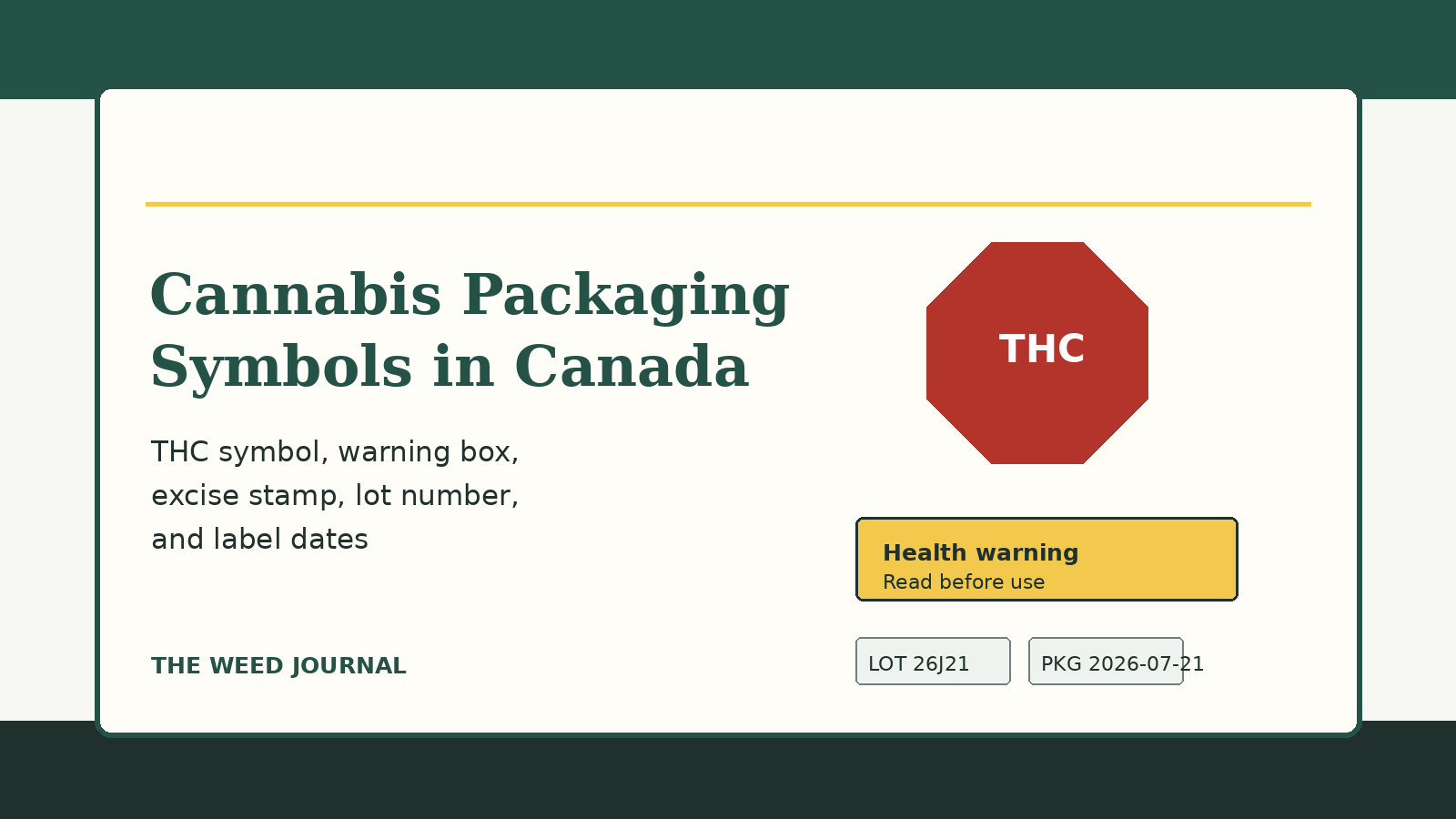
Health Canada’s label guidance explains that legal cannabis labels include required information such as warnings, THC and CBD details, product information, and other packaging elements. Its legal-cannabis guidance also points to visible signals such as the excise stamp, standardized cannabis symbol, child-resistant packaging for most products, bilingual health warnings, and nutrition facts for edible cannabis.
For recall checking, the label detail that matters most is not always the most visible. The lot number and packaging date may be printed small, placed near the barcode, stamped on the side or bottom, or included on a peel-back label. Keep the outer package until the product is finished, especially for edibles, oils, capsules, concentrates, and multi-unit formats where the inner product may not carry enough information on its own.
If you want a fuller label-reading foundation, The Weed Journal’s guide to reading cannabis labels in Canada explains THC, CBD, Total THC, Total CBD, package dates, warnings, and the difference between useful label information and marketing noise.
What a real recall notice can include
Many cannabis recalls are narrow. A notice may identify a product by exact name, package size, lot number, packaging date, province, number of units sold, sales window, and reason for recall. Health Canada recall examples show why exact matching matters: a notice can cover one lot of dried cannabis, one extract, one pre-roll product, or a product sold through specific authorized retailers or medical channels.
The reason can vary. Some recalls involve incorrect cannabinoid values or label information. Others may involve microbial concerns, foreign matter, packaging problems, missing warnings, quality testing, or other compliance issues. The notice should tell consumers what to do with the product and who to contact.
Do not try to infer risk from the headline alone. Read the full notice. A Type III-style labelling problem is not the same as a contamination concern, but both are still recall notices that deserve a careful response.
If your product appears to match
- Stop using the product until you have confirmed the recall instructions.
- Keep the package, label, receipt, product, and any photos of the lot or packaging date.
- Read the full official notice, including affected provinces, dates, sizes, and contact details.
- Contact the retailer, licence holder, or recall contact named in the notice if return or disposal steps are unclear.
- Do not give the product to someone else, resell it, share it, or continue using it because it “seems fine.”
- If anyone had a concerning reaction, seek medical advice when needed and report the suspected side effect through the Health Canada pathway.
For home safety, keep the product secured while you decide what to do. A recalled product should not move from adult-use storage into a kitchen drawer, garbage can, vehicle cupholder, or shared snack area where a child, pet, guest, or housemate may encounter it.
When to report a side effect
Health Canada describes cannabis adverse reactions as harmful, unpleasant, or unintended responses to a cannabis product, and its reporting page lets consumers, patients, health professionals, hospitals, and licence holders submit reports. Reporting does not prove the product caused the reaction, but it gives regulators information that can help identify patterns.
Report details are more useful when they are specific: product name, licence holder if known, lot number, amount used, route of use, time between use and symptoms, other substances used, and whether medical care was needed. If you are dealing with chest pain, severe confusion, fainting, trouble breathing, suspected poisoning, or another urgent situation, get medical help first.
This is also where careful storage helps. If you keep the package, you can report details accurately instead of relying on memory after an uncomfortable experience.
When the issue is not a side effect
Not every cannabis concern is a side effect. A package may look suspicious, a website may appear to sell illegally across provinces, a product may make unauthorized health claims, or a promotion may seem aimed at young people. Health Canada’s cannabis concern page separates different issue types and points people toward the right authority, including local law enforcement for suspected illegal activity and Canada Vigilance for adverse reactions.
For buying safety, a legal product is still the better starting point. It should come from an authorized retailer, carry required packaging and label elements, and be easier to trace if a recall happens. The Weed Journal’s legal retailer checklist and online cannabis buying checklist can help you screen the purchase channel before label checking even starts.
A two-minute recall routine
- Keep the package until the product is finished.
- Take a clear photo of the lot number and packaging date after purchase.
- Search the federal recalls site by brand or product name if a product looks, smells, tastes, or performs unexpectedly.
- Check official notices before relying on social posts or retailer rumours.
- Subscribe to Government of Canada recall alerts if you use cannabis often or manage purchases for a household.
- Do not ignore notices for products you bought weeks or months earlier.
- Store products in a locked place while you verify a concern.
This routine is especially useful for people who buy multiple products at once, share a household, use medical cannabis, keep edibles or oils for months, or transfer information into a journal or dose log.
Bottom line
A cannabis recall check is not complicated, but it does require exact details. Search official Canadian recall sources, compare the package against the notice, and treat the lot number and packaging date seriously. If the product matches, stop using it and follow the recall instructions. If someone had an adverse reaction, report it through the right Health Canada channel after taking care of any urgent health needs.
The calmer habit is simple: buy legal, keep labels, store securely, check official notices, and do not pass along a product that may be affected.
FAQ
Are all cannabis recalls national?
No. Some notices identify specific provinces, territories, retailers, medical channels, sales dates, or lots. Always read the details rather than assuming every package from a brand is affected.
Is a recalled cannabis product always dangerous?
Not always in the same way. Recall reasons vary, including labelling errors, potency information, packaging issues, testing results, contamination concerns, or other quality problems. Follow the official notice instead of guessing risk from the headline.
What if I threw away the package?
Check receipts, order history, retailer emails, product photos, and any remaining label information. If you cannot confirm the lot number, contact the retailer or licence holder named in the notice for guidance.
Should I report a bad cannabis experience even if there is no recall?
Yes, if it was a suspected side effect or adverse reaction. Health Canada’s cannabis side-effect reporting page accepts reports even when a recall has not been announced.
Can I return a recalled cannabis product to any store?
Do not assume that. Follow the recall notice and the retailer or licence holder instructions. Rules can vary by product, province, sales channel, and seller.
Sources
- Health Canada: Cannabis recalls, adverse reactions and reporting
- Government of Canada: Recalls and safety alerts
- Health Canada: How to read and understand a cannabis product label
- Health Canada: Reduce your risk by choosing legal cannabis
- Health Canada: Report a side effect to cannabis
- Health Canada: Submit questions or concerns about cannabis