Cannabis at home needs a storage plan, not just a drawer. A legal product can still become a household risk if a child mistakes an edible for candy, a pet gets into a bag, a guest grabs the wrong container, or an adult takes more than intended because the label is missing.
This Canada-aware checklist is for adults who keep cannabis at home and want a practical system that works in real life. It is not medical advice, and it is not a parenting lecture. The goal is simple: keep cannabis legal, labelled, locked, separated from regular food, and easy to handle if something goes wrong.
Quick answer
Store cannabis in its original child-resistant package whenever possible, lock it away, keep it out of sight and reach of children and pets, and separate edible cannabis from regular food and drinks. Health Canada’s public guidance gives special attention to edibles because they can be mistaken for ordinary snacks. If a child may have consumed cannabis, contact poison control. Call 911 if the child is seriously ill, unresponsive, having trouble breathing, or having a seizure.
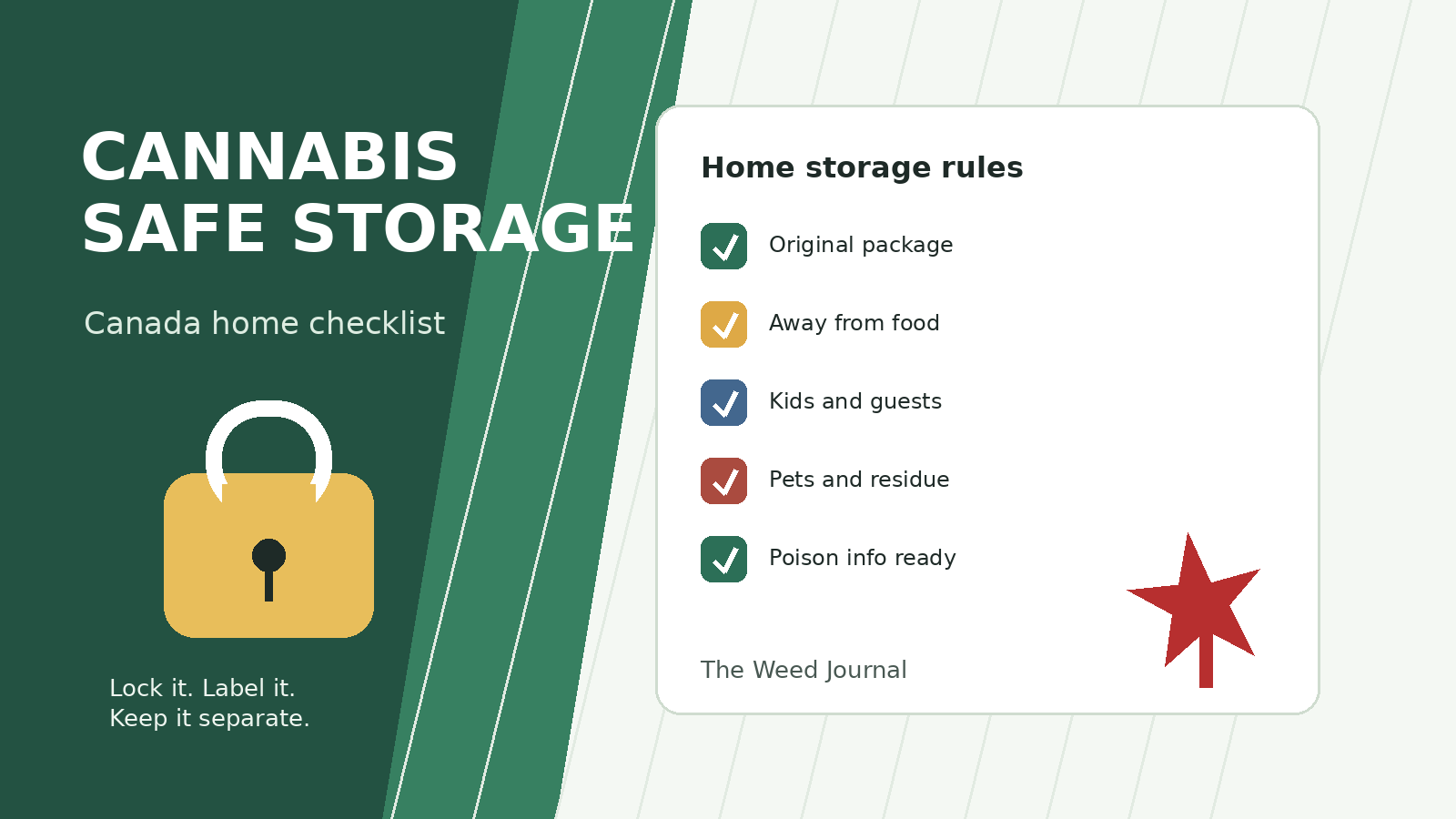
The safest household pattern is boring by design: one locked place, original labels, no loose gummies or baked goods, no cannabis left out during visits, and one sober adult available when children need care.
| Household risk | Better storage choice | Why it matters |
|---|---|---|
| Edibles look like regular snacks | Keep them in original packaging, locked away, and separate from food | Children, guests, and adults can confuse cannabis products with ordinary food |
| Pets can chew bags or containers | Use a locked cabinet, box, or high secure shelf | “Out of reach” for people may still be reachable for animals |
| Homemade edibles have no regulated label | Clearly mark the container and keep it locked away | No one should guess whether food contains cannabis |
| Visitors do not know your system | Put all cannabis away before guests arrive | Shared spaces create avoidable mix-ups |
| Emergency details are hard to find | Keep packaging and product names available for poison control | Accurate information helps responders give better guidance |
Why safe storage deserves its own checklist
Many cannabis articles focus on buying, dosing, or product types. Storage can feel like an afterthought once the product is home. That is the wrong order for a shared household. Cannabis is an adult-use product, and the practical risk often begins after the package is opened.
Health Canada tells adults to store cannabis safely, keep products away from children, youth, and pets, and be especially careful with edibles. Its safe-storage page also advises keeping cannabis locked away and out of sight and reach. Those are not decorative warnings. Edibles, drinks, capsules, oils, concentrates, flower, and homemade infused foods all need a system.
The need is clearest with edibles. A chocolate, gummy, cookie, brownie, or drink can look ordinary, especially after it leaves the original package. Canada’s regulated edible products have rules, but home storage can undo a lot of that protection if the product is moved into an unmarked kitchen container.
Use one locked storage place
The strongest improvement is also the least complicated: choose one locked place for cannabis and use it every time. That might be a small lockbox, a locked cabinet, a locking medicine box, or a dedicated locked drawer. The important part is that it is not a casual drawer, purse, backpack, nightstand, coat pocket, fridge shelf, or open kitchen cupboard.
“High up” can help, but height alone is not a storage plan. Children climb. Pets jump, chew, and nose into bags. Guests may open a pantry without thinking. A locked container creates a clearer boundary and reduces the chance that the system fails during a distracted moment.
If you live with other adults, make the system explicit. Everyone should know where cannabis belongs, who has access, and what to do after opening a package. A storage plan that only one person understands is fragile.
Keep cannabis in original packaging whenever possible
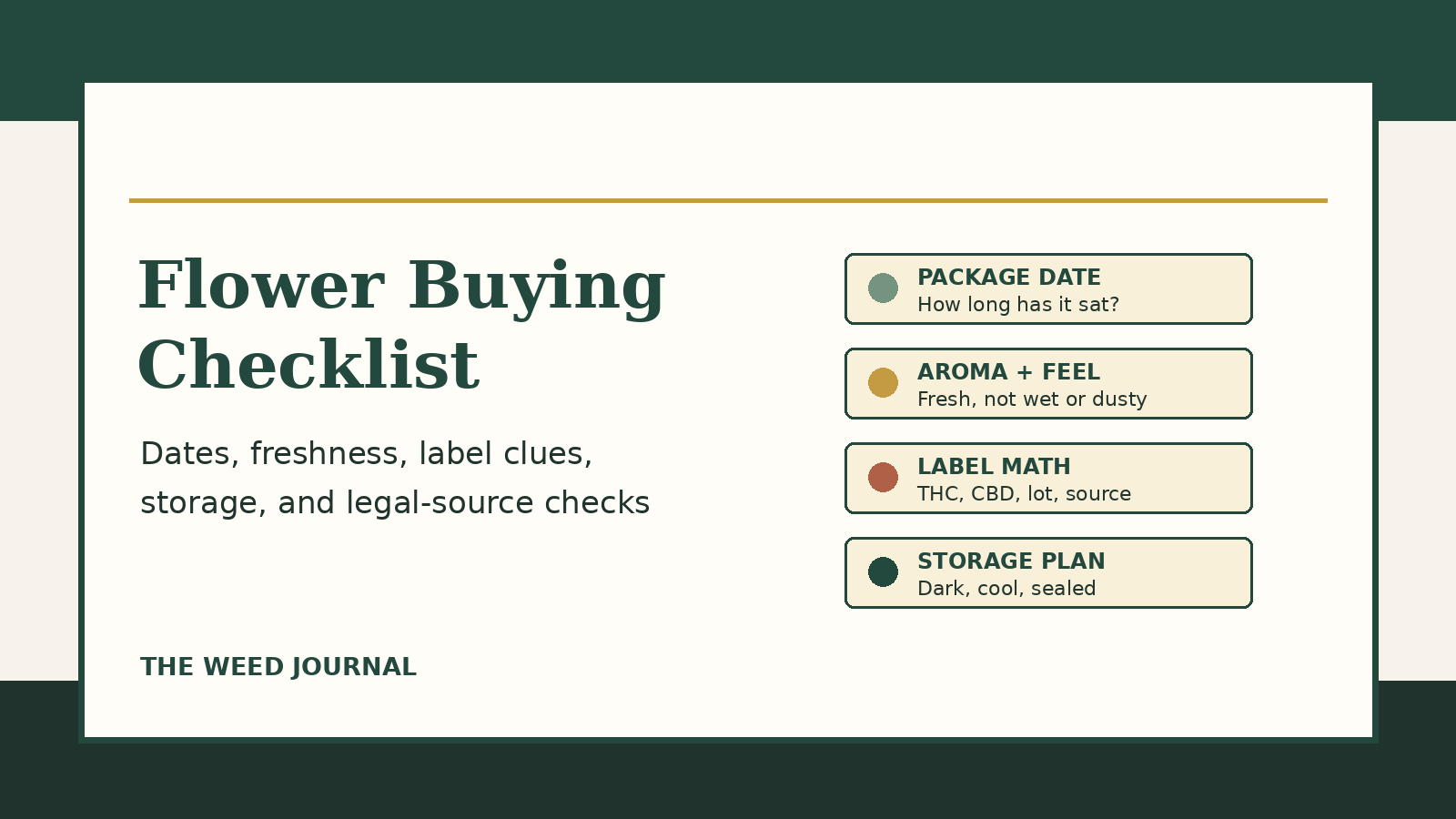
Original packaging carries information that matters: product name, THC and CBD amounts, lot details, warning labels, excise stamp, packaging date or best-before details when available, and manufacturer information. If something goes wrong, that information can help poison control, a clinician, or another adult understand what was consumed.
Original packaging is also a guardrail against ordinary mix-ups. A labelled cannabis chocolate package is easier to recognize than a loose square of chocolate in a food container. A labelled oil bottle is safer than an unmarked dropper. A labelled pre-roll tube is clearer than loose joints on a shelf.
If you transfer cannabis into another container for freshness or smell control, keep the original label with it. For flower freshness, our cannabis storage guide covers temperature, humidity, and container choices. For old products, our edibles expiry guide explains dates, texture, and safety cues.
Separate edibles from regular food
Edibles deserve a stricter rule than most product forms: do not store them with regular snacks. A cannabis drink beside ordinary canned drinks, a gummy bag beside candy, or infused brownies in the fridge can create a mistake even in an adult household. The risk grows when children, overnight guests, cleaners, babysitters, relatives, or roommates are present.
Store edible cannabis in a locked container away from normal food and drinks. If the product needs refrigeration, use a locked fridge box or a clearly marked, inaccessible container. Do not rely on a sticky note if a child can still open the container or a guest might miss the warning.
Homemade edibles are especially easy to mishandle because they do not have regulated labels or standard servings. If you make infused food, label it plainly, store it separately, and avoid making products that look identical to household snacks. Keep the dosing uncertainty in mind too. Homemade edibles can be unevenly mixed, and the amount of THC per piece may be hard to know. Our edibles dose chart is a better starting point than guessing.
Do a guest reset before people come over
Safe storage is not only for parents. Guests change the room. A visiting adult may not use cannabis and may not recognize packaging. A friend may bring a child. A pet may be more curious than yours. A house guest may open the fridge late at night. A dinner party may put people around open counters and snack bowls.
Before visitors arrive, reset the space: clear counters, put cannabis back in the locked place, remove loose rolling materials, put away vapes and batteries, and check the bathroom, bedroom, patio, and coat area. The goal is not secrecy. It is preventing accidental access in a shared environment.
If cannabis will be used while guests are present, keep it adult-only, labelled, and separate from regular food. Do not leave infused snacks on a table. Do not serve cannabis drinks in unlabeled glasses beside non-infused drinks. Make sure every adult knows what contains cannabis before anyone consumes it.
Plan around children and caregiving
Health Canada’s parenting guidance is blunt about the basics: store cannabis in a locked area, keep it in child-resistant packaging, make sure children cannot see or reach the locked area, and avoid using cannabis while caring for a child. That advice matters because impairment and storage risks can overlap.
If a child is in the home, there should be a sober, available adult responsible for care. Cannabis can affect attention, reaction time, judgment, and coordination. Even a moderate dose can make routine caregiving harder if a child wakes up sick, needs a ride, or has an emergency.
Also think beyond your own children. Visiting nieces and nephews, neighbours, grandchildren, babysitting arrangements, and shared custody changes can all turn an adult-only space into a child-accessible space quickly. The storage system should be ready before the visit, not improvised after someone arrives.
Pets need a storage plan too
Health Canada’s storage guidance includes pets for good reason. Dogs and cats can get into bags, chew packaging, lick residue, or eat dropped edibles. Edibles may also include ingredients that are harmful to pets independent of cannabis, such as chocolate or xylitol in some non-cannabis foods.
Do not store cannabis where a pet can smell and reach it. Do not leave roaches, infused food scraps, or oil droppers in open garbage. If a pet may have eaten cannabis, contact a veterinarian or an emergency veterinary clinic. Be direct about what the pet may have consumed; guessing or hiding the information can slow down care.
What to do if accidental consumption may have happened
If a child, pet, guest, or non-consenting adult may have consumed cannabis, treat it as a real incident, not a wait-and-see joke. Find the package, estimate the amount, note the time, and contact the appropriate help line. For children in Ontario, the Ontario Poison Centre provides 24-hour poison help. Other provinces and territories have poison-centre access routes as well.
Health Canada’s poisoning guidance lists warning signs that can include vomiting, confusion, unresponsiveness, slurred speech, unsteadiness, drowsiness, slowed breathing, and seizures. Call 911 immediately if someone is seriously ill, having trouble breathing, unconscious, or having a seizure.
For adults who took too much intentionally or accidentally, the same basic harm-reduction approach applies: stop taking more, avoid driving, get to a calm place, hydrate normally, and get medical help if symptoms feel severe or unusual. Our guide on what to do when you are too high covers adult self-care steps in more detail.
A practical home cannabis checklist
- All cannabis products have one locked storage place.
- Edibles and drinks are stored separately from regular food and beverages.
- Original packaging stays with the product whenever possible.
- Homemade edibles are clearly labelled and locked away.
- Opened products are returned to storage immediately after use.
- Guests, children, and pets cannot access cannabis products or residue.
- One sober adult is available when children need care.
- Poison control and emergency information is easy to find.
- Old, mouldy, or unlabelled products are not kept “just in case.”
- Everyone in the household knows the storage rule.
That checklist may sound strict, but it is easier than cleaning up a preventable mistake. Cannabis storage works best when it is automatic: use it, close it, lock it, put it back.
FAQ
Should cannabis be stored in the fridge?
Only if the product label or product type calls for it. Many products do not need refrigeration, and the fridge can create accidental-access risk if edibles are stored beside regular food. If refrigeration is needed, use a locked and clearly labelled container.
Is child-resistant packaging enough?
No. Child-resistant does not mean child-proof. Keep cannabis locked away, out of sight, and out of reach even when the product is still in its original package.
What is the safest way to store homemade edibles?
Use a clearly labelled, locked container that is separate from regular food. Do not store infused food in ordinary snack containers, and do not leave it on counters, tables, or shared fridge shelves.
What should I do if a child eats cannabis?
Contact poison control right away and call 911 if the child is seriously ill, unresponsive, having trouble breathing, or having a seizure. Keep the product package available so responders know what may have been consumed.
Do I need to hide cannabis from adult guests?
You do not need to hide legal adult-use cannabis, but you should prevent accidental access. Put products away before guests arrive, label anything that contains cannabis, and never mix infused and non-infused food without clear separation.