Tag: cannabis labels

  • Do Edibles Expire in Canada? Dates, Storage, and Safety

    Do Edibles Expire in Canada? Dates, Storage, and Safety

    Old cannabis edibles create a specific kind of uncertainty: the package is still sealed, the gummy looks fine, but the best-before date is close or already past. The practical answer is not simply yes or no. In Canada, edible cannabis can lose freshness, texture, flavour, and dosing predictability over time, while food spoilage depends on the ingredients, storage, and whether the package was opened.

    This guide explains how to read dates on Canadian edible cannabis labels, when to throw a product out, and how to store gummies, chocolates, baked goods, drinks, oils, and capsules more safely. It is not medical advice, and it does not tell you to push past a label date. When in doubt, choose the conservative option: do not consume it.

    If edible cannabis is stored in a shared home, pair freshness checks with the cannabis at home safe storage checklist so packages stay labelled, locked, and separate from regular food.

    The Quick Answer

    Cannabis edibles can go bad in two main ways. First, the food itself can spoil, especially if it contains ingredients that normally need careful storage. Second, the product can become stale or less predictable as cannabinoids and other ingredients are exposed to heat, air, light, or moisture.

    • Follow the label and storage instructions first.
    • Treat a best-before or durable-life date as a quality signal for an unopened product stored properly, not as permission to ignore mould, odour, broken seals, or unsafe storage.
    • Do not assume an older edible still matches the labelled experience perfectly.
    • Do not take more quickly because an older edible “feels weak.” Edibles can still take time to appear.
    • Keep all edibles in original child-resistant packaging, locked away, and separate from regular snacks.

    If your main question is how long effects take, pair this guide with our edibles onset guide. If you are trying to choose a small first serving, use the edibles dose chart before you buy or open the package.

    Best-Before Is Not the Same as “Safe Forever”

    Canadian food labelling rules make an important distinction between date types. The Canadian Food Inspection Agency explains that a durable life date, often seen as “best before,” is about quality for unopened products stored under proper conditions. It is not a direct food-safety guarantee before or after that date. Once a package is opened, the shelf life can change.

    Cannabis edibles add another layer because they are regulated cannabis products as well as edible goods. Health Canada’s cannabis packaging and labelling guidance requires product details such as THC/CBD amounts, ingredients, allergens, lot number, packaging date, storage conditions when required, and child-resistant packaging. The federal Cannabis Regulations also distinguish edible cannabis from other cannabis products for expiry-date labelling. In plain English: read the edible label carefully, but do not treat a date as the only safety check.

    What you seeWhat it usually meansWhat to do
    Packaging dateWhen the product was packaged, useful for age and lot referenceUse it with storage instructions and the product’s condition
    Best-before or durable-life dateQuality marker for an unopened, properly stored productFollow it, especially for shorter-life foods and drinks
    Storage instructionsManufacturer guidance for keeping the product stable and usableTreat this as the first rule, especially after opening
    Lot numberReference code for the batchKeep it available if reporting a quality issue
    Broken seal or damaged packageThe product may have been exposed or tampered withDo not consume if safety is uncertain
    Label dates help, but the package condition, storage history, and food type matter too.

    What Usually Changes First?

    Most shelf-stable edibles do not switch from “fine” to “dangerous” at midnight on a date stamp. More often, quality fades. Gummies can dry out, become tacky, sweat, or stick together. Chocolate can develop bloom, absorb odours, soften, or taste stale. Baked goods can dry out or spoil faster depending on moisture, dairy, eggs, nuts, fillings, and storage. Drinks can separate, lose carbonation, taste flat, or become questionable after opening.

    Potency can also become less predictable over time. Heat, light, air exposure, and repeated opening can all make cannabis products less stable. That does not mean an old edible is harmless or inactive. It means you should not rely on guesswork. If you decide to use a legal product that is still within label guidance and looks normal, keep the same slow edible rules: start low, wait long enough, and avoid stacking doses.

    When to Throw Edibles Out

    Throw the product out if there is any sign that the food or package is compromised. This is especially important for homemade edibles, opened products, baked goods, chocolates with fillings, drinks, and anything stored in a warm vehicle or humid room.

    • Visible mould, unusual spots, or unexplained colour changes.
    • Rancid, sour, fermented, chemical, or otherwise wrong smell.
    • Swollen, leaking, punctured, or broken packaging.
    • Unclear storage history, especially heat exposure in a car or direct sun.
    • Opened drinks, sauces, baked goods, or perishable-style products left too long.
    • Any product a child, pet, or guest may have accessed.

    Do not taste-test a product that smells wrong or looks suspect. With cannabis edibles, the cost of replacing a package is lower than the cost of getting sick, overconsuming, or leaving an unsafe item in the home.

    Shelf-Life Notes by Edible Type

    The label wins over general advice, but the edible format tells you what to watch for.

    Product typeCommon quality issueStorage habitExtra caution
    Gummies and chewsDrying, sweating, stickiness, texture changesCool, dark, dry, sealedHumidity and heat can make them clump or melt
    ChocolateBloom, odour absorption, rancid fats, meltingStable cool room temperature, airtight if chilledFridge condensation can hurt texture
    Baked goodsStaleness, mould, ingredient spoilageFollow label; treat like food firstHomemade items often have shorter life
    DrinksSeparation, flat taste, spoilage after openingFollow label; refrigerate after opening if directedDo not leave opened drinks sitting out
    Capsules, oils, softgelsRancid oil, leaking, cloudy changes, odourCap tight, cool, dark, dryAvoid bathrooms, windowsills, and hot cars
    Different edible formats fail in different ways; label instructions and storage history matter most.

    Can Older Edibles Feel Weaker?

    They can, but “weaker” is not something to gamble on. A stale edible may taste old, have a different texture, or feel less consistent. Another edible from the same old package could still be strong enough to cause impairment. Edibles also have a delayed onset, which is why many uncomfortable experiences happen after someone takes more too soon.

    If a legal edible is still within label guidance and appears normal, use the same conservative approach you would use with a new product. Check the THC per package and per piece, take a small amount if you are not familiar with that exact product, wait the full onset window, and do not drive. Our cannabis and driving guide covers the legal and practical risk of impairment more directly.

    How to Store Edibles So They Last Longer

    The best storage habit is boring and repeatable: keep edibles sealed, cool, dark, dry, clearly labelled, and locked. Original packaging is useful because it carries the THC amount, lot number, warnings, ingredients, allergens, and storage instructions. If you use a secondary container for organization, keep the original package inside it rather than separating the product from its label.

    • Use a locked box, cabinet, or safe instead of an open pantry or snack drawer.
    • Keep edibles away from ovens, sunny windows, heaters, bathrooms, and vehicles.
    • Do not mix infused products with regular candy, chocolate, drinks, or baked goods.
    • Reseal opened packages tightly and use them sooner than sealed ones.
    • Follow “refrigerate after opening” or similar label instructions exactly.
    • Date homemade edibles clearly and treat them like the regular food they are.

    For broader storage targets across flower, pre-rolls, concentrates, vapes, oils, and edibles, use our cannabis storage guide. For THC beverages specifically, the cannabis drinks guide explains why drinks deserve their own caution around onset, serving size, and opened containers.

    Homemade Edibles Need a Stricter Rule

    Homemade edibles are not packaged like legal retail products. They may not have lab-tested THC information, child-resistant packaging, allergen information, a lot number, or storage instructions. Their shelf life depends heavily on the recipe. A brownie, cookie, butter, oil, sauce, or infused meal should be treated as food first and cannabis second.

    Label homemade items with the date, estimated contents, and a clear cannabis warning. Store them locked away, separate from regular food, and do not leave them on counters during gatherings. If the food would normally belong in the fridge or freezer, cannabis does not make it shelf-stable.

    FAQ

    Do THC gummies expire?

    THC gummies can become stale, dry, sticky, melted, or less predictable over time. Follow the package date and storage instructions. Throw them out if they smell wrong, look wrong, were stored badly, or the package seal is damaged.

    Can expired edibles make you sick?

    They can if the food has spoiled, the package was compromised, or the product was stored poorly. Risk depends on the ingredients and condition, not just the printed date. If there is mould, off smell, leakage, swelling, or uncertainty, do not eat it.

    Do edibles lose potency after the date?

    They may become less consistent, especially after heat, air, light, or time, but do not assume they are weak. Older edibles can still cause impairment. Avoid taking extra quickly because delayed onset can make the second serving arrive at the worst time.

    Should edibles go in the fridge?

    Only when the label says so or when the food type clearly needs it. Refrigeration can help opened drinks and heat-sensitive items, but moisture and odours can hurt gummies and chocolate if they are not sealed. If you chill them, keep them airtight and labelled.

    Can you freeze cannabis edibles?

    Some foods freeze better than others. Freezing may protect certain homemade baked goods or chocolates when sealed well, but it can also change texture and create moisture during thawing. Keep the product labelled, sealed, and locked, and thaw it while still sealed to reduce condensation.

    Sources

  • Budget vs Premium Cannabis in Canada: What Matters

    Budget vs Premium Cannabis in Canada: What Matters

    Budget cannabis can be a smart buy in Canada. Premium cannabis can also be worth paying for. The problem is that neither word tells you much by itself. A low price can hide old flower, weak packaging, or a format that does not fit your use. A high price can hide ordinary cannabis behind nicer branding.

    This guide gives adult shoppers a practical way to compare budget and premium cannabis without treating THC percentage as the whole decision. It is Canada-aware, label-first, and intentionally cautious: no product type is automatically safer or better for everyone, and this is not medical advice.

    Quick answer

    The best value is the product that fits your tolerance, format preference, freshness expectations, label needs, and budget. Budget cannabis is often a better choice for experienced shoppers who know what they like and can read labels closely. Premium cannabis may be worth it when freshness, aroma, terpene information, small-batch handling, or product consistency clearly improve the experience. In both cases, buy legal, check the label, and avoid shopping by THC percentage alone.

    Budget vs premium cannabis at a glance

    Comparison point Budget cannabis Premium cannabis What to check
    Price Lower cost per gram, unit, or package. Higher price because of brand, format, batch size, handling, or perceived quality. Compare value by usable fit, not just sticker price.
    THC percentage May still be high, especially in dried flower or concentrates. May be high, moderate, or balanced. Total THC matters, but higher is not automatically better.
    Freshness Can be fresh, but older packages may be more common in clearance or value bins. Often marketed around freshness, aroma, and craft handling. Look for packaging date, lot details, seal quality, smell after opening, and texture.
    Label detail Sometimes simple, sometimes very complete. Often more detailed, but not always. Read Total THC, Total CBD, ingredients, allergens, warnings, and directions.
    Best use case Everyday shoppers who already understand their tolerance and product preferences. Shoppers who care about aroma, flavour, terpene profile, specific format, or consistency. Choose by purpose: occasional, social, low-dose, format-specific, or aroma-focused.

    Start with legal source, not price tier

    Before comparing budget and premium, confirm the product comes through a legal Canadian source. Health Canada continues to warn that illegal cannabis products are still sold and consumed in Canada. Legal products have required packaging, labelling, child-resistant features, warning information, and a regulated supply chain that illegal sellers may not provide.

    That does not mean every legal product is perfect. It means the baseline comparison is fairer. If one seller cannot show a legal retailer trail, a proper package, clear THC/CBD information, and ordinary consumer protections, the price tier is a distraction. Our legal cannabis buying checklist for Canada is the first page to use when the source itself is uncertain.

    Do not treat THC as the value score

    One of the most common buying mistakes is comparing products by the biggest THC number per dollar. Health Canada explains that THC is responsible for intoxication, and that harmful effects may be greater when THC strength is higher. Higher potency can also make a product less useful if it pushes you past the experience you actually wanted.

    This is especially important when comparing a budget eighth against a premium eighth. A cheaper high-THC flower is not necessarily a better deal if it feels harsh, stale, too strong, or hard to dose. A premium flower is not necessarily better just because it also has a high number. THC percentage is one useful label fact, not the verdict.

    If you want a deeper explanation, read our guide on why THC percentage is not everything in Canada. For today’s shopping decision, the shortcut is simple: match potency to your tolerance and setting before you compare price.

    Read the label like a buyer, not a collector

    Health Canada’s cannabis label guidance says legal labels provide health and safety information that can help reduce harm. For shoppers, that turns the label into the most practical comparison tool. You do not need to know every technical term. You do need to slow down long enough to check the basics.

    Look for Total THC, Total CBD, package date, lot number, net weight or volume, directions for use, warnings, ingredients, and allergens where relevant. For inhaled products, check the format and any hardware requirements. For edibles and oils, check the amount per unit, not just the amount in the whole package.

    A premium-looking label that hides basic information is not shopper-friendly. A budget label that is clear, current, and easy to understand may be a better practical buy. Our Canadian cannabis label guide explains those fields in more detail.

    When budget cannabis can make sense

    Budget cannabis can be a good fit when the product is legal, clearly labelled, reasonably fresh, and aligned with your tolerance. Some value products are simply larger batches, simpler packaging, older brand lines, or lower-margin offerings. A lower price does not automatically mean poor quality.

    Budget flower may make sense for shoppers who use a dry herb vaporizer, roll regularly, cook with legal dried cannabis where permitted, or already know they prefer a certain THC/CBD range. Budget edibles or beverages may make sense when the serving size is clear and the product fits your routine. Budget CBD products may be reasonable when the label is clear and the cannabinoid amount is easy to compare.

    The warning is that budget buying punishes guesswork. If you are new, sensitive to THC, returning after a tolerance break, or shopping for a format you have never used, the cheapest option is not always the lower-risk option. Paying less for a product that is too strong, confusing, or stale is not value.

    When premium cannabis may be worth it

    Premium cannabis may be worth paying for when the extra cost buys something you can actually evaluate: fresher flower, better trim, stronger aroma, more complete terpene information, cleaner handling, format reliability, or a more consistent experience across purchases. The word “premium” should point to evidence, not just packaging.

    For dried flower, useful evidence can include a recent packaging date, good texture, intact aroma after opening, visible care in trim and cure, and label details that match the product story. For vape cartridges, premium should mean clear ingredients, reliable hardware compatibility, appropriate warnings, and no mystery additives. For oils, capsules, or edibles, premium should mean precise serving information, consistency, and clear ingredients.

    Premium is less persuasive when it leans on vague language. “Craft,” “top shelf,” “exclusive,” “reserve,” and “small batch” may describe real differences, but they do not replace label facts. If the product cannot tell you what is in it, how strong it is, how to use it, and when it was packaged, the brand language is doing too much work.

    Freshness is where price tiers often separate

    Freshness is not just a luxury concern. Dry, old, or poorly stored cannabis can smell flat, feel brittle, burn or vape harshly, and make the purchase feel disappointing even if the THC number looked attractive. Yesterday’s storage guide covered why light, heat, air, and moisture matter after purchase; the same logic matters before purchase too.

    When comparing two flower products, check the package date and ask whether the retailer can explain storage basics. Once opened, look for aroma, texture, and obvious signs of age or damage. Cannabis should not be wet, moldy, dusty, or suspiciously perfumed. If flower seems wrong, do not try to rescue it by using more.

    For a buyer-friendly freshness pass, use our fresh cannabis flower checklist. For after-purchase handling, see how to store cannabis in Canada.

    Format changes the value calculation

    Budget vs premium looks different across flower, vapes, edibles, oils, beverages, and concentrates. A cheap flower product may be easy to portion if you know your tolerance. A cheap vape cartridge with unclear ingredients or poor hardware fit can be a bad risk. A premium edible with the same THC per unit as a budget edible may not be meaningfully different if ingredients and serving size are similar.

    Compare products inside the same format first. Dried flower competes with dried flower. A vape cartridge should be compared with other cartridges that use compatible hardware and clear ingredients. Edibles should be compared by THC per unit, CBD amount, ingredients, onset expectations, and serving control. Concentrates should be compared even more carefully because small amounts can carry high THC exposure.

    If you are choosing between formats, step back to the larger product-type decision. Our Cannabis 101 product type guide is a better starting point than a price comparison when the format itself is undecided.

    A practical value checklist

    • Confirm the source. Legal Canadian retailer or proper medical channel first.
    • Match the format to your use. Do not buy a product type you do not understand just because it is discounted.
    • Check Total THC and Total CBD. Choose a strength that fits your tolerance and setting.
    • Read the package date. Especially for dried flower and products where freshness affects aroma or texture.
    • Inspect ingredients. Important for edibles, oils, vapes, beverages, capsules, and allergies.
    • Compare serving control. Products that are easy to portion are often better value for cautious users.
    • Ignore vague prestige words. Premium should mean clear evidence, not just nicer branding.
    • Plan storage. A good purchase can become a poor one if it is left in heat, light, or open air.

    Red flags in both budget and premium products

    Some warning signs apply at every price. Be cautious with missing or unclear label details, unrealistic health claims, cartoonish illegal-style branding, damaged packaging, no legal source trail, vague ingredients, pressure to buy quickly, or claims that a product is “safe” because it is natural. Cannabis is a psychoactive product; natural does not mean risk-free.

    Also be careful with products that make the experience sound guaranteed. Cannabis effects vary by person, tolerance, setting, product format, and other substances. A product cannot promise relaxation, sleep, creativity, pain relief, or anxiety relief for everyone. Those claims are especially risky when they encourage a shopper to ignore dose, potency, or personal health context.

    How to compare two products in the store

    Use a simple four-step scan. First, confirm both products are legal and in the same category. Second, compare Total THC, Total CBD, package size, and serving size. Third, compare freshness and label clarity. Fourth, ask what the higher price or lower price actually changes for you.

    Here is an example: Product A is cheaper flower with high THC, an older package date, and little terpene detail. Product B costs more, has moderate THC, a recent package date, and clearer aroma information. The right answer depends on the buyer. Someone seeking low-cost, familiar flower may choose Product A. Someone who values freshness and a less intense session may choose Product B. Neither decision should be based on the price tag alone.

    Keep notes after purchase if you use cannabis more than occasionally. Product name, format, THC/CBD, amount used, time, food or alcohol context, setting, and how it felt can teach you more than brand language. Over time, those notes make both budget and premium shopping easier.

    Bottom line

    Budget cannabis is not automatically low quality, and premium cannabis is not automatically better. In Canada, the stronger shopping habit is to buy legal, read the label, match potency to your tolerance, check freshness, and compare products by use case.

    If a cheaper product is clear, fresh enough, legal, and easy for you to use responsibly, it may be good value. If a premium product gives you better freshness, clearer information, better format reliability, or a more suitable potency, it may be worth the extra cost. The best buy is the one you can understand before you open it.

    Sources

  • CBD Oil in Canada: What Adults Should Know Before Buying

    CBD Oil in Canada: What Adults Should Know Before Buying

    CBD oil is one of the easiest cannabis products to misunderstand. It can look wellness-adjacent, it is often sold in small bottles, and the label may list several numbers that sound similar. In Canada, though, CBD oil is still a cannabis product. Adults should treat it like cannabis first: buy from a legal source, read the label, understand the THC content, and avoid medical assumptions that the package does not prove.

    This guide is for adults comparing legal CBD oils in Canada. It is not medical advice, and it does not tell anyone to use CBD for a health condition. The goal is practical: understand what you are buying before a bottle ends up in your cart or on your counter.

    Quick answer

    In Canada, CBD oil should be bought through legal recreational retailers or, for registered medical cannabis patients, through the proper medical cannabis channel. The most useful label checks are CBD per activation or per mL, total THC, bottle size, carrier oil, ingredients, lot number, packaging date, expiry date if provided, and the excise stamp for the province or territory where it is sold.

    CBD is not the same as “non-intoxicating no matter what.” Many CBD oils contain some THC, and cannabis can affect people differently depending on dose, product type, body chemistry, other substances, and timing. If you are comparing CBD with other cannabinoids, start with our THC vs CBD vs CBN guide, then use the label-focused checks below.

    CBD oil label checks at a glance

    Label item What to check Why it matters
    CBD amount CBD per mL, per activation, or total bottle amount. This is the number you need for basic serving math.
    Total THC THC per mL and total THC in the bottle. CBD-forward oils may still contain THC.
    Carrier oil MCT, sunflower, olive, or another listed carrier. Useful for allergies, preference, and digestion comfort.
    Package and lot details Lot number, packaging date, and expiry date if provided. Helps with freshness, recalls, and product tracking.
    Excise stamp Province or territory stamp on legal cannabis packaging. Signals legal-duty-paid product in the intended market.
    Directions and warnings Use instructions, storage notes, and cannabis warnings. Legal cannabis packaging is designed to slow down impulsive use.

    What CBD oil is in the Canadian retail context

    CBD oil usually means a cannabis extract diluted into a carrier oil and sold with a dropper or measured activation format. The bottle may be CBD-dominant, balanced with THC, or formulated with other cannabinoids. The exact profile matters more than the front-of-package phrase.

    Health Canada explains that cannabis contains many chemical substances, including cannabinoids such as THC and CBD. THC is the main intoxicating cannabinoid. CBD is not intoxicating in the same way, but that does not turn every CBD product into a risk-free wellness item. The product still needs legal packaging, responsible storage, and careful label reading.

    If the front label says “CBD oil,” do not stop there. Turn the bottle or product page into a simple question: how much CBD, how much THC, how many millilitres, and how is one serving measured?

    Buy legal first

    Before comparing strengths or prices, confirm the seller is legal. Health Canada points consumers to provincial and territorial systems for legal recreational cannabis sales. In Ontario, the official online store is the Ontario Cannabis Store, while private retail stores are licensed by the Alcohol and Gaming Commission of Ontario. Other provinces use different models.

    That matters for CBD oil because illegal sellers may lean heavily on wellness language, imported-looking packaging, or “hemp oil” confusion. A legal Canadian cannabis oil should come through a legal cannabis channel and carry the required cannabis packaging information. If you are unsure how to verify a retailer, use our buying cannabis in Canada checklist before comparing products.

    Read CBD and THC together

    A CBD-forward product can still contain THC. Sometimes the THC amount is small; sometimes the product is intentionally balanced. Either way, the practical question is not “is this CBD?” but “what is the CBD-to-THC profile per measured amount?” If the label gives both cannabinoids but the relationship is unclear, use our CBD:THC ratio guide to compare common product profiles before choosing.

    Look for both the amount of CBD and the amount of THC. If a product lists total bottle amounts only, divide by the bottle volume to estimate mg per mL. If it lists mg per activation, confirm what one activation means. A dropper, spray, capsule, and beverage all create different serving expectations.

    For a deeper walkthrough of package numbers, see our Canadian cannabis label guide.

    Do not treat CBD as medical advice from the shelf

    CBD is often discussed online in the context of sleep, pain, stress, inflammation, and anxiety. Some of that conversation comes from early research, some comes from personal experience, and some comes from marketing. A retail cannabis label is not a diagnosis, prescription, or proof that the product will do what a social post claims.

    Health Canada warns that cannabis can affect mental and physical health and that effects vary by person and product. If someone is pregnant, breastfeeding, taking medication, has a health condition, or is using cannabis for symptom management, that is a health-professional conversation rather than a blog-post decision. The safest editorial stance is to separate label literacy from treatment claims.

    Start low, especially with oils

    Oils are easy to underestimate because they do not look like smoking, vaping, or a strong edible. But swallowed cannabis oils can behave more like edible cannabis than inhaled cannabis. Onset may be delayed, effects may last longer, and taking more too soon can make the experience uncomfortable.

    Health Canada’s lower-risk cannabis use guidance recommends starting with a low amount and going slowly when using cannabis. That advice is especially useful when a CBD oil contains THC or when a person is new to cannabis oils. If you are trying to understand timing, our edibles onset guide explains why swallowed cannabis can take longer to feel than inhaled formats.

    Watch the carrier oil and ingredients

    CBD oil is not only cannabinoids. It also includes a carrier oil and sometimes flavouring or other ingredients. Common carriers can include MCT oil, sunflower oil, olive oil, or other food-grade oils. For many adults this is a preference issue, but for some it can matter because of allergies, digestion, diet, or personal tolerance.

    If a product page hides the ingredient list, that is a reason to slow down. Legal cannabis products should not require guesswork about what is in the bottle. The ingredient list also helps distinguish CBD oil from dried flower, capsules, beverages, and topical products, which all have different use patterns.

    Check age, storage, and household safety

    CBD oil bottles are small and easy to misplace. Keep them in the original child-resistant packaging, away from children and pets, and follow storage directions on the label. Health Canada consumer information repeatedly emphasizes keeping cannabis away from young people and storing products securely.

    Do not transfer CBD oil into an unlabelled dropper, supplement bottle, or kitchen container. That creates avoidable confusion, especially in shared households. The original package keeps the THC/CBD numbers, lot details, warning statements, and purchase context attached to the product.

    Price comparisons: compare mg, not bottle hype

    CBD oil prices are easier to compare when you convert the label into rough cost per mg of CBD, while still accounting for THC, bottle size, carrier oil, legal retailer trust, and product freshness. A larger bottle is not automatically a better deal if the CBD concentration is low, and a high-CBD bottle is not automatically the right fit if the THC amount or carrier oil does not suit you.

    Keep the comparison simple: total CBD in the bottle, total THC in the bottle, bottle volume, price before tax, and whether the retailer is legal. That small spreadsheet-style check prevents the front label from doing all the thinking for you.

    It also helps to write down how you expect to use the product before buying it. A bottle meant for occasional low-dose use is a different purchase from a bottle someone expects to use daily. That planning step can keep price, potency, and storage life in proportion.

    When CBD oil may not be the right product

    CBD oil may not be the right choice if you need precise no-THC assurance, dislike oil-based products, cannot wait for swallowed cannabis timing, are avoiding cannabis for work or driving reasons, or are trying to self-treat a condition without professional guidance. For some adults, a lower-risk decision is to skip the product entirely.

    It is also worth remembering that cannabis impairment and workplace or roadside testing are not the same thing as how a product feels in the moment. If the label shows THC, plan around driving, work, caregiving, and other responsibilities before using it.

    Bottom line

    CBD oil in Canada is best approached as a legal cannabis product, not a vague wellness shortcut. Buy from a verified legal source, read CBD and THC together, check the carrier oil and package details, store it securely, and be cautious about health claims that outrun the evidence.

    The best CBD oil decision is usually quiet and practical: legal source, clear label, low-and-slow approach, and no assumptions.

    Sources

  • What Is THCA? Flower, Concentrates, and Label Math in Canada

    What Is THCA? Flower, Concentrates, and Label Math in Canada

    THCA is one of those cannabis terms that sounds technical until it shows up on a real product label. A dried flower label may list THC and Total THC. A concentrate may mention acidic cannabinoids. A social post may claim that THCA is “not really THC.” For Canadian adults trying to read labels without falling for hype, the useful answer is more practical than that.

    THCA, short for tetrahydrocannabinolic acid, is the acidic precursor to THC. In plain language, it is a form of cannabinoid found in raw or unheated cannabis that can convert into THC when heated, aged, or processed. That conversion matters because THC is the main intoxicating compound associated with the cannabis high.

    Quick answer

    THCA is not the same label number as active THC, but it is closely connected to THC. When cannabis is heated through smoking, vaping, baking, or processing, some THCA can decarboxylate into THC. That is why Canadian labels focus on Total THC: the amount of THC a product could produce after activation, not only the THC already present before heating.

    For shoppers, the key habit is simple: do not judge a product by the THC line alone. Read Total THC, Total CBD, product type, package date, lot details, warnings, and the legal source. A flower with low “THC” but high “Total THC” can still be a strong intoxicating product once used.

    THCA vs THC vs Total THC

    Label or term What it usually means Why shoppers misread it Better habit
    THCA The acidic precursor cannabinoid naturally present in unheated cannabis It may be treated as harmless or unrelated to THC even though it can convert Ask how the product will be heated, stored, or consumed
    THC The active intoxicating cannabinoid already present in the product A low THC number can look mild if the Total THC number is ignored Use THC as one detail, not the final potency read
    Total THC The label estimate of THC after potential conversion from THCA It can be higher than the THC line, especially on dried flower Use Total THC when comparing likely intoxicating strength
    CBD / Total CBD The same active-vs-potential logic for CBD and CBDA CBD can be overvalued as a guarantee of calm or safety Read both CBD numbers and still check THC
    Canadian cannabis labels are designed to help consumers compare active and potential cannabinoid amounts. Total THC is the safer shopping number for intoxication risk.

    If you want a broader foundation before getting into THCA, start with The Weed Journal’s guide to THC vs CBD vs CBN in Canada. THCA belongs in that same cannabinoid family conversation, but the label math is especially important for flower and concentrates.

    What decarboxylation means

    Decarboxylation is the chemical change that turns acidic cannabinoids into their neutral forms. For THCA, that means conversion toward THC. It can happen slowly during storage and more quickly with heat. Smoking and vaping create heat. Cooking and baking create heat. Some extraction or processing steps can also change cannabinoid forms.

    This is why “raw cannabis has THCA” and “cannabis can get you high” are not contradictory. A raw plant can contain a lot of THCA before use. Once heated, part of that potential can become THC. The exact conversion is not something a consumer can calculate perfectly at home because time, temperature, product moisture, storage, and method all matter.

    The practical takeaway is to avoid loophole thinking. If a product contains meaningful THCA and you plan to heat it, treat it as a product with intoxicating potential.

    Why Canadian labels use Total THC

    Health Canada’s consumer label guidance says the front of a cannabis label must display Total THC and Total CBD. That is not just a design choice. It helps adults understand the amount of cannabinoid the product could produce after activation, rather than only the amount already active in the package.

    The federal packaging and labelling guidance also accounts for the potential conversion of THCA into THC when applying THC quantity limits for some product classes. In other words, Canadian rules are built around the reality that THCA can become THC. This is different from online arguments that treat THCA as if it has no connection to intoxication.

    For dried flower, the difference can be obvious. A label might show a small current THC percentage and a much higher Total THC percentage. The Total THC line is usually the number a buyer should use when comparing how strong the product may feel after smoking or vaping.

    THCA in flower

    Dried cannabis flower is where many adults first notice the THCA issue. Flower is commonly consumed with heat, so a high Total THC value can translate into a stronger experience even if the pre-heated THC line looks modest.

    This also helps explain why chasing the highest THC percentage can lead to poor buying decisions. Total THC may tell you something about potential strength, but it does not tell you freshness, aroma, moisture, terpene profile, harvest quality, or whether the product fits your tolerance. A very strong label number can still come with dry texture, harsh smoke, weak aroma, or an experience that is too intense for the setting.

    For a better shopping frame, pair this article with why THC percentage is not everything in Canada and our fresh cannabis flower checklist.

    THCA in concentrates

    Concentrates can make THCA feel even more confusing because labels and product names may include resin, rosin, diamonds, sauce, shatter, wax, live products, or vape-ready extracts. Some concentrates are designed around high cannabinoid concentration, and some may contain visible crystalline material described as THCA.

    Do not assume the word “THCA” makes a concentrate mild. If the product will be dabbed, vaporized, or otherwise heated, the intoxicating potential can be significant. Concentrates may also deliver cannabinoids quickly and intensely, which can increase the chance of anxiety, dizziness, coughing, overconsumption, or impairment for people with low tolerance.

    If you are newer to cannabis, it is usually wiser to build label-reading habits with lower-potency products before experimenting with concentrates. The same goes for anyone returning after a long break, changing formats, or buying a product type they have not used before.

    THCA does not make health claims safer

    Some cannabis marketing treats minor or acidic cannabinoids as if they are wellness shortcuts. That is not a reliable way to read a product. THCA is an interesting cannabinoid for researchers, but consumer-facing claims often move faster than the evidence. A product should not be treated as a treatment for pain, inflammation, nausea, sleep, anxiety, or any other health condition just because THCA appears on a label.

    Health Canada warns that cannabis can impair memory, concentration, attention, reaction time, coordination, and judgment. Cannabis can also cause anxiety, panic, confusion, sleepiness, dizziness, and other short-term effects. Those risks are still relevant when the label conversation starts with THCA.

    If you use medications, have a personal or family history of psychosis, are pregnant or breastfeeding, have safety-sensitive work, or are dealing with a serious medical symptom, treat cannabis as a health decision and talk to a qualified professional.

    A practical THCA label checklist

    • Confirm the product is from a legal Canadian retailer or provincial online store.
    • Find Total THC before comparing potency or price.
    • Check whether the product will be heated through smoking, vaping, dabbing, baking, or cooking.
    • Do not assume a low THC line means the product is low-strength if Total THC is high.
    • Read Total CBD too, but do not assume CBD removes impairment risk.
    • Check the package date, lot number, storage condition, and warning labels.
    • For concentrates, go slower than you would with dried flower because potency and onset can feel more abrupt.
    • Plan for no driving, work calls, childcare emergencies, or equipment use after consumption.

    For a full label walkthrough, use The Weed Journal’s guide to reading cannabis labels in Canada. THCA makes much more sense once Total THC, format, package date, and intended use are read together.

    How storage changes the picture

    Storage will not turn a weak product into a strong one, but it can change cannabis quality over time. Heat, oxygen, and light can contribute to cannabinoid changes and terpene loss. Poor storage can also dry flower out, flatten aroma, or create quality concerns if moisture is trapped in the wrong conditions.

    Airtight storage, stable room temperature, darkness, and child-resistant security matter more than novelty jars or complicated gear. If flower smells musty, feels damp in a suspicious way, or shows visible mould, skip it. Potency math is irrelevant if the product looks unsafe or badly stored.

    Common THCA mistakes

    The first mistake is reading only the smallest number on the label. A product can show low active THC and higher Total THC because much of its potential THC is still in acidic form before heating.

    The second mistake is treating THCA as a legal or safety loophole. In Canada, legal cannabis products are regulated, packaged, labelled, and sold through authorized channels. If a seller is using THCA language to dodge basic source, age, package, or warning questions, that is a red flag.

    The third mistake is assuming that a high Total THC product is automatically better. It may be stronger, but stronger is not the same as fresher, smoother, more balanced, or more appropriate for your plans. New and occasional consumers often do better with lower potency, small amounts, and a low-pressure setting.

    Bottom line

    THCA is the acidic precursor to THC, and heat can convert some of it into THC. That is why Total THC matters on Canadian cannabis labels. If you are buying flower or concentrates, Total THC is the number that better reflects likely intoxicating potential after activation.

    The reader-first rule is simple: do not let chemistry terms replace common sense. Buy legal, read the full label, understand the format, avoid medical-style claims, start low if you choose to use, and give yourself enough time and space to stay safe.

    Sources

  • Terpenes for Beginners in Canada

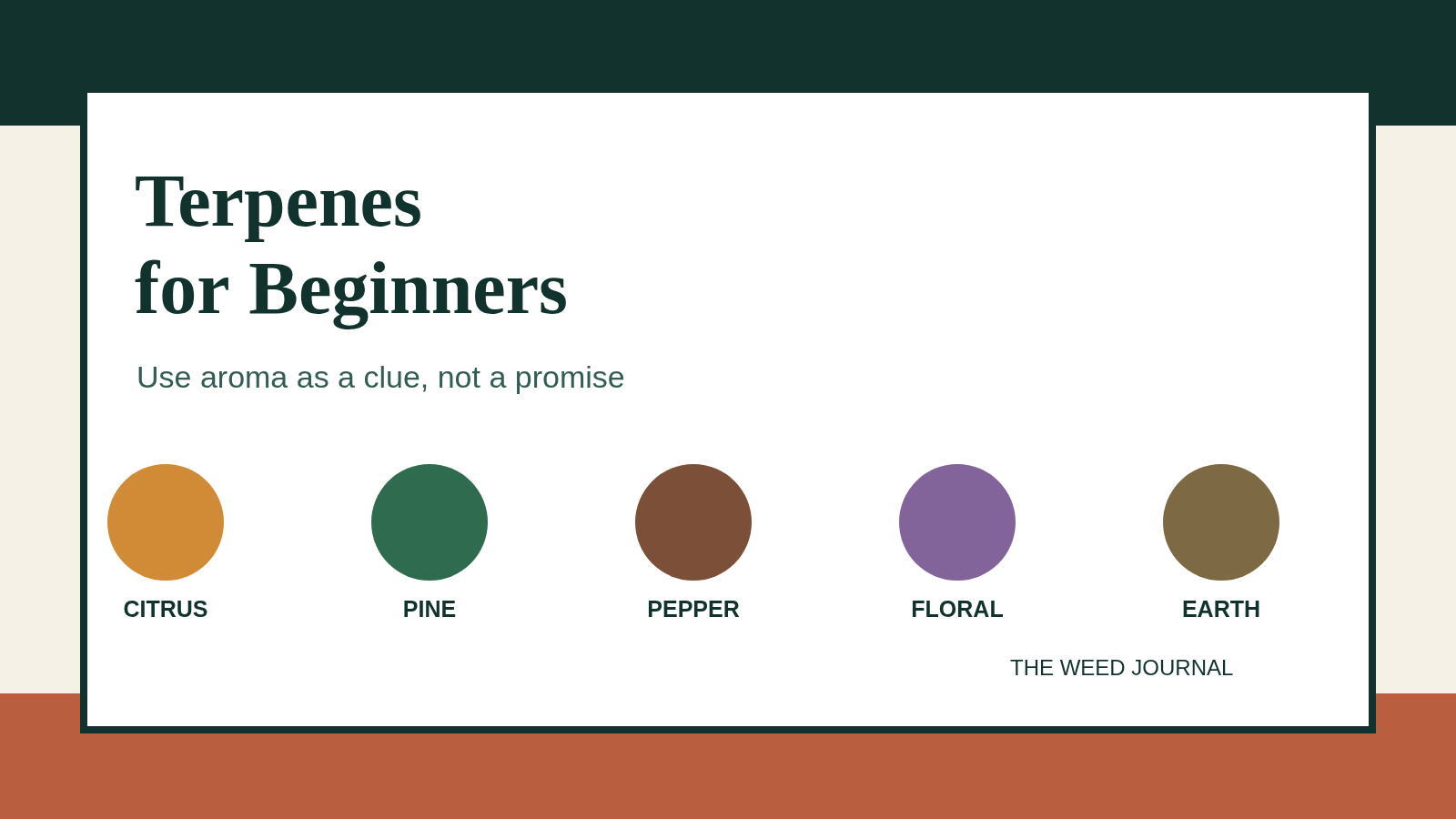
    Terpenes for Beginners in Canada

    Terpenes are one of the most useful cannabis details beginners can learn, but they are also one of the easiest details to overhype. A product page may suggest a citrus terpene means energy, a peppery terpene means focus, or an earthy profile means sleep. Real life is less tidy.

    This guide explains how adults in Canada can use terpene information in a practical way: as an aroma and product-comparison clue, not as a promise that a strain will create a specific effect or treat a health concern. The goal is simple. Use the label, smell, freshness, THC, CBD, format, and your own notes together instead of letting one terpene name make the decision for you.

    Quick answer

    Terpenes are aromatic compounds found in cannabis and many other plants. They help shape smell and flavour, and they can make one legal cannabis product feel more appealing or recognizable than another. Terpene information can be useful when comparing flower, full-spectrum extracts, or products from the same producer.

    What terpenes cannot do is guarantee an effect. A terpene list does not prove that a product will make you sleepy, creative, calm, social, or pain-free. For safer buying decisions, use terpenes alongside Total THC, Total CBD, product format, package date, lot information, freshness, dose, tolerance, and setting.

    What are terpenes?

    Terpenes are naturally occurring aromatic compounds. They are part of why cannabis can smell like citrus peel, pine, black pepper, lavender, mango, herbs, fuel, skunk, damp earth, or fresh flowers. They are not unique to cannabis. Many familiar plant smells come from terpene families found across nature.

    In cannabis shopping, terpenes usually show up in three places: the actual aroma of dried flower, the product description on a legal retailer menu, or a terpene list supplied by a producer. Some labels and product pages name dominant terpenes. Others do not. That variation is normal, so do not assume a product is poor just because the terpene list is not front and centre.

    Common terpene names, translated carefully

    Terpene Common aroma cue Practical shopping use What not to assume
    Myrcene Earthy, musky, herbal, sometimes mango-like Compare earthy or heavy-smelling flower across products you already tolerate. That it will reliably make you sleepy.
    Limonene Citrus peel, lemon, orange Identify bright citrus profiles you enjoy in flower or extracts. That it will treat anxiety or guarantee energy.
    Pinene Pine, resin, forest Look for crisp, pine-forward aroma if you prefer fresher herbal notes. That it will improve focus.
    Caryophyllene Pepper, clove, spice Notice spicy profiles that may make products feel sharper or warmer. That it is a pain treatment.
    Linalool Floral, lavender-like Use as an aroma preference if you like softer floral notes. That it is a sleep aid.
    Humulene Woody, herbal, hoppy Compare beer-like, woody, or dry herbal profiles. That it creates a predictable body effect.

    The table is deliberately cautious. Terpene names can help you describe what you smell and track what you like. They should not be treated like a menu of guaranteed outcomes.

    Why terpene hype gets ahead of the evidence

    Terpenes are interesting, and research on cannabis chemistry keeps developing. The problem is not that terpenes are meaningless. The problem is that retail claims often jump from “this compound exists in the plant” to “this product will reliably create this effect for you.”

    Cannabis effects are influenced by more than aroma compounds. THC, CBD, product format, dose, frequency of use, individual sensitivity, food, alcohol, sleep, mood, medications, and setting can all change the experience. A high-THC product with a citrus terpene profile may still feel uncomfortable to someone prone to THC-related anxiety. A lower-THC product with less dramatic aroma may be easier for that person to use responsibly.

    That is why terpene information works best as a comparison tool, not a medical or psychological prediction tool.

    Start with THC and CBD before terpene shopping

    Health Canada identifies THC as the main intoxicating component in cannabis and warns that higher-THC products are associated with greater risk of adverse effects. Legal Canadian labels must provide important product information, including cannabinoid details and required warnings. Those label basics matter more than a terpene claim.

    If you are newer, returning after a break, or trying a new format, begin with a modest THC level, a legal source, a comfortable setting, and enough time. Then use terpene notes to refine preferences. Do not use terpene language to justify a THC strength that is higher than you planned to use.

    For more detail, read our guide to why THC percentage is not everything. The same principle applies here: one number or one aroma note is never the whole product.

    How to use terpenes when reading a label

    When terpene information is available, read it after the core label details. First check product class, Total THC, Total CBD, package date, lot number, warning information, and serving size where relevant. Then look at the terpene profile.

    Ask practical questions:

    • Are one or two terpenes clearly dominant, or is the profile spread out?
    • Does the aroma match the listed profile when the package is opened?
    • Have you liked similar aroma profiles before?
    • Is the product format familiar, or are you trying a new route such as edibles, vapes, oils, or concentrates?
    • Is the THC level still appropriate for your tolerance and setting?

    If a product has a detailed terpene profile but very high THC, do not let the profile distract you from the strength. If a product has no terpene list but a clear label, modest THC, good freshness, and a format you understand, it may still be a better beginner choice.

    Freshness changes aroma

    Terpenes are tied to aroma, and aroma can change with age, storage, and handling. Dried flower that once had a bright citrus or pine profile may smell flat if it has been stored poorly or kept too long after opening. Very dry flower may lose character and become harsher to use. Flower that smells musty, damp, or mouldy should not be consumed.

    Package date is only one clue, but it is a useful one. So is the condition of the product after opening. If aroma matters to you, freshness and storage matter too.

    Use our fresh cannabis flower checklist when buying or checking stored flower. A terpene list is less useful if the product no longer smells or handles the way it should.

    Indica, sativa, hybrid, and terpenes

    Terpene profiles are often used to support indica, sativa, and hybrid marketing. That can be helpful if a producer uses the terms consistently, but it can also make broad category labels sound more scientific than they are.

    Modern cannabis products do not always fit neatly into old category expectations. A sativa-labelled product can be high in THC and uncomfortable for some people. An indica-labelled product is not guaranteed to feel sedating. A hybrid label may tell you almost nothing without the rest of the profile.

    A better approach is to treat indica, sativa, hybrid, and terpenes as clues, then verify with the label and your own notes. Our indica vs sativa vs hybrid guide explains why the old labels should not be used as effect guarantees. If you are comparing familiar names side by side, use our classic cannabis strain comparison guide to weigh format, freshness, THC/CBD context, and label details before chasing a strain reputation.

    A simple terpene note-taking system

    If you want terpenes to become useful, track patterns instead of memorizing claims. Keep a short note after each legal product you try:

    • Product name, producer, lot, and package date.
    • Format: flower, pre-roll, vape, edible, oil, capsule, or extract.
    • Total THC and Total CBD.
    • Dominant terpenes if listed.
    • Aroma in your own words.
    • Amount used and timing.
    • Setting, food, alcohol, mood, and sleep quality.
    • What felt comfortable, uncomfortable, or not worth repeating.

    After a few products, your own notes will be more useful than generic terpene charts. You might learn that you enjoy citrus aroma but prefer lower THC, or that spicy flower smells good but feels too sharp when the THC is high. That pattern is practical. It still is not a medical conclusion.

    When terpene information is most useful

    Terpenes are especially useful when comparing products within the same format. Flower to flower is easier than flower to edible. Two dried flower products with similar THC and CBD can feel easier to compare when one is citrus-pine and another is earthy-spicy. Two vape cartridges from the same producer may also be easier to compare by flavour profile and cannabinoid strength.

    Terpenes are less useful when the format changes. An edible described with a strain name or flavour note does not behave like inhaled flower from the same strain family. Onset and duration matter more. If edibles are involved, read our guide to how long edibles take to kick in before increasing a dose.

    Red flags in terpene marketing

    Be skeptical when a menu or seller claims a terpene profile will treat anxiety, pain, insomnia, depression, inflammation, or any other health condition. Be skeptical when terpene claims are used to make a high-THC product sound beginner-friendly. Be skeptical when a seller cannot provide basic legal label information but makes confident effect claims.

    Also be cautious with products from non-legal sources. In Canada, legal products come with regulated packaging, warnings, lot information, and testing requirements. If you cannot check the label, the source, or the package, terpene language is not enough to make the purchase trustworthy.

    Beginner-safe defaults

    If you are new to cannabis, use this order: legal source first, lower THC second, familiar format third, comfortable setting fourth, terpene preference fifth. That order keeps aroma in its proper place.

    A calm product choice is not the one with the longest terpene list. It is the one you can understand, dose cautiously, store properly, and use without driving or safety-sensitive responsibilities. Our Cannabis 101 product type guide is the better starting point if you are still choosing between flower, edibles, oils, vapes, and capsules.

    Bottom line

    Terpenes can make cannabis shopping more informed and more personal. They help describe aroma, compare similar products, and build a record of what you tend to enjoy. They should not be treated as effect guarantees or health claims.

    For Canadian adults, the practical framework is: check THC and CBD, confirm the legal label, consider the format, inspect freshness, then use terpene notes to refine your choice. If a terpene claim sounds too certain, it probably is.

    Sources

  • Indica vs Sativa vs Hybrid in Canada

    Indica vs Sativa vs Hybrid in Canada

    Indica, sativa, and hybrid are some of the first words cannabis shoppers learn. They are also some of the easiest words to overtrust. A menu might say one product is relaxing, another is energetic, and a third is balanced, but the label alone cannot promise how cannabis will feel for you.

    This guide is for adults in Canada who want a more reliable way to choose legal cannabis without falling into strain-name hype. The practical answer is not to ignore indica and sativa completely. It is to treat them as rough retail shorthand, then check the details that matter more: THC, CBD, product format, dose, terpene information when available, your tolerance, and the setting where you plan to use it.

    Quick answer

    Indica, sativa, and hybrid labels can be useful menu clues, but they are not reliable predictors of effects on their own. Modern cannabis products are usually better compared by their cannabinoid profile, terpene notes, strength, freshness, product format, and your own past reactions.

    In Canada, legal cannabis labels must show key information such as Total THC and Total CBD, product class, warnings, lot number, package date, and other required details. Health Canada’s lower-risk cannabis guidance also emphasizes choosing lower-THC products and paying attention to what is actually in the product. That is more useful than assuming every indica means couch-lock or every sativa means energy.

    Indica, sativa, and hybrid at a glance

    Menu word What shoppers often expect What to check instead
    Indica Relaxing, heavier, evening-friendly Total THC, CBD ratio, terpene notes, dose, and whether you personally find it calming.
    Sativa Uplifting, alert, daytime-friendly THC strength, anxiety risk, format, serving size, and whether the product has worked that way for you before.
    Hybrid Somewhere in the middle The actual label and batch details, because most modern products are hybrids in some sense.
    Strain name A repeatable experience Producer, lot, package date, THC/CBD, terpene information, and your notes from past purchases.

    Why the old labels became so popular

    Indica and sativa began as plant-classification terms, not consumer-effect guarantees. Over time, retail culture turned them into shortcuts: indica for body-heavy relaxation, sativa for heady energy, and hybrid for a blend. Those shortcuts are simple, which is why they stuck.

    The problem is that cannabis breeding, product naming, and retail marketing are not simple. Many products sold today have mixed ancestry. Two products with the same broad label can have very different THC levels, CBD levels, aroma compounds, harvest dates, curing quality, and formats. A strong sativa-labelled pre-roll can still feel uncomfortable to a newer consumer. A lower-THC indica-labelled flower may feel clear and manageable to someone else.

    That does not make the words useless. They can help you understand how a retailer or producer is positioning a product. They just should not be the final decision point.

    What the research problem looks like

    Scientific and chemical-classification work has repeatedly challenged the idea that common commercial labels neatly separate cannabis into predictable indica and sativa effect groups. Research on cannabis chemovars has found that popular names and categories can misrepresent chemical variation. In plain language: the name on the shelf does not always tell you what is inside the product.

    For readers, the takeaway is practical. If the goal is a more predictable experience, move from category words toward evidence you can actually inspect: THC, CBD, product class, lot information, package date, aroma profile, and notes from your own experience. Cannabis can still be variable, but those details are more grounded than a broad label.

    Start with THC and CBD

    THC is the main intoxicating cannabinoid in cannabis. CBD does not produce the same high, though it can still have effects on the body and brain. Health Canada says legal labels must display Total THC and Total CBD, and those numbers can be shown by weight, by unit, by package, or by activation depending on the product.

    For choosing between indica, sativa, and hybrid products, THC often matters more than the category. A high-THC product can feel intense regardless of whether the menu calls it a sativa or an indica. If you are newer, returning after a break, switching formats, or using cannabis in a setting where anxiety would be a problem, lower THC is usually the more cautious choice.

    CBD can change the character of a product for some consumers, especially when the product has a more balanced THC:CBD ratio. It still is not a guarantee. Treat CBD as one useful detail, not a magic safety switch.

    Use terpenes carefully

    Terpenes are aromatic compounds found in cannabis and many other plants. They contribute to smell and flavour. Some consumers use terpene profiles to compare products, especially when choosing flower or full-spectrum extracts.

    The cautious way to use terpenes is as pattern recognition, not as medical certainty. If you notice that products with a particular aroma profile tend to feel better for you, that is useful shopping information. If a menu claims a terpene will treat anxiety, pain, insomnia, or depression, slow down. The claim may be more confident than the evidence supports.

    When terpene information is listed, compare the dominant terpenes, not just the total number. Also remember that aroma changes with freshness and storage. Our guide to fresh cannabis flower in Canada can help you separate a useful scent clue from stale or suspicious flower.

    Format can change the whole experience

    The same strain name can feel different across flower, pre-rolls, vapes, edibles, oils, and concentrates. Inhaled cannabis tends to act faster and wear off sooner than edibles. Edibles take longer to start and can last much longer. Vapes and concentrates may deliver higher THC more easily than expected.

    That means “indica edible” and “indica flower” are not interchangeable. A person who feels comfortable with one small inhalation of an indica-labelled flower may not feel comfortable with a high-dose edible carrying a similar name. Product format, onset, duration, and dose all matter.

    If onset timing is part of your decision, read our guide to how long edibles take to kick in before using more. If you are comparing inhaled options, our vaping vs smoking guide explains the harm-reduction tradeoffs.

    A better buying framework

    Instead of asking “is this indica or sativa?”, ask five questions.

    • How strong is it? Check Total THC and Total CBD, not just the strain category.
    • What format is it? Flower, vape, edible, oil, and concentrate products can differ in onset, duration, and intensity.
    • What do I need the setting to be? Do not test an unfamiliar product before driving, work, childcare, or a stressful event.
    • Have I used this producer or lot before? A familiar product from a legal source is more predictable than a famous strain name from an unknown source.
    • What happened last time? Keep simple notes: product, THC/CBD, format, amount, time, food, alcohol, mood, and outcome.

    This framework is slower than picking the label that sounds right. It is also safer and more repeatable.

    When indica/sativa labels can still help

    There are times when the labels are still useful. If a legal retailer, budtender, or product page uses them consistently, the category can help you narrow a menu. If you already know that you prefer how a specific producer uses “sativa-dominant” or “indica-dominant,” that pattern may be useful for you.

    The key is to keep the label in its place. Use it as the first filter, then verify the details. Do not use it to override a high THC number, an unfamiliar format, a very old package date, or your own history of anxiety with strong products.

    Beginner-safe defaults

    If you are newer to cannabis, avoid building your first decision around indica versus sativa. Start with legal source, lower THC, clear label, comfortable setting, no alcohol, and no driving. Choose a small amount and wait long enough before using more, especially with edibles.

    For many beginners, a moderate or balanced THC:CBD product is easier to learn from than a very strong product with a famous strain name. Our Cannabis 101 product type guide is a better first stop than a strain list if you are still deciding between flower, edibles, oils, and vapes.

    How to compare two products on a legal menu

    Question Product A Product B
    Label category Indica, sativa, or hybrid Indica, sativa, or hybrid
    Total THC Lower, moderate, or high Lower, moderate, or high
    Total CBD None, low, or meaningful amount None, low, or meaningful amount
    Format Flower, edible, vape, oil, extract Flower, edible, vape, oil, extract
    Freshness/context Package date, lot, producer, reviews from legal buyers Package date, lot, producer, reviews from legal buyers
    Past fit Have you used something similar comfortably? Have you used something similar comfortably?

    If one product is lower THC, has clearer label information, uses a format you understand, and fits your setting, it may be the better choice even if the other product has the more exciting strain name.

    What to avoid

    Avoid any product or seller that asks you to trust a name instead of a legal label. Avoid claims that a strain will treat a health condition. Avoid mixing cannabis with alcohol, especially when trying something new. Avoid driving or operating machinery after using cannabis. Avoid high-THC products if you are prone to panic, paranoia, or uncomfortable highs.

    Health Canada’s lower-risk guidance says higher-THC products are associated with higher risks for acute and long-term problems, and it recommends choosing lower-THC products and higher CBD:THC ratios where possible. That advice is more important than whether a menu says indica, sativa, or hybrid.

    Bottom line

    Indica, sativa, and hybrid labels are retail shorthand, not a reliable promise. They can help you navigate a menu, but they should not replace label reading, lower-risk choices, and your own notes.

    For Canadian adults, the smarter question is: what is actually in this legal product, how strong is it, how will I consume it, and what happened when I used something similar before? Answer those questions and the category word becomes one clue instead of the whole decision.

    Sources

  • Why THC Percentage Is Not Everything in Canada

    Why THC Percentage Is Not Everything in Canada

    THC percentage is one of the loudest numbers on a cannabis label. It is also one of the easiest numbers to overread. A dried flower product at 28% THC may sound stronger, better, or more efficient than one at 20%, but the real-world experience depends on more than a single lab value.

    This Canada-aware guide explains what THC percentage can tell you, what it cannot tell you, and how to use it alongside CBD, product type, freshness, label details, terpene information, dose, tolerance, and setting. It is written for adults who choose to use cannabis and want a more practical buying framework. It is not medical advice, and it does not promise any specific effect.

    Quick answer

    THC percentage tells you the concentration of THC in a cannabis product, but it does not tell you whether that product is fresh, well grown, enjoyable, appropriate for your tolerance, or likely to produce a specific effect. In Canada, legal cannabis labels show Total THC and Total CBD, and those numbers are useful. They should be treated as starting points, not quality scores.

    A better product choice combines THC with format, total amount, CBD, freshness, package date, lot information, aroma, intended use, onset time, and your own tolerance. Higher THC can also increase the chance of stronger impairment or an uncomfortable experience, especially for newer consumers or anyone returning after a break.

    What THC percentage actually means

    THC is the main intoxicating cannabinoid in cannabis. On Canadian labels, Health Canada explains that the front of a product label must show Total THC and Total CBD. For dried flower, that may appear as a concentration such as milligrams per gram or a percentage. For edibles, capsules, sprays, and other formats, the label may show THC by unit, activation, or total package amount.

    That distinction matters. A flower label and an edible label are not read the same way. A 20% THC dried flower means the product contains about 200 mg of THC per gram before real-world losses from burning, vaporizing, handling, and individual use. A 10 mg edible means the edible package or unit contains a set amount of THC, but onset and duration are different from inhaled flower.

    If label math feels confusing, start with our guide to reading cannabis labels in Canada. THC percentage is only useful when you know what format the number applies to.

    Why THC percentage is not a quality score

    THC percentage can help you estimate strength, but it does not measure craft, freshness, aroma, smoothness, storage, trim quality, or whether the product suits your use case. A high-THC flower can be dry, stale, harsh, or simply not enjoyable. A moderate-THC flower can be fresh, aromatic, easier to portion, and more appropriate for a quiet evening.

    It is also possible for people to have very different experiences with the same product. Tolerance, recent cannabis use, food, alcohol, sleep, stress, medication, body size, inhalation style, and setting can all change the outcome. That is why chasing the highest number on the shelf is a blunt way to shop.

    Health Canada notes that products with higher THC content are more likely to be associated with adverse effects and greater impairment. That does not mean every higher-THC product is automatically a bad choice for every adult. It does mean higher THC deserves more caution, not less.

    A better way to compare cannabis products

    Label or product factor What it helps you judge What it cannot prove
    Total THC Potential intoxicating strength and how cautiously to start. Freshness, quality, flavour, or whether the effect will feel good.
    Total CBD Whether the product is THC-dominant, CBD-dominant, or more balanced. That the product is risk-free or non-impairing in every situation.
    Product type Likely onset and duration: inhaled flower differs from edibles, oils, and capsules. That two products with the same THC number will feel alike.
    Package date and lot Traceability and a clue about age or stock rotation. That the product was stored perfectly after packaging.
    Aroma and texture Freshness, handling, and whether flower seems stale, damp, or poorly stored. Exact effects or lab-tested potency.
    Terpenes if listed Aroma profile and a more detailed product fingerprint. A guaranteed effect such as sleep, energy, creativity, or anxiety relief.

    The practical move is to compare several signals at once. If a product has extremely high THC but an old package date, weak aroma, poor texture, or a format you do not handle well, the THC number alone should not carry the decision.

    Format changes the meaning of strength

    THC percentage is most familiar on dried flower, but cannabis products are not interchangeable. Inhaled cannabis can take effect within seconds to minutes. Edibles can take much longer to start and can last longer. Oils, sprays, capsules, concentrates, and vape cartridges each change how people portion and experience THC.

    That is why a lower-looking number can still be strong in practice. A small edible with 10 mg THC may be a lot for a new consumer even though the number looks smaller than a flower percentage. A vape cartridge may be highly concentrated and easy to overuse because repeated small puffs do not feel like a measured dose. A concentrate can carry far more THC than typical dried flower.

    For a beginner-friendly format overview, use our Cannabis 101 product type guide. Strength only makes sense inside a format.

    Freshness can matter more than a few THC points

    With dried flower, a few percentage points on a label may matter less than whether the flower is fresh enough to use comfortably. Flower that is overly dry may burn quickly, taste flat, crumble into dust, or feel harsh. Flower that is too damp, musty, or visibly mouldy should not be consumed.

    Package date is not a freshness guarantee, but it is a useful clue. Legal labels should include lot number and packaging date, which also help if you need to report a quality problem. Once opened, aroma, texture, and appearance become part of the decision.

    For the buying side, use our fresh cannabis flower checklist. A moderate THC product that is fresh and well stored can be a better purchase than a high-THC product that is old, dry, or unpleasant.

    CBD changes the picture, but does not erase risk

    CBD is not intoxicating in the same way THC is, but it still can have effects on the body and brain. Health Canada describes THC and CBD as the two most common cannabinoids on cannabis labels, with THC responsible for intoxication and CBD not producing a high. Some public health resources also note that CBD may reduce some effects of THC.

    For shopping, that means a balanced product with meaningful CBD may feel different from a THC-only product at a similar THC level. It does not mean CBD makes cannabis automatically safe, appropriate for driving, or suitable for every person. If you use medications, have health conditions, are pregnant or breastfeeding, or are using cannabis for medical reasons, speak with a qualified health professional.

    For a broader cannabinoid explanation, see THC vs CBD vs CBN.

    Terpenes are useful for aroma, not a promise

    Terpenes are aromatic compounds that contribute to how cannabis smells. Some legal labels or retailer menus list dominant terpenes. That information can help you identify patterns in products you like: citrus, pine, pepper, floral, herbal, fuel-like, earthy, or sweet notes.

    The caution is that terpene lists are often marketed as if they guarantee effects. They do not. A terpene profile can be useful, but it should not be treated as a medical claim or a reliable prediction that a product will make someone sleepy, focused, calm, or creative.

    Use terpene information as a preference tool. Track what aromas and products you enjoy. Avoid turning strain names or terpene names into promises.

    Tolerance changes the whole equation

    The same THC percentage can feel mild to one person and overwhelming to another. Tolerance changes with frequency of use, recent breaks, product format, and personal sensitivity. If you have not used cannabis in weeks or months, do not assume your old dose still applies.

    Newer consumers often do better by choosing lower THC, using less, and waiting before taking more. Experienced consumers can still overdo it when switching formats or trying a stronger product than usual. The safest product choice is often the one that gives you more control, not the one with the biggest number.

    Our guide on how long THC lasts in Canada explains why effects, residual impairment, and testing windows are separate issues. Regardless of tolerance, do not drive or do safety-sensitive work after using cannabis.

    How to shop without chasing the highest THC

    • Start with product type: flower, pre-roll, edible, oil, capsule, vape, or concentrate.
    • Read Total THC and Total CBD in the correct format for that product.
    • Check package date, lot number, producer, and required label information.
    • For flower, compare freshness, aroma, texture, and storage condition.
    • Avoid treating strain names as guaranteed effect labels.
    • Choose lower THC when you are new, returning after a break, or changing formats.
    • Use less than you think you need, especially with edibles and concentrates.
    • Keep notes on what worked by product, lot, THC/CBD, format, and setting.

    When a high-THC product may be the wrong fit

    A high-THC product may be a poor fit if you are new to cannabis, have low tolerance, need a predictable experience, plan to be around responsibilities, are using alcohol or other substances, or are choosing cannabis because you are already anxious or upset. It may also be the wrong fit if the label is unclear, the product is old or stale, or you are buying from a questionable source.

    Legal does not mean risk-free. It means the product should have required labelling, a licensed supply chain, and traceability. The consumer still has to choose a format and strength that make sense.

    Bottom line

    THC percentage is useful, but it is not the final answer. Use it as a caution signal and comparison tool, not as a quality score. The better question is not “What is the highest THC I can buy?” It is “Which legal product gives me the clearest label, suitable strength, appropriate format, good freshness, and enough control for my tolerance and setting?”

    That question leads to better decisions. It also protects the main point of cannabis education: knowing when less is enough.

    Sources

  • How to Tell If Cannabis Flower Is Fresh in Canada

    How to Tell If Cannabis Flower Is Fresh in Canada

    Fresh cannabis flower is not about chasing the loudest smell or the highest THC percentage. For Canadian buyers, the better question is simple: does this package look legal, recent enough, well stored, and usable for the way you plan to consume it?

    This guide gives you a practical flower freshness checklist for legal cannabis in Canada. It focuses on label details, texture, aroma, package dates, storage, and red flags. It is not a quality guarantee, and it is not medical advice. It is a reader-first way to avoid stale, overly dry, suspicious, or poorly stored flower before it turns into a disappointing purchase.

    Quick answer: signs cannabis flower is fresh

    Fresh cannabis flower usually has a recognizable aroma, a little spring when gently handled, visible structure, and no sign of mould, dampness, or musty odour. In Canada, the first check should happen before you ever open the container: confirm the product came from a legal source, look for the excise stamp where required, read the total THC and CBD values, and check the package date, lot number, and producer information.

    Once opened, good flower should not crumble into dust at the first touch. It also should not feel wet, spongy, or sticky in a way that suggests excess moisture. There is a middle ground: dry enough to burn or vaporize evenly, but not so dry that the buds turn brittle.

    The Canada-first freshness checklist

    Use this checklist when comparing dried flower from a legal retailer. It works best after you have already checked that the retailer itself is legitimate. For that broader step, start with our legal retailer checklist for buying cannabis in Canada.

    What to check What you want to see Possible red flag
    Legal package details Health Canada licence holder, lot number, package date, total THC/CBD, warning information, and excise stamp where required. Missing label details, no clear producer, copied-looking packaging, or no provincial/territorial excise stamp on a THC product that should have one.
    Package date A reasonably recent package date for the product type, with packaging intact and sealed before purchase. Very old stock, damaged seal, or no date visible on the legal label.
    Aroma Distinct but not necessarily overpowering; herbal, citrus, pine, peppery, earthy, sweet, or fuel-like notes can all be normal depending on cultivar. Musty, basement-like, ammonia, mildew, hay-only, or no aroma at all after opening.
    Texture Slight give when gently pressed; breaks apart without becoming powder. Dust-dry crumble, damp clumps, or flower that feels unusually wet.
    Appearance Intact buds, visible trichomes, and colour that looks consistent with the cultivar. Fuzzy white/grey growth, dark wet patches, obvious foreign material, or excessive shake in a premium flower container.
    Storage after opening Kept sealed, cool, dark, dry, and away from children, pets, and anyone who should not access it. Left open, stored in sunlight, stored in a hot car, mixed into unlabelled containers, or kept where children can reach it.

    This table is deliberately practical. Most consumers do not have lab equipment at home. Your job is to combine the legal label, the package condition, and your senses. If a product raises safety concerns, do not try to rescue it by airing it out, baking it, or mixing it with fresher flower.

    Start with the label, not the bud photo

    Canadian cannabis packaging is plain by design, but it still carries useful buying information. Health Canada explains that labels show total THC and total CBD, health warnings, lot details, and other required information. The excise stamp also matters because it helps show the product came through the legal system, although some very low-THC products may not require one.

    For dried flower, the label will not tell you everything about freshness. It cannot tell you whether the aroma will suit you, whether the trim is tidy, or whether the bud structure is better than another lot from the same producer. But it does give you the basics: legal source, cannabinoid strength, package date, quantity, and a way to identify the batch if there is a product issue.

    If label reading still feels confusing, use our separate guide on how to read cannabis labels in Canada. For flower freshness specifically, pay close attention to the package date and lot information. Harvest date is useful when listed, but package date is the detail Canadian buyers are most likely to see consistently.

    How package date should influence your expectations

    A package date is not the same thing as a freshness guarantee. Cannabis can be packaged well and age acceptably, or packaged poorly and feel tired sooner than expected. Still, the date helps you set expectations.

    Recently packaged flower is not automatically excellent. Older flower is not automatically unusable. What matters is how it was dried, cured, packaged, transported, and stored. That said, a package that has been sitting for a long time deserves closer inspection once opened. If it is very dry, muted in aroma, or harsh compared with similar products, age and storage may be part of the reason.

    Legal retailers may also sell value flower, smalls, milled flower, or discounted older stock. Those products can be legitimate. The key is to match the price and format to realistic expectations. A budget ounce may not have the same bud size or aromatic intensity as a small-batch jar. Freshness is about usability and safety first, then preference.

    Smell: useful, but easy to overrate

    Aroma is one of the easiest freshness clues, but it is not a perfect quality score. Some cultivars naturally smell bright and loud. Others are subtler. Packaging can also trap or mute aroma until the flower has been open briefly.

    Good signs include a clear scent profile and no unpleasant damp or mouldy notes. Depending on the cultivar, that scent might lean citrus, floral, pine, spice, gas, berry, tea, wood, or earth. A little grassy note is not automatically a problem, especially with some lots, but a flat hay smell can suggest the flower is tired, dried too aggressively, or simply not very expressive.

    Bad signs are more important than good ones. A musty, mildew-like, ammonia, or basement smell is a stop sign. Do not consume flower that smells like mould or rot. The risk is not worth trying to salvage the purchase.

    Texture: the gentle squeeze test

    Once the package is open, texture tells you a lot. Fresh-enough flower usually has a little give. It should break apart without turning instantly to powder. When ground, it should be workable rather than dusty.

    Too dry: buds snap apart sharply, crumble into dust, taste harsh, burn very quickly, or feel lifeless in the grinder. Overly dry flower is common, especially in small containers or older packages. It is not always dangerous, but it can make the experience less pleasant and harder to portion consistently.

    Too moist: buds feel wet, spongy, unusually heavy, or clump together. Excess moisture can be more concerning than dryness because it raises spoilage questions. If you see fuzzy growth, suspicious white or grey patches, or smell mustiness, do not use it.

    If you are using flower in a dry herb vaporizer, texture matters even more. Very dry flower can toast quickly and taste flat; overly moist flower can vaporize unevenly. For a broader inhalation comparison, see our guide to vaping vs smoking cannabis in Canada.

    Appearance: what looks normal and what does not

    Colour alone does not prove freshness. Cannabis can be light green, deep green, purple, orange-haired, frosty, loose, dense, fluffy, or compact depending on cultivar and production style. Do not reject a product simply because it does not match a social-media photo.

    Look instead for consistency and obvious defects. The buds should look like cannabis flower, not a container of dust unless you intentionally bought milled flower or shake. Trichomes can look like a light frost. Orange or brown pistils can be normal. Purple colouring can be genetic. Small buds can be normal, especially in value products.

    Red flags include visible fuzz, web-like growth, grey or white mould patches, wet dark spots, foreign material, or a smell that confirms something is wrong. If you are uncertain, err on the side of not consuming it. For legal products, keep the package and receipt and contact the retailer or producer with the lot number. For a focused stop-use check, read the mouldy cannabis flower guide.

    Why THC percentage is not a freshness score

    High THC does not mean fresh. It also does not mean the product will feel better for every person. THC percentage is one label detail, not the whole buying decision.

    Freshness depends more on production, curing, packaging, date, storage, and whether the product still has its expected aroma and texture. A moderate-THC flower that is fresh, aromatic, and well stored may be more enjoyable than a high-THC product that is old, dry, and harsh. If you are newer to cannabis, higher THC can also increase the chance of an uncomfortable experience. Start lower than you think you need, especially when switching products or formats.

    For a wider beginner framework, use our Cannabis 101 product type guide. Flower is only one option, and the right choice depends on onset, duration, comfort with inhalation, and your setting.

    How to store flower after you open it

    Freshness can decline quickly if you leave cannabis exposed to air, heat, and light. After opening, keep flower in a sealed container, away from direct sun, and in a cool, dry place. Do not leave it in a hot car or beside a window. Do not store it in an unlabelled snack bag or a container that could confuse someone else in the home.

    Safe storage also means access control. Health Canada and public health sources consistently emphasize keeping cannabis products out of reach of children and pets. A locked box is a better habit than a high shelf, especially in a shared home. Keep original packaging when possible because it preserves product details, warnings, and lot information.

    For more detail, read our Cannabis Storage 101 guide. For a newer format-by-format storage checklist, including temperature, humidity, labels, edibles, vapes, and lockbox habits, use our guide to how to store cannabis in Canada. You do not need fancy gear for basic storage, but you do need consistency: sealed, labelled, cool, dark, dry, and secure.

    What to do if the flower seems stale

    If the flower is simply a bit dry but otherwise normal, some consumers use humidity packs to improve handling. That may make it less brittle, but it does not reverse age or turn poor flower into great flower. Avoid adding fruit peels, wet paper, or random moisture sources. Those can introduce unwanted moisture and contamination risk.

    If the flower smells musty, appears mouldy, has foreign material, or seems wet in a concerning way, do not consume it. Keep the package, note the lot number, and contact the retailer. Legal cannabis products are traceable for a reason.

    If the issue is preference rather than safety, make a note for next time: producer, lot, package date, terpene information if listed, THC/CBD values, price, and what you disliked. Over a few purchases, this simple habit teaches you more than chasing strain names alone.

    Freshness checklist before you buy again

    • Buy from a legal retailer or provincial online store.
    • Check the package date, lot number, producer, total THC, and total CBD.
    • Match price to format: whole flower, smalls, milled flower, value ounce, or premium jar.
    • After opening, reject musty, mouldy, wet, or suspicious flower.
    • Store opened flower sealed, labelled, cool, dark, dry, and locked away from children and pets.
    • Track what worked by lot and producer, not just by strain name.

    Bottom line

    The best flower freshness check in Canada combines legal label reading with common-sense inspection. Start with the package: legal source, excise stamp where required, total THC/CBD, lot number, and package date. Then use your senses: aroma, texture, appearance, and storage condition.

    Fresh flower should be usable, clearly labelled, and free from obvious spoilage signs. It does not need to be the strongest product on the shelf. For most readers, a reliable, well-stored, moderate product from a legal source is a better bet than a mystery package with a loud claim and no traceable label.

    Sources

  • Vape Cartridge Safety Checklist in Canada

    Vape Cartridge Safety Checklist in Canada

    A cannabis vape cartridge can look simple: small tank, threaded battery, a flavour name, and a THC number. That simplicity is exactly why it deserves a checklist. A cartridge is an inhaled cannabis extract, and small differences in source, label clarity, hardware, storage, and strength can change the risk profile quickly.

    This guide is for adults in Canada who already choose to use cannabis and want a practical way to screen vape cartridges before buying or using them. It is not medical advice, and it does not claim vaping is safe. The goal is narrower: help you spot labels, hardware clues, and red flags that deserve a pause.

    If you are still deciding whether inhalation is right for you, start with our comparison of vaping vs smoking cannabis in Canada. This article focuses specifically on pre-filled cartridges and similar extract vapes.

    If you are choosing between cartridge extracts and flower-based vaporizing, The Weed Journal now has a separate dry herb vape vs cartridge comparison for Canada that explains how source material, strength, and device style change the tradeoffs.

    Quick answer

    A safer vape cartridge choice starts with five checks: buy from a legal source, read the cannabis label, understand the THC strength, inspect the hardware, and avoid products with unclear ingredients or unregulated-market claims. Legal does not mean risk-free, but legal Canadian products have required labelling and composition rules that unregulated products do not reliably follow.

    Health Canada has warned that vaping products from illegal or unregulated sources can increase potential risk, and the Public Health Agency of Canada describes vaping-associated lung illness as an acute respiratory illness linked to use of certain vaping products. For cannabis vapes, treat any missing label, unusually cheap cartridge, mystery liquid, or social-media-only seller as a reason to walk away.

    Vape cartridge checklist at a glance

    Check What to look for Why it matters
    Legal source Licensed retailer, provincial store, or clearly legal private retailer where allowed. Unregulated products may not follow Canadian cannabis rules or testing controls.
    Label basics THC, CBD, product class, lot number, packaged date, warning labels, and net weight or volume. The label is your starting point for strength, traceability, and freshness.
    Ingredients Cannabis extract, carrier or permitted formulation details, and any flavouring information shown. Vape liquids should not be a mystery blend.
    Hardware No leaks, cracks, burnt smell, loose centre pin, damaged mouthpiece, or discoloured liquid. Faulty hardware can overheat, leak, clog, or make dosing unpredictable.
    Use pattern Small puffs, wait between pulls, avoid mixing with alcohol, and do not drive. High-THC inhaled products can feel manageable until they suddenly do not.

    1. Confirm the source before the strain name

    The first question is not whether the cartridge is indica, sativa, live resin, distillate, full-spectrum, or terpene-rich. The first question is whether it came through a legal Canadian cannabis channel. In Canada, legal access depends on province or territory, but the practical point is simple: a cartridge should be traceable to a licensed producer and a legal retailer.

    If those extract terms are the comparison in front of you, use our live resin vs distillate label checklist alongside this cartridge safety pass.

    A legal product should have standardized cannabis packaging and required label details. It should not be sold loose in a blank box, through a private message, from a menu that avoids licensing details, or with claims that sound more like a shortcut than a retailer. If you are unsure how to check a seller, our legal retailer checklist for buying cannabis in Canada covers the broader buying questions.

    Unregulated cartridges are especially risky because the user cannot easily see what is in the liquid or how the hardware was manufactured, filled, transported, or stored. A familiar brand name on a package is not proof by itself; counterfeit packaging exists in many consumer categories, and cannabis is no exception.

    2. Read the cannabis label, not just the front panel

    Vape packaging often leads with a strain name, flavour, terpene note, or THC percentage. Those details may be useful, but they are not enough. The label should tell you what product class it is, the amount of THC and CBD, how much product is in the cartridge, who produced it, when it was packaged, and which lot it came from.

    For a deeper walkthrough, use our guide to reading cannabis labels in Canada. For cartridges, pay extra attention to whether the THC is shown as total THC, active THC, or a percentage. A 90% THC cartridge is not a casual beginner product just because the device is small.

    Lot numbers and packaged dates matter because they create traceability. They also help you notice old stock. A cartridge that has been sitting in a hot drawer, car, or display case may leak, darken, clog, or taste harsh even if it was originally legal.

    3. Treat high THC as a real strength signal

    Many vape cartridges are cannabis concentrates. That means the THC level can be much higher than typical dried flower. The dose is not served in a neat edible-style piece, either. It depends on the device, battery voltage, puff length, oil viscosity, airflow, temperature, and how deeply a person inhales.

    That is why a cartridge can be deceptively easy to overuse. A few repeated pulls may feel routine until the effects stack. If you are new to inhaled cannabis or have a low tolerance, a high-THC cartridge is a poor first experiment. Start with lower strength, take fewer pulls, and wait before using more. For broader extract context, see our guide to cannabis concentrates in Canada.

    For timing context, our guide to how long THC lasts in Canada explains the difference between short-term effects, residual impairment, and testing windows. The driving rule is simple regardless of format: do not drive or do safety-sensitive work after using cannabis.

    4. Check the hardware before attaching it

    A cartridge is both a cannabis product and a small piece of hardware. Before connecting it to a battery, look closely. The mouthpiece should be secure. The cartridge should not be cracked, leaking, sticky, or separating at the seams. The centre pin should not look pushed in or crooked. The liquid should not contain visible debris.

    A darker colour is not automatically proof that a cartridge is bad, because extracts vary. But sudden darkening, burnt odour, leaking oil, or a harsh scorched taste can suggest storage, voltage, age, or hardware problems. Do not try to rescue a cartridge that appears damaged. The small savings are not worth inhaling from a compromised device.

    Use the battery recommended for the cartridge style, keep voltage modest if the battery is adjustable, and avoid repeatedly firing the device to clear a clog. Overheating can change the experience and may increase unwanted byproducts. If a cartridge only works when forced, it is telling you something.

    5. Pause on additives, flavours, and mystery blends

    Canadian cannabis extracts are subject to composition requirements. Health Canada’s composition guide says cannabis extracts must not contain anything that may cause injury when used as intended or in a reasonably foreseeable way. The Cannabis Regulations also restrict certain ingredients in cannabis extracts, including specified prohibited substances and sugars or sweetening agents.

    That does not mean every legal vape ingredient is automatically something you want to inhale frequently. It means the label and legal framework give you a baseline for asking better questions. Look for clear ingredient information, avoid products that hide behind vague flavour claims, and be wary of anything that appears to be a homemade blend.

    Health Canada and public-health agencies have paid special attention to vaping-associated lung illness since the 2019 outbreak. The practical consumer lesson remains relevant: do not use vaping products from illegal or unregulated sources, and seek medical help promptly if breathing symptoms, chest pain, or other concerning symptoms appear after vaping.

    6. Store cartridges like cannabis, not like a gadget

    Vape cartridges are easy to misplace because they are small. Store them upright, capped if possible, away from heat, direct sunlight, children, pets, and anyone who may mistake them for a nicotine device. Avoid leaving cartridges in a hot vehicle or pocket where pressure and temperature changes can cause leaks.

    Keep the package until the cartridge is finished. The package carries lot, product, and producer information you may need if there is a recall, adverse reaction, or quality complaint. If a cartridge tastes wrong or appears defective, stop using it and keep the product details rather than throwing away the only traceable information.

    Red flags that should stop the purchase

    • No legal retailer or licensed-source trail.
    • No standardized cannabis warning label or lot information.
    • Very high THC marketed as beginner-friendly.
    • Packaging that looks copied, misspelled, or inconsistent.
    • Cartridges sold loose, refilled, or without a sealed package.
    • Claims that the product is medical, therapeutic, or risk-free.
    • Unclear ingredients, mystery flavouring, or homemade oil.
    • Leaks, cracks, debris, burnt smell, or a damaged mouthpiece.
    • Pressure to order through social media, cash-only delivery, or disappearing menus.

    A practical pre-use checklist

    • Confirm the product came from a legal Canadian cannabis source.
    • Read THC and CBD amounts before attaching the cartridge.
    • Check packaged date, lot number, product class, and producer.
    • Inspect the cartridge for leaks, cracks, loose parts, or debris.
    • Use the right battery and avoid high-voltage experimentation.
    • Start with one small puff and wait before taking more.
    • Do not mix with alcohol or other impairing substances.
    • Do not drive, work, or handle safety-sensitive tasks afterward.
    • Store the cartridge and package securely when finished.

    Bottom line

    A vape cartridge is not just a strain name in a small tank. It is an inhaled cannabis extract, a piece of heating hardware, and a labelled product that should be traceable. The best checklist is boring on purpose: legal source, clear label, understandable strength, intact hardware, cautious use, and secure storage.

    If any part of that chain is missing, pause. Cannabis education is often about knowing when not to use a product, not just how to use one.

    Sources

  • Buying Cannabis in Canada: Legal Retailer Checklist

    Buying Cannabis in Canada: Legal Retailer Checklist

    Buying cannabis in Canada should feel less mysterious than it often does. Legalization created a regulated adult-use system, but it did not make every store, website, delivery menu, package, or product claim equally trustworthy.

    The practical question for most adults is not just “Can I buy cannabis?” It is “Am I buying from the right channel, in the right province, with a product I can understand, store safely, and use without creating avoidable problems?”

    This guide is a buyer’s checklist for Canadian adults. It is not legal advice or medical advice. It is a plain-language way to check the basics before you spend money, especially if you are new to cannabis, returning after a long break, travelling within Canada, or trying to compare legal products without getting pulled around by THC percentages and marketing language.

    Quick answer

    In Canada, adults should buy cannabis only from retailers authorized by the province or territory where they are buying. Health Canada’s retailer guidance says legal products are sold through provincial and territorial authorized channels, except for medically authorized consumers who buy directly from federally licensed sellers. Legal products should also carry required packaging, warning information, and, for products over 0.3% THC, the correct provincial or territorial excise stamp.

    If you are still learning the basics, start with our Start Here guide and our overview of legal cannabis in Canada. Then use the checklist below before placing an order or walking to the counter.

    For the full beginner buying path, including legal basics, label reading, product types, and storage, visit the Buying Cannabis in Canada hub.

    The buyer checklist

    Checkpoint What to look for Why it matters
    Legal channel Use the official provincial or territorial retailer list, licensed store, or government online store. A professional-looking website is not proof that the seller is legal.
    Legal age Check the age in the province or territory where you are buying or visiting. Most jurisdictions list 19, Alberta lists 18, and Quebec lists 21 in Health Canada’s retailer summary.
    Possession amount Stay within the public possession limit and remember equivalency rules for non-flower products. Concentrates, edibles, oils, and flower are not always compared by package size alone.
    Packaging Look for required plain packaging, warning information, product details, and child-resistant features. Unlabelled or repackaged products create safety and quality uncertainty.
    Excise stamp For products above 0.3% THC, check that the stamp matches the province or territory. The stamp is one visible sign that a product came through the regulated system.
    Label clarity Review THC, CBD, units, package size, lot details, and dates before buying. Good buying decisions start with what is actually in the package.
    Use plan Plan storage, timing, transportation, and driving before using cannabis. Legal purchase does not remove impairment, storage, or travel risks.

    Check the retailer before the product

    The first buying decision is the seller. Health Canada is clear that adults are responsible for knowing what is legal in the province or territory where they live or visit. Retail systems differ: some places use government stores, some use private licensed stores, some allow online sales through government channels, and some allow private online sales.

    Ontario is a useful example because it has private licensed in-person stores and a government-operated online store. Ontario’s public cannabis page also points adults toward the province’s legal framework, the Ontario Cannabis Store, and the Alcohol and Gaming Commission of Ontario’s licensed retail information. If you are in a different province, use that province’s official list instead of assuming Ontario’s system applies.

    Be cautious with sellers that rely on urgency, vague “same-day” claims, social-media ordering, cash-only delivery, medical-sounding promises, or menus that avoid saying who licensed the retailer. Those details do not automatically prove a site is illegal, but they are reasons to pause and verify before buying.

    Know your province before you buy

    Canada has a federal cannabis framework, but provincial and territorial details shape the everyday buying experience. Minimum age, retail model, online purchasing rules, public use rules, and local restrictions can all change when you cross a provincial border.

    Do not rely on a national habit like “it is legal in Canada” as your whole rulebook. Check the rules where you are standing. This matters for visitors, students, workers on short assignments, and anyone ordering online while travelling. It also matters if you live near a provincial boundary and shop in more than one jurisdiction.

    Public possession limits are also not a shopping recommendation. A legal limit is not a suggestion to buy that much, carry that much, or keep that much accessible at home. Buy what you can store responsibly and understand clearly.

    Read the label before chasing THC

    THC percentage gets the most attention, but it is not the whole product. A high THC number does not guarantee a better experience, and a low number does not automatically mean the product is weak in every format. Edibles, oils, capsules, beverages, dried flower, pre-rolls, vapes, and concentrates all present potency differently.

    Before buying, look for total THC and CBD, amount per unit, total package amount, product format, lot number, packaging date, expiry or best-before information where listed, ingredients, and warnings. If the label is confusing, slow down. The best cannabis product for you is not just the strongest one; it is the one you can understand and use deliberately.

    For a deeper walkthrough, use our guide to reading cannabis labels in Canada. It explains how THC, CBD, terpenes, lot details, and packaging dates fit into a real purchase.

    If you are comparing price tiers, pair label reading with our budget vs premium cannabis guide, which explains when freshness, format, package size, and realistic THC expectations matter more than shelf price.

    Online ordering and delivery red flags

    Online cannabis shopping can be legal, but the legal path depends on the province or territory. The safest habit is to begin from an official government or regulator page, then follow the listed retailer or store link from there. Search results, ads, and social posts can put unverified sellers beside legitimate ones. Use our buy cannabis online legally in Canada checklist when the purchase happens through a website instead of at a counter.

    Red flags include missing licence information, no connection to an official retailer list, no clear age verification, no required product warnings, no excise-stamp information, unusually broad health claims, unclear return or privacy policies, and products that appear to be repackaged or homemade. Be especially cautious with vape cartridges and concentrates from unverified sources because the product and hardware are harder to evaluate by appearance alone.

    Keep a record of where you bought the product, especially for online orders. A confirmation email, order number, store name, and product lot details can help if you later need to check a recall, report a concern, or understand what you actually consumed.

    If a seller’s main pitch is that it is cheaper, faster, stronger, and easier than the regulated system, that is not a reason to skip verification. It is a reason to check harder.

    For a delivery-specific version of this check, use our guide to avoiding scam cannabis delivery sites in Canada before creating an account or sending payment.

    Plan storage before checkout

    Safe storage is part of buying. Cannabis should be kept away from children, pets, visitors, and anyone who should not access it. Edibles deserve extra care because they can resemble regular food, and a single package can contain multiple servings.

    Keep products in their original packaging when practical, especially if you need the label later. Store flower away from excess heat, light, air, and moisture. Do not leave cannabis loose in vehicles, bags, shared kitchens, or places where someone else might mistake it for something harmless. Our cannabis storage guide covers simple ways to keep flower fresher without turning storage into a complicated hobby.

    Have a use plan, not just a shopping list

    Buying legally does not make cannabis risk-free. Health Canada notes that cannabis can affect attention, coordination, judgment, and reaction time, and advises people to lower risk by starting low and going slow. That guidance is especially important with edibles and beverages because onset can be delayed and overconsumption can happen when someone takes more too soon.

    Plan your timing, setting, and ride before using cannabis. Do not drive after use. Avoid mixing cannabis with alcohol or other substances when you do not know how you respond. If you are pregnant, breastfeeding, have a personal or family history of mental health concerns, take medications, or have a medical condition, speak with a qualified professional before using cannabis.

    If you are unsure what format fits your situation, our guide to choosing cannabis product types in Canada is a better starting point than a store’s bestseller list.

    What to avoid

    • Buying from a seller you cannot match to an official authorized retailer list.
    • Choosing only by the highest THC number.
    • Ignoring package size, units, or THC per serving.
    • Assuming a delivery website is legal because it looks polished.
    • Taking cannabis across an international border.
    • Driving because you “feel fine.”
    • Removing products from labelled packaging and then forgetting what they are.
    • Buying more than you can store securely.

    Bottom line

    The best cannabis purchase is the one you can verify, understand, store safely, and use responsibly. In Canada, that starts with authorized retailers and continues with careful label reading, realistic potency expectations, safer storage, and a plan that does not involve driving or guessing.

    Legal cannabis is a regulated system. Treating it that way protects your money, lowers avoidable risk, and makes the buying experience calmer for beginners and experienced consumers alike.

    Sources