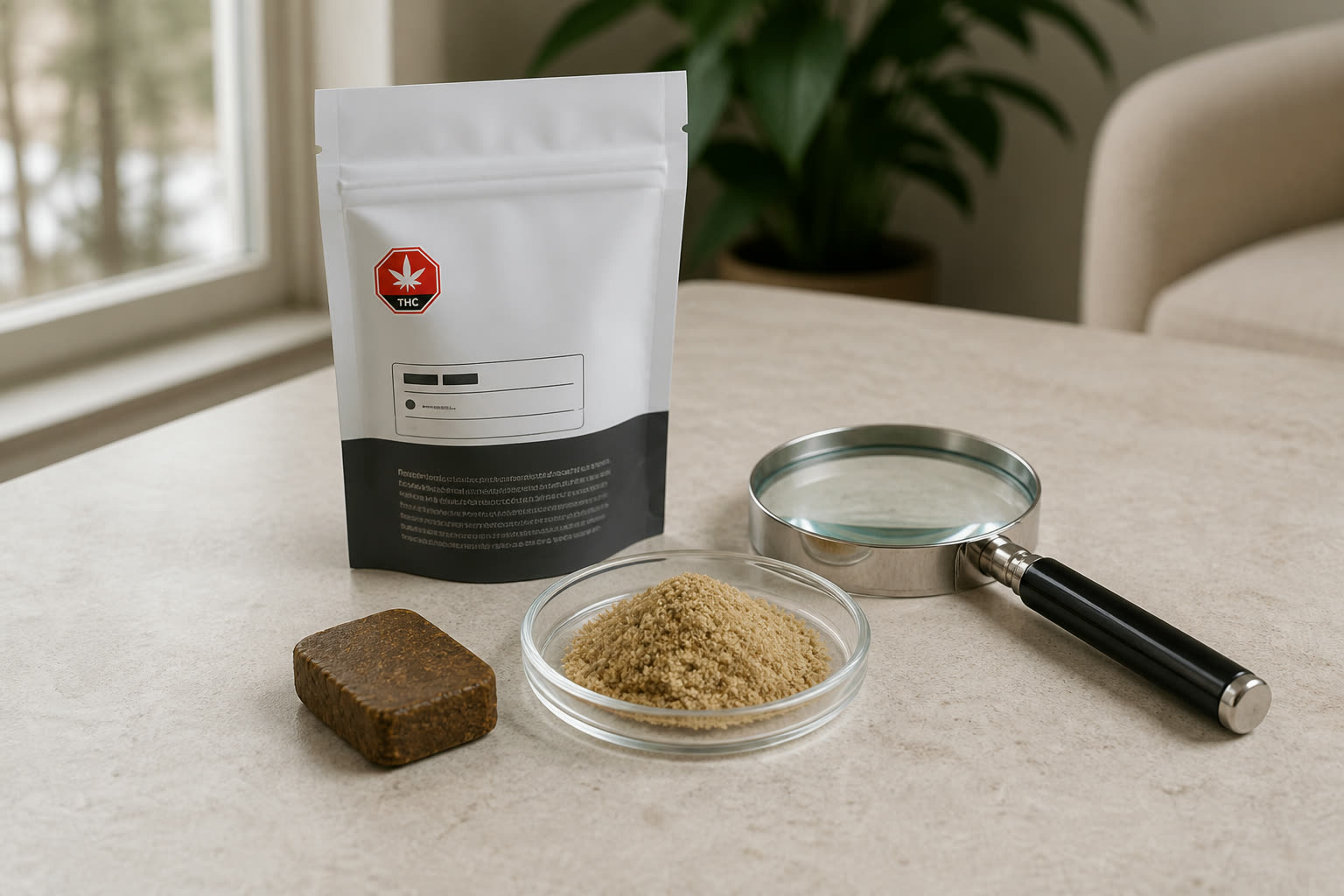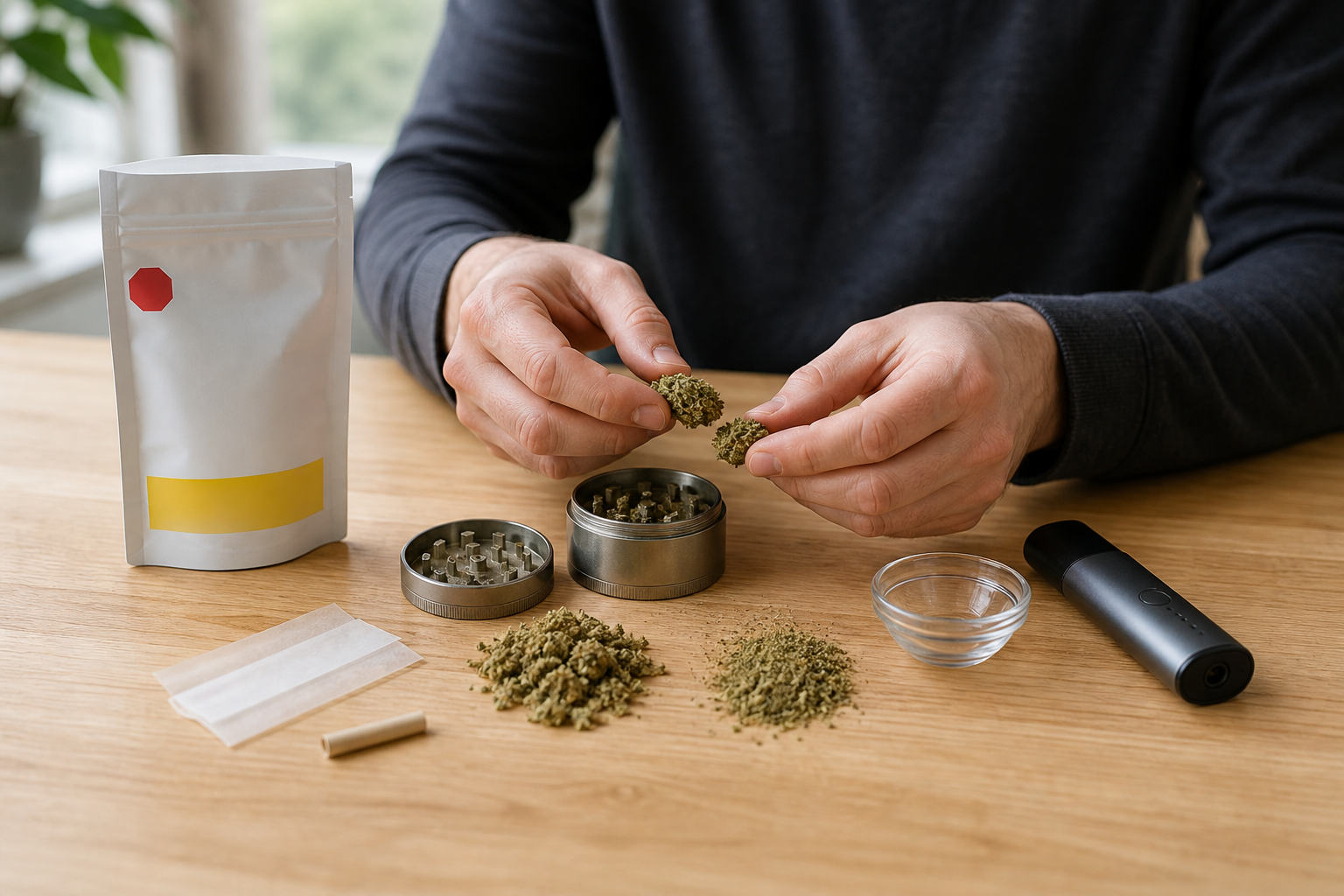
Grinding cannabis flower looks like a small step, but it changes almost everything that happens next: how evenly a joint burns, how easily a bowl pulls, how well a dry herb vape extracts, how much mess ends up on the table, and how quickly fresh flower dries out after you break it apart.
This guide is for adults in Canada who want a practical, low-hype way to prepare dried cannabis flower. It is not medical advice, and it is not a promise that one grind size is best for every person or product. The useful goal is simpler: match the grind to the method, keep the flower fresh, avoid overprocessing, and clean the tools before residue becomes the problem.
The Short Version
- Use a medium, even grind for most joints and simple bowls.
- Use a slightly coarser grind for many dry herb vapes so airflow does not clog.
- Avoid powdery flower unless a device specifically calls for it.
- Remove stems before grinding; they can tear papers and make airflow uneven.
- Grind only what you plan to use soon because broken flower dries faster.
- Clean sticky grinders before they become hard to turn.
- Store unused flower in original or clearly labelled packaging, away from children and pets.
If you are still choosing product types, start with our guide to cannabis product types in Canada. If the flower itself seems dry, spongy, or stale before you grind it, compare it with our fresh cannabis flower checklist.
Why Grind Size Matters
Grinding increases surface area. That sounds technical, but the effect is easy to see. Smaller pieces expose more flower to heat and air. Larger pieces leave more space between bits of flower. Those differences affect burn, airflow, extraction, flavour, and how quickly the flower loses moisture after preparation.
Too coarse can mean uneven heating. A joint may canoe down one side, a bowl may burn around intact chunks, and a vaporizer may leave partly used flower behind. Too fine can create a different problem: powder can restrict airflow, pull through a screen, pack too tightly, or make a joint burn hot and harsh.
The right grind is not about making the flower look impressive. It is about creating a texture that works with the device or format you are using. Think of it as preparation, not decoration.
Grind Size by Method
| Method | Useful grind | What to avoid | Why it helps |
|---|---|---|---|
| Joint or cone | Medium and even | Large chunks, stems, powder | Helps the roll pack consistently and burn more evenly. |
| Pipe or bowl | Medium to slightly coarse | Dusty flower that pulls through the hole | Leaves enough airflow while exposing the flower to heat. |
| Dry herb vape | Slightly coarse to medium, depending on the oven | Overpacked powder or sticky clumps | Supports airflow and more even heating across the chamber. |
| One-hitter | Medium-fine but not dusty | Long strands and hard chunks | Makes a small chamber easier to fill without blocking the draw. |
| Storage after opening | Unground flower whenever possible | Pre-grinding a whole jar | Whole buds generally hold aroma and moisture better than broken material. |
The table matters more than any universal rule. A tight paper cone, a wide bowl, and a small conduction vaporizer do not ask the flower to behave the same way. Start with the closest match, then adjust one step at a time.
For Joints: Medium and Consistent
For most joints, aim for a medium grind that feels fluffy rather than sandy. It should break apart easily, fill the paper without hard gaps, and still leave enough structure for airflow. Remove stems before grinding because they can poke the paper, create air pockets, and make a roll burn unevenly.
If the flower is too chunky, the joint can burn around the large pieces instead of through them. If it is powdery, it may pack too tightly, draw poorly, or burn hotter than you wanted. A two-piece or four-piece grinder usually gets close enough without much effort. Stop once the flower is evenly broken down; extra grinding rarely improves the result.
Health Canada’s lower-risk messaging says people who use cannabis can reduce risk by avoiding deep inhalation and choosing less harmful ways of use. Grinding will not remove the risks of smoking, but it can help adults avoid a frustrating roll that encourages harder pulling or constant relighting.
For Bowls and Pipes: Leave Some Airflow
For a bowl, medium to slightly coarse flower is often easier to manage than powder. You want enough surface area for heat to reach the flower, but not so much dust that it blocks airflow or pulls through the opening. If your pipe has a screen, you may have more room to use a finer texture. Without a screen, leave the grind a bit more substantial.
Do not pack the bowl like you are trying to compress it into a pellet. A gentle fill gives air a path through the flower. If the draw feels blocked before lighting, the grind may be too fine, the pack may be too tight, or the pipe may need cleaning.
For Dry Herb Vapes: Follow the Oven
Dry herb vaporizers vary. Some ovens work best with a medium grind and a light tamp. Others prefer a looser, coarser texture. The common mistake is grinding flower into powder and packing it tightly because that seems efficient. In many devices, that blocks airflow and creates uneven extraction.
A practical starting point is a slightly coarse, even grind. Fill the chamber loosely, then press only as much as the device manual recommends. If the used flower comes out very uneven, with dark edges and green centres, adjust one variable at a time: grind a little finer, pack a little looser, or stir between sessions if your device allows it.
For broader device context, read our dry herb vape vs cartridge comparison and our vaping vs smoking guide. A dry herb vape still needs careful use, clean parts, and realistic expectations.
Freshness Changes the Grind
Freshness matters before the grinder ever turns. Very dry flower can crumble into dust with only a few twists. Very sticky flower can clump, smear the grinder teeth, and leave uneven pieces. Neither situation means the product is automatically unusable, but it changes how gently you should handle it.
If flower is dry, use fewer turns and check the texture early. If it is sticky, break it into smaller pieces by hand before grinding and avoid overfilling the grinder. Overfilling can compress sticky flower instead of cutting it evenly. For buying and freshness checks, our flower buying checklist covers package date, aroma, texture, and storage clues.
Do Not Pre-Grind the Whole Package
Pre-grinding an entire package can feel convenient, but it usually trades convenience for freshness. Once flower is broken apart, more surface area is exposed to air. Aroma can fade faster, moisture can shift, and fine pieces can dry out at the bottom of the container.
For most adults, the better habit is to grind only what you plan to use soon. Keep the rest of the flower whole, sealed, and clearly labelled. If you move cannabis out of its original package, preserve the product name, THC and CBD information, lot number, and package date somewhere reliable. That matters for recall checks, dose awareness, and not confusing products later.
Health Canada advises adults to read and understand cannabis product labels, including cannabinoid information and warnings. Your grinder should not separate the flower from the information that helps you use it more carefully.
Grinder Types: What Actually Matters
A basic grinder is enough for most people. The main differences are teeth, chamber size, material, and whether it includes a screen or lower catcher. A two-piece grinder is simple and easy to clean. A four-piece grinder separates finer material into another chamber, which some adults like and others find unnecessary.
Choose a grinder that turns smoothly, closes securely, and is easy to clean. Avoid painted or flaky surfaces that can chip into the flower. If a grinder starts sticking, do not force it hard enough to damage the threads. Clean it instead.
Scissors can work in a pinch, especially for sticky flower, but keep them clean and use a dedicated surface. Breaking flower by hand is fine for small amounts, but it can be uneven and can transfer resin to your fingers. The best tool is the one that gives you a repeatable texture without adding contamination or frustration.
Cleaning and Safety Habits
Sticky grinders are not just annoying. Built-up residue can make the grinder harder to turn and can trap old plant material. Brush out loose pieces after use. When a deeper clean is needed, follow the grinder maker’s instructions and make sure the tool is fully dry before flower touches it again.
Keep grinders and prepared flower away from children, pets, and anyone who should not access cannabis. A grinder can carry residue even when it looks empty. Treat it like cannabis equipment, not a kitchen gadget. For home routines, use our safe cannabis storage checklist.
Also avoid grinding in a moving car or anywhere you may be tempted to use cannabis before driving. Cannabis can impair attention, reaction time, and coordination. Plan transportation before the session, not after the grinder is open.
A Simple Grinding Checklist
- I checked the product label before separating flower from the package.
- I removed stems and any obvious non-flower material.
- I chose a grind texture that matches the method.
- I stopped before the flower became powdery.
- I kept airflow in mind when filling a bowl or vape chamber.
- I ground only the amount I plan to use soon.
- I stored the package and grinder securely afterward.
Good grinding is quiet preparation. When it works, you notice fewer problems later: fewer tight draws, fewer canoeing joints, fewer clogged screens, less wasted flower, and less guessing.
FAQ
Is fine-ground cannabis stronger?
Fine grinding does not add THC. It changes surface area and airflow, which can change how quickly and evenly flower burns or vaporizes. Too fine can make the experience worse by clogging airflow or making a joint burn hot.
Should I grind cannabis before storing it?
Usually, no. Whole flower generally keeps better than pre-ground flower because less surface area is exposed to air. Grind close to when you plan to use it, and keep the remaining flower sealed and labelled.
What grind should I use for a dry herb vape?
Start with a slightly coarse to medium, even grind unless your device manual says otherwise. Keep the pack loose enough for airflow, then adjust based on how evenly the flower heats.